By the end of a desk-heavy day, many people feel the same pattern. The chest feels stiff, the shoulders drift forward, the neck tightens, and standing tall suddenly takes effort. Athletes feel it too, just from a different source. Heavy pressing, throwing, swimming, and repeated overhead work can leave the front of the shoulder feeling short and crowded.
That’s where the pec stretch in doorway can help, but only if you use it with some precision. Done well, it opens the front of the chest, improves shoulder motion, and helps reset the posture that builds up from sitting or training. Done poorly, it turns into a neck shrug, a low back bend, or a painful push into the front of the shoulder.
In the clinic, this is never just a random stretch. It’s a tool. The way you place your arm, the angle of your elbow, the position of your shoulder blade, and the sensation you feel all change the result. If your joints are already irritated, those details matter even more.
If your upper body stiffness is part of a bigger posture issue, pairing chest mobility work with thoracic extension can help. A guide on using a foam roller for kyphosis is often a useful complement when the mid-back is contributing to the slouched position. And if you’re also sorting through joint-support options for broader comfort, this overview of glucosamine and chondroitin is a practical background read.
Unlocking Tight Chest Muscles From Your Day
A common scene in physical therapy looks like this. Someone sits down, rubs the front of the shoulder, and says their upper back feels overworked all the time. When they stand up, you can usually see the pattern right away. The breastbone drops, the shoulders sit forward, and the head creeps in front of the trunk.
That pattern doesn’t mean your body is broken. It usually means certain tissues have adapted to what you do most. Hours at a keyboard, long drives, cycling posture, bench press volume, and even stress can all reinforce the same front-of-body tension.
The pec stretch in doorway is popular because it’s accessible. You don’t need special equipment, and almost everyone has a doorframe nearby. But accessibility is also why it gets prescribed too casually. People copy a generic version, lean hard into the frame, and assume more force means a better stretch.
Clinical perspective: The best doorway stretch feels specific, controlled, and spread across the chest. It shouldn’t feel like you’re jamming the shoulder forward.
A well-executed stretch can help you create room across the front of the chest so the shoulder blade can sit and move more naturally. That matters if your goal is better overhead motion, less upper trap overuse, easier breathing mechanics, or even feeling less folded over as the day concludes.
Why daily life creates this pattern
Some people tighten because they barely move out of flexed positions. Others tighten because they train hard but mostly in front-loaded patterns. Both groups often arrive at the same complaint: “My chest feels tight, and my neck is doing too much.”
Here’s the practical takeaway:
- Desk workers often need chest opening because sustained sitting encourages rounded shoulders.
- Lifters often need it because pressing volume can outpace the mobility and control work around the shoulder blade.
- Overhead athletes may need it because repeated throwing or reaching can change the way the shoulder and scapula sit between sessions.
The stretch itself is simple. Performing it correctly is what makes it useful.
Why This Simple Stretch Is So Effective
The doorway stretch works because it targets muscles that often pull the shoulder girdle forward. The two main players are the pectoralis major and pectoralis minor. The pec major is the larger chest muscle that helps with horizontal adduction and internal rotation of the arm. The pec minor sits deeper, originating from ribs 3 to 5 and inserting into the coracoid process, where it can influence scapular position when it becomes short or stiff (Journal of Physical Therapy Science study on doorway stretch mechanics).
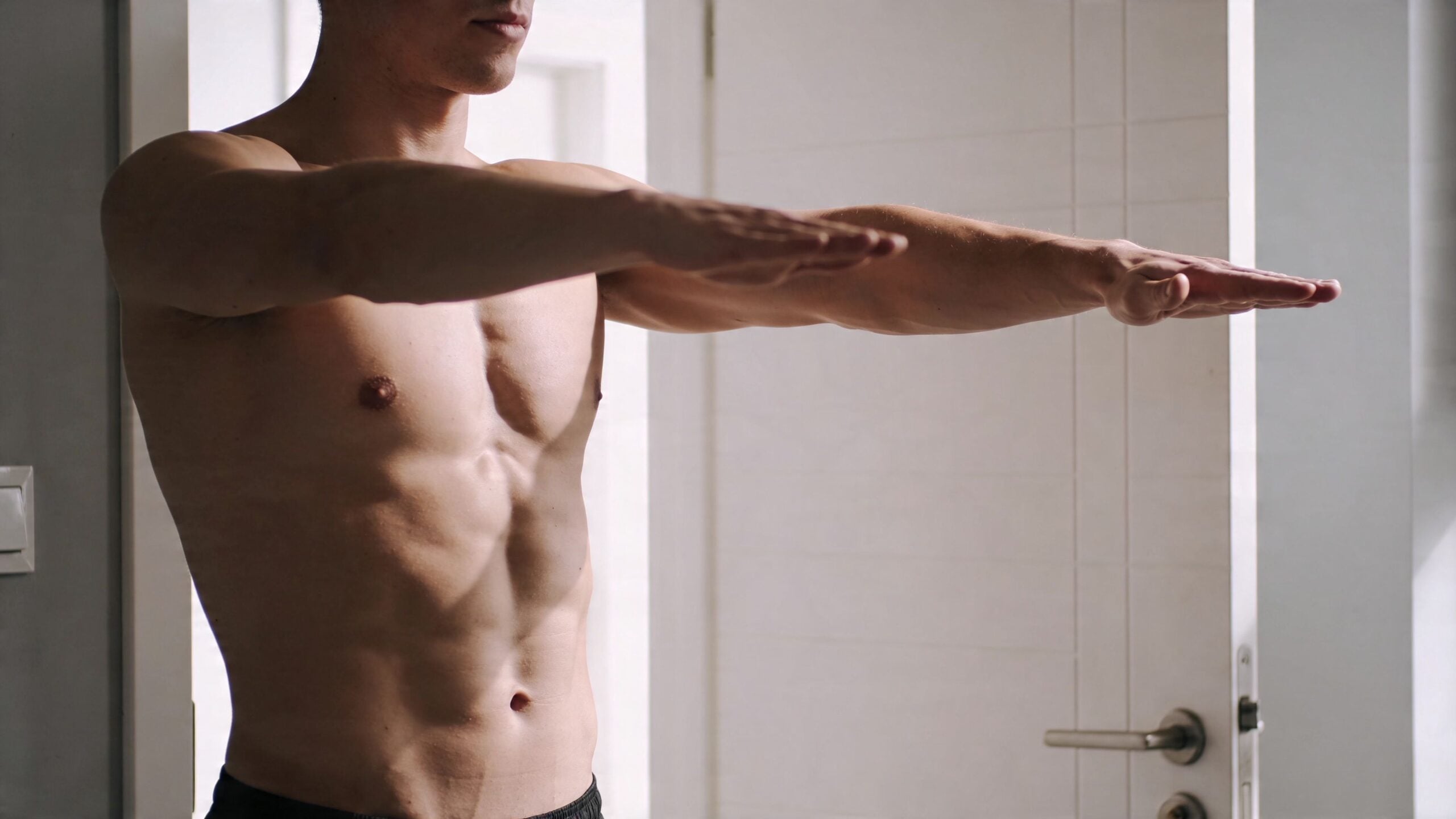
Think of those muscles like ropes on the front of the shoulder. If they stay shortened, they keep pulling the shoulders and shoulder blades into a more forward position. That changes how the shoulder moves when you reach, press, or throw. It can also make your neck and upper back work harder to hold you upright.
A key point from the evidence is that the doorway stretch isn’t just a “feel-good” move. A 2021 study in the Journal of Physical Therapy Science found that a 30-second doorway stretch, repeated 5 times, significantly increased pectoralis minor muscle length and glenohumeral internal rotation range of motion, with a moderate correlation to improved scapular position (study details here).
What that means in plain language
If the front of your chest is limiting how your shoulder blade sits, a properly chosen stretch can change that in the short term. That can make it easier to move the shoulder with less crowding and less compensation.
For patients, the benefits usually show up in a few concrete ways:
- Posture feels easier because you’re not fighting quite as much front-of-chest pull.
- Overhead reach improves because the shoulder blade and upper arm can work together more cleanly.
- Neck tension may settle when the upper trapezius doesn’t have to substitute for a better thoracic and scapular position.
Why pec minor matters so much
The deeper pec minor often gets less attention than the larger chest muscle, but clinically it matters a lot. When it stays tight, it can contribute to scapular protraction, downward rotation, and depression, which are not ideal positions if you’re trying to lift, carry, or throw well. That’s one reason this stretch often helps people who say, “My shoulder motion feels blocked,” even when the problem seems to be in the back or side of the shoulder.
Good mobility work changes the quality of motion, not just the amount of motion.
That’s why a doorway stretch can feel small on paper but useful in practice.
Your Step-by-Step Guide to the Perfect Doorway Stretch
Many have done some version of this stretch. Fewer have done it in a way that targets the pecs without borrowing motion from the neck or low back.

The setup matters as much as the lean. If your trunk is off, the stretch usually migrates to the wrong place.
Start with your body, not your arms
Stand in a doorway and place one forearm or both forearms on the frame. If you’re using the classic version, your shoulder and elbow are usually bent around a right angle. Before you move forward, set your trunk.
Keep these points in mind:
- Ribs stacked over pelvis so you’re not arching the low back.
- Chin level instead of poking forward.
- Shoulder blades gently down rather than shrugged toward the ears.
- Breathing steady so the stretch doesn’t become a strain response.
That “stacked” position is what lets the stretch stay in the chest. If you lose it, the front of the shoulder often takes the load.
Place the arm with intention
Arm position changes what tissue you bias. The classic setup works for many people, but not for everyone. A shoulder that’s irritable may tolerate a lower or more individualized angle better than a fixed textbook position.
When you place your forearm on the frame, think about letting the chest open while the shoulder blade stays controlled. Don’t crank the shoulder back. Don’t pin the arm and force your body through.
A related option if you want more movement before static work is this guide to a dynamic chest stretch, which can be useful before workouts or as part of a warm-up.
Move forward slowly enough to notice the right sensation
Once you’re set, take a small step forward or gently shift your body weight until you feel a stretch across the front of the chest. The stretch should build gradually.
You’re looking for:
- A broad pull across the pecs
- A mild to moderate intensity
- No sharp pinch in the front of the shoulder
- No numbness, tingling, or radiating symptoms
If the sensation lands mostly in the biceps tendon area, the front of the shoulder joint, or the neck, back off and reset. That usually means your alignment or arm angle needs to change.
Practical rule: If you have to brace your jaw, hold your breath, or grit through it, you’ve gone too far.
Use your breath to keep the stretch clean
Breathing is not a minor detail here. A relaxed exhale often lets the chest soften without adding force. Inhale through the nose if comfortable. Exhale slowly and let the sternum stay lifted without flaring the ribs.
That gives you a more honest stretch. It also reduces the tendency to turn the exercise into a passive hanging position.
How long to hold it
Typically, a simple static dose works well. Clinical guidelines, supported by research in the International Journal of Sports Physical Therapy, recommend holding static stretches like the doorway stretch for 20 to 30 seconds and repeating 2 to 3 times for muscle length gains (guideline-supported study summary).
Use that as a practical starting point, not a challenge. Better form for a shorter hold beats a longer hold with compensation every time.
A clean rep should feel like this
At the end of the rep, you should step out of the doorway feeling opened through the chest, not irritated in the shoulder. Many people notice they can stand taller or move the arm more freely right after.
If you want a quick form check, run through this short sequence:
Set posture first
Stand tall, soften the ribs, and keep the neck long.Choose the least irritating arm angle
Start with what feels controlled, not what looks dramatic.Lean until the chest stretches
Stop before the front of the shoulder complains.Breathe and hold
Let the tissue lengthen without forcing range.Step out and reassess
Your shoulder should feel easier, not vulnerable.
That’s the version worth keeping in your routine.
Are You Making These Common Stretching Mistakes
The most common problem with the pec stretch in doorway is that people chase a bigger sensation instead of a better one. The body will happily find extra motion from the neck, low back, or front of the shoulder if you let it.

One of the biggest errors is forward head posture. When the head drifts forward, the neck extensors and upper trapezius kick in, which works against the whole reason you’re stretching the chest. The correction is simple but not automatic: keep a straight back, let the shoulder blades stay depressed, and keep the neck neutral rather than reaching the chin through the doorway.
Mistakes that blunt the effect
Some errors don’t just reduce the benefit. They change the stress entirely.
Shrugging during the stretch
This shifts tension into the upper traps and away from the chest. Think “collarbones wide, shoulders heavy.”Arching the low back
This creates the illusion of chest opening without lengthening the pecs well. Keep the rib cage from flaring.Leaning too aggressively
If you lunge deep and fast, the front of the shoulder usually takes the hit before the pecs get a clean stretch.Pushing into pain
Stretch discomfort is okay. Sharp pain, pinching, or instability is not.
The subtle mistake most people miss
A lot of people place the arms and then collapse into the shoulder joint. The frame becomes a place to hang, not a place to position. That’s when the stretch starts feeling “intense” in a bad way.
If the stretch feels concentrated in the joint instead of the muscle, change the angle or decrease the load.
That one adjustment helps many people immediately.
Quick self-checks that improve form
Use these while you’re stretching:
- Can you breathe normally? If not, reduce the intensity.
- Can you keep your chin from jutting forward? If not, you’re compensating.
- Do your shoulders stay away from your ears? If not, reset before holding.
- Do you feel chest lengthening more than shoulder pressure? If not, change the arm position.
The doorway stretch should look quiet. It isn’t a maximal effort exercise. The best reps are often the least dramatic.
What “good stretch” should feel like
A good stretch usually feels broad, even, and tolerable. You may notice the pull more near the chest wall, the front of the shoulder, or slightly into the upper arm, but it should still feel muscular.
A bad stretch tends to feel sharp, unstable, or nervy. If it makes you wince, brace, or immediately rub the front of the joint afterward, something about the setup is off.
Customizing the Stretch for Your Body and Goals
One reason generic advice falls short is that the “best” doorway stretch depends on what you’re trying to change. A desk worker with rounded shoulders, a swimmer with stiff anterior tissue, and a person easing back after a flare-up may all need different versions.
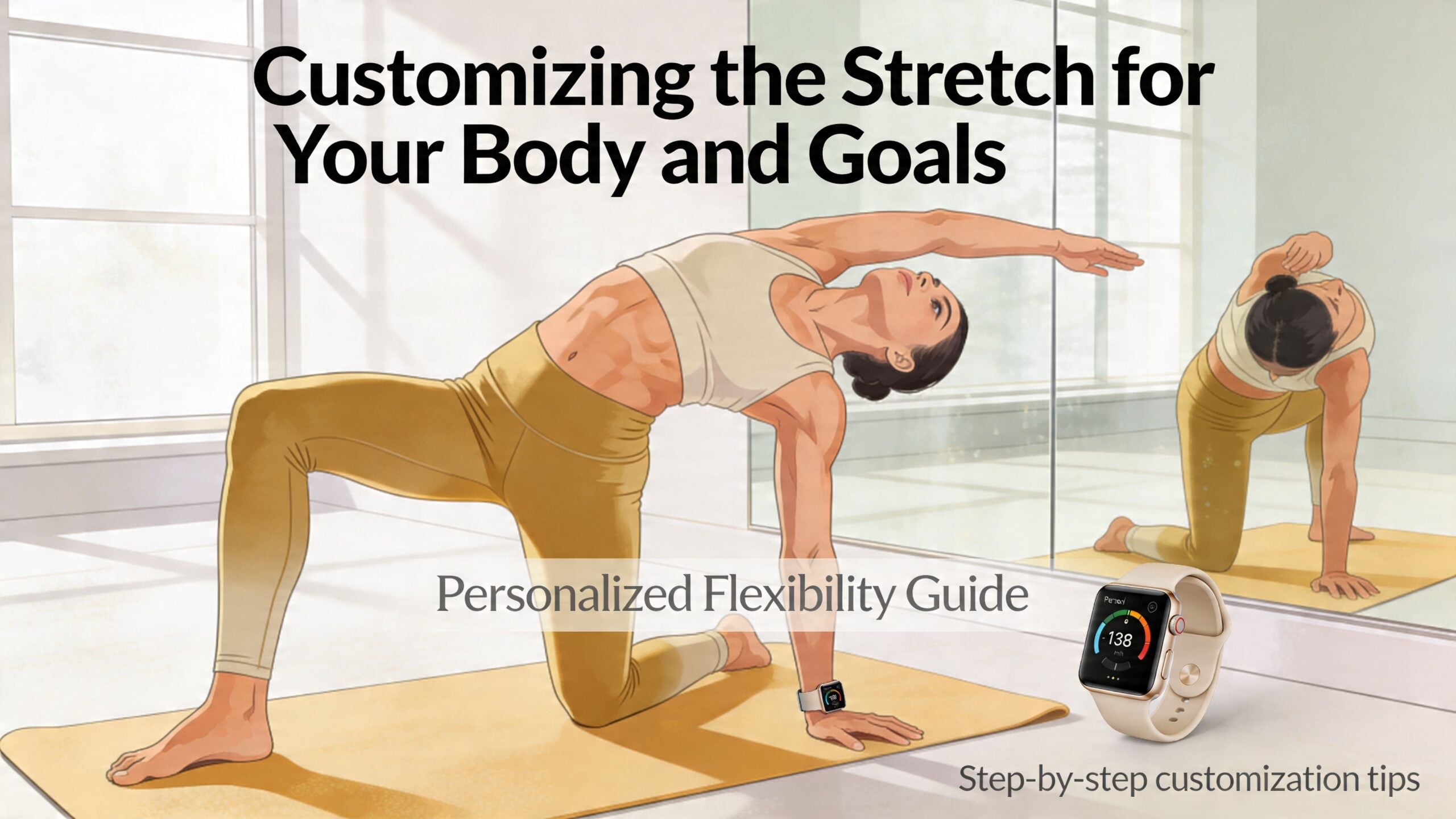
A useful modification is the unilateral doorway stretch. Expert coaching guidance suggests that using one arm at a time and adjusting the arm to different abduction angles such as 45 degrees, 90 degrees, or 120 degrees can target different fibers of the pectoral muscles more effectively than the standard bilateral setup (expert demonstration and rationale).
Which variation fits which goal
Some options are better for control. Others are better for precision.
| Variation | Primary Goal | Best For |
|---|---|---|
| Bilateral doorway stretch | General chest opening | People who tolerate symmetrical positions well |
| Single-arm doorway stretch at lower angle | More precise stretch with less strain | Beginners, people with one-sided tightness |
| Single-arm stretch at higher angle | Bias different pectoral fibers | Athletes and experienced exercisers with good control |
| Corner stretch | More stable setup | People who feel unsteady in a doorway |
| Supine foam roller chest opener | Passive anterior chest opening | People who compensate a lot when standing |
| Wall-based body turn | Gentler version with less forward lean | People sensitive to neck or posture-related compensation |
Practical matching
Here’s how I’d usually sort the choices clinically:
If you’re a desk worker
Start with a gentle single-arm version. It’s easier to keep the ribs down and avoid neck tension.If you’re an athlete
Use single-arm angles deliberately. A lower angle may feel more specific to one area, while a higher angle can challenge another part of the chest.If standing posture is hard to control
Try a wall-based variation or a passive chest opener on a foam roller instead of forcing the classic doorway position.
Small changes in arm angle can completely change where the stretch lands.
Adding active control
For some people, stretching alone doesn’t stick well unless it’s paired with active shoulder blade work. That’s especially true if the chest keeps tightening because the upper back and scapular stabilizers aren’t doing enough.
One option among others is working with Highbar Physical Therapy or another outpatient PT clinic for a movement assessment if you’re not sure whether your limitation is really chest tightness, shoulder irritability, thoracic stiffness, or a mix of all three.
A good rule is this: if a variation gives you a clear chest stretch and leaves you feeling more upright afterward, keep it. If it creates joint pressure or makes your symptoms louder later in the day, it’s the wrong version for your body right now.
When to Be Cautious and See a Physical Therapist
The doorway stretch is useful, but it isn’t harmless for everyone. If you have a history of labral injury, shoulder instability, hypermobility, or impingement, this stretch can push the shoulder farther into a position it already struggles to control. In those cases, the issue isn’t just tight tissue. It may be a lack of stability or joint tolerance.
That’s why people with certain shoulder histories shouldn’t force a standard setup. The doorway stretch can exacerbate glenohumeral instability or shoulder impingement in at-risk individuals, and for those with labral tears or hypermobility, an unmodified version can overstretch the anterior shoulder capsule and worsen symptoms (clinical caution on doorway stretch risks).
Signs to stop and reassess
You don’t need to panic over every uncomfortable sensation, but you do need to respect warning signs.
Stop the stretch and get it assessed if you notice:
- Sharp pain in the front or top of the shoulder
- A slipping or unstable feeling in the joint
- Numbness or tingling into the arm or hand
- Pain that lingers after the stretch instead of settling quickly
- Neck symptoms that ramp up every time you try it
If your symptoms are more centered around neck tension or shoulder blade overload, a broader plan may help more than stretching alone. This guide on trapezius muscle pain treatment can help you sort out whether your upper quarter discomfort is coming from the same pattern or from a different one.
When professional guidance matters
Some people just need a cue or a small adjustment. Others need a different exercise entirely. If you can’t find a version that feels safe and specific, or if your shoulder already has a history of injury, don’t keep testing random variations from the internet.
The right stretch should improve motion quality. It shouldn’t make your joint feel less trustworthy.
A physical therapist can tell you whether the doorway stretch belongs in your program, how to modify arm height, and what strengthening work should accompany it so you’re not just opening range you can’t control.
If the pec stretch in doorway feels helpful but you’re still dealing with shoulder pain, neck tension, or recurring posture-related stiffness, a movement assessment can help you figure out what’s underlying it. Highbar Physical Therapy offers patient-focused physical therapy for shoulder, neck, and postural problems, and can help you choose the right stretch, the right dosage, and the right strengthening plan for your body.