You know the feeling. You stand up after a few hours at the computer or get out of the car after a long drive, and the front of your shoulders feel glued down. Your chest feels tight. Reaching overhead seems stiff. Even taking a deep breath can make you notice how closed-off your upper body has become.
That tight, rounded posture shows up in our clinics all the time. Sometimes it starts with work. Sometimes it follows a shoulder injury. Sometimes it appears when someone is eager to get back to the gym and realizes their body isn’t moving the way it used to.
A dynamic chest stretch is one of the simplest ways to start changing that. It isn't just a stretch you hold. It's an active movement that opens the front of the chest while teaching the shoulders and upper back to move with better control. Done well, it can help you feel less stiff, move with less hesitation, and prepare your body for daily activity, exercise, or rehab.
Improve Shoulder and Chest Mobility
A common story sounds like this. Someone works at a desk all week, starts a workout on Saturday, and notices the first few reps of pressing, reaching, or lifting feel awkward. Another person is recovering from shoulder pain and says, “My chest feels tight all the time, but stretching it makes me nervous.”
Both people usually need the same thing first. They need motion that feels safe.
The dynamic chest stretch works because it combines mobility with movement. Instead of forcing the chest open and waiting, you guide your arms and shoulders through a controlled range. That matters when your body already feels guarded.
If you're building an upper-body routine, it helps to pair mobility work with movements that use that new range. A practical way to do that is to look at exercise options like these chest exercises from Athlemove, then match your warm-up to the tasks you're asking your shoulders and chest to handle.
Why people often feel stuck
Tightness across the chest doesn't always mean the chest muscles are the only problem. Often, the upper back is stiff, the shoulder blades aren't moving well, or the body has adapted to too much time in one position.
That’s why chest opening usually works better when you also address thoracic posture. If that sounds familiar, this guide on improving rounded upper-back posture with a foam roller for kyphosis can complement a dynamic chest stretch nicely.
A good stretch shouldn't make you feel pinned down. It should make the next movement feel easier.
For some people, the benefit is less pain with reaching. For others, it’s better posture awareness. For athletes, it can be the difference between feeling restricted during a warm-up and feeling ready to move.
Why Dynamic Movement Works Better Before Activity
Static stretching has a place. But before activity, a moving warm-up usually makes more sense than holding a long stretch.

When you perform a dynamic chest stretch, you're not just lengthening tissue. You're asking muscles, joints, and your nervous system to coordinate in real time. That’s much closer to what daily life and sport require.
What changes in the body
Dynamic movement helps by warming tissue gradually and creating active motion through a usable range. The body responds better to that when you're about to lift, throw, push, reach, or sprint.
A good warm-up should do a few things at once:
- Raise tissue temperature: Warm muscle usually moves more comfortably than cold muscle.
- Increase blood flow: Active motion helps prepare working areas for load.
- Prime coordination: The shoulder blade, rib cage, and arm need to move together, not in isolation.
- Match the task ahead: Chest mobility before pushing or overhead work is more relevant than a random stretch that doesn't resemble your activity.
If you're building a broader warm-up, this dynamic stretching routine is a useful example of how these movements fit into full-body preparation.
Why performance tends to improve
The benefit isn't just theoretical. An eight-week study of male soccer players found that adding dynamic stretching to warm-ups increased countermovement jump height by 3.4 to 5.3% and force by 7.2 to 12.7% (Wiley Online Library).
That doesn’t mean every chest stretch turns you into a better athlete overnight. It means the body often performs better when the warm-up includes active, controlled mobility rather than passive holds alone.
Clinical takeaway: Before exercise, the goal isn't to feel loose. The goal is to feel ready.
That distinction matters in rehab too. Many patients stretch because they feel stiff. But if the stretch leaves the shoulder unstable, overextended, or irritated, it hasn't helped. Dynamic movement gives you a better chance to prepare without overdoing it.
How to Perform the Perfect Dynamic Chest Stretch
The best dynamic chest stretch looks simple. The challenge is keeping it clean.

You don’t need a band, a bench, or a complicated setup. Start standing tall with your feet about hip-width apart. Soften your knees. Let your ribs stay stacked over your pelvis rather than flaring upward.
Set your trunk first
Most errors start here. If your lower back arches to create the motion, your chest never really opens well.
Think of your trunk as the stable base for the movement. Gently brace your abdominal wall. Not hard enough to feel rigid, just enough to keep your ribs from popping forward.
A few useful cues:
- Stand tall, not stiff: Length through the top of the head helps.
- Keep the chin easy: Don't poke it forward.
- Let the shoulders stay low: They shouldn't creep toward your ears.
Create the arm motion
From that starting position, bring your arms in front of you at about shoulder height with elbows soft, not locked. Then open the arms out and slightly back in a smooth arc, as if you were widening across the collarbones. Return to the front with control.
You should feel a gentle stretch across the chest and front of the shoulders as the arms open. You should not feel pinching in the front of the shoulder joint.
The movement should be continuous. No jerking. No forcing the end range.
Evidence-based guidance recommends 10 to 12 repetitions in a controlled, steady manner, using 5 to 10 minutes as part of a warm-up and moving through your full range without forcing the stretch (GoodRx dynamic vs. static stretching guidance).
Use your breath to control the pace
Breathing changes the quality of the stretch more than many anticipate.
Try this rhythm:
- Inhale as the arms open. Let the chest expand naturally.
- Exhale as the arms return forward. Keep the ribs from lifting excessively.
- Maintain a steady pace. The movement should feel repeatable, not dramatic.
If breathing becomes choppy, you're probably moving too fast or too far.
Move through the range you can own. If you can't return to the start with control, you've gone too far.
What it should feel like
A well-performed dynamic chest stretch usually feels like:
- Mild tension across the pecs: A stretch sensation, not strain
- Smooth shoulder motion: No catching
- Better posture after a few reps: You may feel more upright without trying
- More freedom reaching overhead or behind you: Daily tasks often feel easier right away
If you feel sharp pain, numbness, or a strong pinch in the shoulder, stop and reassess. Stretching should reduce resistance, not create a new symptom.
Common Mistakes and How to Correct Them
Individuals often don't underdo this stretch. They overdo it.

They swing faster, reach farther back, and assume that more intensity means more benefit. In practice, that usually creates compensation.
Research on dynamic stretching warns against bouncing or ballistic movements, noting that these uncontrolled motions may not improve performance and can increase injury risk. Controlled repetitions are the safer choice for activating proprioceptive systems (PMC review on dynamic stretching and injury-related considerations).
The mistakes we see most often
- Turning it into a fling: If the arms snap back, momentum is doing the work instead of your muscles controlling the range.
- Arching the lower back: This creates the illusion of chest opening while dumping motion into the lumbar spine.
- Shrugging the shoulders: Tight upper traps often try to take over.
- Holding your breath: That adds tension and usually makes the movement feel more guarded.
- Chasing discomfort: A stronger stretch sensation isn't automatically a better one.
Quick corrections that help right away
A small adjustment usually fixes the problem faster than a big cue.
| Mistake | What to do instead |
|---|---|
| Arms moving too fast | Slow down until you can feel both the opening and the return |
| Back arching | Exhale lightly and keep ribs stacked over pelvis |
| Shoulders rising | Let the shoulder blades glide, but keep the neck relaxed |
| Breath holding | Match the motion to a calm inhale and exhale |
| Range too aggressive | Stop earlier and build from a smaller arc |
The right version of a dynamic chest stretch should look controlled enough that you could pause anywhere in the movement, even though you don't hold it.
That’s a useful self-test. If you can’t control the path, reduce the range.
Adapting the Stretch for Your Body and Goals
A dynamic chest stretch should match your current capacity, not your ideal version of yourself.
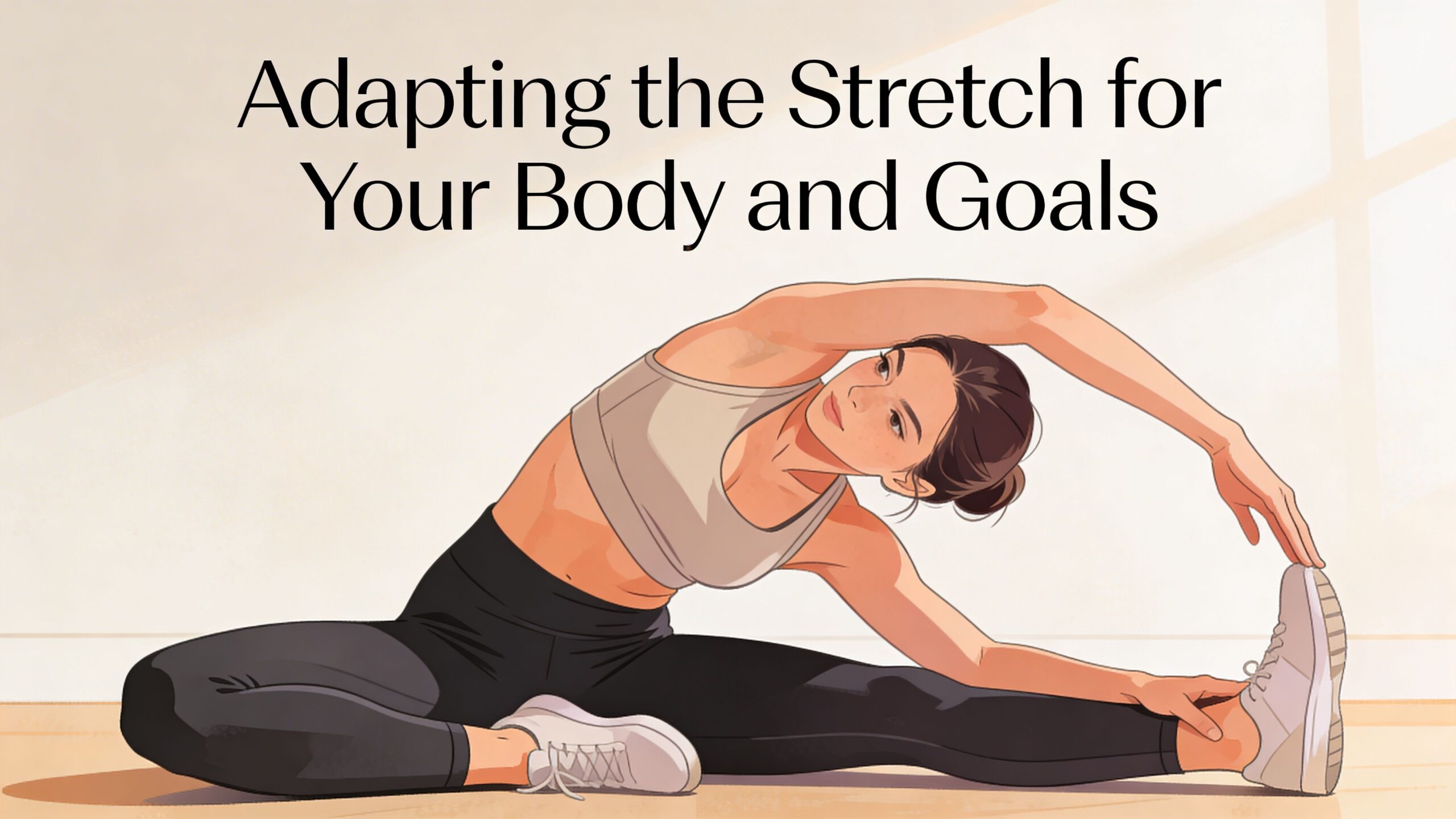
Someone returning from shoulder irritation needs a different entry point than someone warming up for pressing, swimming, or contact sport. That’s where clinical reasoning matters.
If you're in pain or recently injured
Start with a wall-supported version. Stand with your back lightly against a wall and your elbows bent. Open the arms only as far as you can without shoulder pinching, then return to the front.
This setup gives your trunk feedback and limits the urge to arch your back. It also helps if you're nervous about moving after pain.
Good signs you're at the right level:
- You can breathe normally
- The motion feels smooth
- Symptoms settle quickly after the set
If you need shoulder stability work along with mobility, these rotator cuff strengthening exercises may be a logical next step.
If you want general mobility for daily life
Use the standard standing version described earlier. This works well for desk workers, active adults, and people who feel stiff before workouts.
Keep the effort moderate. The goal is to improve motion quality, not to force a dramatic chest opener.
A simple way to judge it: after the set, reaching, lifting, and standing tall should feel easier.
If you're training for performance
Athletes can progress to a larger, more sport-relevant version. That might mean adding a split stance, coordinating trunk rotation, or pairing the movement with the specific warm-up for the session.
That pairing matters. In one trial, combining dynamic stretching with sport-specific warm-ups improved 20-meter sprint performance by 0.94% and also improved countermovement jump outcomes compared with static stretching (randomized controlled trial on dynamic stretching and sprint performance).
For an athlete, chest mobility alone isn't the point. The point is creating better movement for what comes next, whether that’s sprinting, throwing, pressing, or returning to contact.
When to See a Physical Therapist for Chest and Shoulder Pain
A dynamic chest stretch can help with stiffness. It can't diagnose the reason you're stiff.
If the movement causes sharp pain, increases pain each time you repeat it, or brings on numbness or tingling into the arm or hand, stop trying to stretch through it. The same is true if your shoulder feels unstable, catches painfully, or stays irritated after a few days of gentle mobility work.
Pain in the front of the shoulder can come from several places. The chest may be tight, but the primary cause could be the rotator cuff, the neck, the upper back, joint irritation, or post-surgical guarding. Those situations need assessment, not guesswork.
A physical therapist can watch how your shoulder blade moves, test your range, identify what’s being overloaded, and decide whether stretching is the right tool or the wrong one for your current stage. In many cases, the answer isn't “stretch more.” It's “change the dosage, change the position, and strengthen the system around it.”
If you need that kind of guidance, Highbar Physical Therapy offers outpatient evaluation and treatment for orthopedic injuries, post-surgical recovery, sports rehab, and persistent shoulder or chest-related movement problems. You can book directly without a physician referral, choose in-person visits in locations such as Warwick, Westerly, or Worcester, or use telehealth when getting to a clinic is difficult.
If your chest and shoulders feel tight, restricted, or painful, Highbar Physical Therapy can help you figure out why and build a plan that fits your body, your recovery stage, and your goals so you can feel better, move freely, and get back to daily life with confidence.