You know the feeling. Your neck is fine in the morning, then by midafternoon that familiar ache creeps in along the top of your shoulders. By dinner, it feels like you're wearing a heavy coat hanger across your neck. Turning your head is stiff. Looking down at your phone is annoying. A workout might make it bark, but so can a quiet day at the computer.
That pattern is common with trapezius pain. It’s also frustrating because the usual advice often sounds too simple. Stretch more. Roll it out. Get a massage. Sit up straight. Those things can help for the moment, but they don’t always fix the reason the pain keeps coming back.
Good trapezius muscle pain treatment starts with a better question. Not just “How do I calm this down today?” but “Why is this muscle doing so much work in the first place?”
That Nagging Pain in Your Neck and Shoulders
A lot of people describe trapezius pain the same way. It starts as tension near the base of the neck, then spreads toward the shoulder blade or up into the side of the neck. Some feel it most while typing. Others notice it after lifting, carrying a bag, sleeping awkwardly, or trying to push through a workout with poor shoulder mechanics.

The trapezius is a large muscle, not a small knot. It runs from the neck into the upper back and helps control the shoulder blade. When it gets irritated, daily life feels smaller. Driving is less comfortable. Sleeping gets harder. Even holding your arms up to wash your hair can feel more demanding than it should.
Why this pain lingers
The upper trapezius often works overtime when other parts of the shoulder and upper back aren’t sharing the load well. That’s why pain can hang around even after the original flare settles down.
Common patterns include:
- Desk posture overload: Long hours with your head drifting forward and your shoulders slightly raised.
- Training imbalance: Plenty of pressing, shrugging, or upper-body volume, but not enough control from the middle back and shoulder blade muscles.
- Stress bracing: Many people unconsciously hold tension in the neck and shoulders.
- Movement habits: Reaching, lifting, or carrying with poor shoulder blade control.
Trapezius pain is real, common, and treatable. It usually makes more sense once someone looks at the whole movement system, not just the sore spot.
That’s where physical therapy helps. A licensed PT can sort out whether the issue is mostly irritation, trigger points, joint stiffness, weakness, poor mechanics, or some combination of all of them. Once you know the driver, the plan gets clearer. Relief stops feeling random.
Why Your Trapezius Really Hurts It's Not Just Tightness
A common experience involves putting a hand on the top of the shoulder, feeling a hard band of muscle, and assuming the answer is obvious. It’s tight, so I should stretch it.
Sometimes that’s partly true. But for persistent upper trapezius pain, that explanation is often incomplete.
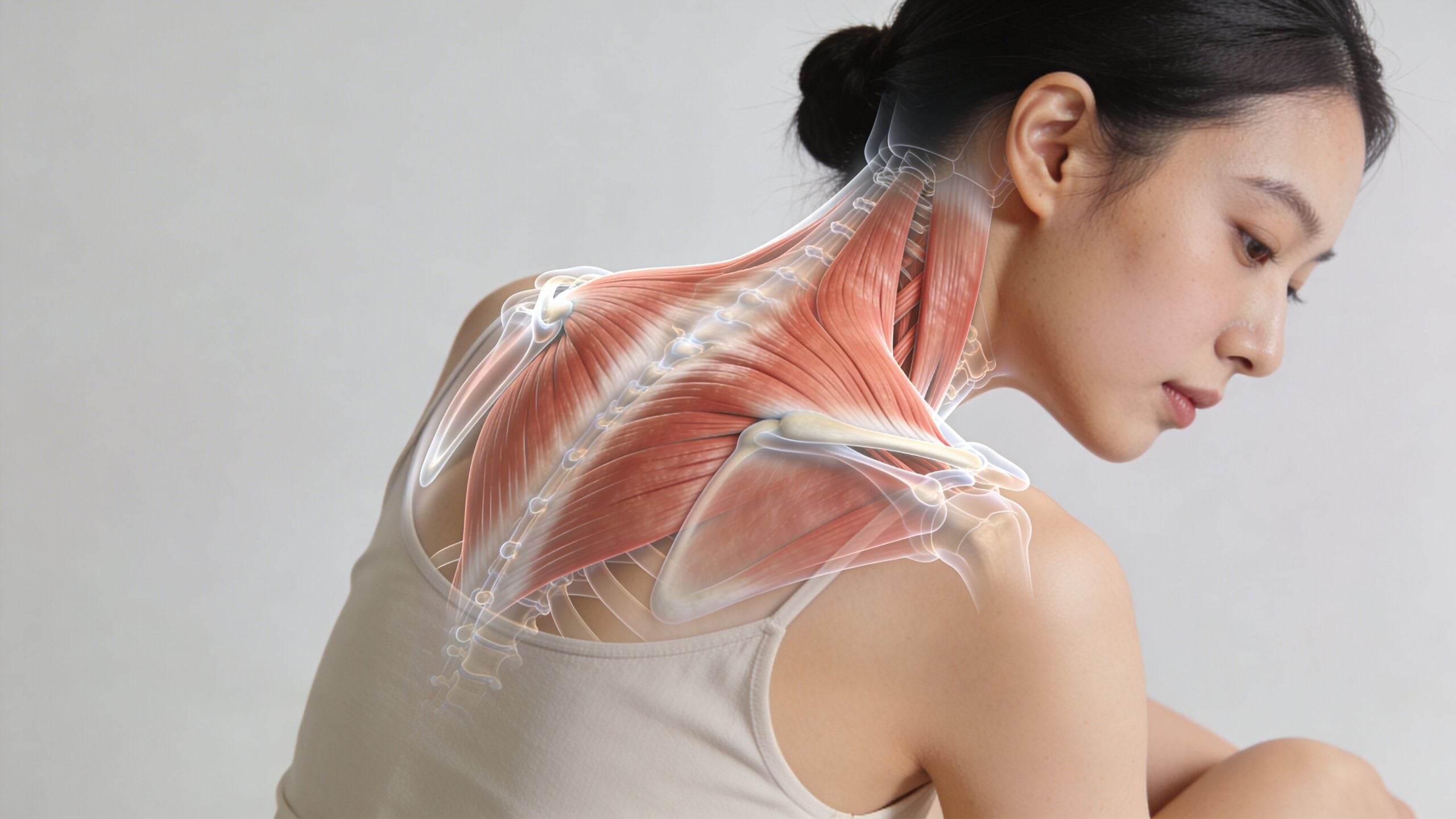
Think of the trapezius as a team, not one spot
The trapezius has upper, middle, and lower portions. They don’t all do the same job.
A simple way to think about it is like a sail system on a boat. One part lifts and helps position. Another stabilizes. Another helps pull and guide. When all three coordinate well, the shoulder blade moves smoothly and the neck doesn’t have to fight through every task.
When that coordination breaks down, the upper traps often become the emergency backup. They start doing too much lifting, too much holding, and too much guarding.
The tight feeling can come from overload
This is the part many people haven’t heard. A contrarian perspective in physical therapy suggests that upper traps in pain are often “weak and long, not tight and short,” and that strengthening, not stretching, is the long-term answer, even though that idea feels “completely alien and counterintuitive” to many readers (WebMD on trapezius strain).
That doesn’t mean stretching is always wrong. It means the sensation of tightness doesn’t automatically tell you what the muscle needs.
A muscle can feel tense because it’s overworking in a lengthened position. It’s trying to create stability, not just resisting movement. If you only keep stretching that already overloaded system, you may get temporary relief without improving its capacity.
What this looks like in real life
A few common examples:
| Pattern | What you feel | What may actually be happening |
|---|---|---|
| Long computer day | Burning or pulling at the top of the shoulder | The neck and upper trap are holding your head and shoulder girdle in a poor position for hours |
| Gym session with pressing or overhead work | Pinching or fatigue near the neck | The shoulder blade isn’t rotating or stabilizing well, so the upper trap compensates |
| Stressful week | Constant “knotted” feeling | You’re bracing through the neck and shoulders, then loading those muscles all day |
| Repeated stretching with no lasting change | Short relief, quick return of symptoms | The muscle may need better load sharing and strength, not just more length |
Why the common advice sometimes stalls out
Massage can help. Heat can help. Stretching can help. But none of those automatically improve how your shoulder blade moves or how much work your neck muscles can tolerate.
That’s why some people feel better for a day, then flare again as soon as they return to work, training, or parenting tasks.
Clinical insight: If a trapezius muscle calms down briefly after stretching but flares quickly during normal activity, look beyond mobility. The bigger problem is often poor load tolerance or poor shoulder blade control.
A strong treatment plan asks different questions:
- Can the middle and lower trapezius contribute enough?
- Do the deep neck and upper back muscles support posture without constant bracing?
- Does the shoulder blade move well when the arm lifts?
- Are you using the upper trap as the only stabilizer?
When you address those pieces, trapezius muscle pain treatment becomes more durable. Short-term symptom relief matters, but long-term change usually comes from restoring capacity.
First Steps for Acute Trapezius Pain Relief at Home
If your trapezius is flared up right now, the first goal is simple. Calm the area down without making it stiffer or more irritated.
That means avoiding two extremes. Don’t force aggressive stretching into sharp pain, and don’t stop moving completely unless a clinician has told you to.
Use the right input for the moment
Heat and cold both have a place. Cold is often useful when the area feels freshly irritated or reactive. Heat can help when the problem feels more like guarding and stiffness. If you want a practical breakdown of when each tends to fit, this guide on heat vs cold compress is a helpful starting point.
At home, a reasonable approach is:
- Cold for a fresh flare: Use a cold pack briefly when the area feels hot, aggravated, or sore after activity.
- Heat for guarding: Use a warm pack when the muscle feels stiff and protective, especially before gentle movement.
- Recheck after: The right choice should make motion easier, not more guarded.
Gentle motion beats total rest
When pain spikes, people often freeze the neck and shoulders. That usually adds stiffness.
Try a few easy movements instead:
-
Chin tucks
Sit tall. Gently draw your head back as if making a double chin. Don’t tip up or down. -
Shoulder rolls
Move slowly. The goal isn’t to grind through tightness. It’s to remind the shoulder girdle that it can move. -
Pendulum arm swings
Lean on a counter or table and let the sore-side arm hang. Make small circles and easy forward-back motions. -
Scapular setting
Think “shoulder blades lightly back and down,” then relax. You’re practicing control, not squeezing hard.
Self-massage can help for quick relief
Targeted hands-on work can settle an angry trapezius. In a study of 46 patients, both Conventional Treatment Trigger Massage and Traditional Hot-cold Exercise reduced pain, but the targeted massage approach produced superior pain reduction (SAGE study on upper trapezius myofascial pain).
That supports a simple home principle. Direct pressure to the sore area can be useful when done gently.
You can try:
- Therapy ball on the wall: Place the ball between the wall and the sore upper trapezius. Lean in lightly and breathe.
- Small pressure, short duration: Stay on a tender point briefly, then come off. You’re looking for a release, not a bruising session.
- Follow with motion: After pressure, turn your head or move the shoulder gently to see if things feel freer.
Don’t chase pain with harder pressure. If the muscle tightens more while you’re doing it, back off.
Sleep and support matter
A flare often feels worse after a bad night’s sleep. If you wake up with your neck side-bent or your shoulder shrugged toward your ear, pillow setup may be part of the problem. This overview of cervical pillows for neck pain can help you think through what kind of support keeps the neck in a more neutral position overnight.
What home care can and can’t do
Home care is good for symptom control. It’s not always enough to solve the reason the pain started.
Get evaluated sooner if:
- Pain keeps returning after temporary relief
- You’re losing range of motion and turning your head stays difficult
- Arm symptoms show up, such as tingling, numbness, or spreading pain
- Training or work tasks keep triggering it even with rest and self-care
The right early move is often modest. Settle the flare. Keep the area moving. Then find out what’s overloading the trapezius in the first place.
Your Physical Therapy Journey at Highbar Health
You wake up with the same ache at the top of your shoulder, stretch it, maybe rub it out, and get a little relief. Then it returns by midday. That pattern usually means the upper trapezius is not the whole problem. It is often the muscle doing extra work because something else is not doing enough.
A good physical therapy evaluation starts there. The goal is to find out why the area keeps getting overloaded, especially when the pain has been hanging around long enough that "just stretch it" has stopped working.
The first visit looks beyond the sore spot
The exam includes the painful area, but it also looks at the parts that control how your neck and shoulder move together. Upper trapezius pain often shows up when the shoulder blade is not rotating well, the deep neck muscles are underperforming, or the lower trapezius and serratus are not contributing enough.
That usually includes:
- Posture at rest: Your default neck, rib cage, and shoulder blade position can show why the upper trap stays busy all day.
- Neck motion: Turning, side-bending, and extension help sort out muscle irritation from joint stiffness or a mix of both.
- Shoulder mechanics: Arm elevation often reveals shrugging patterns and early upper trap dominance.
- Strength testing: Weakness in the middle back, lower trapezius, rotator cuff, or deep neck flexors changes the plan.
- Task-specific patterns: Workstation setup, lifting, reaching, training, sleep position, and stress all change load on the area.
Patients usually feel better once the pattern makes sense. Pain is easier to handle when it stops feeling random.
Treatment has two jobs
The first job is to calm things down enough that movement feels possible again. The second is to fix the reason the trapezius keeps getting irritated.
A clinical trial involving 52 participants with active upper trapezius trigger points found that both myofascial release therapy and positional release therapy, when combined with conservative care such as static stretching and cold packs, led to significant improvements in pain, disability, and quality of life over a two-week, six-session period (clinical trial on MFR and PRT for upper trapezius trigger points).
That fits what works well in practice. Hands-on treatment can reduce pain and guarding, but lasting change usually comes from pairing symptom relief with retraining. If the upper trapezius is sore because it is long, overworked, and trying to stabilize for weaker muscles, stretching alone will not solve it. In that case, the better long-term play is graded strengthening.
What the plan often includes
Treatment should match the pattern driving your symptoms.
| If your pain is driven by | Treatment emphasis |
|---|---|
| Guarding and trigger points | Hands-on relief, gentle motion, graded loading |
| Shoulder blade control problems | Motor control drills, postural retraining, rowing and lower trap work |
| Neck stiffness with muscle overload | Joint mobility work, movement re-education, activity modification |
| Training overload | Exercise selection changes, load management, recovery planning |
For some patients, that means starting with simple neck positioning and shoulder blade drills. For others, it means building pulling strength, rotator cuff endurance, and tolerance to overhead activity. If you need ideas for home work between visits, these exercises for neck pain relief are a useful starting point.
In the gym, exercise selection matters too. Movements that train scapular control without feeding a shrug pattern can help. Kelso Shrugs are one example when they fit the person in front of you.
Education changes the outcome
Patients make faster progress when they understand whether the trapezius needs less irritation, more support, or both.
That distinction matters. A short-term strain after an awkward lift needs a different plan than chronic upper trapezius pain driven by poor shoulder blade mechanics and low strength capacity. The same is true for desk-related symptoms. A workstation tweak helps, but it does not replace building a neck and shoulder system that can handle the day without the upper trap doing everything.
Highbar Physical Therapy offers outpatient rehab, direct access scheduling without a physician referral, and telehealth for patients who need flexibility around travel or weather.
Good therapy gives you a clear explanation, a plan you can follow, and objective signs that the area is getting stronger, not just less painful.
Advanced Manual Therapy for Lasting Relief
Manual therapy matters most when it’s targeted. The goal isn’t to “work out knots.”” It’s to reduce irritability, improve tolerance to movement, and make it easier for the right muscles to do their jobs again.
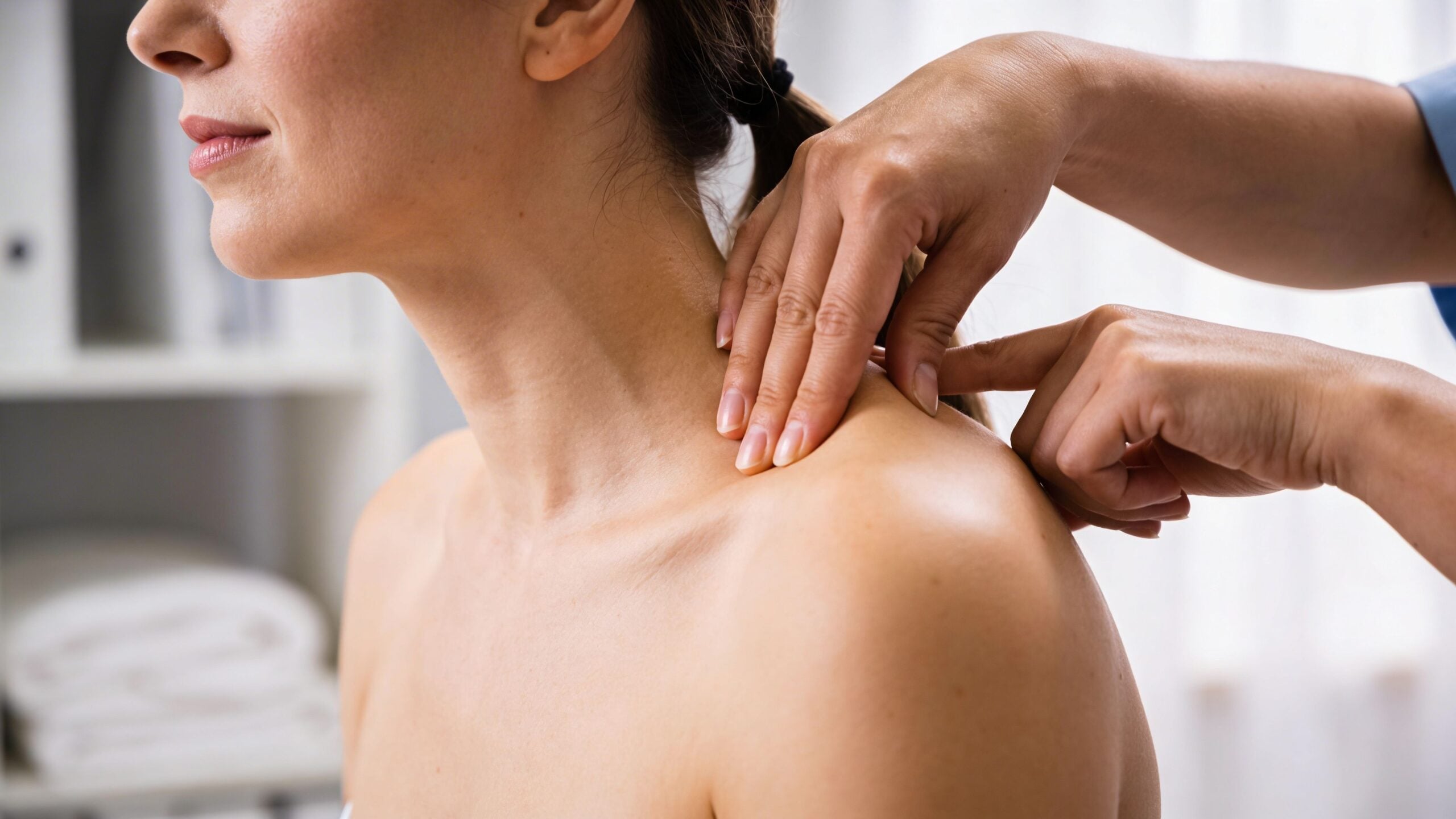
Trigger point work and ischemic compression
One common technique for upper trapezius pain is trigger point therapy. If you want a plain-language overview, this explanation of trigger point therapy is useful.
In the clinic, that often includes ischemic compression, which means sustained pressure on a trigger point. A randomized controlled trial found that ischemic compression, muscle energy technique, and strain-counterstrain were all effective for upper trapezius trigger points, but ischemic compression provided superior short-term pain relief when sustained pressure was applied for up to 90 seconds (randomized controlled trial on trapezius trigger point techniques).
What you’ll usually feel:
- Tender pressure at first
- A gradual softening or spreading sensation
- Less soreness with neck movement afterward
Done well, this shouldn’t feel like a fight. The pressure is specific and tolerable.
Myofascial release
Myofascial release focuses on the tissue around the painful area, not just the most obvious point of tenderness. The therapist uses steady, directed contact to reduce restriction and improve glide between layers of tissue.
Patients often describe this as less pokey than trigger point pressure. It can be especially helpful when the whole upper shoulder region feels bound up and movement is guarded in multiple directions.
Muscle energy technique
Muscle energy technique, or MET, is more active. The therapist positions the muscle, then asks you for a gentle contraction against resistance. After that contraction, the muscle often relaxes enough to allow a better stretch or easier repositioning.
This works well for people who don’t tolerate heavy pressure and for patients whose trapezius keeps re-tightening after passive treatment. It gives the nervous system a role in calming the muscle down.
Strain-counterstrain
This approach places the painful muscle in a position where it feels easier, then holds that position briefly before returning to neutral. It sounds simple, but it can reduce protective guarding in very reactive tissue.
It’s often a good fit when even moderate pressure is too much.
What manual therapy does well, and what it doesn’t
Manual therapy can give you a valuable window. Pain drops. Motion improves. A shoulder shrug or head turn feels less threatening.
What it doesn’t do on its own is build the lasting capacity that keeps symptoms from returning.
That’s the key trade-off:
- Useful for short-term relief
- Helpful for restoring movement
- Not enough by itself for recurrent pain tied to weakness or poor mechanics
The best hands-on treatment creates an opening. Exercise and movement retraining make that opening last.
Building a Stronger and More Resilient Neck and Shoulders
If you’ve been told to just stretch your upper traps, this is the part that often changes the game. Long-term trapezius muscle pain treatment usually depends on improving how the neck, shoulder blade, and upper back handle load.
A systematic review found that specific strength training reduced trapezius pain by 68% over 12 weeks, outperforming general fitness. The same review reported that targeted exercises can increase muscle cross-sectional area by 15-20%, improving the capacity of the system that supports the neck and shoulders (Physiopedia summary on trapezius myalgia).
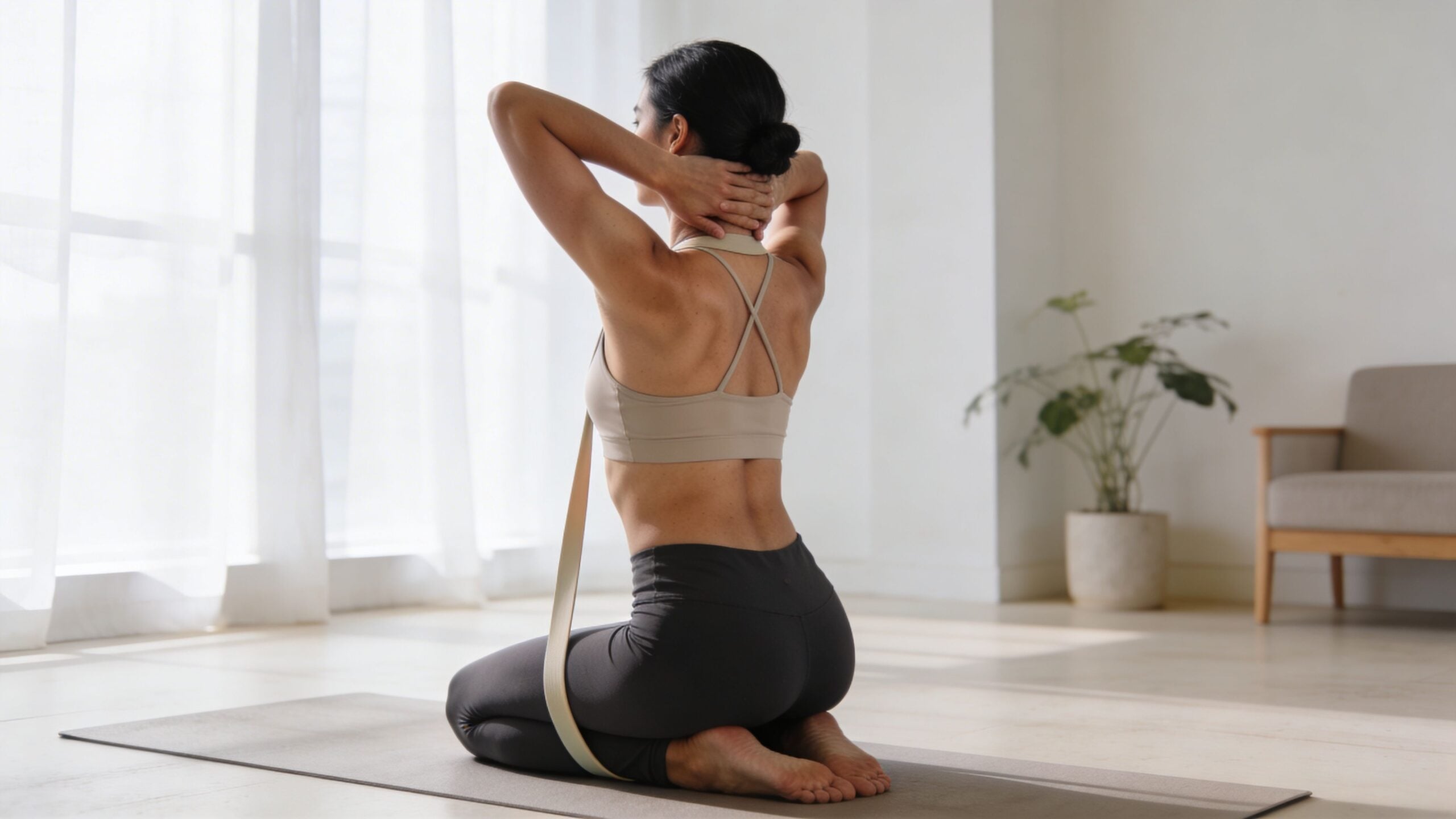
That doesn’t mean every sore trapezius needs heavy loading on day one. It means the destination is capacity, not endless symptom management.
Start with control before load
Early strengthening should feel organized, not dramatic.
Good first drills include:
- Prone Y-raise: This teaches the lower trapezius to contribute. Lift with control, not momentum.
- Scapular retraction holds: Light activation of the middle back can reduce the habit of living in a shrugged position.
- Wall slides: These help pair arm movement with cleaner shoulder blade motion.
- Chin tuck with reach: A useful combo for people who lead with the head and neck during arm tasks.
If you want more ideas for a home routine, these exercises for neck pain relief can help you build a consistent base.
Then add bigger movements
Once symptoms are less reactive and control improves, training should look more like real life.
That often means:
| Exercise | Why it helps | Common mistake |
|---|---|---|
| One-arm row | Builds mid-back strength and shoulder blade control | Pulling with the neck instead of the back |
| Shoulder shrug | Can be useful when programmed well for strength, not just tension | Going too heavy and losing control |
| Lateral raise | Challenges shoulder and scapular coordination | Elevating the shoulder too early |
| Prone Y-raise | Reinforces lower trap contribution | Arching the low back to fake the motion |
A shoulder shrug isn’t automatically bad for trapezius pain. It depends on how and when you use it. For some lifters, variations like Kelso Shrugs can help train scapular control with less neck dominance than the way people often perform standing shrugs.
What progression should feel like
Strengthening shouldn’t spike symptoms for the rest of the day. Mild effort and some local fatigue are normal. Sharp pain, spreading pain, or a lingering flare that lasts deep into the next day usually means the dose is too high or the exercise choice isn’t right yet.
Use a simple decision rule:
- The movement should look clean
- Pain during the drill should stay manageable
- You should settle back to baseline after training
What doesn’t work well
Some people stay stuck because they keep rotating through passive fixes. Stretch, massage, rest, repeat.
That cycle can feel productive because each step gives short-term relief. But if the upper trap is overloaded from weak support below it, you have to change the workload.
Less helpful long-term strategies include:
- Aggressive daily stretching when the muscle already feels pulled and irritated
- Heavy shrugs too soon without shoulder blade control
- Stopping all upper-body training for too long
- Only treating posture as a “sit up straight” problem instead of a strength and endurance issue
Stronger support muscles give the upper trapezius fewer emergencies to manage.
The goal isn’t to make the trapezius stop working. It’s supposed to work. The goal is to stop asking it to do everyone else’s job.
Take Control of Your Neck and Shoulder Health Today
Trapezius pain can feel stubborn, but it usually follows a pattern. The muscle gets overloaded, irritated, and protective. You feel that as tightness, stiffness, or knots. The mistake is assuming that every tight feeling needs more stretching.
Often, the better answer is a combination of short-term calming strategies and a longer-term plan to improve strength, shoulder blade control, and movement quality. That’s what makes trapezius muscle pain treatment more than a temporary patch.
Start with what you can control today. Settle the flare. Keep the area moving. Notice the positions and tasks that trigger symptoms. Then address the driver, especially if the pain keeps circling back.
If your neck and shoulders have been running this same script for weeks or months, don’t wait for it to magically resolve. Recurrent trapezius pain usually improves faster when someone identifies the movement problem behind it and gives you a specific plan.
If trapezius pain is limiting how you work, train, sleep, or move through the day, schedule an evaluation with Highbar Physical Therapy. You can book directly without a physician referral, choose a convenient Rhode Island or Massachusetts location, or use telehealth when travel is difficult.