When you’re in pain, figuring out whether to use a heat or cold compress can feel like a toss-up. But it’s not. The answer is actually pretty straightforward: grab a cold compress for a new, swollen injury (like a twisted ankle) and a heat compress for that stubborn muscle stiffness and soreness (like a tight lower back). Getting this right is a powerful first step you can take to manage your pain and get back to living a fuller, better life.
The Definitive Guide to Injury Care
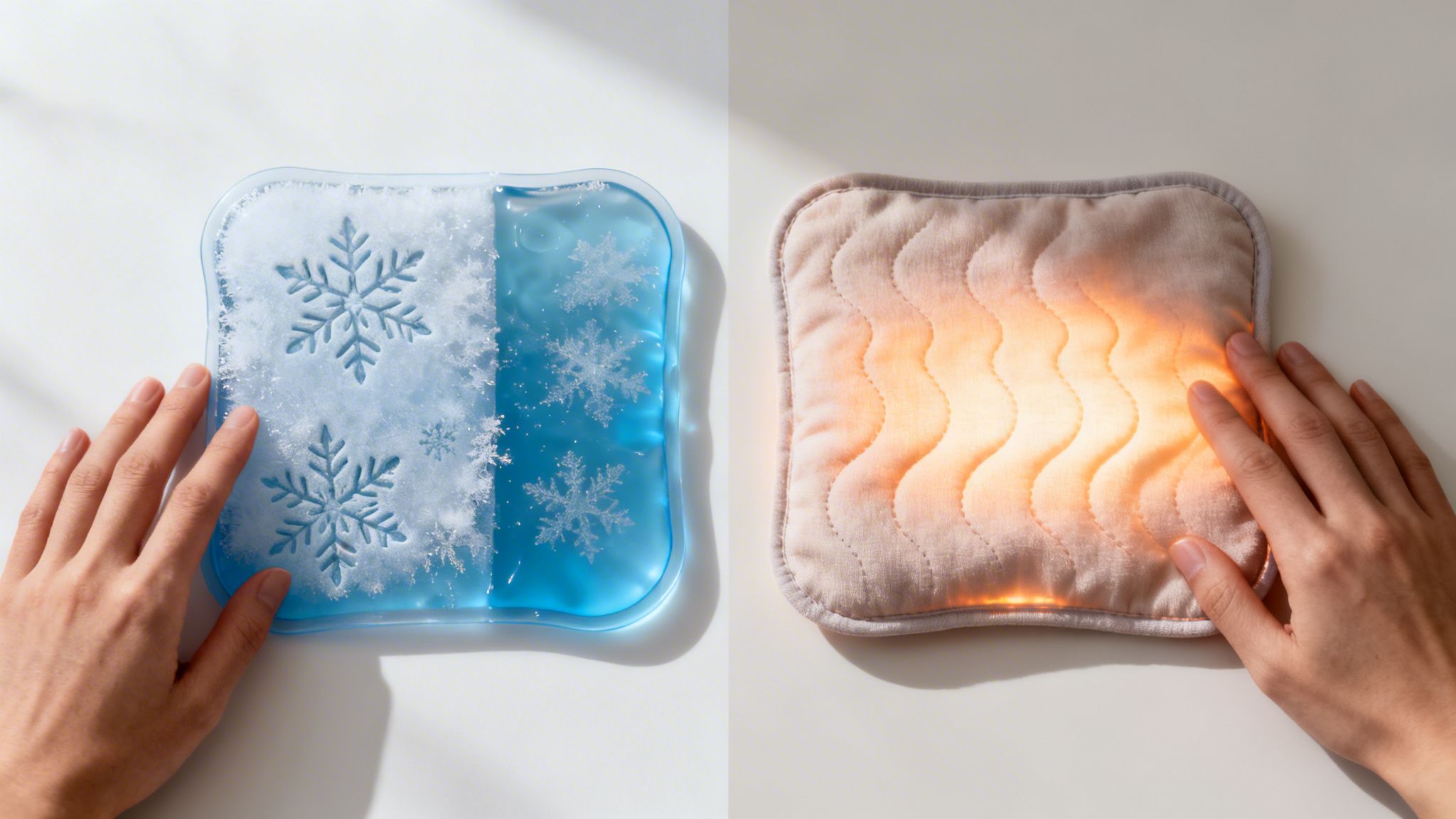
When an injury happens, what you do in those first few minutes and hours can make a huge difference in how quickly you recover. Reaching for an ice pack or a heating pad isn’t just about what feels good; it's a strategic decision that works with your body's natural healing process. Understanding how each one works is a powerful tool for self-care.
This guide is designed to give you the clarity you need to make the right choice, every time. We'll break down the science behind both methods so you understand why you’re choosing one over the other.
The Core Science of Heat and Cold
At its most basic level, heat and cold therapy is all about controlling blood flow—the engine of your body’s repair system.
- Cold Therapy (Cryotherapy): Applying cold makes your blood vessels clamp down and get smaller. This process, called vasoconstriction, dramatically reduces blood flow to the injured spot.
- Heat Therapy (Thermotherapy): Applying heat does the opposite, causing your blood vessels to open up and widen. This process, called vasodilation, rushes more blood to the area.
Key Takeaway: Cold constricts to reduce swelling and numb fresh pain, making it your go-to for the first 48 hours of a new injury. Heat expands to improve circulation and loosen things up, which is perfect for lingering stiffness and chronic muscle aches.
Using cold to treat injuries isn't a new concept. The idea goes back over 5,000 years to ancient Egypt, where the world's oldest known medical document described using cold to knock down inflammation. Modern science has since proven why it works, showing that cold can cut blood flow by up to 50% in certain tissues. This simple principle is the foundation for the precise rehab protocols our physical therapists use to help people get better every day. You can explore the history and science of cold therapy to see how that ancient wisdom evolved.
Use this quick-reference table to settle the heat vs cold compress debate once and for all.
| Core Function | Cold Compress (Cryotherapy) | Heat Compress (Thermotherapy) |
|---|---|---|
| Primary Goal | Reduce swelling, inflammation, and numb acute pain. | Relax stiff muscles, soothe chronic aches, and improve flexibility. |
| Effect on Blood Vessels | Constricts (Vasoconstriction) | Expands (Vasodilation) |
| Best For | New injuries (first 0-48 hours), sprains, strains, bruises. | Chronic pain (after 48 hours), muscle stiffness, arthritis. |
By learning what heat and cold do, you can manage many minor injuries effectively at home. But it’s just as important to know when an injury requires professional expertise. This guide will also cover the clear signs that mean it's time to book an appointment with a Highbar physical therapist to get you on the path to a fuller, better life.
How Cold Therapy Works for Acute Injuries
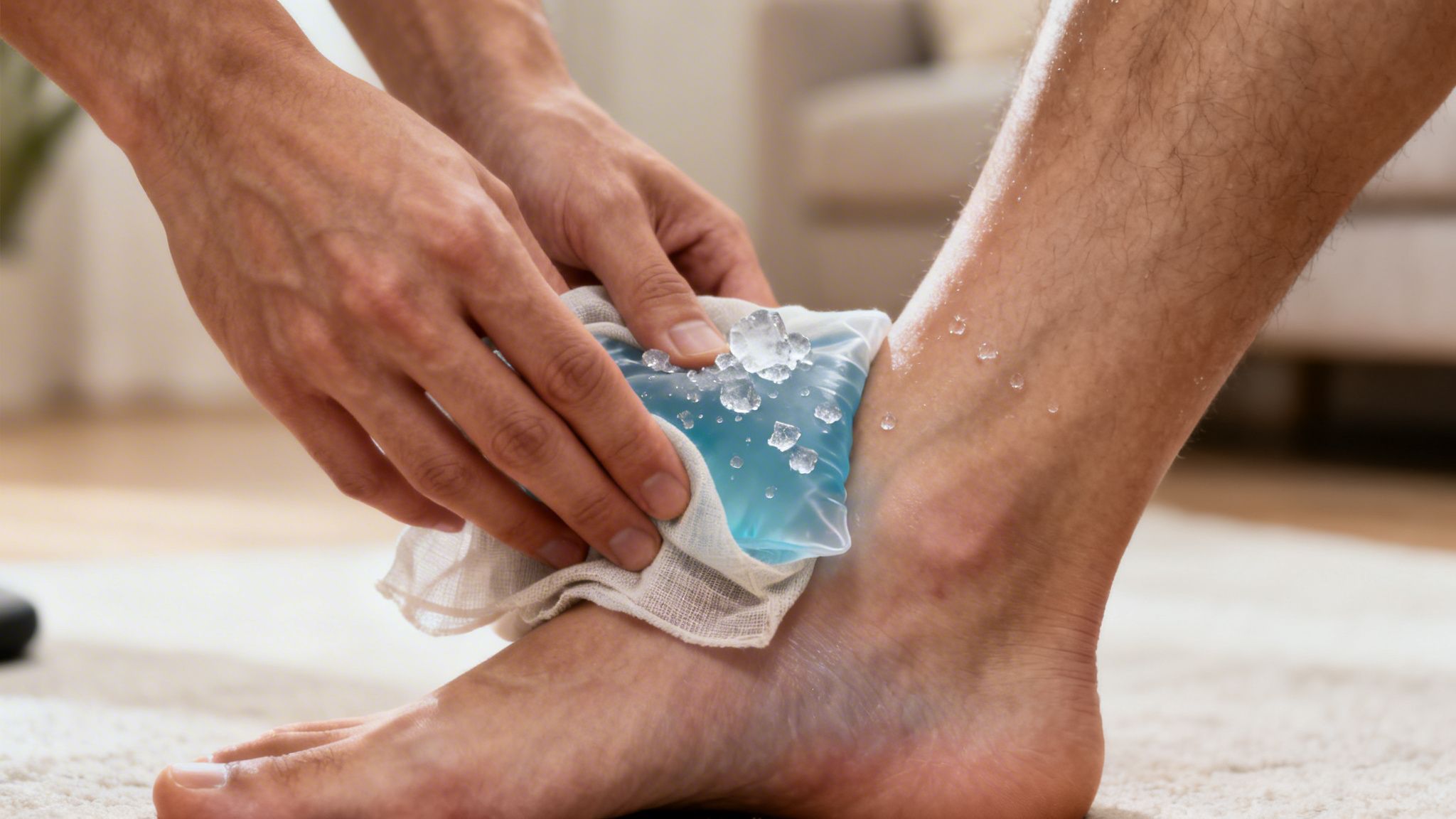
When you get hit with a sudden, acute injury—like rolling an ankle on your morning run or twisting a knee during a weekend game—your first instinct should be to grab a cold compress. This isn't just an old wives' tale; it's a powerful and scientifically-backed first line of defense. This practice, known as cryotherapy, is critical for managing the immediate aftermath and setting the stage for a smoother recovery.
The magic behind cold therapy is a process called vasoconstriction. When you apply something cold, it signals the blood vessels in that area to narrow down significantly. Think of it as your body’s emergency brake for internal bleeding and fluid buildup.
It’s like pinching a garden hose to slow the flow of water. By restricting blood flow to the freshly injured site, you directly attack the two main sources of pain and dysfunction in the first 24 to 48 hours: swelling and inflammation.
Taming Inflammation and Swelling
The moment you get hurt, your body kicks off an inflammatory response, sending a rush of fluid and cells to the area. While this is a normal part of healing, too much of it creates excessive swelling (edema), which puts pressure on nearby nerves and tissues, leading to even more pain.
A cold compress works to:
- Limit Swelling: By narrowing the blood vessels, it reduces the amount of fluid that can leak into the surrounding tissue.
- Minimize Bruising: Less blood flow means less internal bleeding, which is what causes those dark, angry-looking bruises to form.
- Slow Metabolic Activity: Cold temporarily slows down cellular processes, which helps put the brakes on that initial inflammatory response.
This controlled approach helps your body manage the initial trauma without overreacting—a key step in getting you back on your feet and back to living an active life. Beyond traditional ice packs, other methods like cold laser therapy for pain relief exist for certain conditions, offering more advanced options.
The Numbing Power of Cold
Beyond just controlling the swelling, cold therapy provides immediate pain relief through its analgesic, or pain-numbing, effect. It’s a welcome and almost instant benefit.
The cold temperature actually slows down the speed at which pain signals travel along your nerve pathways to your brain. This creates a temporary numbing sensation that can significantly dull the sharp, throbbing pain of an acute injury.
This numbing effect also helps break the pain-spasm cycle. After an injury, surrounding muscles often tighten up to guard the area, but this reflexive guarding can be painful in itself. Cold therapy helps interrupt those signals, allowing the tense muscles to relax a bit. For athletes managing post-training discomfort, we dive deeper into this in our guide on the benefits of an ice bath for muscle soreness.
Ultimately, by applying a cold compress quickly and correctly, you are actively taking control of your recovery from the very first moment.
When to Use Heat Therapy for Lasting Relief

While cold therapy is your first responder for a fresh injury, heat—also known as thermotherapy—is what you call in for the long haul. If you're wrestling with a stubborn ache, persistent stiffness, or any pain that’s well past the initial swelling phase, it’s time to bring in the warmth.
Think of it this way: cold restricts, but heat opens things up. It encourages vasodilation, which is just the technical term for widening your blood vessels. This dramatically increases circulation, sending a rush of oxygen and nutrients to sore muscles and joints that are desperate for repair.
By boosting blood flow, heat helps your body flush out the metabolic waste products that contribute to lingering soreness. It's a gentle but incredibly effective way to support your body's natural healing process, helping you feel better and live a more active life.
Soothing Chronic Pain and Stiffness
Heat is your best friend when it comes to managing chronic conditions where active, angry inflammation isn't the main problem. Instead, you're usually dealing with tightness, poor circulation, and tissues that have lost their flexibility. This is where thermotherapy truly shines.
It’s particularly effective for nagging issues like:
- Persistent Lower Back Pain: Heat helps relax those deep, chronically tight muscles in your lumbar spine that are so hard to reach.
- Arthritis-Related Stiffness: A warm compress can be a game-changer for stiff, achy joints, especially first thing in the morning. It makes starting your day with less pain and more freedom possible.
- Delayed Onset Muscle Soreness (DOMS): For that "day or two after" soreness from a tough workout, heat eases the ache and helps you recover faster.
- Muscle Spasms and Trigger Points: Applying warmth helps relax knotted muscles and can significantly dial down the intensity of painful spasms.
Heat is a go-to for a reason. A 2015 survey of nearly 1,600 chronic pain patients found that 67.8% use heat weekly to manage their symptoms. It makes sense—heat can boost local blood flow by two to three times its normal rate. Newer studies also show hot packs are superior to cold for relieving pain in the 48 hours after exercise, underscoring their power in promoting tissue repair. For a deeper dive, you can learn more about the benefits of heat for chronic pain management.
Improving Flexibility and Preparing for Activity
Beyond just feeling good, heat therapy is a fantastic tool for improving the elasticity of your tissues. Applying warmth to a stiff muscle or joint before you stretch or start an activity can make all the difference.
Think of it like warming up cold clay before you try to mold it. Heat makes your muscles and connective tissues more pliable, allowing them to move more freely. This simple step can dramatically reduce your risk of straining something during exercise.
This is why a physical therapist might have you use a heating pad for 15-20 minutes before you start your prescribed exercises. It helps you get more out of every movement, making your rehab more effective and getting you back to the life you want to live.
Comparing Heat and Cold for Your Specific Injury
Trying to decide between a heat and a cold compress can feel confusing, but the choice gets a lot clearer when you focus on one thing: your specific situation. Instead of thinking in absolutes, it’s about what’s happening in your body right now. Is your goal to shut down swelling fast, or is it to soothe a chronic ache that’s been bothering you for weeks?
This comparison will give you the clarity to make the right call. We’ll go beyond generic advice and get into the real-world scenarios our physical therapists see every day, helping you support your body’s healing and get back to your life.
Acute Injury vs. Chronic Pain
The most important factor in the heat vs. cold debate is timing. Is this a brand-new injury, or is it something that’s been lingering?
For an acute injury (the first 0-72 hours), think of a sudden ankle sprain on the soccer field, a fall, or a muscle pull from lifting something too heavy. In these first few days, your body’s immediate response is inflammation. Cold is the undisputed champion here. It constricts blood vessels, numbs the sharp pain, and puts the brakes on swelling.
Applying heat to a new injury would be like throwing fuel on a fire. It would increase blood flow and make the swelling significantly worse.
For chronic pain (anything after 72 hours), we’re talking about that stubborn lower back pain, persistent muscle tightness, or arthritis stiffness that greets you in the morning. Here, the initial inflammatory crisis is over. Heat is your go-to solution. It boosts circulation, delivering fresh oxygen and nutrients to help repair tissues, relax tight muscles, and ease that dull, aching pain.
Cold compresses are king for acute injuries, while heat owns chronic relief. A 2014 literature review confirmed that ice is exceptional for new, inflammatory sprains, reducing swelling by cutting local blood flow by up to 50%. For a fresh ankle sprain, icing can decrease that puffy swelling (edema) 20-30% faster.
On the flip side, for chronic conditions like arthritis, applying heat in the morning can increase blood flow by 200%, improving tissue elasticity and reducing stiffness. As you can see in this in-depth look at the hot and cold compress debate, what feels best to you also plays a role, and many people find success by using both at different times.
Sharp, Stabbing Pain vs. Dull, Aching Pain
The type of pain you’re feeling is another excellent clue. Your body is telling you exactly what it needs.
Does the pain feel sharp, stabbing, and intense? That’s the signature of an acute injury with active inflammation. You’ll want to reach for a cold compress to numb the area and calm that fiery response.
Is the pain more of a dull, persistent ache or a feeling of deep stiffness? This is classic for chronic muscle tension or joint issues where circulation has become sluggish. A heat compress will help relax those tissues and soothe that deep-seated ache.
Key Differentiator: Think of cold as a firefighter for the "five-alarm fire" of a new injury—its only job is to contain the immediate damage. Heat, on the other hand, is like a maintenance crew that comes in later to handle long-term repairs and upkeep.
Goal: Reducing Swelling vs. Improving Flexibility
Finally, ask yourself what you’re trying to accomplish. Your end goal will point you directly to the right tool.
If you look at your knee or ankle and it’s visibly puffy and swollen, your number one priority is getting that swelling down. A cold compress is the only choice. It directly counteracts the process causing the swelling by slowing down the fluid leaking into the area.
But if your goal is to prepare for activity—whether it’s your physical therapy exercises or just getting your day started with less stiffness—you need to improve tissue flexibility. A heat compress applied for 15-20 minutes beforehand will make muscles and connective tissues more pliable and ready to move.
Heat vs Cold Compress Quick Decision Guide
When you’re standing in front of the freezer or microwave, a quick reference can make all the difference. Use this table to make a fast, confident decision based on your symptoms and goals.
| Factor | Cold Compress (Cryotherapy) | Heat Compress (Thermotherapy) |
|---|---|---|
| Primary Mechanism | Constricts blood vessels (vasoconstriction) to reduce blood flow and inflammation. | Expands blood vessels (vasodilation) to increase blood flow and relax tissues. |
| Best For | New injuries like sprains and strains, post-workout soreness, post-surgery swelling, and acute inflammation. | Chronic pain like back aches, muscle stiffness, arthritis, and pre-activity warm-ups. |
| Pain Type | Sharp, throbbing, or stabbing pain associated with a new injury. | Dull, aching, or persistent soreness from chronic conditions or muscle tension. |
| Key Goal | To reduce swelling, numb sharp pain, and calm down an active inflammatory response. | To increase flexibility, soothe stiff joints, and relax tight, sore muscles. |
| Key Precaution | Never apply directly to skin; always use a barrier like a thin towel. Avoid if you have poor circulation. | Never apply to a new, swollen injury. Avoid with open wounds or conditions like diabetes with impaired sensation. |
Making the right choice between heat and cold is a powerful self-care skill. By understanding these key differences, you can manage your pain more effectively and take an active role in your own recovery journey.
Applying Heat and Cold Safely and Effectively
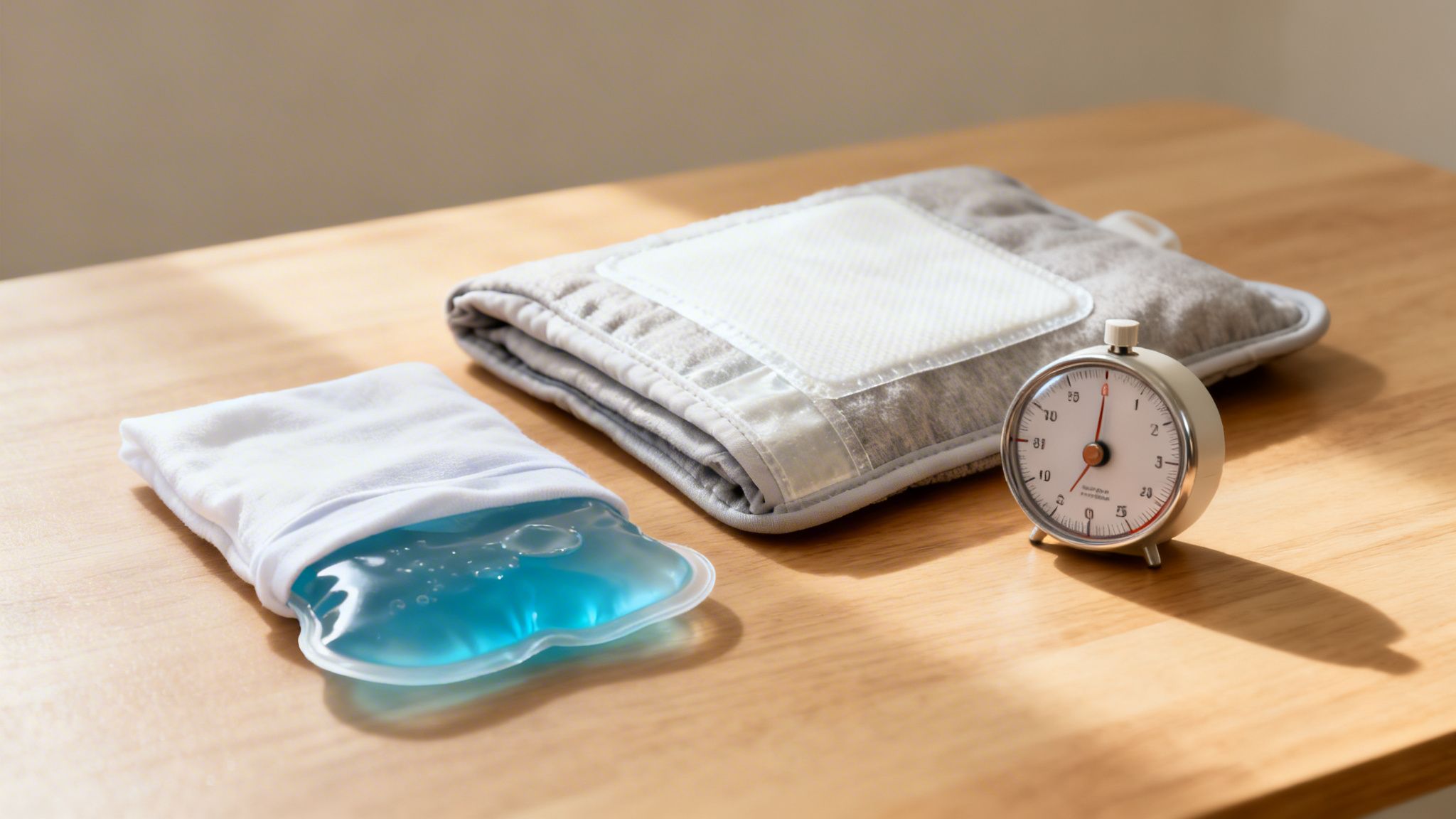
Knowing when to grab a heat pack versus an ice pack is a great self-care skill. But how you use them is just as important for getting results and, more importantly, staying safe.
Effective application is about more than just tossing a pack in the microwave or pulling one from the freezer. It’s about paying close attention to duration, frequency, and a few crucial safety measures. Done right, you’ll get the maximum benefit, whether you're trying to shut down inflammation or soothe chronic stiffness. Done wrong, you risk skin damage or could even make your injury worse.
Let’s walk through the practical steps to use both methods safely so you feel confident in your at-home treatment.
Best Practices for Applying a Cold Compress
When you’re dealing with a fresh, swollen injury, a cold compress is your first line of defense. The goal here is simple: reduce swelling and numb the pain without causing any harm to your skin.
- Protect Your Skin: This is non-negotiable. Never place an ice pack, frozen gel pack, or even a bag of frozen peas directly on your skin. Always wrap it in a thin, dry barrier like a dish towel or a t-shirt. This simple step prevents common but painful issues like frostnip or ice burns.
- Set a Timer: The sweet spot for a cold compress is 15 to 20 minutes at a time. Leaving it on longer doesn’t add more benefit and significantly increases the risk of skin and nerve damage.
- Get Good Contact: If you can, use something flexible that can mold to the contours of the injured area, like an ankle or a knee. A bag of frozen peas is a classic for a reason! This ensures the cold is distributed evenly across the entire site.
- Repeat as Needed: For an acute injury, you can reapply the cold compress every 2 to 3 hours during the first 24 to 48 hours. This consistent cycle is what really helps control that initial inflammatory response. For a deeper dive, check out our guide on the role of an ice pack in physical therapy.
Best Practices for Applying a Heat Compress
For those nagging, chronic muscle aches, stiffness, or soreness that don't involve swelling, a heat compress is your go-to tool. Here, the objective is to increase circulation and help tight tissues relax safely.
- Choose Your Heat Source: You’ve got options—an electric heating pad, a microwavable gel pack, or a hot water bottle all work. We find that moist heat, like a warm, damp towel, often feels more effective because it can penetrate deeper into the muscles.
- Keep the Temperature Moderate: The goal is comfortably warm, not painfully hot. If you’re using an electric pad, always start on the lowest setting and only turn it up if you need to. And just like with ice, always wrap your heat source in a towel to prevent burns.
- Stick to the Time Limit: Same rule as cold therapy: 15 to 20 minutes is the ideal duration. Whatever you do, never fall asleep with a heating pad on. It’s one of the most common causes of serious skin burns.
- Allow for Breaks: Give your skin at least an hour to return to its normal temperature between heat applications. This rest period is crucial for preventing tissue damage from prolonged exposure.
Crucial Safety Insight: Your ability to feel is your safety guide. If you have any condition that impairs your sensation of hot or cold—like diabetes-related nerve damage (neuropathy)—using these therapies can be dangerous. Always check with a physical therapist or your doctor before using a heat or cold compress if you have any sensory deficits.
When to Avoid Heat or Cold
Just as important as knowing when to use these therapies is knowing when not to. Applying the wrong therapy at the wrong time can actually set your healing back. These situations are what we call contraindications.
Do NOT use a heat compress when:
- The injury is new (less than 48-72 hours old) and clearly swollen.
- The area is already red, inflamed, or hot to the touch.
- You have an open wound, stitches, or a fresh surgical incision.
Do NOT use a cold compress when:
- You are trying to relax stiff muscles or soothe chronic aches before an activity.
- You have poor circulation or a vascular condition like Raynaud's phenomenon.
- The area is already numb.
Following these simple but effective guidelines will empower you to use heat and cold correctly, helping you manage pain at home and support your journey toward living a fuller, better life.
When Your Injury Needs a Physical Therapist
Knowing how to use a heat or cold compress is a fantastic self-care skill for managing minor aches and pains. But home remedies have their limits. Some injuries need the diagnostic skill and hands-on expertise of a licensed movement specialist to heal correctly and prevent long-term problems.
Continuing to self-treat without professional guidance can sometimes delay recovery or even make an issue worse. Recognizing when to move beyond home care is a crucial step toward getting truly better. If you’re not seeing improvement or your symptoms are getting worse, it’s a clear signal your body needs more support.
Signs It’s Time to See a Professional
While the heat vs cold compress debate helps with initial care, certain red flags point to a more serious underlying issue that requires a professional diagnosis. Don’t wait to seek help if you experience any of the following.
Pay close attention to these warning signs:
- Pain That Worsens or Lingers: If your pain intensifies or doesn’t improve significantly after 48-72 hours of rest and home care, it's time for an evaluation.
- Significant Swelling or Discoloration: Excessive swelling, deep bruising, or changes in skin color suggest a more substantial injury than a simple sprain or strain.
- Difficulty Bearing Weight: If you can’t put weight on an arm or leg, or if doing so causes sharp pain, you need to have it professionally assessed.
- Chronic Pain That Disrupts Your Life: When persistent pain interferes with your ability to work, sleep, or enjoy daily activities, it’s no longer a minor issue. It's a quality-of-life problem that physical therapy is designed to solve.
- Loss of Motion or Function: If you notice a major decrease in your range of motion or can't perform simple movements you previously could, a physical therapist can identify the cause.
At Highbar Physical Therapy, our mission is to help you move freely and live fully. We don’t just treat symptoms; our licensed physical therapists are experts at diagnosing the root cause of your pain to create a personalized, evidence-based treatment plan that works.
We understand that navigating the healthcare system can be complicated. That’s why we make it easy to get the expert care you need. You can often see a specialist without a long wait, and in many cases, you may not even need a referral from a physician. You can learn more about getting started with physical therapy without a referral on our website.
Don’t let pain hold you back. Scheduling an appointment at one of our convenient locations or through a telehealth visit is your first step toward true recovery. Let us be your trusted partner in getting you better.
Common Questions About Heat and Cold Therapy
Even when you know the basics, a lot of questions pop up when it's time to actually grab an ice pack or a heating pad. Our physical therapists hear them all the time. Here are some clear, straightforward answers to help you get the best results.
Can You Alternate Between Heat and Cold?
Yes, you can. This technique is called contrast therapy, and it can be a great tool once you’re past the initial 48-72 hour acute injury phase and the major swelling has gone down. The idea is to create a "pump" effect by rapidly switching between widening the blood vessels (with heat) and narrowing them (with cold).
This process helps flush out stubborn, lingering swelling and brings in fresh, nutrient-rich blood to the area. It’s a go-to for athletes looking to speed up recovery, and it’s also useful for managing chronic issues that tend to have occasional inflammatory flare-ups. A standard routine would be something like 3-4 minutes of heat followed by 1 minute of cold, repeated for several cycles.
Is Moist Heat Better Than Dry Heat?
Most of our physical therapists—and our patients—find that moist heat feels more effective than dry heat. While a dry heating pad is certainly convenient, moist heat from a damp towel, a microwavable steam pack, or even a hot bath seems to penetrate deeper into the muscle tissue.
This deeper warmth can provide more meaningful relief for stubborn tightness, joint stiffness, and chronic aches. It also does a better job of increasing tissue elasticity before you stretch or start a physical activity. That said, the most important thing is safety, so pick the method you can use consistently without any risk of burns.
Can You Use Heat or Cold After Surgery?
This is a big one, and it requires careful guidance. Immediately after a procedure, your surgeon will almost always recommend cold therapy to get a handle on the significant post-op pain and swelling. Following their directions for icing is a critical part of that initial recovery phase.
Crucial Post-Surgical Advice: Always follow your surgeon's and physical therapist's specific instructions. They know the details of your procedure and will provide a precise protocol for when—and if—it is safe to switch from cold to heat. Applying heat too early can increase swelling and bleeding, delaying your recovery.
In more complex situations, like navigating the recovery after knee replacement, a physical therapist's expertise is absolutely essential for a safe and structured healing process. They will guide every step, including the right way to use temperature therapy.
At Highbar Physical Therapy, we're committed to giving you the tools and expert guidance you need to move beyond pain and get back to living a full life. If you're struggling with an injury or chronic pain, let our team of licensed movement experts help you get better. Book your appointment online today at https://highbarhealth.com.