Yes, an ice bath for muscle soreness can be an effective recovery tool, but the real question is whether it's the right tool for you. The benefits depend entirely on how and when you use it. While popular with pro athletes, this method isn’t a magic fix and works best when applied correctly for a specific kind of ache: Delayed Onset Muscle Soreness (DOMS).
The Real Deal on Ice Baths for Muscle Soreness
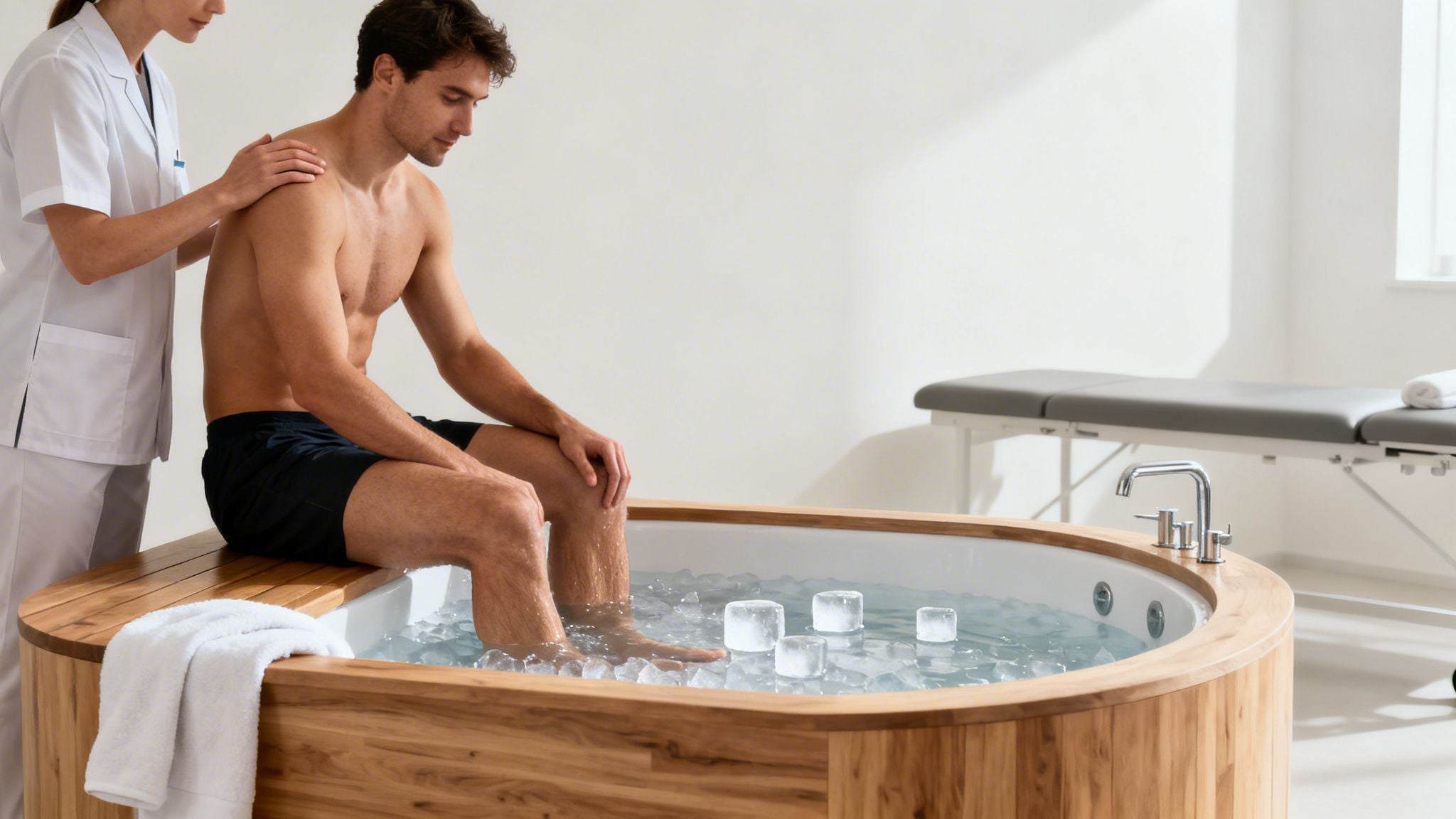
You pushed through a tough workout, and now every movement is a stiff, aching reminder of your effort. That familiar post-exercise pain, known as Delayed Onset Muscle Soreness (DOMS), is something we see all the time, from weekend warriors to seasoned athletes. It’s simply the body's natural response to the microscopic muscle damage that happens during intense or new activities.
As physical therapists, our passion is guiding people toward what works so they can get back to living fuller, better lives. The chatter around ice baths is everywhere, but it's often more hype than help. Let's cut through the noise and give you an evidence-based perspective on whether this chilly trend is right for you.
Understanding the Goal of Post-Workout Recovery
The primary goal after a workout is to help your body repair itself efficiently so you can get back to your life. This boils down to a few key objectives:
- Managing Inflammation: While some inflammation is a necessary signal for healing, too much of it can increase pain and actually slow down your recovery.
- Clearing Metabolic Waste: Intense exercise creates byproducts in your muscles. If they hang around too long, they can contribute to that feeling of soreness and fatigue.
- Restoring Function: The ultimate goal is to return to your daily activities and future workouts without pain or limitation.
An ice bath is just one of many tools that can address these goals, but it’s only one piece of a much larger puzzle. While ice baths are popular, it's crucial to understand other effective strategies to reduce muscle soreness and recover faster to build a complete approach.
Before jumping into the tub, it's helpful to have a clear framework. Here is a quick guide to the most important factors we discuss with our patients.
Ice Bath Quick Guide Key Considerations
| Factor | PT Recommendation | Why It Matters for Recovery |
|---|---|---|
| Timing | Within 1-2 hours post-workout for soreness; avoid immediately before strength training. | Using it too early can blunt the signals your muscles need for growth and adaptation. |
| Temperature | 50-59°F (10-15°C). Colder isn't always better and increases risks. | This range is effective for reducing soreness without being overly stressful on the body. |
| Duration | 10-15 minutes. Longer exposures offer no extra benefit and can be harmful. | After 15 minutes, the risks of frostbite or nerve issues start to outweigh the benefits. |
| Goal | Best for soreness after high-impact endurance or competition. Not for muscle building. | The anti-inflammatory effect is great for pain relief but can interfere with hypertrophy. |
This table is your starting point. Think of it as the "recipe" for using cold therapy safely and effectively.
A well-rounded recovery plan doesn't rely on a single method. It combines several strategies—like proper nutrition, active recovery, and adequate sleep—to support the body's natural healing processes. The aim is to build resilience, not just chase temporary relief.
Throughout this guide, we'll dive deeper into the science of how cold water immersion affects your body. We'll give you a practical, safe protocol to follow and break down the real benefits versus the risks. Our goal is to empower you with the knowledge to decide if an ice bath is the right choice for your fitness journey.
How Cold Water Immersion Actually Works
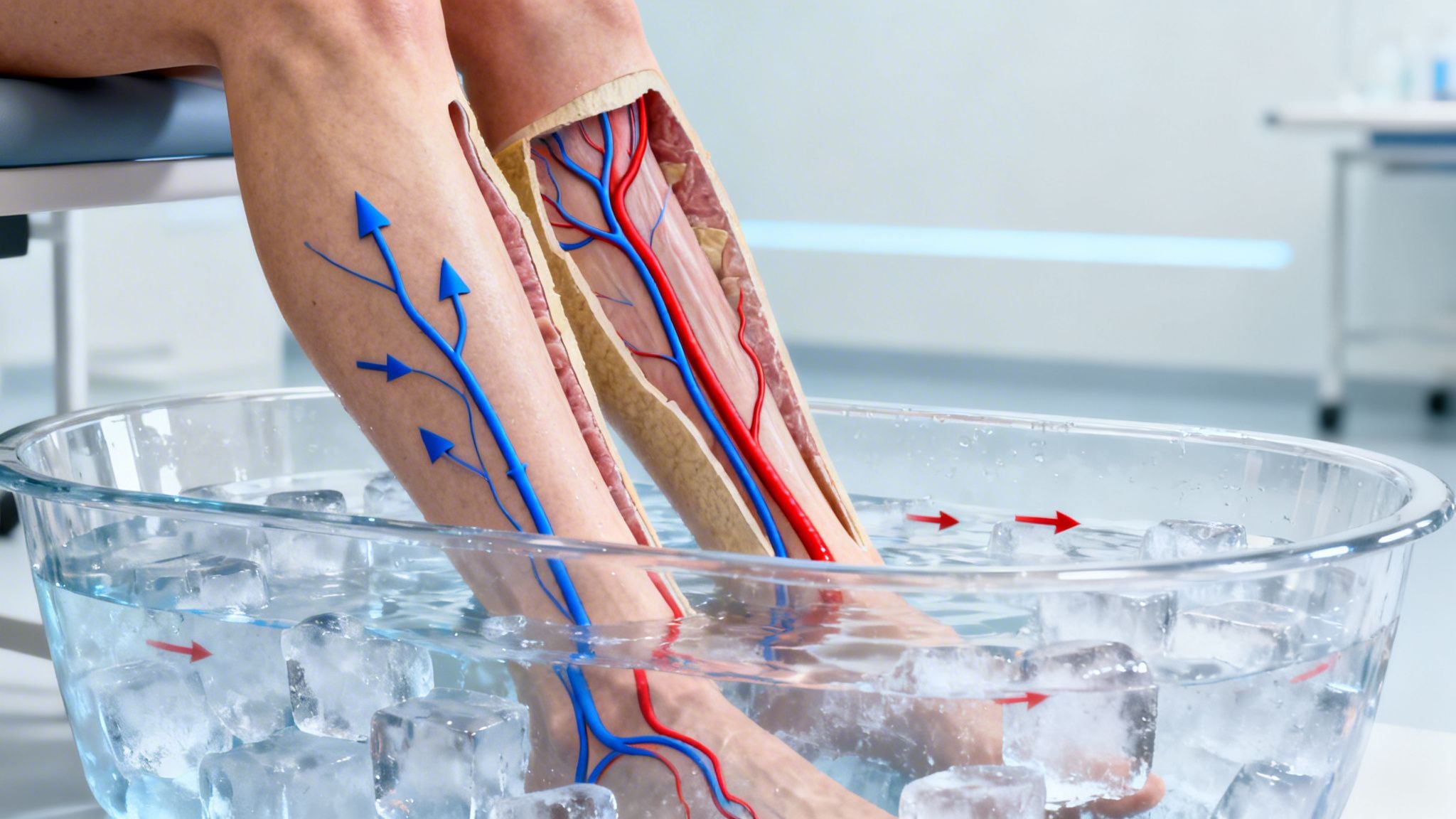
So, what’s really going on in your muscles when you take that icy plunge? It’s easy to think of an ice bath as just a mental challenge, but there’s a powerful physiological process at work that can dramatically influence your recovery.
Think of your circulatory system like a network of city streets. After a tough workout, your muscles are like a downtown core gridlocked with traffic. That "traffic" is a mix of metabolic waste products and inflammatory cells rushing to the site of microscopic muscle damage, which is what causes that familiar swelling and soreness.
When you step into an ice bath, you’re basically telling your body to call in the traffic cops.
The Role of Vasoconstriction
The primary mechanism at work here is vasoconstriction—the narrowing of your blood vessels. The intense cold is a powerful signal that tells your body to tighten up the blood vessels in your limbs to keep your core warm and protected.
In our city analogy, this is like temporarily closing down a bunch of side streets leading into that congested downtown area.
This narrowing has two immediate effects that help with muscle soreness:
- It cuts down on swelling and inflammation. By restricting blood flow to your tired muscles, vasoconstriction limits the amount of fluid and inflammatory cells that can pool in the tissue.
- It numbs the pain. The cold dulls the sensitivity of your nerve endings, which turns down the volume on the pain signals being sent to your brain. This is why that initial ache often seems to melt away after a few minutes in the tub.
But this initial clamp-down is really just setting the stage. The most important part of the process happens after you get out.
The Rebound and Flush Effect
Once you step out of the cold water and start to warm up, your body flips the script. It kicks off vasodilation, causing your blood vessels to open back up—often wider than they were before.
This creates a powerful "flush" effect.
Imagine the city suddenly reopening all those closed roads and adding a few extra lanes. A surge of fresh, oxygen-rich blood rushes back into your muscle tissues. This powerful flow flushes out the metabolic byproducts, like lactic acid, that were causing the gridlock and soreness. At the same time, it delivers a fresh supply of nutrients your muscles desperately need to repair themselves.
This rapid shift from constriction to dilation acts like a pump for your circulatory system. It’s a passive way to enhance your body's natural cleanup and repair process without any additional physical effort.
This shows that the real magic of an ice bath isn't just the cold itself, but the entire cycle of cooling and rewarming. The protocol—how deep you go, for how long, and at what temperature—is everything. For instance, studies show that cold immersion right after exercise can reduce muscle soreness, but the benefits vary. When athletes immerse themselves, their cardiac output can jump by up to 102%, a powerful cardiovascular response that happens without any added energy expenditure. You can learn more about the physiological responses to cold water immersion to see how specific protocols can change the outcome.
When you understand this mechanism, you can see that using an ice bath for muscle soreness isn't about "toughing it out." It’s a deliberate strategy to manipulate blood flow, get a handle on inflammation, and speed up the delivery of healing resources—helping your body get you back to 100%.
Your Guide to a Safe and Effective Ice Bath
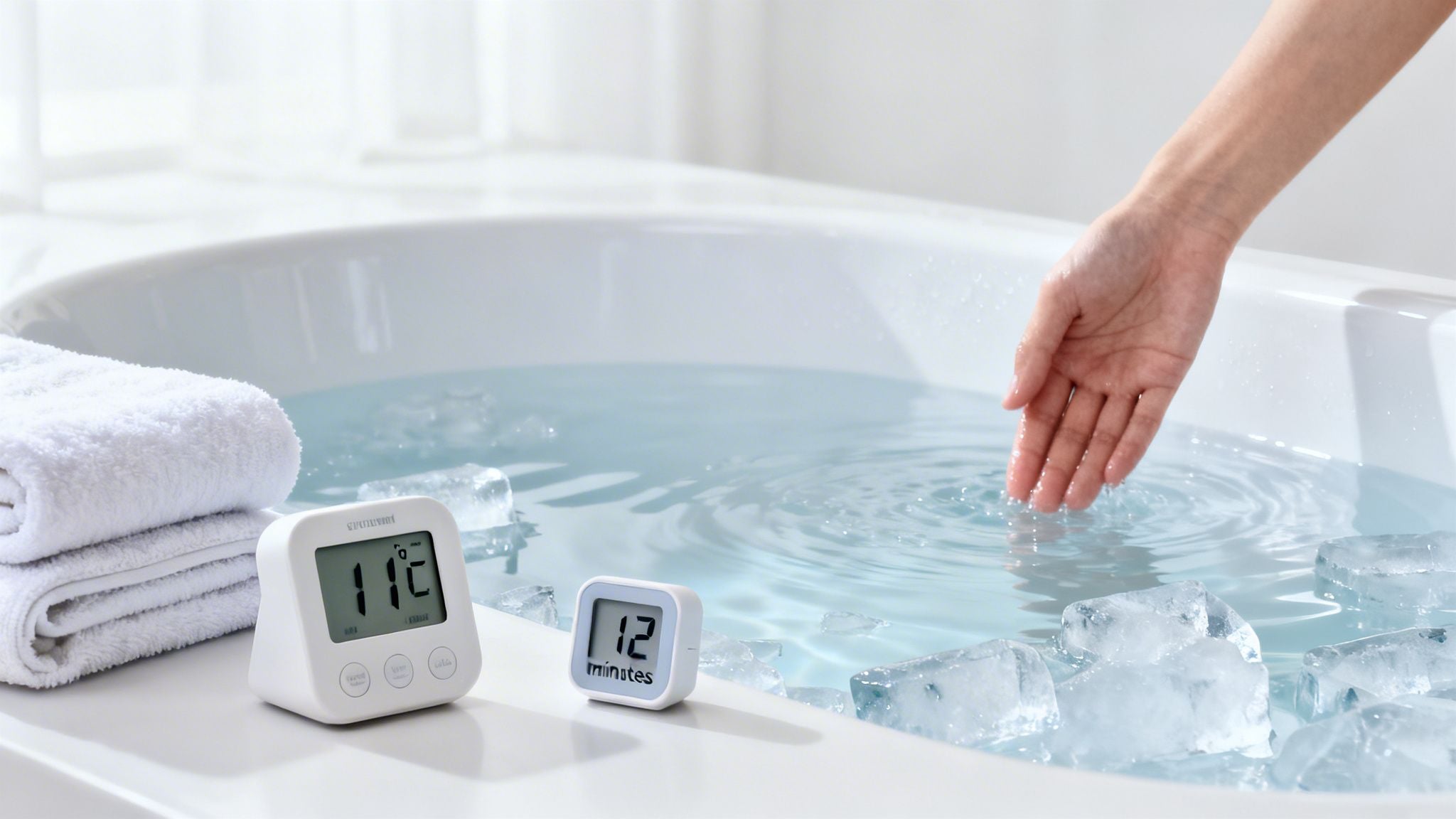
If you're ready to give ice baths a try for your muscle soreness, getting the "dose" right is everything. Think of it like a prescription from your PT—the temperature, how long you stay in, and when you do it are the ingredients for success. Without a clear plan, it's just an uncomfortably cold bath.
We're going to walk through a practical, step-by-step protocol that’s grounded in what we know works. This is about making sure your efforts actually help you recover, so you can get back to your life and the activities you love.
The Three Keys to a Proper Ice Bath
To get the real benefits of cold water immersion, you need to manage three key variables. Let's break down the protocol that the research, and our own clinical experience, shows works best for soothing those aching muscles.
Temperature: The sweet spot is between 50-59°F (10-15°C). It’s a common mistake to think that colder is better, but dipping into water that’s close to freezing won’t give you extra benefits. It just dramatically increases the risk of nerve issues or frostbite. A simple floating thermometer is your best friend here. Don't guess.
Duration: You’re looking for 10 to 15 minutes. Staying in longer doesn’t speed up recovery. In fact, after about 15 minutes, you hit a point of diminishing returns where the risks start to outweigh the rewards. Set a timer and stick to it.
Timing: The best time to take the plunge is right after a tough workout, ideally within one to two hours. This allows you to get ahead of the inflammatory process before it really kicks into high gear.
Think of this as your starting point. Not all soreness is created equal, and as we'll see, you can fine-tune the protocol to hit different recovery targets. The most important thing is to be consistent and pay attention to how your body responds.
Targeting Specific Recovery Goals
This "dosing" can get surprisingly specific. We’re not just throwing numbers out there; recent research shows how dialing in the temperature and time can change the outcome of your ice bath.
For instance, if your main goal is to reduce the actual biochemical markers of muscle damage—like the creatine kinase (CK) levels we can measure in the blood—the science points to a slightly colder bath. A dip of 10-15 minutes at 41-50°F (5-10°C) seems to be the most effective for that.
But what if you're just trying to quiet down that nagging feeling of delayed-onset muscle soreness (DOMS)? For that, a slightly warmer immersion of 10-15 minutes at 52-59°F (11-15°C) appears to work best.
Ice Bath Protocol Temperature vs Duration
The table below breaks down these subtle but important differences. It shows how you can adjust the "prescription" to better match what you're trying to achieve.
| Recovery Goal | Optimal Temperature | Optimal Duration | Effectiveness Notes |
|---|---|---|---|
| Reduce Muscle Damage Markers (CK) | 41-50°F (5-10°C) | 10-15 minutes | Best for post-competition or after a workout that caused significant muscle breakdown. This is a more intense protocol. |
| Alleviate DOMS (Soreness) | 52-59°F (11-15°C) | 10-15 minutes | The gold standard for general post-workout recovery. Effectively reduces the perception of soreness without being excessively cold. |
| General Recovery & Inflammation Control | 50-59°F (10-15°C) | 10-15 minutes | A balanced approach that provides a good mix of benefits. This is the best starting point for most people. |
This shows that the effectiveness of an ice bath isn't a one-size-fits-all deal. It's highly dependent on getting the parameters just right, and you can actually explore the full research on immersion protocols to see just how much these small tweaks matter.
Your Step-by-Step Plunge Plan
Ready to put it all together? Here’s a simple, PT-approved plan for your first plunge.
Prep Your Space: Fill your tub with cold water first, then start adding ice. Use your thermometer to dial in that 50-59°F sweet spot. Have a timer, a watch, and some warm towels ready and within arm's reach.
The Initial Plunge: Let’s be honest, the first 60-90 seconds are the toughest. Your body will have a "cold shock" response. The key is to focus on slow, deep, controlled breathing. Exhale as you get in. Your body will adapt, and the intense feeling will pass.
During the Bath: Submerge the muscle groups that did the most work. Now’s the time to distract yourself—put on some music, listen to a podcast, or just focus on your breathing. And remember, never stay in longer than 15 minutes.
Rewarming Gradually: This part is just as important. Get out of the tub carefully (your coordination might be a little off) and dry off immediately. Wrap yourself in a warm robe or dry towels. Avoid the temptation to jump straight into a hot shower—that rapid temperature shift can make you lightheaded or dizzy. A lukewarm shower or just moving around gently is a much safer bet.
Sometimes, you might just have one sore area. Is a full-body plunge necessary? For that, you can read our guide on using ice packs in physical therapy to see when a targeted cold pack might be a better choice.
Is the Plunge Worth It? Weighing the Benefits and Risks

So, is an ice bath for muscle soreness really worth the shock to your system? The answer involves weighing some pretty significant benefits against some very real risks. While the practice can be a game-changer for recovery, it's definitely not a one-size-fits-all solution.
Getting a clear picture of both sides of the coin is the only way to make a safe, smart choice that fits your personal health needs. The main draw is fast, drug-free pain relief, which can feel like a lifesaver after a tough workout. But understanding the full story is key to deciding if this tool has a place in your wellness routine.
The Upsides of a Cold Plunge
For most people, the main reason to brave the chill is the immediate drop in post-exercise pain. That intense cold constricts your blood vessels, which helps put the brakes on the inflammatory process that leads to swelling and that familiar muscle ache.
But it’s not just about dulling the pain. There are a few other powerful advantages to consider:
- Turns Down the Pain Signals: The cold literally numbs your nerve endings. Think of it as turning down the volume on the pain signals being sent to your brain, offering instant (though temporary) relief.
- Reduces Swelling and Inflammation: By tightening up blood vessels, ice baths can limit how much inflammatory fluid pools in your muscle tissue. This can mean less swelling and less secondary damage after a hard effort.
- May Improve Sleep Quality: Some people swear by an evening ice bath for better sleep. The drop in your core body temperature can act as a powerful signal to your body that it’s time to wind down, potentially leading to deeper, more restorative rest.
- Builds Mental Toughness: Let’s be honest—getting into freezing water is a mental battle. Doing it consistently can build a kind of mental fortitude that carries over into your workouts and other parts of your life.
These are the reasons why ice baths have stuck around as a go-to recovery method for athletes who need to bounce back fast between games or training sessions.
The Downsides and When to Be Cautious
Of course, the conversation isn't complete without talking about the risks. This is a practice you need to approach with respect, and for some people, it should be avoided altogether. The biggest concern for many active individuals is the potential hit to muscle growth.
Frequent use of ice baths right after a strength workout might actually blunt your gains. The very anti-inflammatory effect that eases soreness can also interfere with the critical cellular signals your body needs to build bigger, stronger muscles—a process known as hypertrophy.
What this means in practice is that an endurance athlete might benefit from regular plunges to manage soreness, while a strength athlete focused on building mass might want to use them much more selectively, if at all.
It's also worth noting that the science isn't totally settled. For instance, a 2026 study in PLOS One that looked at muscle recovery in young women found no major difference in muscle strength, soreness, or swelling between those who used cold water immersion and those who didn't. This just goes to show that results can vary, and you can discover more about these findings on women's muscle recovery to see the full picture.
Absolute Contraindications: When You Should Never Take the Plunge
Patient safety always comes first. For certain medical conditions, ice baths aren't just a bad idea—they're dangerous. These are considered absolute contraindications.
You should never use an ice bath if you have:
- High Blood Pressure or Heart Disease: The sudden, intense cold can cause a sharp spike in blood pressure and place a serious strain on your heart.
- Raynaud's Phenomenon: This condition causes an extreme circulatory reaction to cold, leading to numbness and dangerously poor blood flow in your fingers and toes.
- Open Wounds or Skin Conditions: Soaking open cuts or certain skin issues like eczema in non-sterile cold water is a recipe for infection or major irritation.
- Cold Urticaria: This is essentially an allergy to cold that can cause hives, swelling, and other serious allergic reactions upon exposure.
It can also be tricky figuring out whether to use ice or heat for a given issue. For a deeper dive, you might find it helpful to read our guide on when to use ice versus heat. When in doubt, the best move is always to talk to a physical therapist or your doctor before you even think about taking the plunge.
Comparing Ice Baths to Other Recovery Methods
An ice bath is a powerful tool, but it’s just one tool in the recovery toolbox. There’s no single “best” method for every person or every workout. The right choice depends on your specific goals, the type of exercise you just finished, and even your personal preferences.
Think of it this way: an ice bath is a very specific intervention, like using a targeted anti-inflammatory cream. It's fantastic for acute soreness. Other methods are more like daily stretching or a healthy diet—they support the body's overall maintenance and repair systems in different ways. A physical therapist can help you figure out which tools to use and when, building a personalized strategy for your long-term health.
Active Recovery: The Gentle Approach
The most accessible recovery method is something you’re probably already doing: active recovery. This is simply low-intensity exercise performed after a tough workout. Think of a light walk, a slow bike ride, or some gentle stretching.
The goal isn’t to push yourself; it’s to keep your blood flowing. This sustained, gentle circulation helps your body do its job—shuttling metabolic waste out of your muscles and delivering fresh oxygen and nutrients—all without adding more stress to your system.
- When to Use It: Active recovery is a foundational practice that's great after almost any workout, especially on days when you feel sore but still want to move.
- How It Compares: It's far less intense than an ice bath. Instead of constricting blood vessels to blunt inflammation, it supports the body's natural cleanup process.
Contrast Therapy: The Pumping Action
Contrast water therapy is exactly what it sounds like—alternating between hot and cold water. A typical routine might involve three minutes in a warm bath followed by one minute in a cold one, repeated for several cycles.
This method creates a “pumping” action in your circulatory system. The warm water causes blood vessels to open up (vasodilation), and the cold water makes them clamp down (vasoconstriction). This rapid switching effectively pumps blood through your tissues, which can help flush out byproducts and reduce stiffness.
Contrast therapy is like a workout for your blood vessels. It actively stimulates circulation, aiming to enhance the "flush" effect that ice baths achieve more passively during the rewarming phase.
It can be a good middle ground for people who find a full ice bath too intense or want to combine the benefits of both heat and cold.
Compression Garments and Other Tools
Beyond water therapies, a few other common tools can make a big difference in how you feel. Compression garments, like recovery tights or sleeves, apply mechanical pressure to your limbs. This pressure can help limit how much swelling you get and improve circulation, making them a popular choice after hard workouts or for long travel days.
Similarly, other popular tools offer their own unique benefits:
- Foam Rolling: This is a form of self-myofascial release that can help break up knots, ease muscle tension, and improve flexibility.
- Massage: A good sports massage can manually push fluid out of the muscles and break down adhesions, offering highly targeted relief where you need it most.
These methods work differently than an ice bath, but they all share the same overarching goal: helping you recover faster so you can get back to doing what you love. The best recovery plan is almost always a combination of several strategies, tailored by a professional to meet your unique needs and goals.
When Your Muscle Soreness Is a Sign of Injury
While an ice bath for muscle soreness can be a fantastic recovery tool, it’s designed for the normal aches and pains that follow a tough workout—not an actual injury. Knowing how to tell the difference between standard Delayed Onset Muscle Soreness (DOMS) and the pain that signals a real problem is one of the most important things you can learn for your long-term health.
Pushing through an injury you’ve mistaken for soreness can turn a minor setback into a major one, keeping you away from the activities you love for far longer than necessary. Your body is great at sending signals when it needs professional attention. Learning to listen is the key to staying active and healthy for years to come.
Red Flags to Watch For
DOMS usually feels like a dull, widespread ache in the muscles you trained. It tends to peak 24 to 48 hours after your workout and then gradually gets better. Injury pain, on the other hand, has some very distinct characteristics you should never ignore.
Here are the clear red flags that mean you should skip the ice bath and see a physical therapist instead:
- Sharp, Stabbing Pain: Muscle soreness is a dull ache. If you feel a sharp, localized, or shooting pain, that’s a classic sign of an injury like a muscle tear or ligament sprain.
- Pain That Lasts More Than 3 Days: If your "soreness" isn't getting better after 72 hours—or if it's getting worse—it’s probably more than just DOMS.
- Pain Centered on a Joint: While muscles get sore, pain felt deep in a joint like your knee, shoulder, or ankle points to potential damage to ligaments, cartilage, or other joint structures.
- Significant Swelling or Bruising: A little puffiness can be normal, but obvious swelling, especially if it’s focused on one spot or comes with discoloration, indicates tissue damage.
- Loss of Movement or Function: If the pain stops you from moving a limb through its full range of motion or you can’t put weight on it, that’s a serious warning sign.
Ignoring these symptoms can lead to chronic pain, instability, and a much longer, more complicated recovery down the road.
How a Physical Therapist Can Help
As the leading teaching practice in New England, Highbar is committed to helping the next generation of physical therapists practice at the top of their license. That commitment starts with how we treat our patients. Our first job is to act as a movement detective, performing a thorough evaluation to diagnose the true root cause of your pain—to figure out why it happened in the first place.
A physical therapist’s goal isn’t just to make you feel better, but to help you move better. We create a personalized action plan that addresses the underlying issue, restores your function, and gives you the tools to prevent the problem from coming back.
Your treatment plan will be designed specifically for you, using evidence-based techniques to get you back to 100%. This often includes:
- Hands-On Manual Therapy: We use skilled techniques to improve mobility in your joints and soft tissues, which helps reduce pain and restore proper movement patterns.
- Targeted Therapeutic Exercise: You’ll get a specific program of exercises designed to strengthen weak spots, improve flexibility, and correct the imbalances that might have led to the injury.
- Personalized Education: We empower you with knowledge about your body. We’ll teach you how to manage your condition, modify your activities safely, and prevent future injuries.
If your soreness feels more like an injury, don't wait. Book an appointment with a Highbar physical therapist today and start your journey back to health with a team dedicated to helping you live fully and without limitations.
Answering Your Top Questions About Ice Baths
Jumping into the world of cold-water recovery can bring up a lot of questions. As physical therapists dedicated to practicing at the top of our license, we’re passionate about providing clear, evidence-based answers to help you make informed decisions. Here are our straightforward answers to the most common questions about using an ice bath for muscle soreness.
How Often Can I Take an Ice Bath?
When it comes to ice baths, less is often more. Think of them as a specific tool, not a daily habit.
For an endurance athlete deep in a heavy training block, one or two a week might be just right to manage that deep-seated soreness. But for strength-focused athletes, using them too often can actually get in the way of muscle growth.
A good rule of thumb is to save them for after your most punishing workouts or competitions.
Can I Eat Before or After an Ice Bath?
It’s best to wait a bit. Digestion pulls blood toward your stomach and intestines, which can compete with the very circulatory effects you’re trying to get from the cold water.
Try to leave about an hour on either side of a big meal. This lets your body focus on one major task at a time. A small, post-workout snack is usually no problem, though.
What if I Can’t Stand the Cold?
Don't worry, you don’t have to do a full, icy plunge on day one. Most people build up their tolerance over time.
Here's how to ease into it:
- Start with cold showers. Just finish your normal shower with 30-60 seconds of cold water.
- Begin with warmer water. Your first few baths don't have to be freezing. Start at the higher end of the recommended range, around 59°F (15°C).
- Go in gradually. Start by just putting your legs in. As you get more comfortable over a few sessions, you can work your way up to submerging your torso.
Do I Need to Submerge My Whole Body?
Nope. Just focus on the muscles that did the work.
If you just crushed a long run, immersing your legs and hips is all you need. There’s no real benefit to submerging your upper body if those muscles aren’t sore. It just makes the experience less pleasant. And you should never, ever submerge your head.
Targeting the right areas makes the whole process more efficient and a lot more manageable.
If you're dealing with pain that feels like more than just standard soreness, it's time to get a professional diagnosis. At Highbar Physical Therapy, our expert team can help you find the root cause of your discomfort and create a personalized plan to get you moving freely again. Book your appointment online today and start your journey back to living a full, active life.