A wrist fracture usually starts the same way. You catch yourself from a fall, miss a step, slide on ice, or take a hit during sports. Then comes the sharp pain, swelling, the X-ray, and one of the first treatment questions you hear: Will this need a splint or a cast?
Most patients think that choice is only about what they’ll wear for a few weeks. It’s bigger than that. The device used to protect your wrist can affect comfort, swelling, hygiene, early motion, and what rehab feels like once the bone is stable enough to move again. In a practical sense, splint vs cast for wrist fracture is really a question about the entire recovery process, not just the first appointment.
Both can work well. Neither is automatically “better” in every case. The right option depends on fracture stability, swelling, alignment, age, and how reliably you can follow instructions at home.
Your Wrist Fracture First Steps
The first few hours after a wrist fracture are often a blur. Your wrist hurts, your hand may swell quickly, and you’re trying to follow instructions while worrying about work, sleep, driving, and whether you’ll need surgery.
A common urgent care or ER sequence looks like this: exam, X-ray, discussion of whether the bones are lined up well enough, then a decision about how to immobilize the wrist. Sometimes that means a temporary splint right away. Sometimes it leads to a cast after swelling settles. Sometimes the answer depends on a follow-up visit with orthopedics.

What matters most in the first day
At this stage, the main priorities are simple:
- Protect the fracture: The bone needs support so the injured area doesn’t shift.
- Control swelling: Early swelling can change how tight a device feels within hours.
- Confirm stability: The imaging tells the clinician whether the fracture is likely to stay in position.
- Plan the next step: Some people leave with a temporary setup and a short-term recheck.
Both splints and casts are tools. Your doctor chooses the one that best protects the fracture you actually have, not the one that seems most convenient in the moment.
Patients often feel more in control once they know what to ask. Is the fracture stable or unstable? Is this temporary because of swelling? Will the wrist be re-imaged? When can finger movement start? Those questions matter because recovery doesn’t depend on the device alone. It depends on using the right device at the right time, then following through.
Why Your Wrist Needs to Be Immobilized
A broken bone heals best when the injured parts stay in the right position long enough for the body to rebuild the area. That’s the basic reason immobilization matters. If the wrist moves too much, the healing bone can shift, heal crooked, or stay painful longer than it should.
Wrist fractures are especially sensitive to this because the wrist is involved in nearly everything. You use it to push up from a chair, type, grip a steering wheel, carry groceries, turn a doorknob, and brace yourself during everyday movements. Even small repeated motions can stress a fresh fracture.
Stable fractures and unstable fractures
The word stable matters a lot. A stable fracture is one that’s well aligned and less likely to move out of place once it has been positioned properly. An unstable fracture has a greater risk of shifting, collapsing, or losing alignment.
That difference usually drives the splint-versus-cast decision more than comfort does.
- Stable fractures may be managed with less rigid immobilization if the clinician believes alignment will hold.
- Unstable fractures usually need stronger control because the bone fragments can drift.
- Fresh injuries with major swelling often need a device that can accommodate changing pressure.
- Fractures that required reduction need close monitoring because holding the new position is critical.
What immobilization actually does
Immobilization isn’t only about stopping pain. It serves several jobs at once:
- Limits motion at the fracture site so early healing tissue isn’t disrupted.
- Protects alignment while swelling rises and then slowly falls.
- Reduces secondary irritation from repeated movement of injured soft tissue.
- Creates a safer starting point for rehab once the bone is stable enough to progress.
Practical rule: The “best” device is the one that keeps the fracture protected without creating preventable problems like excessive pressure, skin breakdown, or poor compliance.
Patients sometimes assume more rigid always means better. It doesn’t. Too little support can be a problem, but so can using a rigid setup when swelling is still evolving or when a removable option would safely improve hygiene and comfort. The right match depends on the fracture pattern and the phase of healing.
An In-Depth Comparison of Splints and Casts
A splint and a cast can look similar from the outside because both support the wrist. In practice, they behave differently.
A splint usually supports one side of the wrist and forearm, then uses wrapping or straps to hold that support in place. A cast surrounds the area more completely and creates a more rigid cylinder of protection. That difference affects swelling, skin care, comfort, and how much motion the wrist can tolerate safely.
Splint vs. Cast At a Glance
| Feature | Splint | Cast |
|---|---|---|
| Support level | Strong support, but less circumferential than a cast | More rigid, more complete circumferential support |
| Swelling accommodation | Better early on because it can allow room for swelling | Less forgiving if swelling increases after application |
| Adjustability | Easier to adjust or remove if your clinician allows it | Not designed for patient adjustment |
| Hygiene | Often easier to manage because skin access may be possible | Harder to keep skin clean under the cast |
| Comfort | Often feels more tolerable in the acute phase | Can feel secure, but may become tight or cumbersome |
| Best use cases | Fresh injuries, swelling, some stable fractures, selected pediatric cases | Fractures needing firmer control after swelling settles |
| Risk profile | More dependent on patient compliance | More restrictive, with greater concern for pressure and skin issues |
How they differ in real life
Splints are often the practical first choice after a fresh injury because wrists swell. A device that can better accommodate that swelling is safer and often more comfortable in the first phase.
Casts become useful when the priority shifts toward holding alignment with maximal consistency. Once swelling is more predictable, a circumferential cast can provide firm containment that doesn’t depend on the patient reapplying it correctly.
A cast controls motion more completely. A splint offers more flexibility. The trade-off is that flexibility helps only if the fracture is stable enough and the patient uses it exactly as instructed.
What adult research suggests
In adults with distal radius fractures, a 2024 JAMA Network Open randomized clinical trial involving 110 adults found that topology-optimized splints produced better short-term outcomes than traditional casts after closed manual reduction and 6 weeks of immobilization. At 6 weeks, the splint group had better wrist function, with median PRWE scores of 15 (IQR 13-18) versus 17 (IQR 13-18) in the cast group, with a mean difference of -2.0, 95% CI -3.4 to -0.6, P=0.03. The splint group also had greater pain reduction at 2 weeks and 6 weeks, less swelling at 2 weeks, and fewer complications. By 12 weeks, clinically significant functional differences were no longer present, and radiographic findings were comparable.
That’s useful because it reflects what many clinicians see. In the early phase, comfort and swelling management matter a lot. Over time, though, the gap may narrow if healing progresses as expected.
Materials and feel
You may hear different material terms during treatment:
- Plaster: Often molds well but can feel heavier.
- Fiberglass: Common for casts, lighter, and durable.
- Thermoplastic or prefabricated supports: Common in some splints and custom braces.
Patients usually care less about the material name than the day-to-day experience. Does it feel too tight? Can you sleep in it? Can you keep the skin healthy? Can you follow instructions without guessing? Those are the questions that shape outcomes.
Which Is Best for Your Specific Wrist Fracture
The short answer is this: the fracture decides.
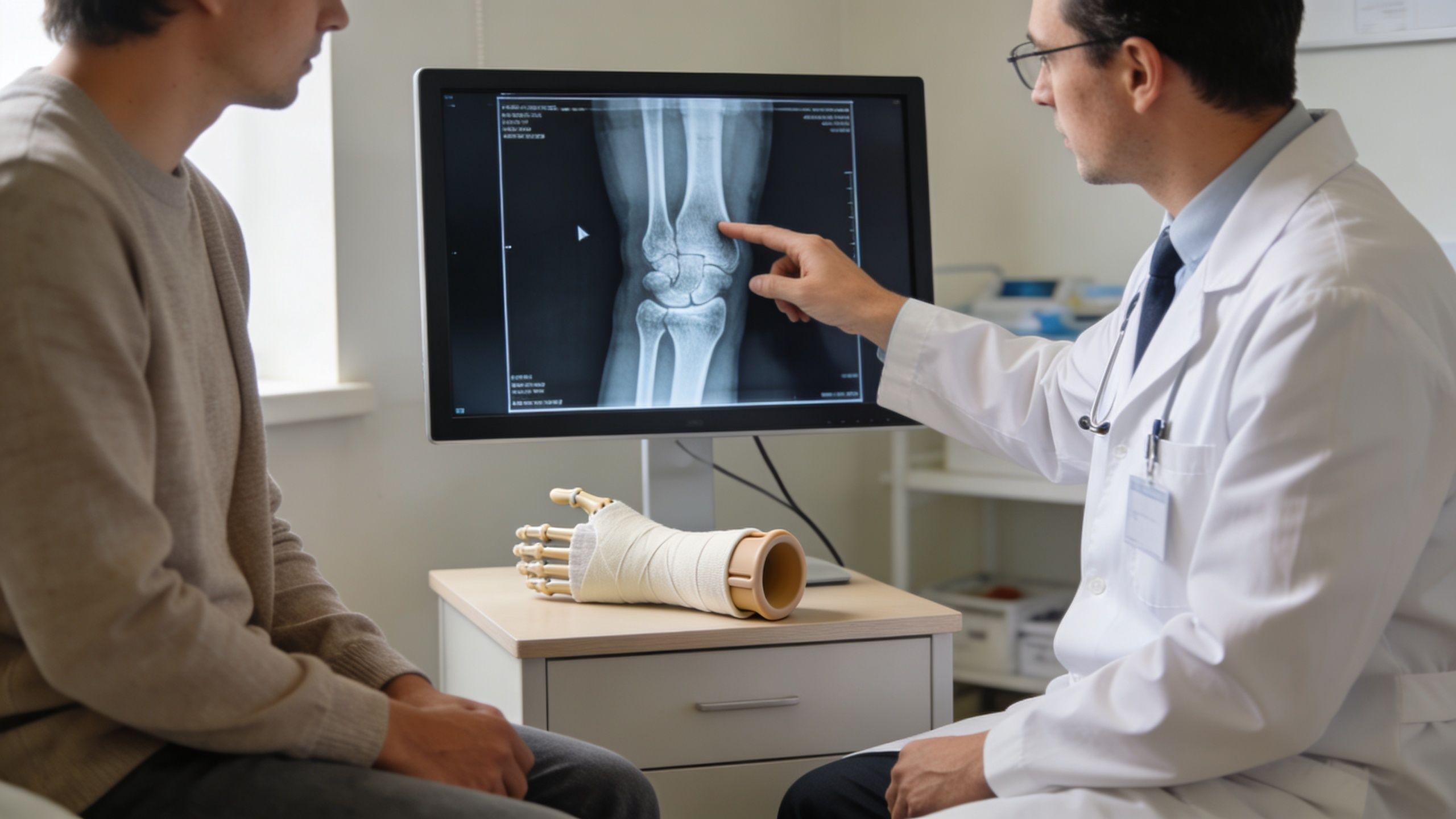
A clinician doesn’t choose between a splint and a cast based on preference alone. They look at the X-ray, how much the wrist is swollen, whether the fracture is displaced, whether a reduction was needed, and whether the pattern is likely to remain stable over time.
When a splint often makes sense
A splint is commonly used right after injury because swelling changes quickly. Even when a cast may eventually be used, the first immobilization device is often a splint so the wrist has room during the acute phase.
Splints may also be appropriate for stable, non-displaced, or minimally displaced fractures where the risk of shifting is lower. They can be especially useful when hygiene is important and the treating team is confident the patient will follow instructions closely.
In children, selected wrist fractures are a strong example. A 2011 randomized trial summarized by AAFP reported that for children ages 5 to 12 with minimally angulated greenstick or transverse distal radius fractures, splinting was as safe and effective as casting for 4 weeks. At 6 weeks, 68% of children in the cast group wished they had a splint, while only 12% of children in the splint group wished they had a cast. Parent preferences showed the same pattern.
When a cast is usually the better choice
A cast becomes more likely when the fracture needs stronger control and less room for user error.
Common reasons include:
- The fracture is unstable: Alignment may not hold with a removable device.
- The wrist required reduction: Once the bone is repositioned, the treating team may want firmer immobilization.
- There is concern about compliance: A removable device only works if it stays on when it should.
- The fracture pattern is more complex: More rigid containment can reduce unwanted motion.
A practical way to think about it
Here’s the simplest framework patients can use:
- Fresh and swollen: splint is often favored first.
- Stable and low risk: splint may remain appropriate.
- Unstable or alignment-sensitive: cast is often safer.
- Child with a selected minimally displaced fracture: splint may be a very reasonable option.
- High-risk pattern or poor follow-through expected: cast may protect the healing process better.
If your doctor starts with a splint and later changes to a cast, that doesn’t mean something went wrong. It often means the treatment is adapting to the stage of healing.
The goal isn’t convenience. The goal is healing in the best possible position, with the least avoidable stiffness, skin trouble, and disruption to daily life.
Managing Daily Life Pain and Swelling
The first week is usually the most awkward. Your wrist hurts, your hand feels heavy, and ordinary tasks suddenly require planning. You will often do better once you focus on a few basics instead of trying to “tough it out.”
What helps in the first several days
Start with position. Elevation matters more than many patients realize. When possible, keep your hand above heart level, especially after walking, showering, or any activity that makes the hand throb.
Cold can also help. If your clinician says it’s appropriate, use a cold pack around the area without getting the device wet. If you’re unsure when to use ice versus warmth during recovery, this guide on heat vs cold compress choices is a useful reference.
For medication, follow the plan given by your treating clinician. If you’ve been told to use over-the-counter options, a practical overview of dosing Tylenol and Ibuprofen can help you understand how people commonly alternate them safely, but your own doctor’s instructions should always come first.
Day-to-day adjustments that make life easier
Some problems are mechanical, not medical. You’ll feel better if you adapt quickly.
- Getting dressed: Choose loose sleeves, front-opening tops, and clothing you can put on with one hand.
- Sleeping: Rest the arm on pillows so the wrist isn’t hanging down and swelling overnight.
- Typing and phone use: Keep sessions short. Stop if finger swelling or throbbing increases.
- Showering: Protect a cast carefully from water. If you have a removable splint, only remove it for hygiene if your clinician has clearly allowed that.
- Hand movement: Move the fingers often unless you’ve been told otherwise. Gentle finger motion helps limit stiffness.
Splint-specific and cast-specific tips
If you’re wearing a splint, don’t assume removable means optional. Reapply it exactly as instructed. A poorly positioned splint can become almost as problematic as no splint at all.
If you’re in a cast, resist the urge to stick anything inside it to scratch. That’s a common way people irritate the skin or create small wounds they can’t see.
The best home strategy is boring and consistent. Elevate, protect, move the fingers, and avoid testing the wrist before it’s ready.
Potential Risks and What to Watch For
Both splints and casts are effective. Both can also cause problems if the fit is poor, swelling changes quickly, or instructions aren’t followed.
The key is knowing the difference between expected discomfort and warning signs.
Problems more commonly linked to casts
Casts are rigid and protective, which is why they work well for many fractures. That same rigidity can become a problem if swelling increases and there isn’t enough room inside.
Call your doctor promptly if you notice:
- Numbness or tingling: Especially if it’s new or worsening.
- Finger color changes: Pale, bluish, or unusually dark fingers need attention.
- Severe tightness: A cast that feels progressively tighter is not something to ignore.
- Burning spots or pressure pain: These may suggest skin irritation or a pressure area.
- Inability to move the fingers normally: Especially if this change is sudden.
Very severe pain out of proportion to what you expect, especially with rapidly increasing pressure, is urgent. That can signal a serious swelling problem.
The hidden risk with splints
The main risk with a splint is different. It’s not usually that the device is too rigid. It’s that patients may use its flexibility poorly.
A review discussing compliance concerns with removable immobilization notes that removability helps hygiene and comfort, but it also creates an underappreciated risk of non-compliance. Patients may remove the splint too early or too often, which can allow the fracture to displace. That’s why clear education and a structured home plan matter.
A removable splint works only when the patient treats it like prescribed protection, not like a convenience item.
What else deserves attention
Watch for fit problems in either device:
- Too loose: The wrist shifts, the support slides, or the hand no longer feels held securely.
- Too tight: Swelling increases, fingers feel puffy, or pain rises instead of settling.
- Skin issues: Redness, odor, drainage, or raw spots deserve a call.
- After surgery: If you’ve had an operation and later need rehab, scar management becomes part of the picture. This article on how to prevent scar tissue after surgery explains why early guided care matters.
Patients do best when they report changes early. Waiting several days on a bad fit rarely fixes the problem on its own.
Physical Therapy The Key to Full Recovery
Many people think they’re done once the splint or cast comes off. That’s rarely true. The bone may be healing, but the wrist, hand, and forearm are usually stiff, weak, and poorly coordinated after immobilization.
At this stage, recovery either becomes complete or stalls out.

What changes after immobilization
Even when the fracture heals well, the body pays a price for being held still. Common issues include:
- Joint stiffness: Flexion, extension, and rotation often feel blocked.
- Weak grip strength: Holding a mug, opening a jar, or carrying a bag may feel surprisingly hard.
- Finger and thumb tightness: The whole hand can become less efficient.
- Forearm weakness: Muscles above and below the wrist often decondition too.
- Protective movement patterns: People stop trusting the hand and avoid loading it.
Patients sometimes call this “my wrist still feels broken.” Often it isn’t broken in a dangerous way. It’s just deconditioned, guarded, and stiff.
How splint and cast recovery can differ
Research compares early fracture outcomes more often than long-term rehab needs. A discussion of this gap in the literature points out that while many studies focus on the first weeks, they don’t fully answer how the initial immobilization choice affects later physical therapy. Clinically, therapists often see that splinted patients begin with somewhat better motion, while casted patients may start stiffer. With a structured rehab program, casted patients can often catch up well over time.
That matches what matters most in practice. The quality of rehabilitation often matters more than the initial device once the fracture is stable enough to progress.
Early differences in comfort are real. Long-term success usually depends on guided mobility, strength work, and a smart return to loading.
What physical therapy typically works on
A strong PT plan is specific. It doesn’t just hand you a printout and hope for the best.
Treatment often includes:
Mobility work
The therapist checks wrist motion, forearm rotation, finger mobility, and soft tissue restrictions. Hands-on treatment may help reduce guarding and improve joint motion.Strength rebuilding
Grip, pinch, forearm control, and shoulder support all matter. If the wrist is weak, the rest of the arm often compensates poorly.Functional retraining
Rehab should connect to real tasks. Typing, lifting pans, pushing from a chair, using tools, exercising, or returning to sport all load the wrist differently.Load progression
The wrist has to relearn tolerance gradually. Too much too soon can flare pain. Too little for too long leaves weakness in place.
Why patients recover better with guidance
The most common mistake after immobilization is doing either too little or too much. Some patients baby the wrist for weeks because they’re afraid to move. Others decide the cast is off, so everything must be fine, then overload the joint immediately.
Neither approach works well.
If you need focused hand and wrist rehab, a clinician with experience in hand therapy and upper extremity rehabilitation can build a plan around your fracture type, healing stage, and daily demands. The goal isn’t just range of motion on a chart. It’s getting back to work, exercise, driving, lifting, and normal use without lingering limitation.
Frequently Asked Questions About Wrist Immobilization
Can I get my splint or cast wet
A cast generally needs to stay dry unless your treating team has given you a waterproof option and specific instructions. Water trapped inside a cast can irritate skin and create odor or breakdown.
A splint may be easier to manage for hygiene, but only remove it if your clinician has said that’s safe. If the splint is meant to stay on full time, treat it that way.
Is itching normal
Mild itching can happen. Aggressive scratching is not safe, especially inside a cast. Don’t slide pens, hangers, or other objects under the material.
Call your doctor if itching comes with burning, odor, wetness, drainage, or skin pain.
How tight is too tight
A device may feel snug at first. That alone isn’t always a problem. It becomes concerning when tightness is paired with finger swelling, numbness, tingling, color change, or increasing pain.
If your hand looks different or feels progressively worse, don’t wait for your next routine visit.
What if my splint feels loose
That matters. A loose splint may not control the wrist well enough to protect the fracture. Contact the clinic that applied it and ask whether it needs adjustment.
Don’t solve this by wrapping it tighter on your own unless you were taught exactly how to do that.
Can I drive with a wrist fracture
That depends on the injured side, your pain level, your medication use, and whether you can control the vehicle safely. Many patients are not ready to drive early on, especially if they’re in a bulky immobilizer or taking pain medication that affects alertness.
Ask your doctor for clear guidance before returning to driving.
When can I type or work on a computer again
Light typing may be possible earlier than lifting or pushing, but comfort and swelling often limit how long you can do it. Start with short sessions, take breaks, and stop if symptoms build.
The ability to type doesn’t mean the wrist is ready for all work duties. Repetitive strain still counts as load.
Should I worry about the cost side if this happened in an accident
If your fracture happened in a car crash, work incident, or another situation involving an injury claim, it’s reasonable to understand the legal and insurance side along with the medical recovery. For a general overview of how injury claims may be discussed, this Scher, Bassett & Hames compensation guide can provide background. It isn’t a substitute for legal advice, but it can help you understand the kinds of issues people ask about.
What’s the biggest mistake patients make
Usually one of two things: they stop protecting the wrist too soon, or they never fully commit to rehab once protection is no longer needed.
Healing the bone is one job. Restoring full function is another.
If your wrist still feels stiff, weak, or unreliable after a fracture, working with a physical therapist can help you regain motion, strength, and confidence. Highbar Physical Therapy offers individualized care to help you move from basic healing to full function.