That dull ache between your shoulder and neck at the end of a desk day often isn’t just a “tight shoulder.” The sharp pinch you feel reaching into a high cabinet may not be coming only from the ball-and-socket joint either. In many cases, the problem starts with the scapula, the shoulder blade that has to move well if your arm is going to move well.
The scapula is often thought of as a flat bone on the back. Clinically, it’s much more useful to think of it as the moving base of the entire shoulder. If that base tips, wings, rotates poorly, or loses muscle control, the rest of the shoulder pays for it.
For patients, that explains why shoulder pain can feel stubborn and oddly inconsistent. For PT students and new clinicians, it explains why local pain at the front or side of the shoulder often has a driver somewhere around the rib cage, thoracic spine, or scapular stabilizers.
More Than Just a Shoulder Blade
The scapula is the bone many people point to when they say, “It hurts back here.” But it’s not just a bony plate under the skin. The scapula connects the humerus, or upper arm bone, with the clavicle, or collar bone, making it a key part of shoulder function. Its name comes from the Latin word for “trowel” or “small shovel” because of its flat, blade-like shape, and it develops from at least seven centers of ossification according to the scapula anatomy reference on Wikipedia.
That developmental complexity matters. The scapula isn’t a simple slab of bone. It’s built to provide both stability and motion, which is exactly why shoulder rehab can’t treat it as an afterthought.
A useful analogy is a crane. Your arm is the boom reaching out into space. The scapula is the base that has to reposition underneath it. If the base doesn’t turn and tilt when it should, the arm can still move, but the movement becomes noisy, inefficient, and often painful.
The shoulder is highly mobile because the scapula is allowed to move. That same freedom is also why poor control shows up so quickly.
In practice, a lot of shoulder problems begin when people stretch what feels tight, rub the sore spot, or strengthen the rotator cuff in isolation, yet the pain keeps returning. Often the missing piece is scapular mechanics. The shoulder blade has to sit in a useful position at rest, then glide, rotate, and stabilize during reaching, lifting, pushing, and pulling.
That’s why understanding the scapula helps both the person with shoulder pain and the student learning shoulder evaluation. If you know what this bone is supposed to do, common problems like winging, impingement, rotator cuff irritation, and postural overload start to make more sense.
Anatomy of the Scapula Your Shoulders Anchor
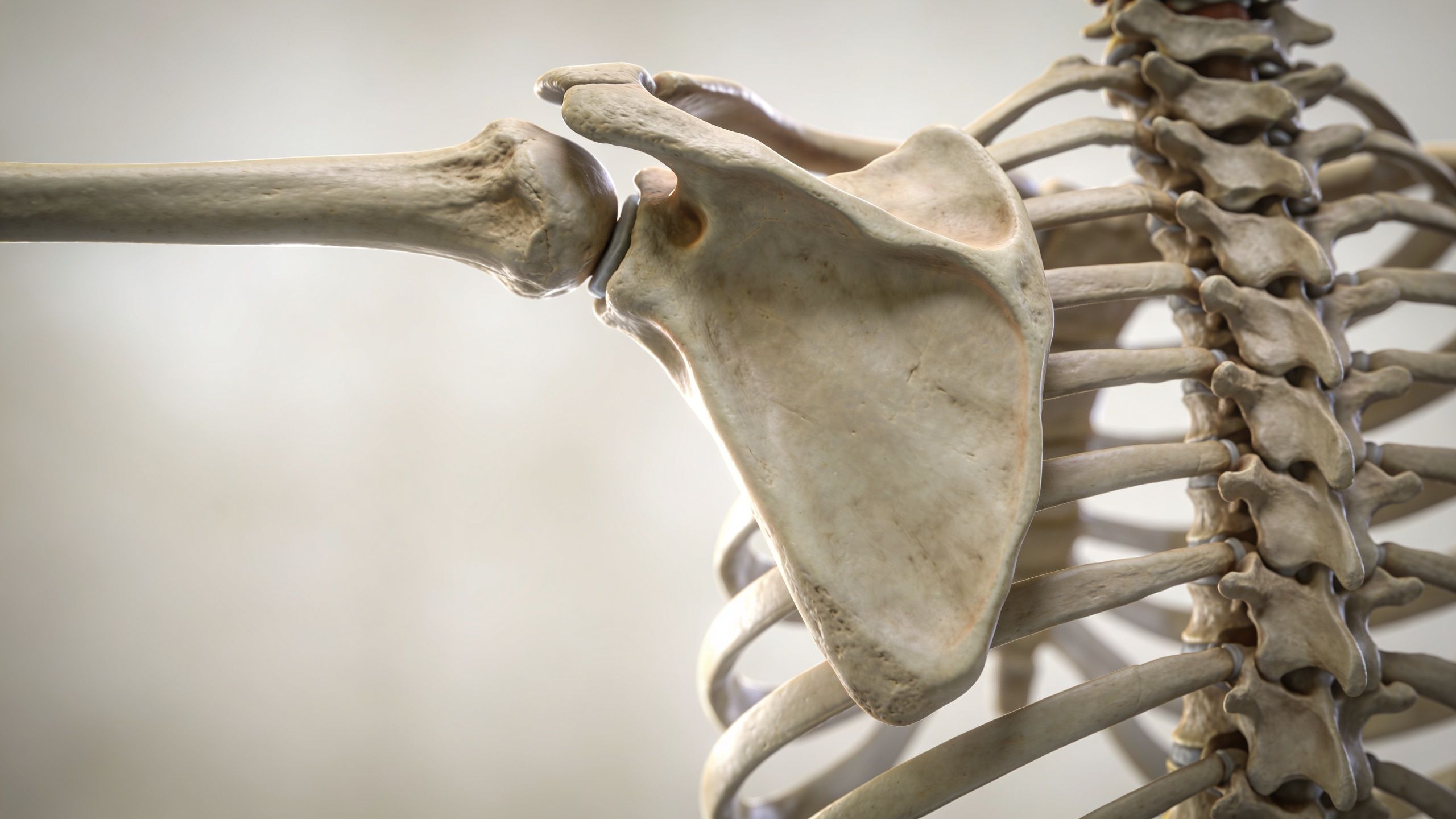
The scapula works like a floating anchor. It doesn’t lock rigidly to the rib cage. Instead, it rides on the thorax and gives the arm a mobile platform. That combination is what makes overhead motion possible.
The landmarks that matter clinically
The glenoid is the shallow socket on the lateral side of the scapula, where the head of the humerus meets the scapula to form the glenohumeral joint. “Shallow” is the key word. The shoulder trades bony stability for motion, which means the scapula has to help position that socket well.
The acromion is the bony roof at the top and outside of the scapula. It helps form the top of the shoulder and contributes to the space where tendons move. If scapular motion is poor, that space can become less favorable during elevation, which is one reason movement quality matters as much as tissue health.
The coracoid process is the hook-like projection on the front. It serves as an attachment point for important soft tissues and acts like a front-mounted handle for muscular and ligamentous control.
The spine of the scapula divides the back surface into upper and lower regions and affords key muscles mechanical advantage. Follow it laterally and you reach the acromion. Follow it medially and you have one of the easiest landmarks to palpate in an exam.
The medial border and inferior angle are especially useful in physical therapy. They help us see whether the scapula is staying flush to the rib cage, drifting into winging, or rotating too little or too much during arm motion.
Why the scapula isn’t just a bone chart
A bone chart teaches where structures are. A good shoulder exam asks what each structure contributes.
- Glenoid: Orients the socket for efficient arm motion
- Acromion: Helps create the roof over the shoulder
- Coracoid process: Anchors several important soft tissue structures
- Spine and borders: Give clinicians visual and tactile landmarks during movement assessment
- Inferior angle: Often reveals whether upward rotation is happening smoothly
If you want an intuitive model, think of the scapula as the base plate under a camera tripod head. The arm can point in many directions, but the base still has to stay controlled.
The team of muscles that controls the scapula
No single muscle “owns” scapular movement. It’s a coordinated group effort.
| Muscle | Primary Action on Scapula | Clinical Relevance |
|---|---|---|
| Serratus anterior | Protraction, upward rotation, helps keep scapula against rib cage | Weakness often contributes to winging and poor overhead mechanics |
| Upper trapezius | Assists elevation and upward rotation | Can become overactive when other stabilizers underperform |
| Lower trapezius | Assists upward rotation and posterior control | Often needs retraining in people with overhead pain |
| Middle trapezius | Retraction and stabilization | Helps control scapular position during pulling tasks |
| Rhomboids | Retraction and downward rotational influence | Useful stabilizers, but over-recruitment can limit smooth upward rotation |
| Levator scapulae | Elevation and downward rotational influence | Often feels “tight,” but stretching alone rarely fixes the full problem |
| Pectoralis minor | Pulls scapula forward and into anterior tilt | Stiffness can bias the scapula into a poor resting position |
| Rotator cuff | Centers humeral head relative to scapular socket | Works best when the scapula provides a stable base |
The trapezius deserves special attention because patients often identify “trap pain” without realizing it reflects a larger movement issue. If that area is a recurring problem, this guide on trapezius muscle pain treatment helps connect local symptoms to broader shoulder mechanics.
Clinical shortcut: If the scapula loses position, even strong shoulder muscles can start producing poor movement.
For students, the big takeaway is simple. Learn the landmarks, but don’t stop there. Ask what each structure does during motion, and which muscle team is supposed to control it.
Scapular Biomechanics How Your Shoulder Blade Should Move
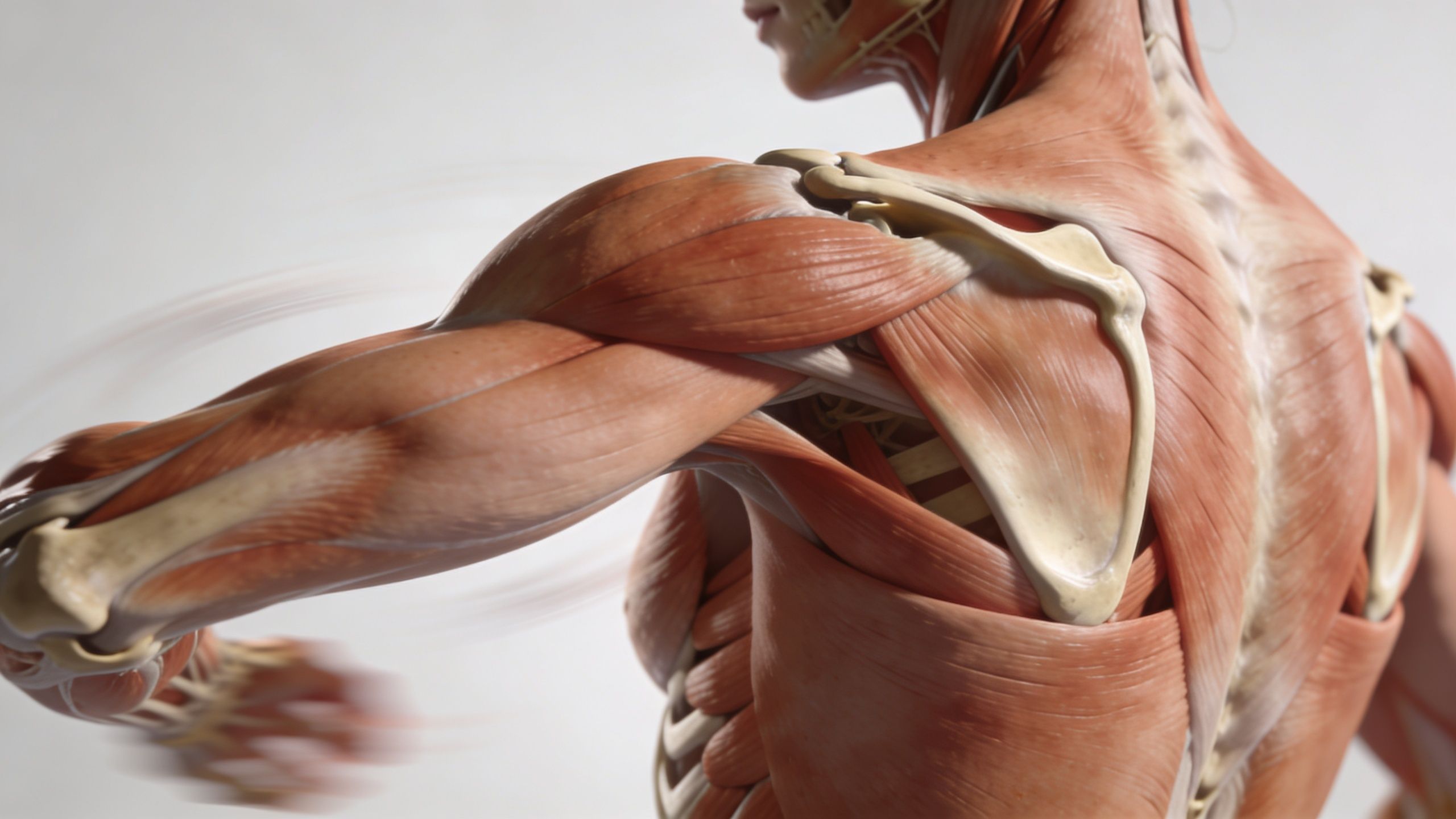
A patient reaches for a plate on the top shelf and feels a pinch halfway up. The arm looks like the problem, but the movement often starts breaking down at the shoulder blade.
The scapula is supposed to move continuously on the rib cage as the arm lifts, lowers, pushes, and pulls. It does not hold one fixed “good posture” position. Good biomechanics means the scapula changes position at the right time, in the right direction, with enough control to give the ball-and-socket joint a stable base. The American Council on Exercise outlines these scapular actions clearly in its review of shoulder girdle and scapula movements.
What normal movement looks like
During arm elevation, the scapula should upwardly rotate, posteriorly tilt, and externally rotate enough to keep the socket oriented well for the moving humerus. In plain language, the shoulder blade has to clear space, stay flush to the rib cage, and avoid getting dragged into an early shrug.
That is why I watch the lowering phase as closely as the lifting phase. A patient may get the arm overhead, but if the scapula dumps forward, wings, or jerks on the way down, control is still missing.
Three motions matter in daily function:
- Upward rotation: helps with reaching overhead, placing dishes away, and pressing
- Protraction and retraction: help with pushing a door, reaching forward, hugging, and rowing
- Tilt control: helps maintain shoulder clearance and joint efficiency during arm motion
Where movement often breaks down
The serratus anterior and the upper and lower trapezius have to work as a team. The serratus anterior keeps the scapula connected to the rib cage and helps drive upward rotation. The lower trapezius helps guide posterior tilt and steady the shoulder blade as the arm rises. If that partnership is weak or poorly timed, patients usually compensate with an early shrug, rib flare, neck tension, or lumbar extension.
Those compensations are not random. They are the body finding another way to get the hand overhead when the scapula is not doing its share.
This is also why “shoulders back and down” is bad advice for many people with overhead pain. That cue can lock the scapula into depression and downward rotation, which makes overhead motion harder, not better. A better goal is controlled motion, not stiffness.
How muscle imbalance turns into symptoms
A stiff pectoralis minor can hold the scapula in more anterior tilt and internal rotation. That resting bias narrows the margin for clean overhead movement before the arm even starts. If the serratus anterior is also underperforming, the medial border may lift off the rib cage and the shoulder can develop a winging pattern during pushing or reaching.
If someone spends long hours rounded forward, opening the front of the chest can help. A doorway pec stretch for the chest and front shoulder is often useful. It works best when paired with retraining, because extra mobility without better control usually gives only short-term relief.
For PT students, this is the practical framework. First check the resting position. Then watch active motion under low load and under challenge. Finally, connect the visible movement fault to the muscle groups that should be controlling it. That is how scapular biomechanics becomes useful in the clinic, not just memorized anatomy.
Common Scapular Injuries and Pathologies
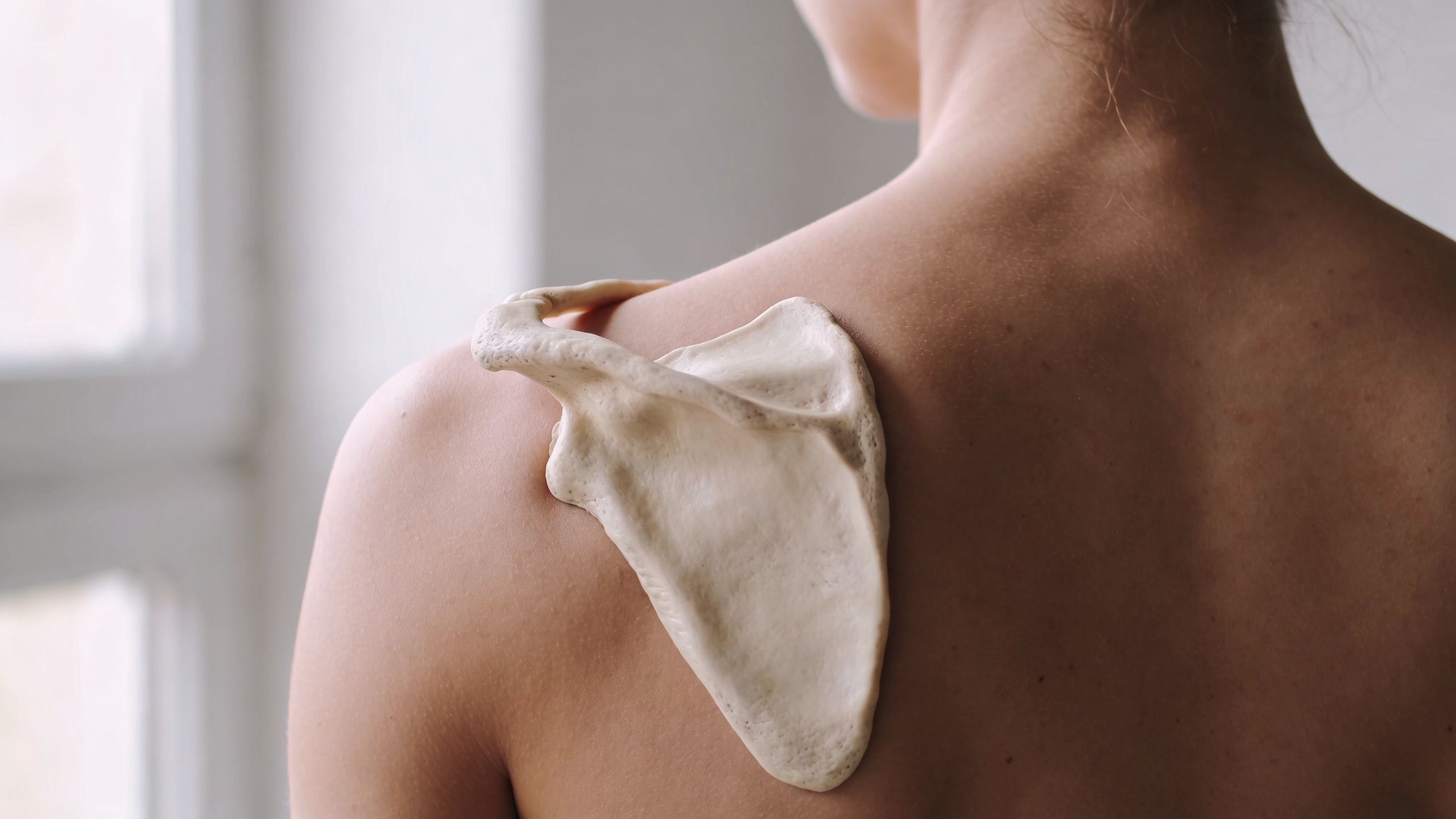
Not every painful shoulder problem starts in the rotator cuff. Often the scapula is the part that sets the problem up.
Scapular dyskinesis
Scapular dyskinesis means the shoulder blade isn’t moving with normal timing, position, or control. Patients usually don’t use that term. They say things like:
- “My shoulder blade sticks out.”
- “My shoulder feels off when I lower my arm.”
- “I can lift it, but it catches.”
- “One side looks different in the mirror.”
The visual pattern can include winging, tipping, early shrugging, or reduced upward rotation. Sometimes the scapula looks mostly normal at rest and only loses control during motion or under load.
For PT students, this is the important distinction. Dyskinesis is not just a posture snapshot. It’s a movement problem.
Impingement and rotator cuff overload
When the scapula doesn’t rotate or tilt well, the shoulder loses an efficient base. The result is often pain at the front or side of the shoulder during reaching, pressing, throwing, or sleeping on that side.
Clinically, this is why a person can have “impingement symptoms” but the underlying driver is poor scapular control. The cuff may be irritated, but the movement system has usually been making the cuff work in a less favorable position.
What doesn’t work well is chasing pain alone. Patients often rub the sore tendon, strengthen randomly, or stop all upper-body exercise. Those approaches may calm symptoms temporarily, but they don’t correct the reason the shoulder keeps getting overloaded.
If the scapula fails to support the arm, the rotator cuff has to solve a positioning problem it was never meant to solve alone.
Winging
A winged scapula is one of the clearest signs of scapular dysfunction. The medial border or inferior angle becomes more prominent, especially during pushing or lowering the arm.
Sometimes winging reflects muscle inhibition and poor motor control. Sometimes it reflects nerve involvement. Sometimes it’s a compensation pattern after pain, surgery, or prolonged guarding. The point is that visible winging deserves a proper exam, not a generic internet exercise list.
Scapular fractures
Scapular fractures are different from movement dysfunction. They usually result from significant trauma, not from poor office posture or overuse. They’re uncommon, occurring in less than 1% of all torso trauma cases, but over 70% of patients with a scapular fracture have associated injuries such as rib fractures, pulmonary contusion, or fractures of the clavicle or humerus, according to this review of scapula fractures.
That matters because shoulder trauma can look deceptively simple from the outside. A patient may focus on shoulder pain while missing the larger injury picture.
What needs prompt medical attention
Seek urgent assessment after trauma if you have:
- Severe pain after a collision or fall: Especially if moving the arm is difficult
- Visible deformity or major swelling: This can suggest fracture or dislocation
- Pain with breathing or chest symptoms: Associated injuries are a real concern
- Loss of strength or sensation: This may indicate nerve involvement
For everyday overuse pain, the pattern is different. Symptoms usually build with activity, fatigue, or poor load tolerance. That’s where movement-based rehab becomes central.
How Physical Therapy Evaluates Scapular Function
A patient reaches to put a carry-on bag in the overhead bin and feels a pinch at the front of the shoulder. Another can do a few push-ups with no problem, then the shoulder blade starts drifting off the rib cage by rep six. Those two complaints can come from very different impairments, even if both get labeled “shoulder pain.”
That is why scapular evaluation is a movement exam, not just a pain check. I want to know how the shoulder blade behaves at rest, how it moves with the arm, what happens under fatigue, and which nearby regions are forcing it to compensate.
First, we watch before we touch
The exam starts with observation. The scapula should sit against the rib cage with a quiet resting position, but rest alone does not tell the whole story. Some patients look symmetrical standing still and lose control as soon as they reach overhead, lower a weight, or push through the arm.
Clinicians commonly assess visible dyskinesis during repeated arm motion and compare what changes with assistance or repositioning. The Scapular Dyskinesis Test described by the American Society of Shoulder and Elbow Therapists is useful here because it focuses on what the scapula does during real movement, not just on static posture.
I also watch the rib cage and thoracic spine early. A stiff upper back, flared ribs, or a guarded neck can change scapular mechanics before the shoulder even starts moving.
What a PT is looking for during movement
The shoulder blade works like the foundation of a crane. If the base is unstable or poorly timed, the arm can still go up, but the effort shifts to the wrong places.
During active motion, a physical therapist looks for:
- Upward rotation: Does the scapula rotate enough as the arm lifts, or does the patient substitute with an early shrug?
- Posterior tilt and external rotation: Does the blade clear the rib cage well, or does it tip forward and crowd the front of the shoulder?
- Winging: Does the medial border or inferior angle lift away from the ribs, suggesting poor serratus anterior control, fatigue, or nerve-related weakness?
- Timing: Does scapular motion match the arm, or is it late, abrupt, or jerky?
- Load tolerance: Does the pattern break down with repetition, carrying, pushing, or lowering the arm?
The lowering phase matters. Many patients can muscle the arm overhead, then lose control on the way down because eccentric control is weaker than the lift itself.
How muscle imbalance turns into movement problems
This is the part patients and new PT students both need. A muscle is rarely “bad” on its own. The problem is usually coordination, stiffness, weakness, or overuse in a system.
If the serratus anterior is underperforming, the scapula often loses upward rotation and rib cage contact. The upper trapezius may then work too hard to lift the shoulder girdle, which looks like shrugging and often feels like neck tension. If the pectoralis minor is stiff and the thoracic spine stays flexed, the scapula can sit tipped forward, making overhead motion feel pinchy. If the rotator cuff is also weak or painful, the humeral head may not stay centered well, and the shoulder has even less room to move cleanly.
That is how a “posture problem” becomes a movement problem, and then a pain problem.
The exam does not stop at the scapula
Scapular dysfunction is often secondary. The driver may be glenohumeral stiffness, rotator cuff pain, cervical referral, thoracic immobility, post-surgical guarding, or simple deconditioning.
A good evaluation checks shoulder range of motion, cuff strength, thoracic extension and rotation, rib mobility, cervical screening, and task-specific mechanics. Someone who swims, lifts, welds overhead, or spends all day at a laptop will not fail for the same reason. That is one reason broader discussions of physiotherapy for busy professionals can be helpful. Daily demands shape both the problem and the treatment plan.
I also use symptom modification tests. If manual support into upward rotation improves pain or range, that tells me the scapula is part of the problem and also points toward treatment. For readers who want context on where hands-on care fits, this overview of manual therapy in physical therapy explains how therapists use it to improve motion and reduce guarding while retraining movement.
The takeaway is simple. We are not just checking whether the shoulder blade moves. We are figuring out why it moves that way, which tissues are driving the pattern, and which corrections effectively change the task in front of us.
Evidence-Based Treatment for Scapular Pain and Dysfunction
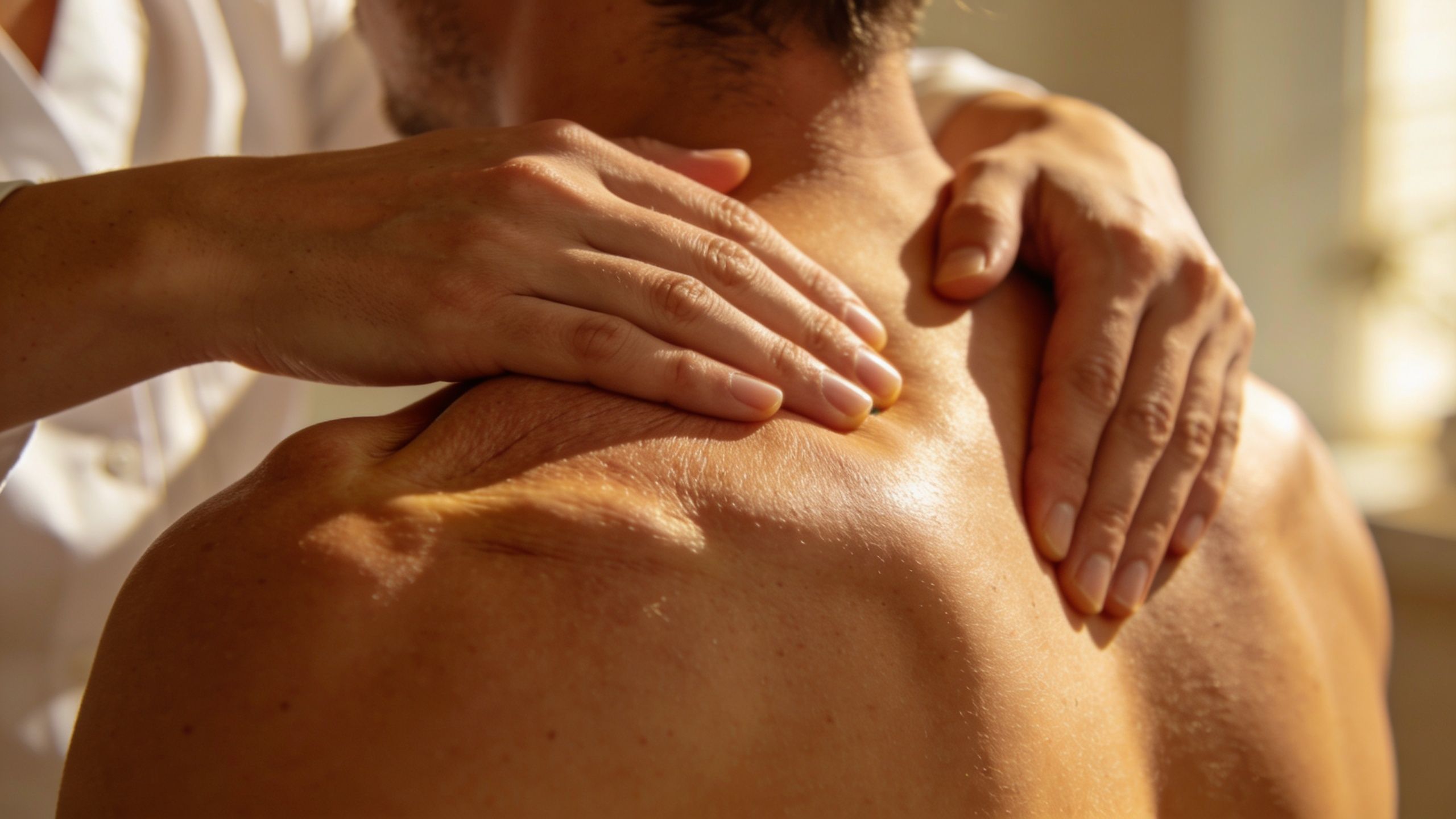
Scapular rehab works best when it addresses three problems at once. First, the tissues and joints have to allow the scapula to move. Second, the right muscles have to turn on with the right timing. Third, the patient has to carry that pattern into real tasks.
A generic handout usually misses at least one of those.
Manual therapy creates room to move
Hands-on treatment doesn’t “put the scapula back in place.” That’s not how good rehab works. What manual therapy can do is reduce guarding, improve soft tissue mobility, and help neighboring regions move better so the scapula has a better mechanical environment.
That often includes work around the chest wall, posterior shoulder, upper back, or thoracic spine. A stiff front of the shoulder girdle can bias the scapula into a tipped or forward posture. Thoracic stiffness can make upward rotation harder. Local tenderness around the upper trapezius or medial border often reflects overwork from compensation.
If you want a practical overview of where hands-on treatment fits, this explanation of manual therapy in physical therapy breaks down how therapists use it as one part of a broader plan.
Exercise fixes the control problem
Treatment becomes specific at this point. The best exercise is not the one that looks impressive. It’s the one the patient can perform with the right scapular mechanics.
The most common progression is simple to complex.
Early phase goals
Early rehab usually focuses on awareness and low-load activation. The patient has to feel where the scapula is and learn how to move it without defaulting to shrugging or trunk compensation.
Examples include:
Wall slide with control
Stand facing a wall with forearms supported. Slide upward while keeping the neck relaxed and allowing the shoulder blades to rotate upward smoothly.
Goal: Rehearse upward rotation and reduce early shrugging.Supine serratus reach
Lie on your back with the arm pointed toward the ceiling. Reach upward without bending the elbow, lifting the shoulder blade slightly around the rib cage rather than jamming the shoulder forward.
Goal: Activate serratus anterior in a position with less compensation.Supported scapular setting
In a low-load position, practice gentle scapular control without pinching hard.
Goal: Build awareness of neutral control rather than rigid retraction.
Middle phase goals
Once the patient controls the scapula at low load, strengthening becomes more functional.
- Rows with scapular timing: Useful when the patient can retract without rib flare or neck dominance
- Closed-chain pushing drills: Helpful for co-contraction and rib cage control
- Prone or incline lower trapezius work: Useful when upward rotation support is limited
What doesn’t work is jumping to heavy rows, overhead pressing, or endless band pull-aparts if the scapula still tips, wings, or shrugs.
Stronger is not the same as better. If the movement pattern is poor, loading it harder often strengthens the compensation.
Neuromuscular re-education makes it stick
This is the part patients often describe as “learning how to use the area again.” The body has to stop defaulting to the old strategy.
That may include tactile cueing, mirror feedback, tempo changes, breathing coordination, or task-specific drills. A patient might do well in a clinic exercise and still lose the pattern while reaching into a back seat, placing luggage overhead, or performing a push-up. Rehab has to close that gap.
Personalization matters more than people think
Scapular position and mobility vary with posture, muscle development, and occupation, so a one-size-fits-all exercise program is often ineffective, as noted in this Elsevier anatomy resource on scapular variability.
That’s why two patients with “shoulder blade pain” may need very different plans. One needs thoracic mobility and serratus activation. Another needs load management and cuff integration. Another needs post-surgical progression and careful movement retraining. The right plan comes from the exam, not from the diagnosis label alone.
What patients can do between sessions
A solid home plan is usually short and repeatable. Better to do a few precise drills consistently than cycle through a long list with poor form.
Focus on:
- Quality first: Stop a rep when the shoulder starts shrugging or the rib cage flares
- Frequent practice: Skill-based drills respond well to steady repetition
- Load patience: Don’t rush back to overhead strength work before control returns
- Carryover: Practice the same mechanics in reaching, lifting, and desk posture
When treatment works, the shoulder often feels quieter before it feels stronger. Motion becomes smoother. Reaching takes less effort. The ache around the neck or blade fades because the right muscles finally share the load.
When to Seek Help for Your Shoulder
If your scapula isn’t moving well, your shoulder usually won’t feel or function well for long. The good news is that scapular dysfunction is often very treatable once someone identifies the actual movement problem.
You should get your shoulder assessed if any of these apply:
- Pain lasts more than two weeks: Especially if rest hasn’t changed it much
- Sleep is affected: Night pain often means the problem is becoming more irritable
- Daily tasks are limited: Reaching overhead, dressing, lifting, or pushing shouldn’t feel unreliable
- You notice winging or asymmetry: A visible difference in the shoulder blade deserves attention
- The arm feels weak or poorly coordinated: Especially during elevation or lowering
- You had a traumatic injury: Falls, collisions, or sudden impact need a proper screen
If your symptoms seem tied to cuff irritation, this article on healing rotator cuff injuries without surgery offers useful context on conservative care. Just remember that cuff symptoms and scapular mechanics often overlap.
The earlier you address poor movement, the easier it is to change. Waiting usually gives the body more time to rehearse compensation.
If shoulder pain, winging, or overhead difficulty is limiting you, Highbar Physical Therapy can help you get a clear evaluation and a personalized plan. Their physical therapists treat the movement problem behind the pain, not just the sore spot, so you can move with more confidence and less irritation.