You wake up stiff. Your neck still catches when you check the mirror. Your back loosens a little after a hot shower, then tightens again by lunch. You’ve stretched, rested, walked it off, maybe even tried to ignore it. But the problem keeps showing up in ordinary moments, getting out of the car, reaching overhead, turning in bed, picking up your child, finishing a workout.
That’s usually the point when people start asking a reasonable question. What is manual therapy in physical therapy, and could it help me?
Manual therapy is often misunderstood. Some people think it’s just massage. Others picture forceful cracking. In reality, it’s a much broader and more precise part of physical therapy. It’s a hands-on approach that helps your therapist assess how your joints, muscles, fascia, and nerves are moving, then use targeted treatment to reduce pain and improve function.
The important part is the word skilled. A physical therapist isn’t just applying pressure and hoping for the best. Their hands are gathering information, testing your body’s response, and adjusting in real time. Done well, manual therapy feels less like something being done to you and more like a focused conversation with your body about what it can tolerate, what it’s guarding, and what it needs next.
When Pain Lingers What Comes Next
For a lot of people, pain doesn’t arrive as one dramatic moment. It settles in.
It starts as a sore shoulder after yard work, a low back ache after a long commute, or a knee that feels “off” going down stairs. Then weeks pass. The pain sticks around. Movement gets smaller. You stop doing things without fully realizing it.
When self-care stops working
Maybe you’ve already tried the usual first steps.
- Stretching at home: It helps for a few minutes, then the stiffness returns.
- Resting more: The area calms down, but now you feel weaker and tighter.
- Heat or ice: Useful for symptom relief, but not enough to change the pattern.
That’s where hands-on physical therapy can change the conversation.
The American Physical Therapy Association defines manual therapy as skilled passive movements of joints and soft tissues to improve extensibility, range of motion, relaxation, and pain modulation through precise, anatomy-informed care, not device-based treatment, as described in this overview of manual physical therapy.
A more precise next step
If you’re dealing with a strain after lifting, a lingering sports issue, or symptoms related to more serious back injuries, the next step shouldn’t be guesswork.
Manual therapy gives your therapist a way to feel what your body is doing, where it’s restricted, where it’s overworking, and where movement breaks down. That matters because pain doesn’t always start where you feel it. A painful shoulder can be connected to a stiff upper back. A sore knee can be linked to limited hip motion. A tight low back can come from the body trying to protect a weak or guarded area.
Practical rule: If a problem keeps returning, your body usually needs more than temporary relief. It needs a better movement strategy.
That’s one reason physical therapy helps people move from symptom-chasing to actual recovery. If you want a broad look at how that process works, this overview of the benefits of physical therapy gives a useful patient-friendly starting point.
When pain lingers, what comes next isn’t more random stretching or endless waiting. It’s a more skilled assessment, a clearer plan, and treatment that helps you get back to living a fuller life.
Manual Therapy A Skilled Conversation with Your Body
The clearest way to understand manual therapy is to see it as a skilled conversation between your therapist’s hands and your body.
A conversation has give-and-take. Manual therapy does too. Your physical therapist applies pressure, support, or movement, then pays close attention to what your body says back. A joint may move freely or feel blocked. A muscle may relax or tighten to protect you. Your pain may ease when one area is supported, which tells the therapist the problem is not always where you feel it.
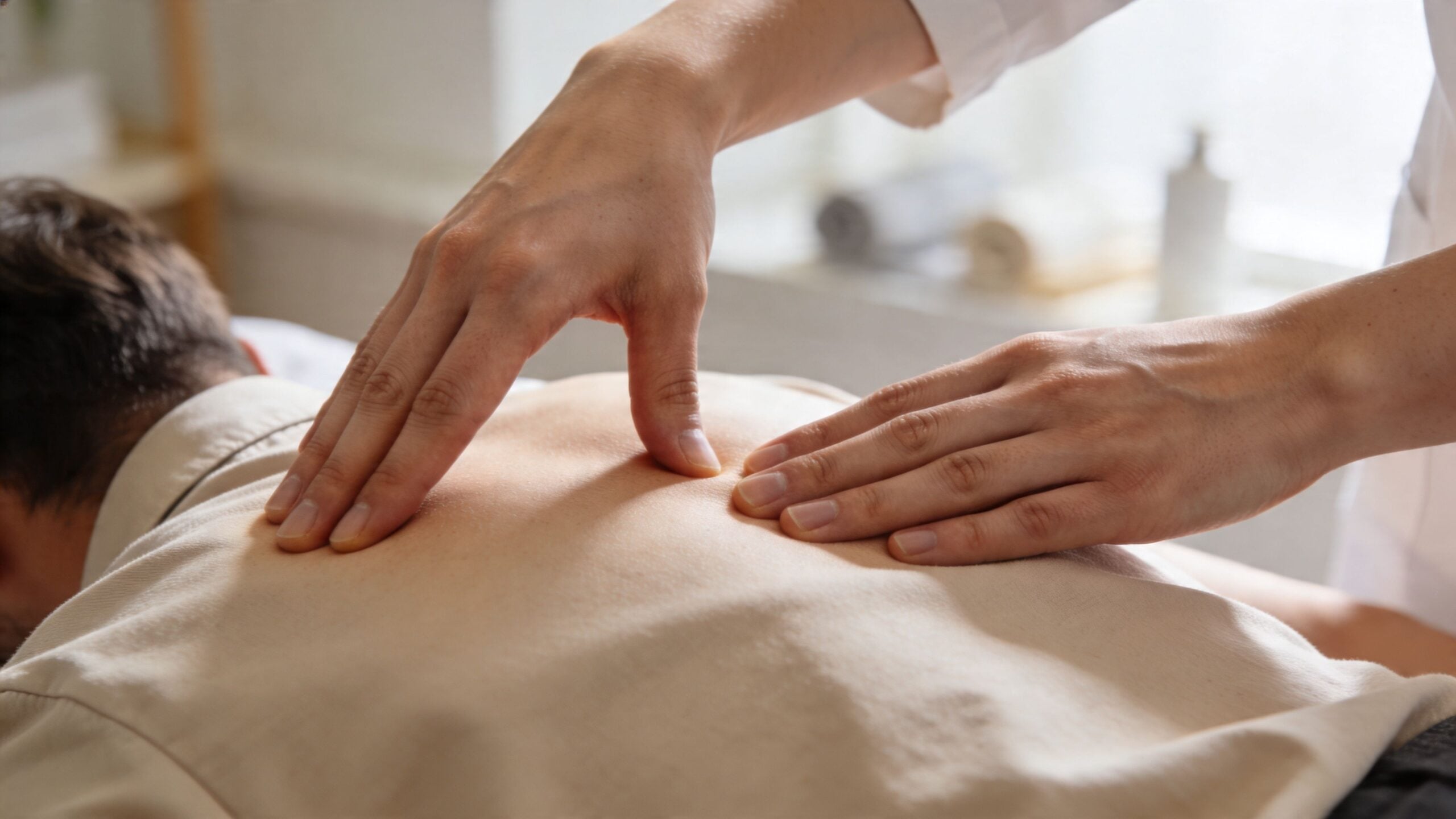
Your therapist is assessing and treating at the same time
This real-time feedback is what separates manual therapy from passive treatments.
A hot pack can warm an area. An electrical device can create a sensation. Manual therapy gives your therapist something different. It lets them feel how tissue responds from one moment to the next and adjust the force, angle, timing, and direction based on your response. In other words, the treatment is also an ongoing exam.
For that reason, two people with “the same” diagnosis often need different hands-on care. One person with neck pain may respond well to joint mobilization. Another may need soft tissue work to calm a guarded muscle. Another may improve fastest with only a small amount of hands-on care and much more exercise, pacing, and education.
It’s not the same as a spa massage
That question comes up often, and it makes sense.
Massage is often designed for relaxation. Manual therapy has a clinical purpose. Your therapist is not just working on an area that feels tight. They are testing a specific idea about why you hurt, why you feel stiff, or why a movement is hard. If they press on a tender knot in a muscle, for example, they may be addressing a trigger point. You can learn more about trigger point therapy in physical therapy.
The target might be:
- A stiff joint that is not gliding the way it should
- A guarded muscle that stays “on” after the original irritation has passed
- A sensitive nerve pathway that does not tolerate certain positions well
- A movement problem that changes once pain decreases or support improves
That is why manual therapy is rarely a stand-alone fix. At Highbar, hands-on care is used to create an opening. Once your body moves with less pain or less guarding, your therapist helps you build on that change with movement, strength, and better control.
Why the conversation matters
A good comparison is a skilled mechanic diagnosing a car noise by listening while the engine runs, not just by looking at a checklist. The therapist is doing something similar with your movement system. They are not forcing a result. They are gathering information, making a choice, and checking the effect right away.
That process often reassures patients.
You are not lying there while something mysterious happens. You are part of the feedback loop. Your therapist checks a movement, uses a hands-on technique, checks again, and then decides whether to continue, change direction, or stop. That kind of clinical reasoning is the primary value in asking what is manual therapy in physical therapy. The answer goes beyond “hands-on treatment.” It is hands-on problem solving.
A Guide to Common Manual Therapy Techniques
Manual therapy includes several different tools. They don’t all feel the same, and they don’t all target the same tissue.
Some techniques work on muscle and fascia. Others focus on joints. Others help nerves move more comfortably. The right choice depends on what your body is doing that day.
Common Manual Therapy Techniques at a Glance
| Technique | Primary Goal | What It Feels Like |
|---|---|---|
| Soft Tissue Mobilization | Reduce muscle tension and improve tissue movement | Pressure, kneading, or focused stretching |
| Myofascial Release | Address fascial restriction and improve glide | Slow sustained stretch or broad pressure |
| Joint Mobilization | Improve joint motion and reduce stiffness | Gentle repeated movement at a joint |
| Joint Manipulation | Restore motion with a quick targeted thrust | A brief, fast movement, sometimes with a pop |
| Muscle Energy Technique | Use your own muscle effort to improve motion | Gentle push against resistance, then relax |
| Neurodynamics | Help nerves move with less irritation | Light limb movements or guided nerve glides |
Soft tissue mobilization
This is one of the most familiar forms of manual therapy.
Your therapist uses their hands to work on muscles and surrounding soft tissue that feel tight, guarded, or less mobile than they should. The pressure may be broad or very specific. Sometimes it targets a sore band of muscle. Sometimes it addresses a larger region that’s compensating for something else.
It often feels like focused pressure, stretching, or kneading. Not fluffy. Not random. Purposeful.
A good analogy is smoothing a wrinkled bedsheet. You’re not tearing the fabric. You’re helping it move more evenly so the whole surface functions better.
Myofascial release
Fascia is connective tissue that helps link structures throughout the body. When it becomes restricted, movement can feel sticky or limited.
Myofascial release uses slower, sustained pressure. It’s less about rubbing and more about waiting for tissue to ease. If soft tissue mobilization feels like working a knot out of a rope, myofascial release feels more like gradually stretching a stiff leather glove so it becomes supple again.
Patients sometimes expect dramatic movement here. Instead, the effect can feel subtle during treatment, then more obvious when they stand up and move.
Joint mobilization
Joints need small accessory movements to function well. If those movements are limited, you may feel stiffness, pinching, or a sense that the area just won’t move naturally.
Joint mobilization uses repeated, controlled movements at a joint. These are graded by speed, force, and where they occur within the range of motion. Joint mobilisation uses oscillatory movements to restore motion, while joint manipulation uses a high-velocity, low-amplitude thrust. Evidence also shows dose-dependent responses, with higher force magnitudes producing greater pain relief and changes in muscle activity, according to this overview of manual therapy techniques.
What does that mean in plain language?
It means your therapist can choose a very gentle technique for pain and guarding, or a firmer technique when the goal is to improve a stiff joint’s motion. The choice isn’t arbitrary.
Joint manipulation
This is the technique people often associate with a “crack.”
Manipulation is a specific, quick movement delivered within safe anatomical limits. It’s not used on everyone. It isn’t required for successful physical therapy. And it isn’t the same as forceful twisting.
For the right patient, at the right time, it can help restore motion and reduce pain. For other patients, slower mobilization works just as well. The skill is in choosing what fits your presentation, not in using the most dramatic tool.
Muscle energy technique
This technique is more interactive.
Your therapist places you in a position, then asks you to gently contract a muscle against resistance. After a brief effort, you relax, and the therapist moves the joint or tissue a little further. This can help improve mobility and reduce protective muscle tension.
It often surprises patients because it’s so gentle. They expect hands-on care to mean something is being done entirely to them. Muscle energy technique turns treatment into a partnership.
The best manual therapy often looks simple. The skill is in timing, positioning, and knowing how much is enough.
Neurodynamics and nerve gliding
Not all pain is just about muscles and joints. Sometimes nerves become sensitive to stretch, compression, or position.
When that happens, symptoms may travel. You might feel burning, tingling, zapping, pulling, or discomfort that moves down an arm or leg. Neurodynamic techniques guide nerves through surrounding tissue with careful, controlled movement.
People sometimes call these nerve glides or nerve flossing. The goal isn’t to “stretch a nerve” aggressively. It’s to help the nerve move more comfortably in its pathway.
What about trigger points
You may also hear about trigger point work, which focuses on highly sensitive spots in muscle that can refer pain elsewhere. If that’s part of your plan, this guide to what is trigger point therapy can help you understand what your therapist may be addressing.
What should it feel like
Most manual therapy should feel targeted, tolerable, and purposeful.
You might notice:
- Relief during treatment: Movement feels easier right away.
- Productive soreness after: Similar to how you feel after a good workout.
- A clearer sense of the problem area: Sometimes treatment reveals what has been compensating.
You should always know why a technique is being used. If you don’t, ask. A good therapist will explain what they’re doing, what they expect it to change, and how they’ll check whether it helped.
The Science Behind Why Manual Therapy Works
Manual therapy can seem simple from the outside. A therapist uses their hands. You move again. Something feels better.
But the response inside your body is more interesting than that.
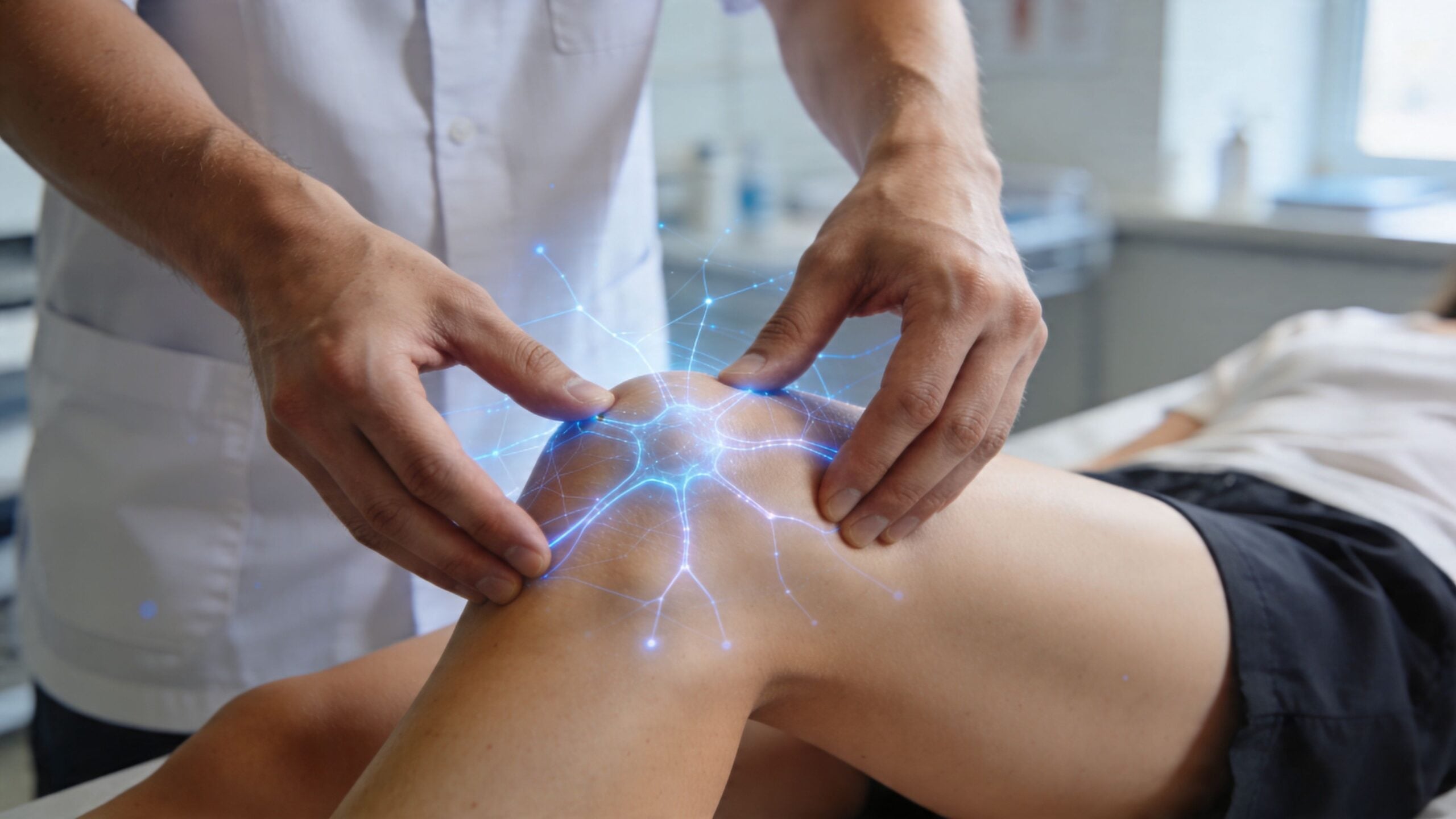
Pain isn’t only about tissue damage
Pain is also influenced by how your nervous system interprets threat.
If an area has been irritated for a while, your body may become more protective. Muscles tighten sooner. Movement feels unsafe sooner. Sensitivity rises. That doesn’t mean the pain is “in your head.” It means your nervous system is doing its job a little too aggressively.
Manual therapy can help calm that system.
One way to think about it is the gate control idea of pain. Non-threatening input from pressure, movement, and touch can compete with pain signals and change what your brain pays attention to. That can reduce the intensity of pain and make movement feel possible again.
It also changes movement mechanics
Manual therapy isn’t only about the nervous system.
If a joint is stiff, if soft tissue isn’t gliding well, or if scarred or guarded tissue limits motion, hands-on treatment can improve how the area moves. That matters because better movement usually means less compensation, less strain on nearby structures, and more normal loading during daily activity.
For some patients, this includes treatment around post-surgical restrictions or dense tissue changes. If that applies to you, this overview of how PT can break up scar tissue explains why careful loading and hands-on work often go together.
The changes can be measurable
Clinical evidence has shown meaningful short-term improvement after manual therapy. In one study of people with musculoskeletal pain, pain intensity on a 10-point scale improved from 4.1 at baseline to 1.6 immediately after treatment, which surpassed the minimal clinically important difference, according to this review of manual therapy for chronic pain.
That doesn’t mean one session “fixes everything.” It means manual therapy can create a significant early shift in pain and function.
When pain drops and movement opens up, your body becomes more teachable. That’s often when progress accelerates.
Why that matters in real life
The science matters because it answers a common fear.
People often worry that if hands-on care helps, it must be masking the problem. In most cases, that’s not what’s happening. It’s creating conditions where your body can move better, learn better, and tolerate more normal activity.
That might mean:
- Turning your head without bracing
- Squatting with less pinching
- Walking with a more natural stride
- Using a shoulder without feeling stuck
The key point is that manual therapy isn’t magic, and it isn’t random. It’s a way to influence pain, mobility, muscle activity, and movement quality through targeted input.
How Hands-On Care Powers Your Recovery Plan
A good recovery plan has to do more than make you feel better on the treatment table. It has to help you move better when you stand up, walk out, and get back to your normal life.
Manual therapy helps create that opening.
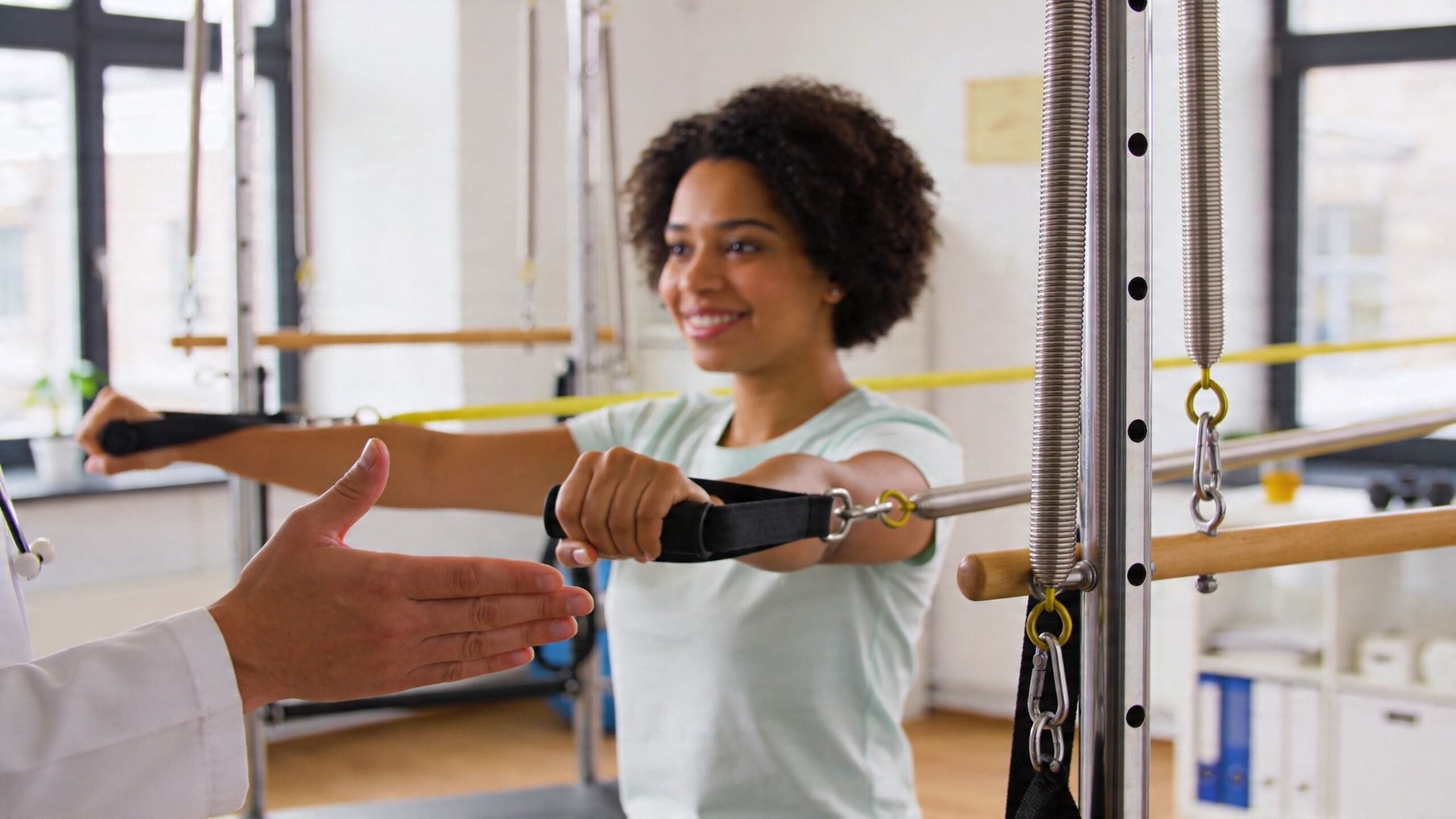
A better way to understand its role
Hands-on care works like loosening a rusted hinge. The door may swing more freely after that, but the ultimate goal is using the door well so it keeps moving the way it should.
That is how manual therapy fits into rehab. Your therapist uses hands-on treatment to calm pain, reduce guarding, or improve how an area moves. Then you use that change right away through guided movement, strength work, balance practice, or better daily mechanics.
The hands-on part is not separate from the rest of the plan. It is part of a skilled conversation. Your therapist’s hands assess how your body responds, then the exercise portion teaches your system how to hold on to that progress.
Why manual therapy and exercise work together
If a shoulder feels less stiff after treatment, that is a useful change. If you then practice reaching, lifting, and controlling that shoulder in the new range, the change becomes more meaningful.
At that point, therapeutic exercise becomes the part that builds staying power.
A physical therapy plan often includes a few pieces working together:
- Manual therapy: To improve comfort, mobility, and tolerance for movement
- Exercise: To build strength, coordination, and confidence in that improved movement
- Education: To help you understand pacing, posture, recovery, and what to do between visits
Each part has a job. Together, they help turn short-term improvement into real-world function.
What that looks like day to day
A person with neck pain may respond well to hands-on treatment that improves upper back motion and reduces muscle tension. Once turning the head feels easier, the session can shift to exercises that train the neck and shoulder blade muscles to support that change.
A runner with knee pain may feel less restricted after treatment around the hip, knee, or ankle. The next step is practicing control, strength, and running form so the body does not fall back into the same pattern.
That broader picture also connects to overall physical wellness, including regular movement, sleep, recovery habits, and routines you can maintain outside the clinic.
Highbar Physical Therapy may combine manual therapy, exercise, education, and telehealth follow-up based on the person’s condition, goals, and response to treatment.
Good hands-on care should lead to better movement, not stop at temporary relief.
That is why manual therapy can be so useful. It helps your body become more ready to learn, and the rest of the plan turns that readiness into lasting progress.
What to Expect During and After Your Session
If you’ve never had manual therapy before, the uncertainty can make it sound more intimidating than it is.
Most sessions feel straightforward. Your therapist explains what they’re noticing, tries a technique, checks how you respond, and adjusts based on what your body tells them.
During the session
It usually starts with movement.
Your therapist may watch you bend, reach, walk, squat, or turn your head. Then they’ll use their hands to assess how specific tissues and joints move. That assessment is part of the treatment process. They’re not just locating pain. They’re figuring out what changes it.
During hands-on treatment, communication matters. Your therapist may ask:
- Where do you feel this
- Does this feel like your usual pain
- Is this pressure tolerable
- Did that movement become easier
Manual therapy shouldn’t feel confusing. You should know what your therapist is doing and why.
Some techniques feel like steady pressure. Some feel like rhythmic movement. Some involve you gently contracting a muscle. A few techniques are quick and brief. The right intensity depends on your condition, irritability, and goals.
After the session
Many people notice one of three things.
First, you may feel looser right away. Turning, walking, or reaching may feel easier.
Second, you may feel mild soreness later that day or the next morning. That’s often similar to post-workout soreness and doesn’t necessarily mean anything went wrong.
Third, you may notice that one area improved, which reveals weakness or stiffness somewhere else. That’s useful information. It helps refine the plan.
What helps the results last
The most important part of the session often happens after the hands-on treatment.
Your therapist will usually give you a small set of movements or exercises to reinforce what changed. Do them. That home program helps your body hold onto the gains from the session instead of drifting back into the same protective pattern.
A few practical tips help:
- Speak up early: If a technique feels too intense, say so.
- Notice functional changes: Can you roll in bed easier, sit longer, reach higher, walk smoother?
- Follow through at home: The exercises are part of the treatment, not an optional extra.
Recovery is collaborative. Manual therapy works best when your therapist provides the right input and you build on it between visits.
Your Questions About Manual Therapy Answered
Is manual therapy supposed to hurt
Not usually.
Some techniques create pressure or a strong stretch sensation, but treatment should be tolerable. “No pain, no gain” isn’t the rule here. The right amount of input depends on how irritable the area is and how your nervous system responds.
Is it just massage by another name
No.
Massage may help relaxation and comfort. Manual therapy is broader and more clinical. It includes soft tissue work, joint techniques, nerve-related techniques, and repeated reassessment to see whether movement and symptoms change.
Does it work only because of placebo
That question comes up a lot, and it deserves an honest answer.
Manual therapy isn’t just about “putting something back into place.” A modern view recognizes that its benefits come from a mix of factors, including neuromodulation, therapeutic alliance, and biomechanical effects. Research also suggests it benefits 70 to 80% of musculoskeletal cases, even when a precise diagnosis is hard to pin down, as discussed in this paper on a modern framework for manual therapy.
That doesn’t weaken the case for manual therapy. It strengthens it.
It means good care respects both the body and the nervous system. Your therapist’s explanation, your sense of safety, the reduction in guarding, and the change in tissue motion can all matter at once.
Some treatments fail because they chase a perfect label. Manual therapy often helps because it responds to the person in front of the therapist.
Will I need it forever
No. The goal is not to make you dependent on hands-on care.
Manual therapy should help you move, exercise, and function better so you can take over more of the work yourself. Some people benefit from a short course. Others need it longer during more complex recovery. But the long-term target is always greater independence.
Do I need a physician referral to start PT
In many outpatient settings, you can often book directly without waiting for a referral. If you’re unsure what applies to your situation, the clinic can usually guide you before your first appointment.
Start Your Recovery at Highbar Physical Therapy
A lot of people reach this point after weeks or months of trying to work around pain. You stop taking the long walk. You brace before getting out of the car. You wonder whether this is something you just have to live with.
It usually is not.
At Highbar Physical Therapy, manual therapy is part of a larger plan to help you move with more confidence again. Your therapist’s hands are not only treating the area that hurts. They are also gathering information in real time, like a skilled conversation with your body. How a joint responds, where tissue feels guarded, and which movement eases symptoms all help shape what happens next.
That matters because good hands-on care is never a preset routine. It is a clinical decision made moment by moment, then matched with the exercises, movement practice, and education that help the changes last outside the clinic.
Highbar serves communities across Rhode Island and Massachusetts, including Warwick, Westerly, South Kingstown, Worcester, and Sudbury. You can book online, and many patients can start without a physician referral. Telehealth is also available when travel or weather makes an in-person visit harder.
If stiffness, pain, or a nagging injury keeps interrupting your day, Highbar Physical Therapy can help you start with a plan built around your goals. The aim is simple. Help you feel better, move more freely, and get back to a fuller, more active life.