You feel pain deep in one buttock. Sitting makes it worse. Sometimes the ache spreads down the back of your leg, and now you're wondering if it's your back, your sciatic nerve, or that small muscle you keep seeing online: the piriformis muscle.
That confusion is common. The piriformis sits in a crowded part of the body where muscles, joints, and the sciatic nerve all live close together. Because of that, piriformis-related pain can look a lot like lumbar radiculopathy, sciatica, or other causes of deep gluteal pain. That's why a careful exam matters more than a quick guess.
As a physical therapist, I'd frame it this way. The piriformis muscle can absolutely matter, but the problem isn't always a simple “tight muscle.” Sometimes the issue is how the hip is moving. Sometimes it's how the sciatic nerve is getting irritated. Sometimes it's not the piriformis at all. Understanding that difference is what helps people stop chasing stretches that don't work and start getting the right treatment.
Understanding the Piriformis Muscle Anatomy and Function
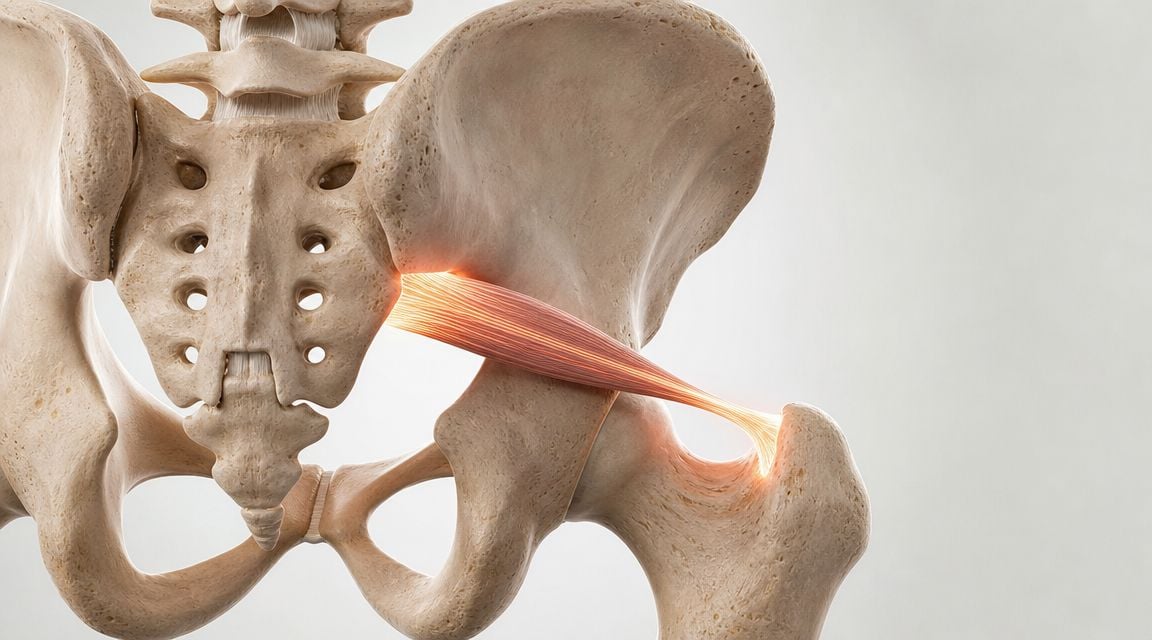
The piriformis muscle is a small, deep gluteal muscle with a big job. Its role is comparable to a guy wire on a tent pole. It isn't the biggest structure around, but it helps steady the system when force moves through it.
It runs from the anterior sacrum to the greater trochanter of the femur, and it acts as a deep gluteal external rotator and stabilizer of the hip. In standard anatomy, its main jobs are lateral rotation when the hip is extended and abduction when the hip is flexed, which is why it matters during weight shifting, stepping, and pivoting tasks, as described in Kenhub's piriformis muscle anatomy reference.
Where it sits and why that matters
The piriformis lives underneath the gluteus maximus, so you can't usually point to it directly with your hand. It sits deep in the buttock and crosses from the pelvis to the top of the thigh bone. That location is a big reason it gets so much attention in pain discussions.
The muscle is also pear-shaped, which is where its name comes from. It sits near the sciatic nerve, and that close relationship helps explain why irritation in this area can create symptoms that feel nerve-related rather than just muscular.
Practical rule: Small muscles can create large symptoms when they help control a joint that takes load all day.
What the piriformis does during daily movement
The common understanding of “external rotator” often stops there, but that misses the useful part. The piriformis helps guide the hip when you stand on one leg, turn, or control your pelvis over the femur. If that control gets disrupted, the body may compensate with gripping, guarding, or awkward movement patterns.
You use this muscle when you:
- Walk and change direction: It helps control rotation as your foot contacts the ground.
- Climb stairs: It contributes to hip stability when one leg bears most of your weight.
- Stand on one leg: It helps keep the pelvis and femur aligned.
- Pivot or side-step: It supports transverse-plane control, which is often where symptoms show up.
Why anatomy alone doesn't explain pain
A lot of people assume that because the piriformis is near the sciatic nerve, any buttock pain with leg symptoms must be piriformis syndrome. It's not that simple. Anatomy gives us the map, but movement testing and symptom behavior tell us whether that map matches the problem in front of us.
That's why the piriformis muscle is worth understanding as a stabilizer, not just a muscle to stretch.
What Is Piriformis Syndrome and Deep Gluteal Pain
Piriformis syndrome is one of those diagnoses people hear often online but much less often explained well. The short version is this: it refers to pain and nerve irritation related to the piriformis region, usually in the deep buttock, sometimes with symptoms that travel down the leg.
The more modern and often more accurate term is deep gluteal syndrome. That term matters because the piriformis muscle may be involved without being the only structure at fault.
Why the label can be misleading
Piriformis syndrome is considered uncommon and sometimes controversial. In nondiscogenic sciatic nerve entrapment in the pelvis, the most common site of compression is beneath the piriformis muscle at 67.8%, not necessarily within the muscle itself, which is why the broader term deep gluteal syndrome is often more accurate, according to Radsource's review of piriformis syndrome.
That changes the conversation. If the nerve is irritated beneath the muscle, or by nearby fibrous tissue and deep gluteal structures, then “your piriformis is tight” may be too simplistic.
Here's what patients usually find confusing:
| Term | What it suggests | Why it can be confusing |
|---|---|---|
| Piriformis syndrome | The piriformis muscle is the main culprit | The muscle may be involved, but the entrapment may be around it rather than inside it |
| Deep gluteal syndrome | Sciatic nerve irritation in the deep buttock region | It's broader and often closer to what's actually happening |
| Lumbar radiculopathy | A nerve root issue from the spine | It can mimic buttock and leg symptoms very closely |
What symptoms tend to feel like
People usually describe this pain as deep, nagging, or sharp in one buttock. Sitting often aggravates it, especially if you stay in one position too long. Some feel tingling, burning, or a pulling pain down the back of the thigh.
For many, the hardest part is that it can feel like “sciatica,” even when the source may not be the lumbar spine. If sitting is a major trigger, this guide on painful hips after sitting can help you think through related hip and gluteal contributors.
Deep buttock pain that radiates doesn't automatically mean the back is the problem. It also doesn't automatically mean the piriformis muscle is.
Why self-diagnosis often goes wrong
A figure-four stretch can feel good and still miss the actual issue. If the problem is nerve sensitivity, movement coordination, or entrapment by surrounding tissue, more stretching won't necessarily solve it.
That's the key takeaway. The location of pain may suggest the piriformis region, but the mechanism needs a proper exam.
How Physical Therapists Diagnose Piriformis Issues
A good diagnosis starts by ruling things in and ruling things out. That process is called differential diagnosis, and it matters because buttock pain with leg symptoms can come from the hip, the deep gluteal space, or the lumbar spine.
Physical therapists don't diagnose piriformis issues by pressing on one sore spot and calling it done. We look for a pattern.

What the exam usually includes
Diagnosis is typically based on a thorough history and physical exam, with symptoms reproduced through specific hip positions and palpation. An MRI may show an enlarged piriformis or nerve compression, but a diagnostic anesthetic injection can be especially helpful when clinicians need to confirm that the piriformis region is the pain generator, as explained in this clinical discussion of piriformis syndrome diagnosis.
In the clinic, that usually means checking:
- Symptom behavior: Does sitting worsen it? Does walking help or irritate it? Is coughing or sneezing involved?
- Hip movement: Certain positions can reproduce deep gluteal symptoms if the area is irritated.
- Palpation: Tenderness near the sciatic notch can add useful information.
- Strength and control: Weakness or poor coordination around the hip may be feeding the problem.
- Nerve-related findings: We check whether the pattern fits a peripheral entrapment or something more consistent with the spine.
How PTs separate it from a back problem
A lot of patients ask, “How do you know it isn't a disc?” The answer is that we test for spinal and nerve-root patterns, not just hip pain.
A lumbar source may create symptoms that follow skin sensation patterns called dermatomes. If you've never seen that concept explained clearly, this primer on dermatomes and nerve root patterns can make the distinction easier to understand.
Clinical clue: If a movement of the hip reproduces the pain and a repeated movement of the back does not, that points the exam in a different direction.
When imaging helps and when it doesn't
Imaging can be useful when symptoms are persistent, the diagnosis is unclear, or another condition needs to be ruled out. But imaging isn't always the first step. Many piriformis-region problems are diagnosed more from the story and movement exam than from a scan.
That's reassuring for patients. A careful PT evaluation isn't guessing. It's a structured process that sorts through overlapping causes until the most likely pain source becomes clear.
Evidence-Based Physical Therapy for Piriformis Pain
Treatment works best when it matches the reason the area is irritated. That's important because piriformis syndrome represents only 0.3% to 6% of all low back pain and/or sciatica cases, a range that reflects real diagnostic variability in the literature, as noted in this review on piriformis syndrome. For the people who do have it, a targeted plan matters more than a generic list of stretches.
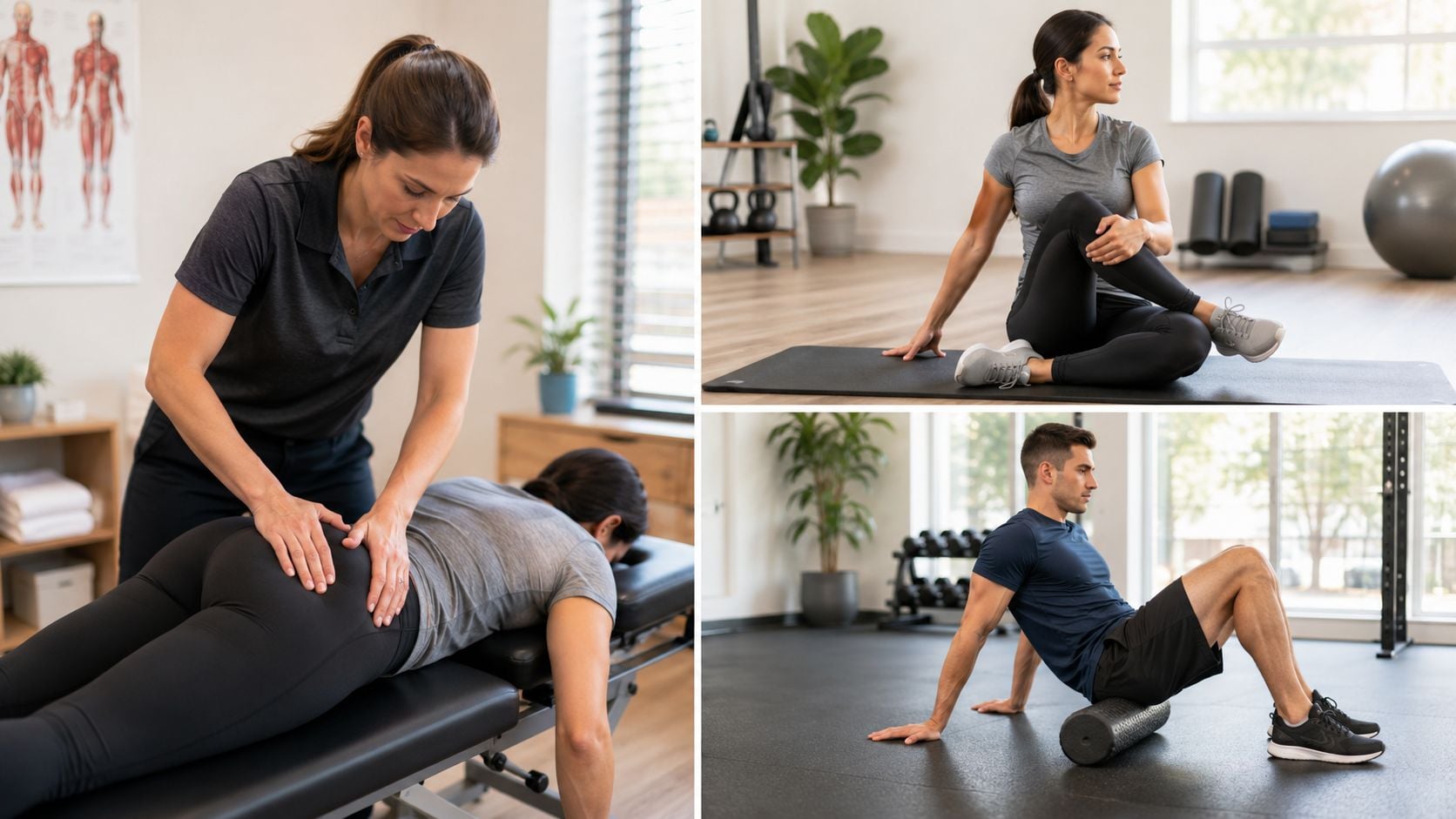
The most effective PT plans usually combine hands-on care, movement work, and progressive strengthening.
Manual therapy to calm the area down
If the deep gluteal tissues are irritable, manual therapy can help reduce guarding and improve tolerance to movement. That may include soft tissue work to the gluteals and nearby rotators, gentle trigger point techniques, or strategies to improve hip mobility.
This doesn't “put the muscle back in place.” The goal is more practical. It helps reduce local sensitivity so you can move better and tolerate exercise.
Stretching with a purpose
Stretching can help, but only when it's used for the right reason. If a stretch decreases buttock tension and improves how you sit, walk, or bend, it can be useful. If every stretch just lights up nerve symptoms, it may need to be modified or paused.
Good stretching usually focuses on:
- Position and comfort: You should feel a stretch, not sharp nerve pain.
- Breathing and relaxation: Guarding often keeps the area more reactive.
- Response afterward: A good stretch leaves the area calmer, not more irritated later that day.
The best stretch is the one that improves your next movement, not the one that feels most intense in the moment.
Strengthening is often the long-term fix
This is the part many people skip. If the piriformis muscle has been overworking to stabilize the hip, then strengthening the surrounding system is often what creates lasting change.
That might include work for the gluteus medius, gluteus maximus, trunk stabilizers, and single-leg control. A PT may use bridges, side-lying hip work, step-downs, band-resisted walking, and balance drills, depending on your symptoms and tolerance.
The point isn't to isolate one muscle perfectly. The point is to improve how the whole hip manages load.
A plan should match the person
A runner with deep buttock pain, a desk worker who hurts after sitting, and a patient recovering from back-related symptoms won't all need the same program. If you're looking for formal outpatient care, Highbar Physical Therapy is one option that evaluates and treats musculoskeletal pain and movement limitations through individualized physical therapy.
That individualized approach matters. Piriformis-region pain responds best when the program matches the movement problem, not just the body part.
Advanced Rehab Strategies and Neural Mobility
When people tell me, “I've been stretching my piriformis for weeks and it keeps coming back,” I don't assume they're doing the wrong stretch. I assume the problem may be bigger than muscle tightness.
That's where deeper rehab strategy comes in.
Why stretching alone can miss the problem
Piriformis syndrome is more commonly reported in women and in adults 40 to 60, and the pain may involve fibrous bands, not just muscle spasm. That helps explain why stretching alone may fail and why strengthening and load management are often necessary, as discussed in this clinical overview of piriformis syndrome evaluation.
If a nerve is irritated by surrounding tissue, repeated aggressive stretching may just keep poking the system. The body doesn't always need more length. Sometimes it needs better space, better control, and less irritation.
What neural mobility means
The sciatic nerve needs to glide as the hip and knee move. If that glide is restricted or the nerve is sensitive, symptoms can linger even after the muscle itself feels looser.
I explain neural mobility like this: picture a rope moving through a sleeve. If the sleeve is crowded or the rope gets snagged, pulling harder on the rope doesn't fix the snag. You need smoother movement through the whole path.
That's what nerve glides, often called nerve flossing, are trying to do. They're not meant to be aggressive stretches. They're gentle mobility drills that help the nervous system tolerate movement with less threat.
What advanced rehab usually adds
A more complete rehab plan often includes a combination of strategies:
- Neural mobilization: Gentle movements that encourage the sciatic nerve to move more freely.
- Load management: Adjusting sitting time, hills, speed work, or gym volume so symptoms can settle.
- Hip control training: Teaching the glutes and trunk to share the work better.
- Movement retraining: Cleaning up the specific motions that trigger symptoms, such as crossing over during walking or collapsing into one hip during single-leg tasks.
For many people, this is the turning point. The piriformis muscle stops acting like the whole story, and the rehab starts addressing the actual mechanics of the problem.
Home Management and Prevention Strategies
Home care matters because the piriformis region often gets irritated by the things you do every day, not just by exercise. Sitting habits, training errors, and repeated movement patterns can all keep the area sensitive.
That's good news, because it means small changes can add up.
Daily habits that usually help
If sitting is your biggest trigger, start there. Don't aim for a perfect chair setup. Aim for less continuous pressure and more movement variation.
Try these practical changes:
- Change positions often: Shift, stand, or walk before the ache builds.
- Unload the irritated side: Avoid sinking into one hip or crossing legs if that reproduces symptoms.
- Check what's in your back pocket: A thick wallet or phone can add asymmetrical pressure.
- Use short movement breaks: A brief walk, a few hip extensions, or standing weight shifts can settle symptoms better than staying still.
At-home reminder: Your body usually tolerates frequent, gentle movement better than one long stretch session at the end of the day.
A simple home exercise mix
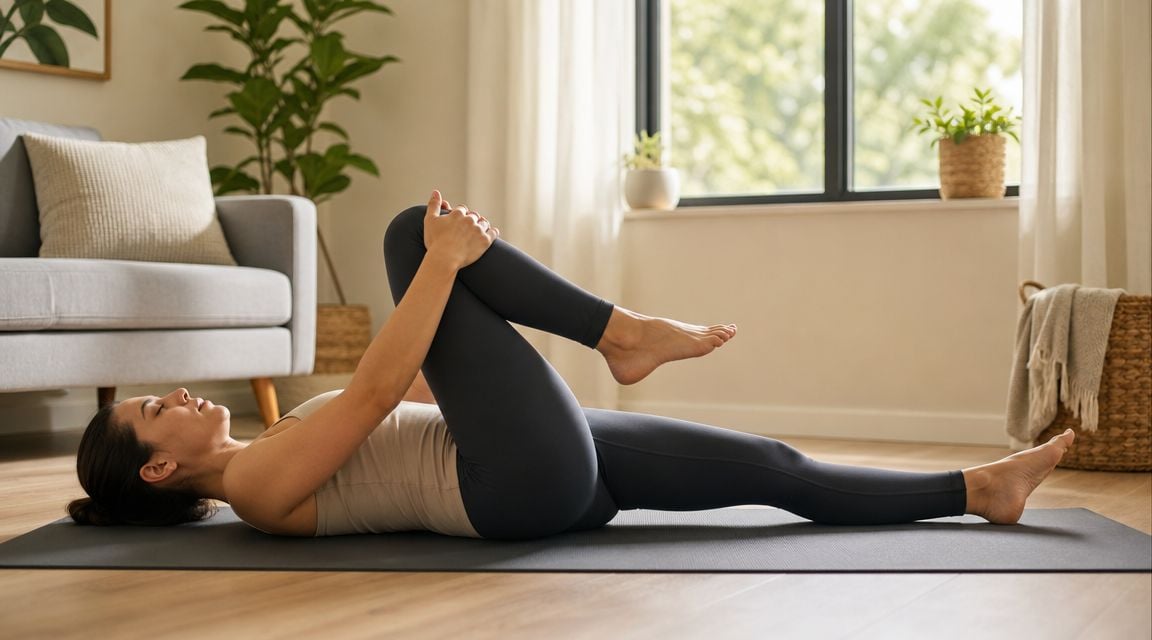
At home, I'd usually lean on a small routine rather than a long one. A useful combination might include a gentle piriformis stretch if it feels relieving, glute strengthening, and a nerve mobility drill if your clinician has shown you one.
A solid support exercise resource is this guide to gluteus medius exercises for hip stability, because stronger lateral hip support often reduces how much the deep rotators have to compensate.
You can also use self-release tools carefully. If you run or do high-volume lower-body training, these foam rolling exercises for runners offer practical ideas for general tissue mobility around the hips and legs. Keep the pressure moderate. More pressure isn't always better around an irritated sciatic region.
Prevention usually looks boring and effective
The best prevention plan is rarely dramatic. It's built from repeatable habits.
A few that matter most:
| Habit | Why it helps |
|---|---|
| Regular hip strength work | Reduces overload on small stabilizers |
| Warm up before harder activity | Gives the hip and trunk time to coordinate before full effort |
| Don't ignore early buttock pain | Small symptoms are easier to calm than entrenched ones |
| Spread load across the week | Sudden spikes in activity often irritate sensitive tissue |
Consistency beats intensity here. If your piriformis muscle gets cranky, the answer usually isn't to attack it harder. It's to manage the environment around it more intelligently.
When to Seek Care and How Highbar Can Help
Most piriformis-region pain isn't dangerous, but some symptoms should never be self-treated. Seek urgent medical attention if you notice progressive weakness, loss of bowel or bladder control, or saddle anesthesia. Those symptoms can point to a problem that needs immediate medical evaluation.
For non-emergency symptoms, get checked sooner rather than later if pain keeps returning, spreads farther down the leg, wakes you at night, or doesn't improve with basic activity changes. The longer people guess, the more likely they are to keep treating the wrong thing.
A physical therapist can help sort out whether your pain pattern fits the piriformis muscle, broader deep gluteal irritation, or a lumbar source. That changes treatment right away. Instead of repeating random stretches from the internet, you get a plan based on how your body moves and what reproduces your symptoms.
If your pain is persistent but not urgent, that's a strong reason to schedule an evaluation. The goal isn't just short-term relief. It's to help you sit, walk, train, and live without constantly wondering what's going on in your hip or leg.
If piriformis-region pain has you stuck between “maybe it's my back” and “maybe I just need to stretch,” Highbar Physical Therapy can help you sort it out with an individualized evaluation and treatment plan. Their physical therapists treat musculoskeletal pain and movement problems, and patients can book appointments without a physician referral.