PT For Future Me: An Investment You Make Today for All Your Tomorrows
This October, the American Physical Therapy Association (APTA) turns the spotlight on a simple but powerful idea: PT For Future Me. The message is that physical therapy isn’t just for recovery after an injury. It’s a proactive investment in your life and wellness five, ten, even fifty years from now. The strength, balance, and movement habits you build and protect today are what determine whether “future you” is climbing a ladder to clean the gutters, chasing grandkids around the yard, and navigating an icy driveway with confidence each winter.
Enter: falls prevention. A fall can happen in a split second, but the balance, strength, and body awareness that prevent it are built over months and years. Focus now on the small habits and exercises you can build into your routine to mitigate your risk of falling. “Future you” will thank you!
Falls Are Common, Costly, and Largely Preventable
- 1 in 4adults 65+ fall each year in the U.S.
- 2xyour risk of falling again after one fall
- $80Bestimated annual cost of falls to the U.S. health system
More than 1 in 4 adults aged 65+ fall each year in the United States. Falling once roughly doubles your risk of falling again. Falls cost the U.S. health system an estimated $80 billion a year (yikes!). But the outlook is not so bleak: falls are not an inevitable part of aging. They are the end result of specific, measurable, and, most importantly, modifiable risk factors. Physical therapy can help identify what contributes to a person’s instability before it results in an injury and train the body to correct it.
The New England Factor: Why Our Region Raises the Stakes
If you live in Rhode Island, Massachusetts, or anywhere else in New England, you know that our environment adds a few extra layers of fall risk:
- Ice, black ice, and slushEven a short walk to the mailbox in the winter can require rapid, reflexive balance adjustments many people never consciously practice.
- Uneven, historic terrainCobblestone streets, brick sidewalks, and centuries-old doorway thresholds are charming, and notoriously unforgiving on ankles and hips.
- Older housing stockOld New England homes often feature steep, narrow staircases, low basement clearances, and bathrooms that predate modern accessibility standards.
- Seasonal transitionsThe shift from summer activity to shorter, darker, icier days each fall is exactly when fall risk quietly creeps up.
None of this means you need to hibernate from October to April. It simply means that it is worthwhile to train your balance system to meet your environment.
“Balance and confidence can be trained like a muscle. Safe challenges, targeted to your specific needs, can build skill and success!”
What Causes a Fall?
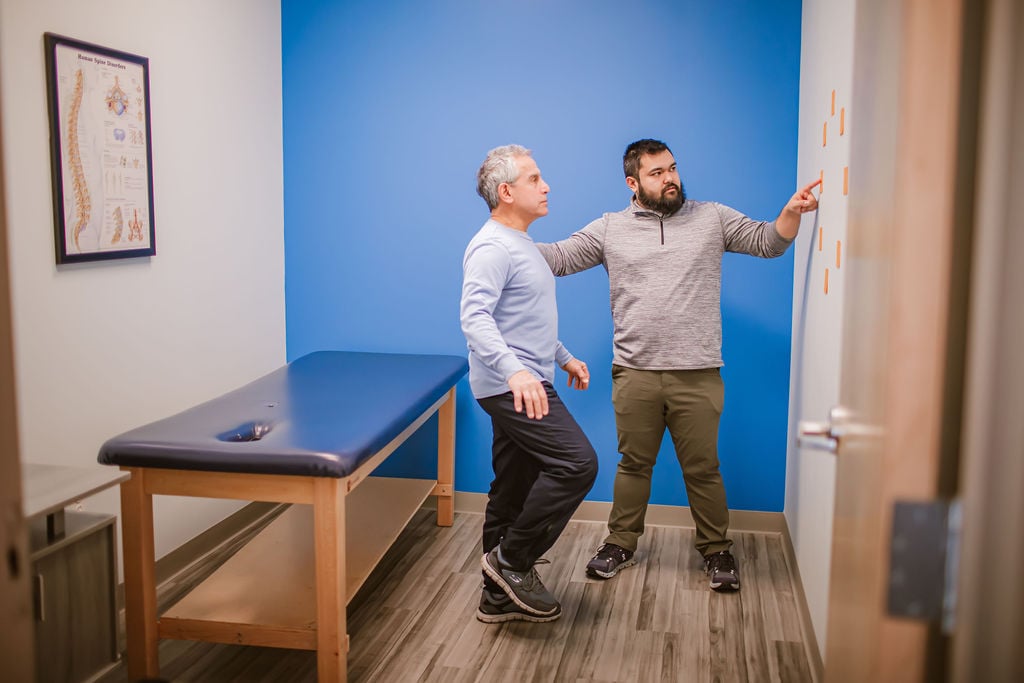
Physical therapists don’t treat “falling” as one problem. It is treated as the output of several interacting systems. A thorough fall risk evaluation looks at:
Balance and the Three Systems That Create It
Balance isn’t a single skill, but rather the brain constantly blending input from three sources: the vestibular system (inner ear), the visual system (as your eyes scan your environment), and your proprioception (sensory detectors in your muscles and joints).
When one or more of these systems weakens, the other(s) must compensate. A PT can test each system individually to find out which one needs the most work.
Strength and Biomechanics
Strength in your core and major joints and the mechanics with which you navigate your environment strongly influence your fall risk. For example, hip abductor strength (the muscles on the side of your hip) is one of the strongest predictors of fall risk, as those muscles keep your pelvis level as you walk. Ankle strength and mobility determine how well you can catch yourself on uneven ground. A PT evaluates strength through the lens of function: not just “how strong is this muscle,” but also “can this muscle react fast enough to stop a stumble.”
Gait Mechanics
How you walk reveals a tremendous amount. Shortened stride length, reduced walking speed, and asymmetry between your left and right steps are all measurable, well-studied predictors of fall risk. PTs use standardized gait assessments to catch these patterns early, often before you’ve noticed anything is “off.”
Reaction Time and Dual-Tasking
Real-world falls rarely happen while someone is standing still and focused on their balance. They happen while you’re living your real life: carrying groceries, talking to a walking companion, or glancing at your phone. PTs train “dual-task” balance, the ability to maintain stability while your attention is divided, because that’s how balance is actually called upon in daily life.
Home and Environmental Setup and Ergonomics
Strengthening exercises only go so far if the environment itself is a hazard. PT evaluations that address fall risk typically include a comprehensive review of factors including assistive devices as needed, proper footwear, bathroom or bedroom setup, stair negotiation (railings, step height), lighting in dim areas, and clearing clutter and floor hazards.
Fall prevention doesn’t involve being afraid of movement. Quite the opposite. Research consistently shows that structured balance and strength programs meaningfully reduce fall rates, precisely because they restore the confidence to keep moving.
A typical fall risk-focused plan of care can include a standardized assessment that screens for fall risk, progressive balance training and targeted strengthening, gait training, vestibular rehabilitation, real-world task training, and even a home assessment when appropriate.
What Are Some Everyday Fall Prevention Tips?
You don’t have to wait for a referral to start protecting your balance. Try these:
- Stand on one foot while brushing your teeth. It’s a free, twice-daily balance training session. (Be sure to stand close to a wall, sturdy piece of furniture, or grab bar you can reach to steady yourself as needed.)
- Wear supportive, closed-back shoes, including indoors.
- Ensure adequate lighting in the home, especially in tight hallways at night.
- Clear clutter from main thoroughfares in your home.
- Get up slowly. Standing up too quickly can sometimes cause dizziness. Pause for a beat before you walk.
- Salt and treat walkways early during the winter.
- Review medications with your doctor or pharmacist. Several common medication classes can affect balance or alertness.
- Get your vision checked annually. Uncorrected vision changes are one of the most overlooked fall risk factors.
Simple Exercises to Build Balance and Strength at Home
You don’t need a gym membership to start reducing your fall risk. You need consistency. The exercises below target the specific systems PTs look at during a fall risk evaluation: balance reactions, hip, leg, and core strength, ankle and foot stability, and the functional movement patterns you use every day. Always have a sturdy chair, counter, or wall within reach before you begin, and check with your doctor or physical therapist before starting if you have a current injury or balance concern.
Balance Exercises
- Single-leg stance: Hold onto a counter, lift one foot slightly off the floor, and balance for 10 to 30 seconds per side. Progress by lightening your hold, then letting go entirely.
- Weight shifts: Standing with feet hip-width apart, slowly shift your weight side to side, then front to back, without lifting your feet. 10 shifts each direction.
- Tandem stance: Stand heel-to-toe, like on a balance beam, holding support as needed. Hold 10 to 20 seconds, then switch which foot is in front.
Core, Hip, and Leg Strength
- Sit-to-stands: From a firm chair, stand up fully and sit back down with control, using your legs rather than your arms as much as possible. Aim for 10 reps, 3 to 5 times a day. This single movement is one of the best predictors and improvers of fall risk because it mirrors real-life transfers (chairs, toilets, car seats).
- Standing hip abduction: Holding onto a counter, lift one leg straight out to the side and slowly lower it. Complete 10 to 12 reps per side. This directly strengthens the hip muscles that keep your pelvis level while walking.
- Bridges: Lying on your back with knees bent, feet flat, lift your hips toward the ceiling and lower slowly. Complete 10 to 12 reps. This targets the glutes and core muscles that stabilize your trunk while you’re standing upright.
Ankle and Foot Strength
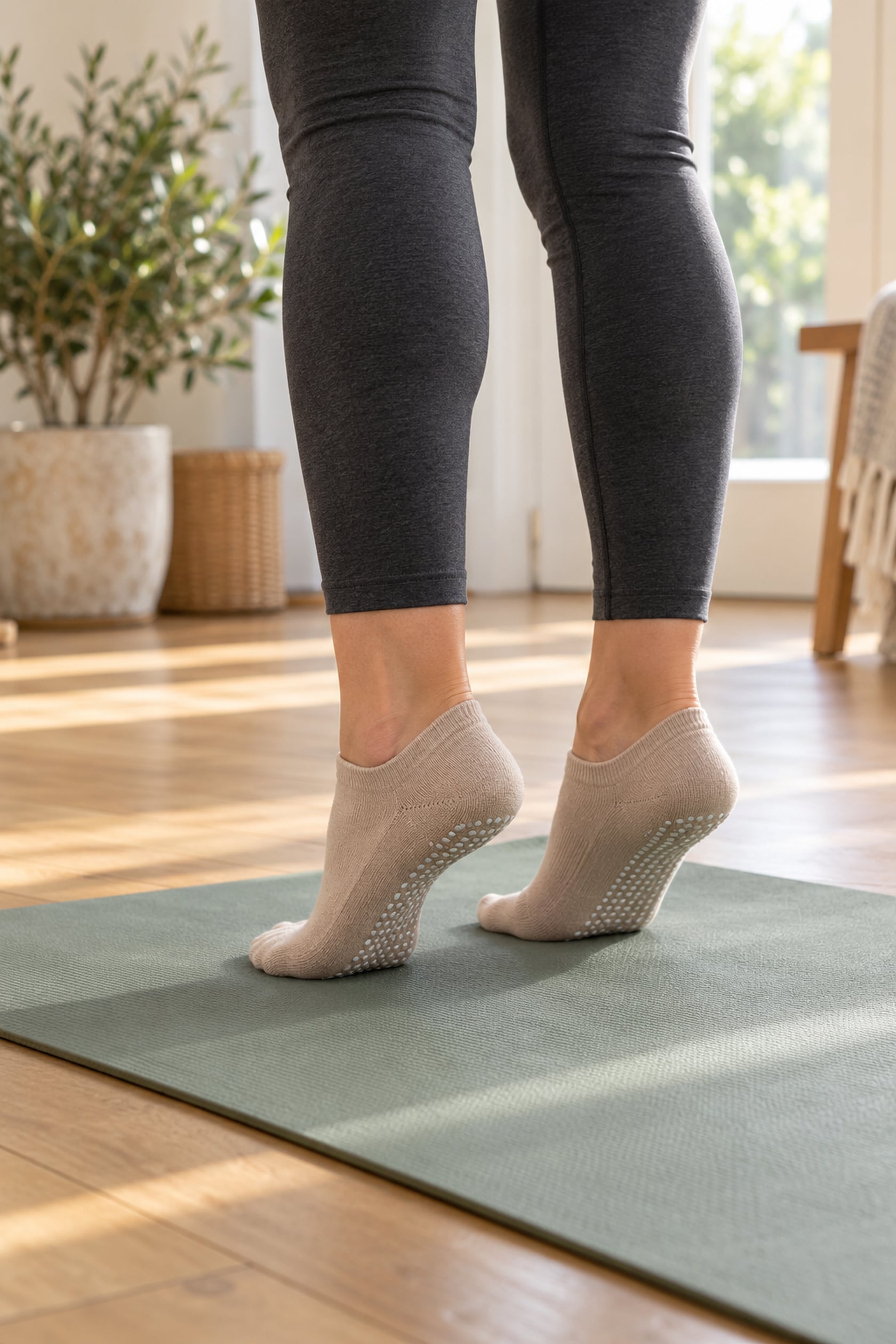
- Heel raises: Holding onto a counter, rise up onto your toes and lower slowly. Complete 10 to 20 reps. This strengthens the calf muscles that help you push off and catch yourself on uneven ground.
- Ankle circles: Seated, lift one foot and slowly circle the ankle 10 to 15 times in each direction. This addresses ankle mobility and the joint’s ability to adapt to uneven terrain.
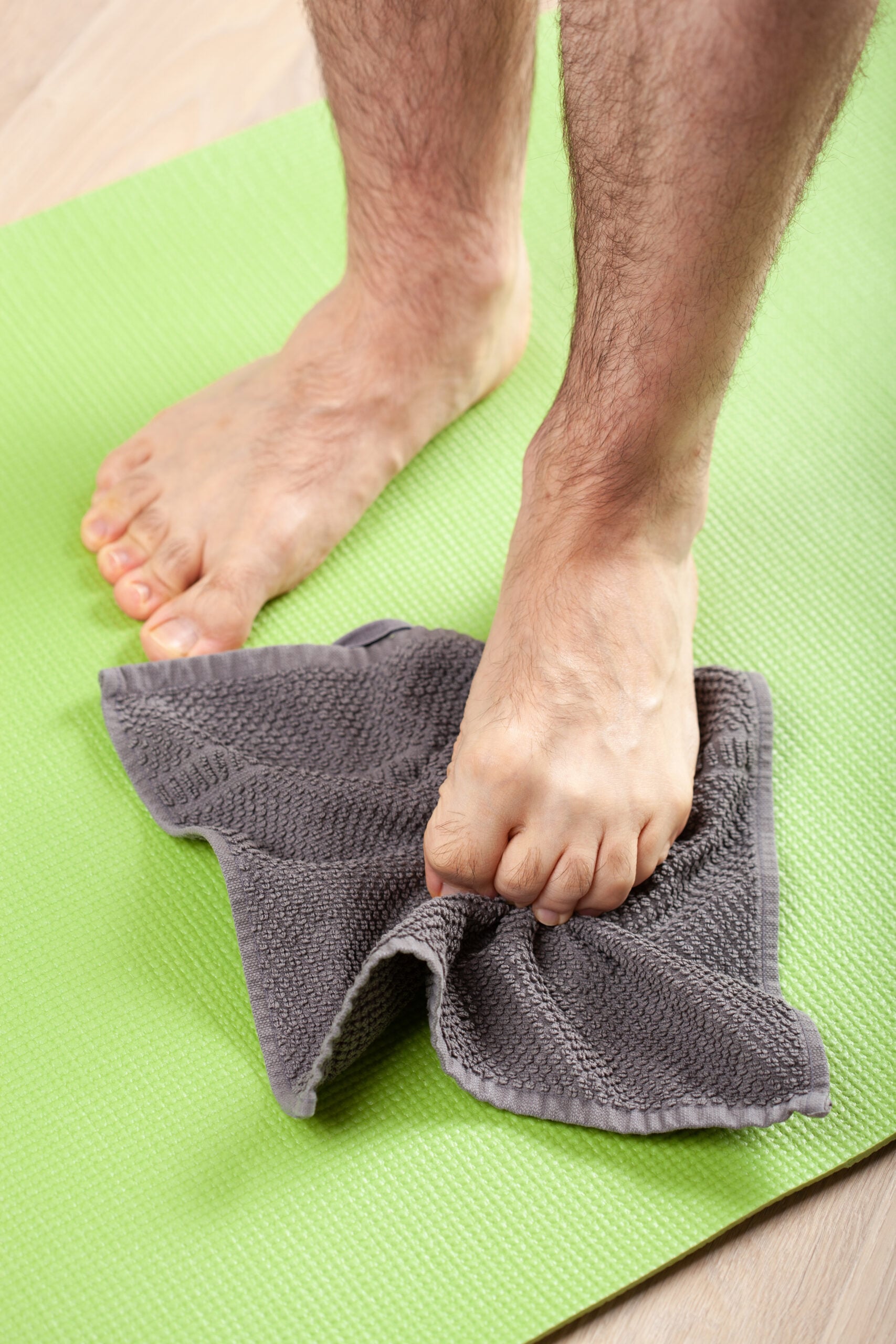
- Towel scrunches: Seated with a towel flat under your bare foot, scrunch it toward you using only your toes. Repeat at least 10 to 12 reps per foot. This helps build the small, intrinsic foot muscles that support your arch and balance.
Functional, Real-World Movements
- Sit-to-stands (5x/day): As above. Worth repeating as the single most functional exercise on this list, since it trains the exact strength and mechanics used every time you get up from a chair, bed, or car.
- Step-ups: Using a stair or a sturdy step stool, step up and down with control, holding a railing as needed. Repeat 10 to 12 reps per leg. This mimics navigating stairs in your daily life.
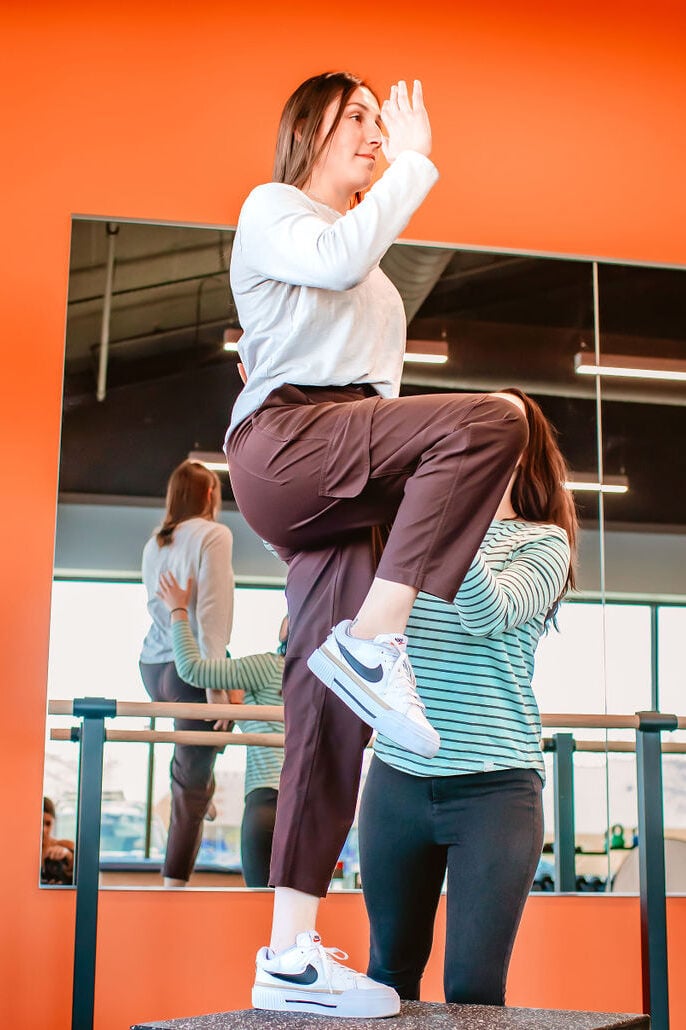
- Marching in place: Holding support as needed, lift your knees to hip height one at a time, alternating for 20 to 30 total steps. This targets hip flexor strength and balance reactions used in everyday walking.
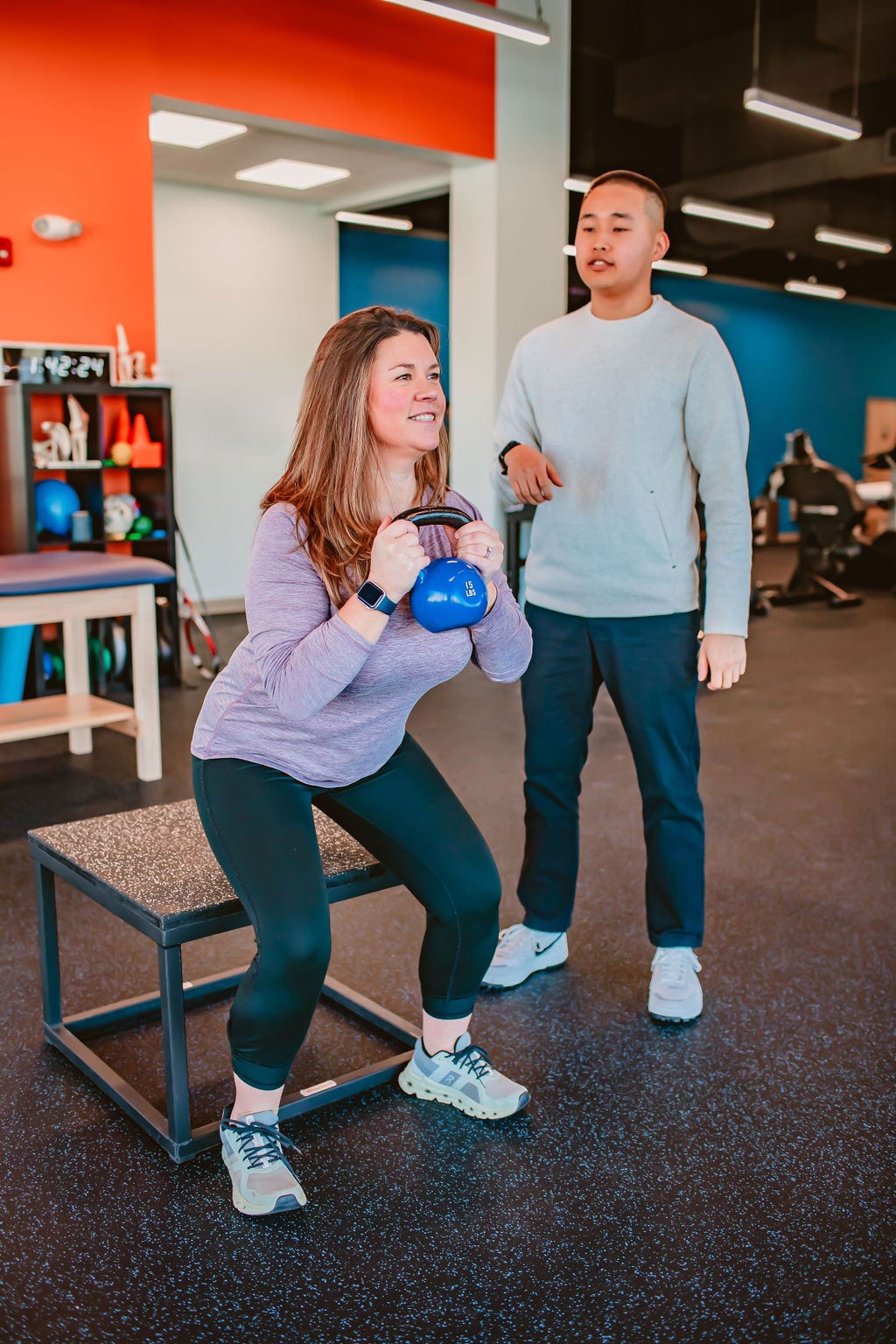
A physical therapist can turn this general list into a personalized, progressive plan as your balance improves, and correct form to make sure each exercise is targeting the right muscles safely.
When Should You See a Physical Therapist for Balance or Falls?
You don’t need to have already fallen to benefit from an evaluation. Consider scheduling one if you notice:
- You’ve had one or more falls or near-falls in the past year
- You feel unsteady on stairs, uneven ground, or in the dark
- You’ve started avoiding activities out of fear of falling
- You hold onto walls or furniture more than you used to
- You’ve noticed your walking has slowed down or changed
- You’re recovering from a hip, knee, or ankle injury or surgery
- You have a condition affecting balance, such as Parkinson’s disease, peripheral neuropathy, or a prior stroke
In most states, including throughout New England, you can see a physical therapist for an evaluation without a referral from your physician, making it easier than ever to get ahead of a fall before it happens.
The Bottom Line
The work you put in today, training balance, strengthening muscles, correcting movement patterns, and fall-proofing your home, is a direct deposit into your future mobility and independence. You don’t have to wait for a fall, a diagnosis, or the first icy morning of the season. The best time to start is now, so that “future you” can keep enjoying every season of the year, and every season of life, with confidence.
Ready to find out where your balance stands? Contact Highbar Physical Therapy to schedule an evaluation with our team and receive a personalized plan built around your body, your home, and your life.
Schedule a balance evaluationFrequently asked questions
Is falling a normal part of getting older?
No. While certain risk factors (like reduced muscle mass or slower reflexes) become more common with age, falling itself is not inevitable. Research shows that targeted balance and strength training can significantly reduce fall risk at any age.
What is a fall risk assessment, and does it hurt?
A fall risk assessment is a non-invasive evaluation where a physical therapist tests your balance, strength, gait, and reaction time using standardized measures like the Timed Up and Go test or Berg Balance Scale. It typically takes under an hour.
Do I need a doctor’s referral to see a physical therapist for balance issues?
In most states, including Rhode Island and Massachusetts, no! You can typically schedule a direct evaluation with a physical therapist without a physician referral. Check your specific insurance plan, as coverage rules can vary.
How many physical therapy sessions does falls prevention typically take?
This varies by individual, but many balance and fall prevention programs run 6 to 12 sessions over several weeks, followed by a home exercise program to maintain progress long-term.
Can physical therapy help even if I haven’t fallen yet?
Absolutely, and this is the heart of the “PT For Future Me” philosophy. Preventive, proactive PT is often more effective than reactive treatment, since it addresses small balance or strength deficits before they cause an injury.
What’s the single most important exercise for fall prevention?
There isn’t one “magic” exercise, because fall risk is multifactorial. However, hip and ankle strengthening combined with dynamic balance practice (like weight shifting and stepping over obstacles) consistently shows strong evidence for reducing falls.
Does winter weather really increase fall risk that much?
Yes. Icy or snow-covered surfaces demand faster, more reactive balance adjustments than flat, dry ground. Combine that with shorter daylight hours and colder muscles that are slower to react, and winter does raise fall risk, which is why New England residents benefit from balance training that’s specific to their environment.
Will physical therapy help with my fear of falling?
Yes. Fear of falling is common and clinically recognized, and it often leads people to move less, which paradoxically increases fall risk through deconditioning. A structured PT program is designed to rebuild both physical stability and the confidence to move freely again.
This article is for educational purposes and does not replace personalized medical advice. If you have concerns about your balance or fall risk, consult a licensed physical therapist or physician.