You finish a hard workout, carry groceries upstairs, or spend a Saturday doing yard work. A few hours later, your muscles start talking back. Maybe it’s your calves, maybe your low back, maybe your shoulders. You open the freezer, look at the ice pack, then glance at the heating pad and realize you’re not sure which one fits the problem.
That confusion is normal. It's often said that “ice for new injuries, heat for old ones,” but that rule is too blunt to be useful in real life. Sore muscles after exercise aren’t the same as a swollen ankle. A stiff back after sitting all day isn’t the same as a strained hamstring. Timing matters. The type of pain matters. Your goal matters too.
If you’ve been wondering is cold or heat better for sore muscles, the honest answer is that both can help, but they help for different reasons and at different times. A more complete overview of the basics is in this guide to heat vs cold compress use. What follows is the practical version I’d give a patient who wants a clear answer they can use today.
The Age-Old Question Ice Pack or Heating Pad
The classic moment goes like this. You wake up the day after leg day and your quads feel heavy, stiff, and sore when you sit down. Or you tweak your back lifting a box and now every movement feels guarded. You want relief, but the wrong tool can make the situation feel worse, or at least less comfortable than it needs to.
Part of the problem is that people lump all muscle pain into one category. They call it “soreness” whether it’s delayed onset muscle soreness after exercise, a muscle spasm, a fresh strain, or stiffness from sitting too long. Those are not the same thing, and they don’t respond the same way.
Why the old rule falls short
“Ice for new, heat for old” still has some value, but it misses two details that matter a lot in practice.
- Timing changes the answer. The same muscle can respond differently right after activity than it does the next day.
- Pain type changes the answer. Sharp, irritated, puffy pain often behaves differently than deep stiffness.
- Your goal changes the choice. Numbing pain, calming swelling, loosening tissue, and preparing to move are different jobs.
Practical rule: Don’t ask which tool is better in general. Ask which tool matches what the tissue is doing right now.
What most people actually need
Most patients don’t need a long physiology lecture. They need a fast way to decide:
- Is this a fresh, irritated problem?
- Is this post-workout soreness?
- Is this stiffness and tightness without swelling?
Once you sort the problem into the right bucket, the cold-versus-heat decision gets much easier.
The Science Behind Cold and Heat Therapy
Cold and heat work almost like opposite signals. One turns things down. The other helps things open up.

How cold changes the tissue response
Cold therapy, also called cryotherapy, narrows blood vessels. Think of your blood vessels like adjustable pipes. With cold, the pipe tightens. That can help limit fluid buildup in an irritated area and can reduce the sense of throbbing or swelling.
Cold also slows nerve conduction. In plain terms, that means it can dull pain and make a sore area feel less reactive for a short period. That’s why an ice pack can feel especially helpful on a fresh strain, a bruised muscle, or a swollen joint after activity.
Cold tends to fit best when the area feels:
- Sharp or irritated
- Puffy or swollen
- Tender to touch
- Too uncomfortable to move normally
If you’re considering immersion methods, this guide on ice bath use for muscle soreness can help you think through the practical side.
How heat changes the tissue response
Heat therapy, or thermotherapy, widens blood vessels. Using the same pipe analogy, the pipe opens. More blood flow can reach the area, which often makes tissue feel less guarded and easier to move.
Heat also improves tissue extensibility. That’s the clinical way of saying muscles and surrounding soft tissue often feel more pliable when warmed. For someone with a stiff back, tight neck, or sore calves, that can make movement feel smoother and less restricted.
Heat usually fits better when the area feels:
- Tight
- Stiff
- Achy
- Restricted, but not visibly swollen
Heat is often the better setup tool. It doesn’t just soothe. It can make the next walk, stretch, or exercise session feel easier.
What the research shows about both
A randomized controlled trial found that after exercise, the control group lost 24% of muscle strength, while people who applied either heat or cold immediately lost only 4%, and both approaches also reduced muscle damage markers compared with no treatment at all, according to this PubMed trial on heat and cold after exercise.
That matters because it shows a key point patients often miss. This isn’t a battle where one tool is always useless and the other is always right. Both can help. The better question is when to use each one.
A Head-to-Head Comparison for Muscle Recovery
Here’s the quick version that readers often want.
Cold Therapy vs. Heat Therapy At a Glance
| Factor | Cold Therapy (Cryotherapy) | Heat Therapy (Thermotherapy) |
|---|---|---|
| Primary effect | Constricts blood vessels and dulls pain | Increases blood flow and relaxes tissue |
| Best fit | Fresh irritation, swelling, sharp soreness | Stiffness, tightness, muscle guarding |
| Common examples | New strain, swollen knee, post-activity flare-up | Tight low back, sore neck, morning stiffness |
| Timing | Best early, especially when symptoms are freshly aggravated | Best when swelling isn’t the main issue |
| Sensation | Numbing, cooling, calming | Soothing, loosening, comforting |
| Main goal | Settle pain and irritation | Improve comfort with movement |
Where cold tends to win
Cold is usually the better option when pain feels hot, irritable, or locally inflamed. If a muscle or nearby joint became aggravated during activity and now feels swollen or sharply sore, ice often makes more sense than heat.
That’s because cold helps reduce sensory overload. It can quiet an area enough that you can walk more comfortably, rest more comfortably, or start gentle movement without feeling like the tissue is protesting every step.
Cold is often the more logical choice for:
- A rolled ankle with swelling
- A calf strain that feels freshly pulled
- A knee that puffed up after activity
- A sore area that feels better with numbing
Where heat tends to win
Heat usually does better with stiffness than with swelling. A sore back after a long drive, shoulder tightness from desk work, or post-workout heaviness without obvious inflammation often responds well to warmth.
Patients often describe this as “I just need it to loosen up.” That’s a heat problem more often than an ice problem.
Heat often makes more sense for:
- A stiff low back first thing in the morning
- Neck and upper trap tension after a long workday
- Muscles that feel dense, tight, or guarded
- Soreness that eases once you get moving
If movement feels better after warmth, heat is probably matching the problem well.
The trade-off most people don’t think about
Cold can feel effective quickly because it numbs. Heat can feel effective quickly because it relaxes. Those are different kinds of relief.
One isn’t automatically better. A patient with a tweaked back may say heat helps because they can finally straighten up. A patient with a fresh quad strain may say ice helps because the area stops feeling angry. Both can be right.
The main mistake is using one method by habit instead of matching it to the presentation. If you ice every sore muscle for days, you may miss a point where warmth would help more. If you put heat on a freshly swollen area, you may feel more throbbing and irritation.
The Protocol for Using Cold Therapy
Cold has a place, but it’s narrower than many people think. A lot of people hear “use ice for the first couple of days” and keep repeating it long after the useful window has passed.
When cold makes the most sense
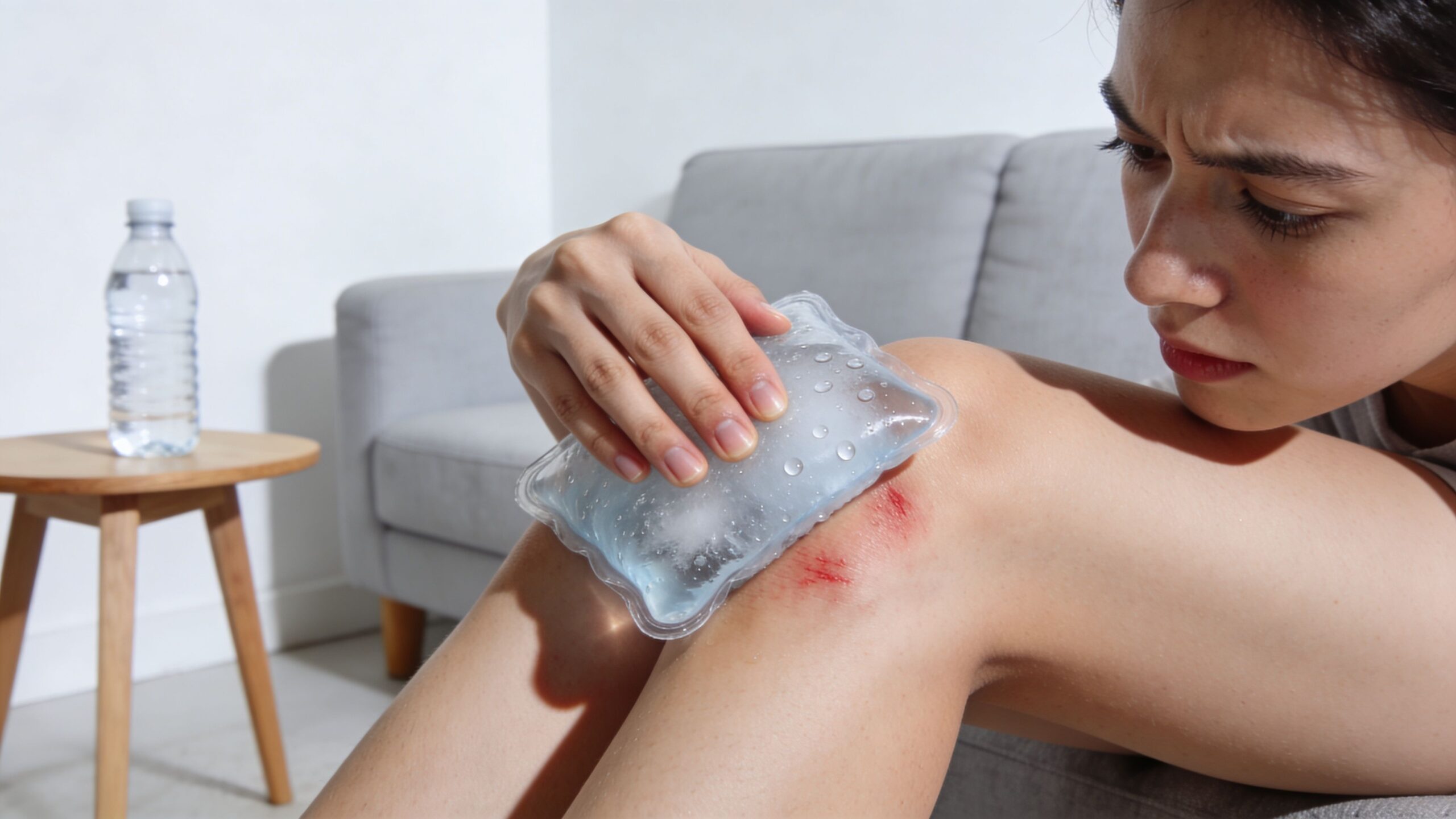
Cold is a strong option when the problem is acute irritation. That includes a fresh muscle strain, a sore joint with swelling, or a post-activity flare that feels inflamed rather than tight.
For delayed onset muscle soreness, cold can help too, but the timing matters more than many people realize. A meta-analysis of 32 randomized controlled trials found that cold therapy for DOMS worked best when applied within 1 hour after exercise and had “no obvious effect” on pain when applied more than 24 hours later, according to this PubMed meta-analysis on DOMS timing.
That finding changes the usual advice. For simple post-workout soreness, icing long after the session may not do much.
A practical cold routine
Cold works best as a short, controlled treatment, not an all-evening event.
- Use a barrier. Wrap an ice pack or gel pack in a thin towel. Don’t place it directly on skin.
- Keep sessions brief. A common home routine is about 15 to 20 minutes at a time.
- Give the skin a break. Wait at least an hour before the next round.
- Check the area. If the skin looks irritated or you feel burning, stop.
Methods can include:
- Gel packs for knees, shoulders, and smaller areas
- Crushed ice in a bag for a close contour fit
- Cold water immersion for larger muscle groups after hard training
If you’re trying immersion, these optimal ice bath recovery times are a useful reference for thinking about safe exposure.
What cold doesn’t do well
Cold is not the answer to every sore muscle. It’s usually less helpful when the area feels dense, stiff, or hard to loosen but not swollen. In those cases, people often say ice makes them feel tighter.
That response is clinically useful. It means the tissue may need relaxation and mobility support more than numbing. If the muscle feels better while you’re icing but tighter once you stop, cold may be controlling symptoms without improving movement.
The Protocol for Using Heat Therapy
Heat deserves more credit than it usually gets. Many people assume it’s only for old injuries or general comfort, but for some kinds of muscle soreness, especially after exercise, it can be the more effective option.
When heat is the better tool
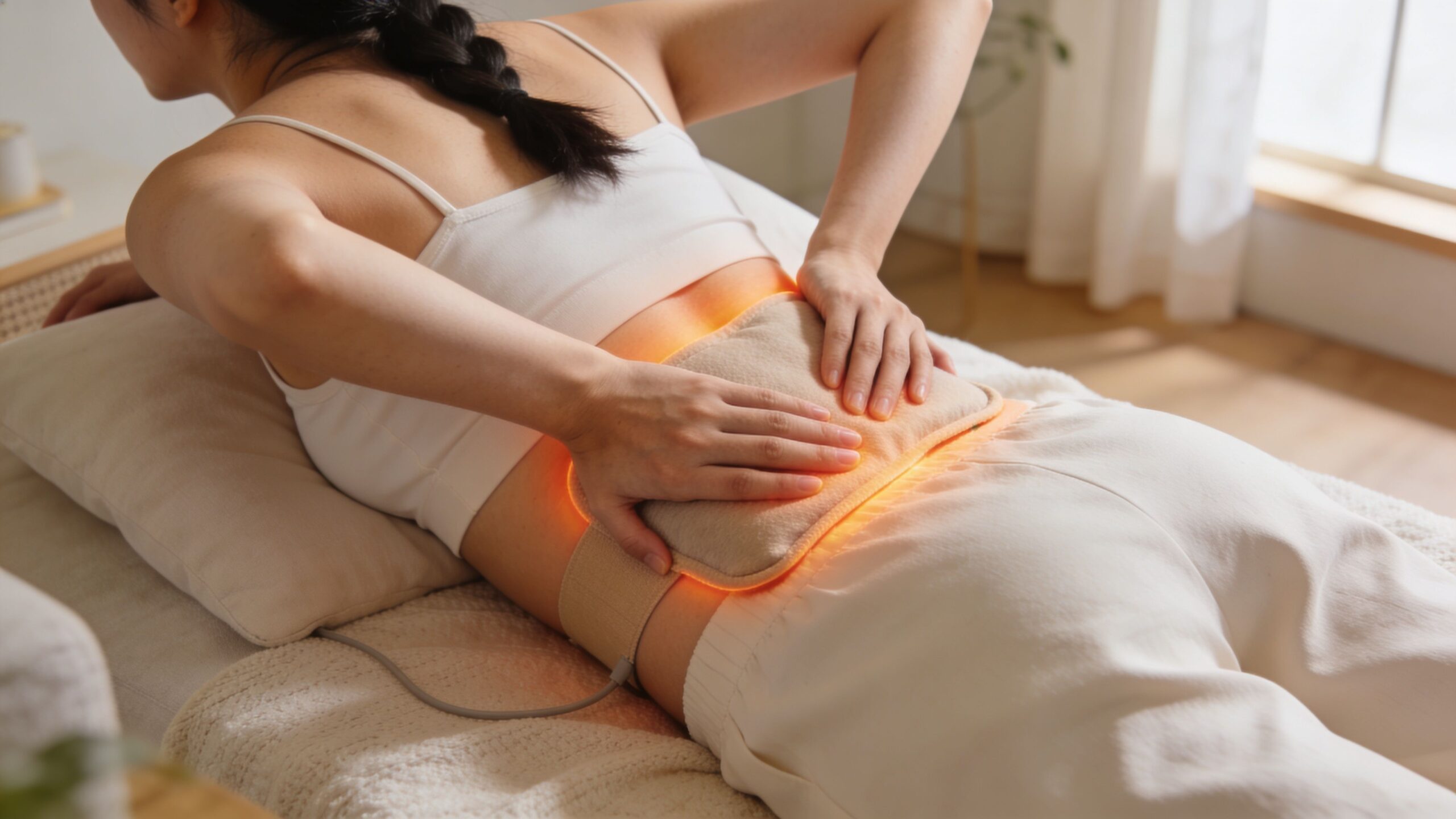
Heat works best when your main complaint is stiffness, tightness, or aching that improves as you move. That includes chronic low back tightness, upper back tension, sore calves after a workout, or general muscular guarding.
It can also play a bigger role in post-exercise recovery than commonly realized. A 2022 network meta-analysis found that hot pack therapy was the most effective intervention for pain relief within the first 24 hours after exercise, outperforming cryotherapy and contrast water therapy in early DOMS recovery, according to this PMC meta-analysis on heat and DOMS.
That doesn’t mean heat belongs on every fresh injury. It means that for muscle soreness after exercise, especially when swelling isn’t the defining feature, heat may be a very reasonable first choice.
Good ways to apply heat
The best heat source is usually the one you’ll use correctly and safely.
Common options include:
- Heating pads for low back, neck, and shoulders
- Warm baths or showers for larger muscle groups
- Moist heat packs when you want warmth that feels deeper and more soothing
- Adhesive heat wraps when you need portable support during the day
A useful routine is simple:
- Apply heat for a short session.
- Follow it with easy movement.
- Reassess how the area feels.
That second step matters. Heat often works best when it prepares you to do something productive, like walking, stretching, mobility work, or a home exercise program.
Warm the tissue, then use the window. Heat helps most when you move during the period it makes motion easier.
What to avoid with heat
Heat can backfire if the area is visibly swollen, freshly bruised, or already throbbing. In those situations, added warmth may make the region feel more reactive.
Use a cloth barrier if needed, keep the temperature comfortable rather than intense, and don’t fall asleep on a heating pad. If warmth leaves you feeling looser and more mobile, it’s probably helping. If it leaves the area heavier, puffier, or more irritated, it’s the wrong tool for that moment.
Safety First Risks and When to Seek Professional Help
Self-care works best when it’s used like treatment, not like guesswork. Heat and cold are both low-tech, but they still have risks.

When to be cautious with cold or heat
Don’t use cold casually if you have poor circulation, unusual cold sensitivity, or trouble sensing temperature accurately. Don’t place ice directly over vulnerable skin or leave it on long enough that the area becomes painful or excessively numb.
Heat needs just as much respect. Avoid it over a body part that looks freshly swollen, actively inflamed, or bruised. If you have reduced sensation, neuropathy, or a condition that makes burns harder to detect, be extra careful with heating pads and wraps.
People also underestimate overnight heat exposure. If you’re curious about longer-duration sleep products, this overview on understanding heated mattress toppers is useful background, but the clinical point is simple: don’t trap heat against a painful area all night and assume more is better.
Signs it’s time to get checked
Sometimes “sore muscles” aren’t just sore muscles. Get evaluated if you notice any of the following:
- Pain that keeps worsening. Normal soreness should gradually settle, not escalate.
- Inability to bear weight or use the limb normally. That raises concern for a more significant injury.
- Visible deformity or major swelling. Those signs suggest more than routine muscle irritation.
- Numbness that doesn’t fade. Persistent sensory changes need attention.
- Pain that limits daily life. If walking, sleeping, dressing, or working becomes difficult, it’s time for a closer look.
For a more complete decision guide, this article on when to ice vs heat can help you sort through common situations.
If heat or cold only gives brief relief but the same pain keeps returning, the issue may be a movement or loading problem, not a missing ice pack or heating pad.
If symptoms don’t fit the usual pattern, a physical therapist can assess whether you’re dealing with routine soreness, a true strain, referred pain, or another musculoskeletal problem.
Building Your Smart Recovery Toolkit
The easiest way to remember all of this is to stop treating heat and cold like rivals. They’re different tools for different jobs.
A simple mental model
Use this framework:
- Fresh injury with swelling or sharp irritation. Start with cold.
- Post-workout soreness right after exercise. Cold may help early, especially if used quickly.
- DOMS that feels achy and stiff. Heat is often a strong option, especially for pain relief.
- Chronic tightness or a tweaked back that feels guarded. Heat usually fits better.
- If one method clearly makes movement worse. Stop and switch strategies.
Listen to the response, not the habit
Your body usually gives useful feedback. If cold reduces pain and settles the area, that’s a clue. If heat makes you stand taller, walk easier, or move with less guarding, that’s a clue too.
The smartest recovery plan is rarely “always ice” or “always heat.” It’s matching the tool to the tissue state, then paying attention to how you respond. If soreness doesn’t behave like normal soreness, or it keeps coming back, that’s where a fuller evaluation matters. In some cases, structured rehab such as outpatient physical therapy or lower-impact options like aquatic therapy can help when simple home recovery stops working.
If your muscle pain isn’t improving, keeps returning, or you’re not sure whether it’s soreness or an injury, a physical therapist can help you sort it out. Highbar Physical Therapy offers evaluation and treatment for musculoskeletal pain, movement limitations, sports injuries, and recovery needs, with care focused on identifying the cause and building a plan you can follow.