You get the diagnosis, the pain settles slightly, and then confusion starts. Reaching into a cabinet feels risky. A light workout sounds reasonable until the shoulder aches that night. Patients hear “stay active” and “don’t irritate it” in the same week, and both can be true.
A torn rotator cuff changes how the shoulder handles force. The cuff is supposed to keep the humeral head centered on the socket while larger muscles move the arm. Once that system is painful, weak, or delayed, certain exercises stop being productive and start feeding the problem. The issue is rarely exercise in general. It is the combination of load, joint angle, speed, and control.
That distinction matters during recovery.
Many people do better once they stop asking, “Is this exercise good or bad?” and start asking, “Does this movement force the cuff to control load in a position it cannot yet tolerate?” That is the standard used throughout this guide. Some exercises increase subacromial compression. Others create a strong anterior pull on the shoulder, push the arm into end range without enough scapular support, or add speed the healing tendon cannot decelerate well. Different movement patterns stress the cuff in different ways, so a simple avoid list is not enough.
Exercise still has a clear role in treatment. Research published in the Journal of Shoulder and Elbow Surgery found that a structured program emphasizing rotator cuff and scapular training can help many patients with atraumatic full-thickness tears improve pain and function over time, often delaying or avoiding surgery (MOON Shoulder Group study summary). The practical takeaway is straightforward. Keep training, but choose positions the shoulder can control and progress them deliberately.
If you need examples of lower-risk loading options, this guide to rotator cuff strengthening exercises that build capacity without provoking the joint is a useful companion to the avoid list below.
If you need a primer on the injury itself, this overview on understanding rotator cuff injuries is a useful starting point.
1. Overhead Pressing Movements

A common rehab mistake looks harmless at first. Someone with a healing cuff picks up light dumbbells, presses overhead, and feels only a mild pinch on the first set. The shoulder stiffens later, the ache shows up that night, and now even reaching into a cabinet feels worse.
Military press, dumbbell shoulder press, machine shoulder press, and strict press all load the cuff in a position that demands precise joint control. The rotator cuff has to center the humeral head while the arm moves into elevation, and it has to do that under load, often near end range. If that control is not there yet, the humeral head tends to ride up, subacromial space closes down, and the irritated tendon gets compressed rep after rep.
That is why overhead pressing is often a poor choice early in recovery, even when the weight seems light.
Why pressing overhead goes wrong
The problem is not "arm overhead." The issue is the combination of elevation, load, and limited margin for error. During a press, the cuff must work with the scapula to keep the ball centered in the socket as force travels upward. A healthy shoulder can usually handle that. A torn or irritated cuff often cannot.
Clinical guidance from the Hospital for Special Surgery notes that shoulder pain with overhead activity is a common feature of rotator cuff problems, especially when the tissues are already irritated or weak (rotator cuff tendonitis and impingement overview). In practice, that same pattern shows up in the gym as a painful arc, a catch near the top, or a deep ache that appears after the workout rather than during it.
Strict pressing can be especially provocative because it removes compensation from the lower body and trunk. Seated pressing does not solve that. It often gives the shoulder even less help from the rest of the system while still demanding clean upward rotation and humeral control.
Practical rule: If pressing overhead produces a pinch during the set or an increase in soreness later that day, the shoulder is not ready for that pattern.
What to do instead
Use movements that train the shoulder without forcing loaded end-range elevation. In early rehab, I would rather see a patient build tolerance in positions the cuff can control than keep testing whether overhead pressing has become tolerable.
Better options often include:
- Scapular control drills: Rows, retraction work, and serratus-focused exercises can improve the base the cuff depends on.
- Supported pressing in a lower range: Landmine press variations or short-range incline pressing can work for some patients because they reduce the demand of straight overhead loading.
- Isometric cuff work and controlled raising below shoulder height: These let you load tissue without asking it to manage the most provocative position.
If you need examples of lower-risk progressions, this guide to rotator cuff strengthening exercises that build control before overhead loading is a useful next step.
A simple test from daily life helps here. If lifting a bag into an overhead bin, placing a dish on a high shelf, or washing your hair still hurts, pressing weight overhead is usually ahead of your current capacity. Respect that signal. Recovery moves faster when exercise matches what the shoulder can control, not what the athlete misses doing.
2. Behind-the-Neck Lat Pulldowns and Pull-Ups
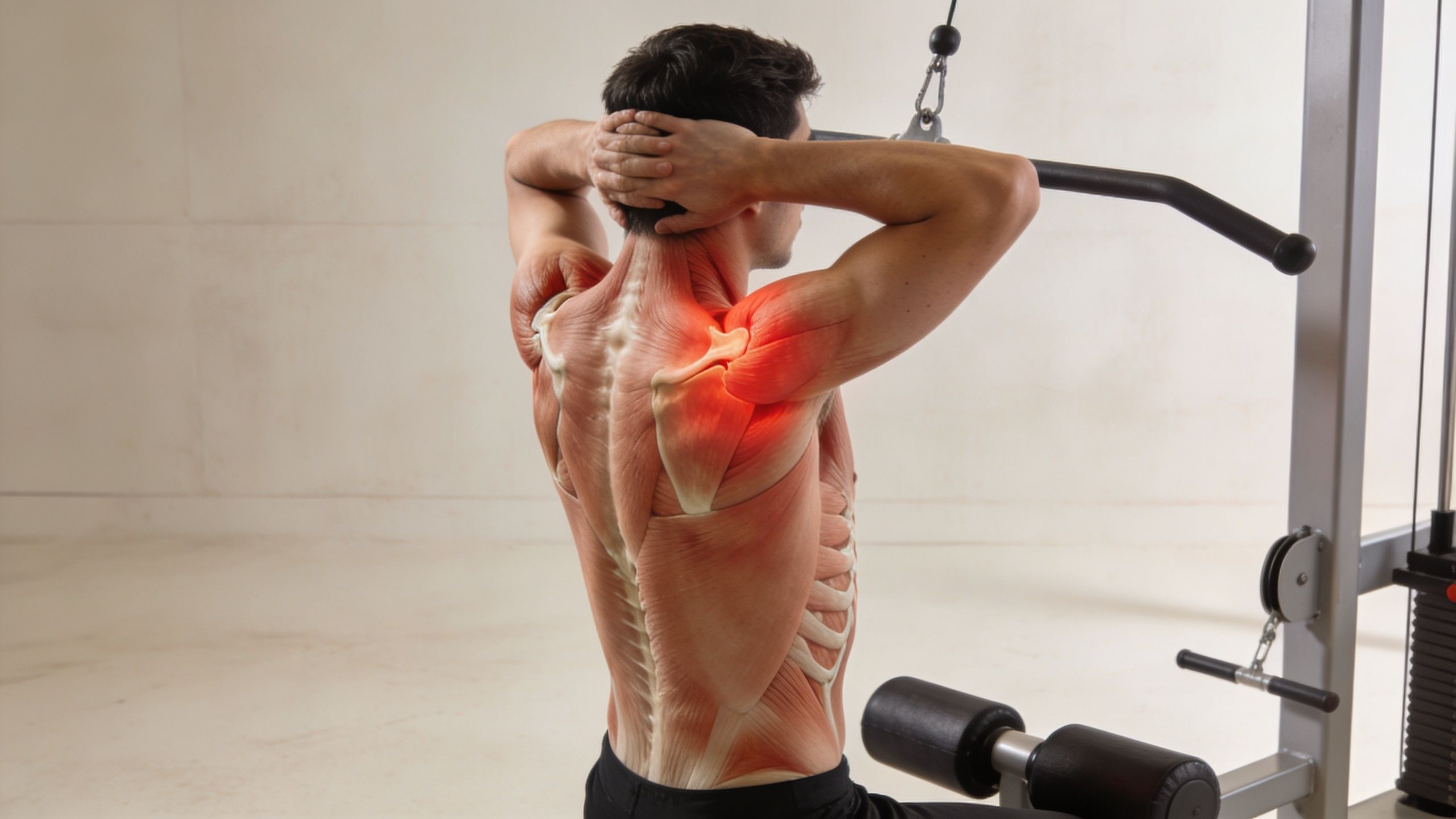
Behind-the-neck pulling is one of those exercises that looks like upper-back training but often turns into shoulder irritation. Whether it’s a lat pulldown or a pull-up variation, bringing the bar or your body behind the head pushes the shoulder into a position many injured cuffs can’t manage well.
This movement forces the shoulder past a comfortable recovery range. The combination of internal rotation and horizontal adduction creates stress that healing tissue doesn’t need.
The biomechanical problem
Behind-the-neck lat pulldowns can extend the rotator cuff beyond its natural range of motion and add unnecessary stress to the glenohumeral joint and surrounding soft tissue, as described in this review of the best and worst exercises for your rotator cuff. Patients often think they’re targeting the back more effectively. In practice, they’re usually trading a small training benefit for a much bigger mechanical cost.
The bottom position is where trouble often shows up. Someone pulls the bar down, the neck juts forward, the ribs flare, and the shoulder runs out of clean motion. That’s when people report a top-of-shoulder pinch, an unstable feeling, or sharp pain around the front of the joint.
Keep the bar in front of the body. If you need to change your posture to finish the rep, the shoulder is already compensating.
Better pulling options
You usually don’t need to eliminate pulling. You need to clean up the path.
Useful substitutions include:
- High-to-low rows: These train the posterior shoulder and scapular stabilizers without forcing end-range compromise.
- Front-of-body lat pulldowns: Only after the shoulder tolerates the setup well.
- Band rows at controlled speed: These let you build strength without the neck and shoulder distortion many people use on the machine.
A common scenario is the person who says standard rows feel mostly fine, then one set of behind-the-neck pulldowns brings the pain back for two days. That doesn’t mean pulling is bad. It means that specific shoulder position is bad for a torn cuff.
3. Heavy Bench Press and Decline Bench Press
Bench press surprises people because it doesn’t look like an overhead movement. But a torn cuff doesn’t only get irritated overhead. Heavy benching, especially with a deep range or wide elbows, can be just as provocative because the cuff still has to center and control the humeral head under load.
Decline bench can be even less forgiving. The angle often drives people into a stronger pushing pattern while masking shoulder strain until the set is over. Then they feel it when reaching, sleeping, or lowering the arm later.
Why pressing from the bench still stresses the cuff
When you lower the bar, the cuff works to control the shoulder and keep the joint stable. If the elbows flare and the bar drops too low, the front of the shoulder often takes the hit. That’s where patients describe clicking, a painful stretch at the bottom, or soreness that lingers into the night.
This is one of the more frustrating trade-offs in rehab. Bench press can feel “almost okay” during the workout, but delayed pain is a sign the tissue wasn’t tolerating the load well.
A few gym patterns are especially risky:
- Heavy barbell bench press: More load, less room to self-correct.
- Decline bench press: More stress through the front of the shoulder for many lifters.
- Deep dumbbell benching: Greater range can mean greater irritation if control is poor.
What works better while you rebuild
If pressing strength matters to you, don’t force a comeback through pain. Start with movements that let the shoulder stay more centered and the elbows stay in a more manageable path.
That often means:
- Floor press: The floor limits the painful bottom range.
- Incline push variations with controlled elbow position: Better than flat heavy barbell work for many people.
- Lighter front-of-body loading: Only when symptoms stay quiet during and after.
A practical example is the lifter who can do chest-supported rows but gets night pain after a “light” bench session. That difference matters. The cuff may tolerate pulling and still reject loaded horizontal pressing. Treat those as separate categories, not as proof the shoulder is ready for all upper-body work.
4. Wide-Grip Rows and Extreme Horizontal Abduction Movements
Rows usually land on the “safe” list too quickly. Some are. Some aren’t. Wide-grip rows and other movements that drive the arm far out from the body can put the cuff in a mechanically awkward position, especially if the shoulder blade doesn’t move well.
The issue is less obvious than with overhead pressing. A person can perform the movement, but the shoulder often does it by shrugging, jamming forward, or rotating into a poor path. That keeps the cuff working in a compressed, inefficient position.
When back training turns into shoulder aggravation
The wider the grip, the harder it is for many injured shoulders to keep clean scapular mechanics. Instead of a smooth row, you get neck tension, upper trap dominance, and a humeral head that drifts where it shouldn’t. Patients often say they feel clicking near the top of the rep or a pinch when trying to “squeeze the shoulder blades together.”
This matters with cable rows, bent-over rows, rowing machines, and some wide-grip lat variations. The movement may look like back work, but the cuff still has to stabilize every inch of it.
The best row for a torn cuff is usually the one you can control without shrugging, twisting, or chasing range you haven’t earned.
Smarter rowing modifications
A better setup usually starts by narrowing the grip and reducing the demand on end-range shoulder position.
Try these principles:
- Use a neutral or closer grip: This reduces the stress of wide abduction.
- Support the torso when possible: Chest-supported rows remove a lot of compensation.
- Lead with the shoulder blade, not the hand: That keeps the movement from turning into an arm yank.
- Stop before the shoulder tips forward: More range isn’t better if the joint position gets sloppy.
One practical scenario is the person who returns to the rowing machine because it feels “less risky than pressing,” then notices a nagging click every time the elbows travel wide. That’s not a cue to pull harder. It’s a sign to clean up grip, path, and load.
5. Upright Rows
Upright rows are one of the easiest exercises to identify as a poor fit for rotator cuff recovery. The movement combines internal rotation with elevation of the elbows, which tends to narrow the space available for the rotator cuff tendon. That’s exactly the direction a painful shoulder usually doesn’t want.
People often assume lighter weight will solve the problem. Usually it doesn’t. The issue is built into the movement pattern itself.
Why this movement stays risky
Guidance on torn rotator cuff exercise selection specifically includes upright rows among the movements that overload the shoulder and should be avoided during recovery, as noted in this discussion of exercises to avoid with a rotator cuff tear. Even when form looks clean, the shoulder is still being pulled into a position that can increase tendon irritation.
The classic symptom is pain as the elbows rise. Some people feel a pinch on top of the shoulder. Others feel a catch deep in the front. A kettlebell, barbell, cable, or dumbbell can all create the same issue because the problem is the path, not the brand of resistance.
Better substitutes for the same goal
Upright rows are often performed for upper-back or shoulder work. You can train those areas without feeding an impingement-style position.
Better choices include:
- Shoulder rotations: Useful for cuff control instead of cuff compression.
- High-to-low rows: These target the posterior chain without driving the elbows into a risky path.
- Scapular activation drills: Angry cat rocking and similar options can build shoulder blade control.
A familiar example is the gym-goer who says, “It only hurts near the top, so I stop there.” That’s still a sign the exercise isn’t buying you much. If one part of a rep consistently recreates symptoms, you’re not modifying the lift. You’re repeating the problem.
6. Rapid Acceleration Throwing and Throwing Sports
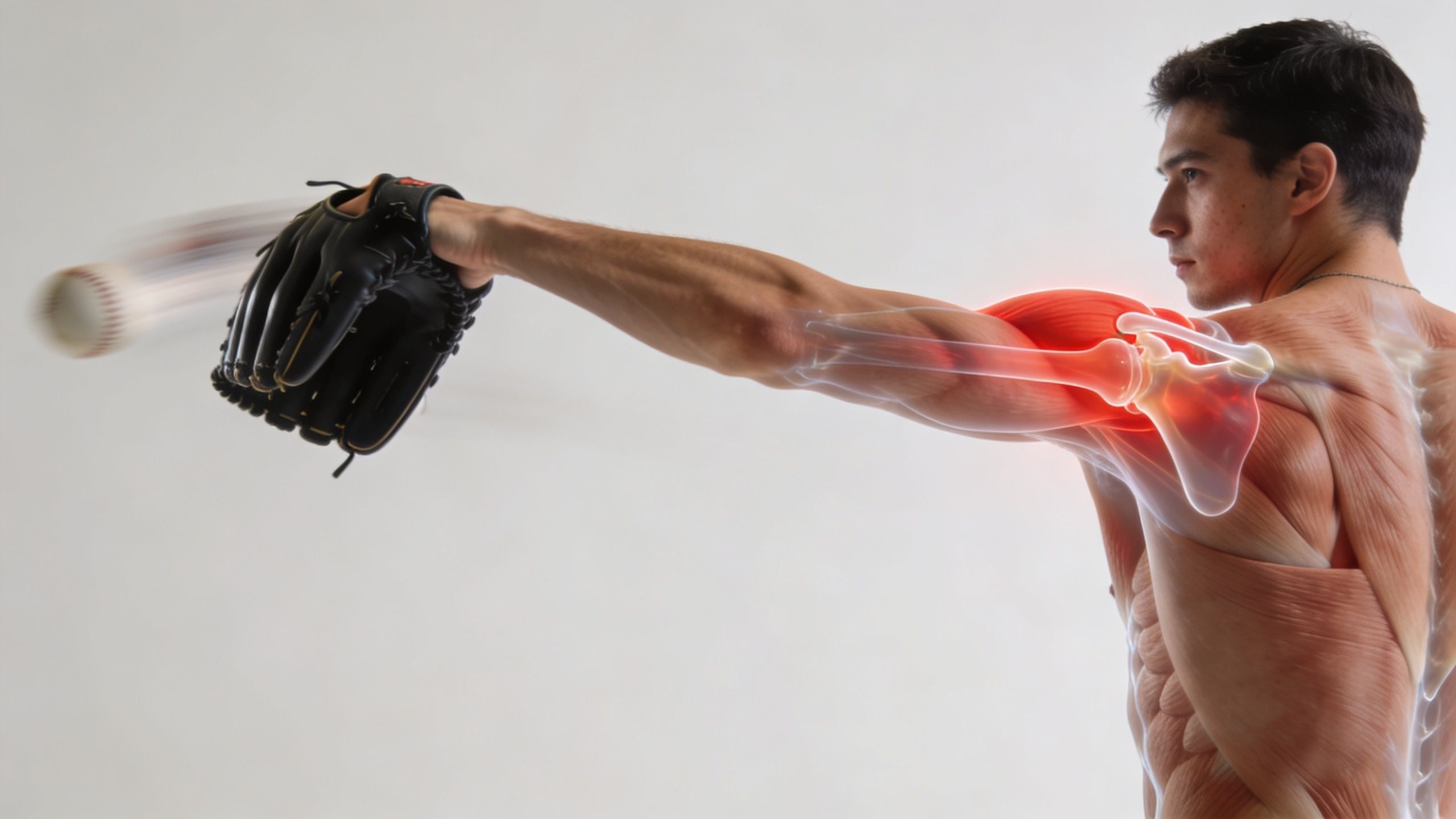
Throwing doesn’t just challenge the shoulder. It asks the cuff to control speed, rotation, and deceleration in a very short window. That’s why baseball, tennis, volleyball, and similar sports can feel fine in basic drills but fall apart when intensity rises.
A torn cuff usually tolerates slow strength work before it tolerates velocity. Patients often underestimate that difference. They can do bands or rows and assume a few easy throws should be okay. Then the shoulder flares immediately.
Why early return to throwing backfires
This category includes hard throws, serves, overhead slams, and explosive return-to-sport drills. The cuff has to stabilize the humeral head while the arm moves quickly, then control the stop. If strength, timing, and scapular mechanics aren’t ready, the tendon absorbs more force than it can handle.
This becomes even more important for people recovering after a procedure. If that’s your situation, these tips for recovering from rotator cuff surgery are worth reviewing alongside your sport-specific rehab plan.
A shoulder that handles slow resistance isn’t automatically ready for speed.
What athletes should do instead
Don’t confuse “not throwing yet” with inactivity. There’s still a lot of productive work available before return to sport.
Prioritize:
- Rotator cuff strengthening: Especially controlled external rotation and scapular stability.
- Core and trunk control: Throwing starts below the shoulder.
- Graduated return-to-throw progressions: Only after formal clearance and with symptom monitoring.
- Low-intensity skill reintroduction: Build control before power.
A common scenario is the recreational tennis player who can rally lightly but gets pain on the serve. That makes sense. The serve adds overhead speed and deceleration demand that basic hitting doesn’t. Treat that as a stage issue, not as a sign to push through.
7. Aggressive Cross-Body Adduction and Horizontal Adduction Stretching
Stretching is often perceived as safe. That’s why this category catches them off guard. If the shoulder feels stiff, pulling the arm hard across the body seems logical. But with a torn cuff, aggressive stretching can irritate the same tissues you’re trying to calm down.
The problem is force. A gentle mobility drill is different from cranking the arm across the chest until you feel a sharp stretch in the back or top of the shoulder.
When stretching becomes too much
Cross-body adduction and similar end-range positions can place the cuff in a mechanically poor position, especially if the shoulder blade isn’t moving well or the joint is already reactive. Some patients do these stretches repeatedly because they think more tension means more benefit. Then they notice worse pain reaching overhead, putting on a shirt, or lying on that side later.
This gets even more relevant when posterior shoulder symptoms are part of the picture. If that overlap sounds familiar, it helps to understand how shoulder posterior impingement can change which positions your shoulder tolerates.
A safer approach to mobility
Gentle mobility should support recovery, not provoke it. The shoulder should feel easier after the movement, not more inflamed.
Use these filters:
- Keep the stretch pain-free: Mild tension is acceptable. Sharp or pinchy pain is not.
- Shorten the hold: Brief, repeatable stretches are often better tolerated than long aggressive holds.
- Pair mobility with scapular control: The shoulder blade has to do its job too.
- Stop if symptoms build afterward: Delayed irritation still counts.
A real-world example is the person who sits at a desk all day, feels “tight,” and starts yanking the arm across the chest every hour. If that creates more soreness by evening, the stretch isn’t fixing stiffness. It’s adding irritation to healing tissue.
7 Rotator Cuff Exercises to Avoid, Quick Comparison
| Exercise / Movement | Implementation complexity | Resource requirements | Expected outcomes (rotator cuff recovery) | Ideal use cases | Key advantages |
|---|---|---|---|---|---|
| Overhead Pressing Movements (Military Press, Shoulder Press) | Moderate–High (technique and control required) | Barbell/dumbbells/machine; PT supervision recommended | High impingement and re‑injury risk; can delay healing | Uninjured athletes or late rehab after PT clearance | Strong overhead strength and functional for overhead tasks |
| Behind‑the‑Neck Lat Pulldowns and Pull‑Ups | High (extreme shoulder positioning) | Lat‑pulldown machine or pull‑up bar; supervision advised | Very high compression/impingement risk; potential catastrophic re‑tear | Avoid during recovery; only considered for healthy shoulders (rare) | Effective lat activation and full ROM for healthy shoulders |
| Heavy Bench Press and Decline Bench Press | Moderate (loads and eccentric control important) | Bench, barbell, spotter; rehab supervision for return | Eccentric overload and anterior stress; can worsen tears or delay healing | Healthy lifters or late rehab with graded progression | Excellent chest and anterior shoulder strength development |
| Wide‑Grip Rows and Extreme Horizontal Abduction Movements | Moderate (scapular control critical) | Barbell/cable/machine; cueing for scapular mechanics | Increased subacromial impingement and cumulative microtrauma | Healthy athletes or later rehab after scapular control achieved | Targets posterior shoulder and upper back development |
| Upright Rows (Particularly with Heavy Load) | Low–Moderate (simple pattern but risky) | Barbell/dumbbells/kettlebells | High impingement potential even at light loads; linked to cuff pathology | Generally avoid with rotator cuff history; used cautiously in healthy individuals | Effective upper trapezius and shoulder elevation strengthening |
| Rapid Acceleration Throwing and Throwing Sports (Early Recovery) | Very High (sport skill and high velocities) | Sport environment; structured interval programs; PT/coach oversight | Highest eccentric loading risk; common cause of failed recovery if early return | Only for athletes following structured, supervised return‑to‑throw program | Essential for reclaiming sport‑specific performance when safe |
| Aggressive Cross‑Body Adduction and Horizontal Adduction Stretching | Low (easy to perform but requires dosage control) | None or clinician guidance | Over‑stretching can cause microtrauma, pain, and altered mechanics | Gentle mobility work in rehab under PT guidance; avoid aggressive stretching | Helps posterior shoulder mobility when performed gently and appropriately |
Your Next Move From Avoiding Injury to Building Strength
You finish a workout, and the shoulder does not feel terrible until later that night. Reaching for a seatbelt hurts. Sleep becomes awkward. The next session turns into a test of what you can get away with, not a plan to get better. That is the point where many rotator cuff recoveries stall.
Avoiding a bad exercise is only the first step. The goal is choosing movements that keep load on the shoulder without putting the cuff in positions it cannot control yet. In practice, the highest-risk patterns usually share the same traits: poor humeral head control, too much load too soon, speed, or end-range positioning that narrows space and increases tendon strain.
That gives you a simple way to judge any exercise during recovery. Ask three questions. Can you keep the shoulder blade moving well? Can you control the arm without shrugging, pinching, or drifting forward? Can you finish the set without a pain spike during the session or a clear flare-up later that day? If the answer is no, the movement is ahead of your current capacity.
The trade-off matters. Rest helps an irritated cuff settle down, but prolonged avoidance creates a different problem: less strength, less coordination, and a shoulder that becomes more sensitive to normal loading. I usually want patients doing something, just not random overhead work or stubborn gym substitutions that keep provoking symptoms.
A better progression is usually boring at first, and that is fine. Supported rows, side-lying or band-based cuff work, landmine or other front-of-body pressing variations, and controlled carries often let people build strength with less superior humeral migration and less compression at the irritated tissues. The exact exercise matters less than the mechanics. Clean reps beat impressive reps early in rehab.
This is also where online advice often falls short. A blanket "never press overhead again" message is not clinically useful for the parent who needs to place a box on a shelf or the lifter who wants to return to training. The better question is whether the shoulder has earned that demand yet. Pain-free range, cuff strength, scapular control, and tolerance to gradually heavier loading matter more than motivation.
As noted earlier, many rotator cuff tears improve with a well-sequenced nonoperative plan. The sequence is what separates rehab from symptom-chasing. Reduce irritation first. Restore motion and control next. Then rebuild strength, then return to higher-speed and overhead demands.
If progress feels inconsistent, get the shoulder assessed. A physical therapist can identify which movements are creating compression or overload, which substitutions fit your current stage, and how to progress without turning every workout into a setback. If you are considering care options, Highbar Physical Therapy is one example of a provider that offers evidence-based physical therapy for shoulder injuries, including rotator cuff rehab.
The goal is a shoulder that can tolerate real life again, not one that only feels good when you avoid using it.