Golf is one of the few sports many people can keep playing for life. That’s part of its appeal. You get fresh air, competition, routine, and a reason to keep moving. But if you’re a senior golfer, you’ve probably also noticed the trade-offs. The round still sounds good on Friday. Your back, hips, or shoulders may disagree by Saturday afternoon.
That doesn’t mean your best golf is behind you. It usually means your approach needs to change. Senior golfers, typically defined as golfers 50 and older, often average between 90 and 100 on a standard par-72 course, according to The Clubhouse. That range reflects real physical changes such as reduced flexibility, less efficient power transfer, and more effort needed to repeat the same swing.
The good news is that golf rewards efficiency. A smooth, repeatable motion often beats an aggressive one that asks your body to do what it can’t do comfortably anymore. The most useful tips for senior golfers aren’t about swinging harder. They’re about moving better, choosing smarter setups, and recovering well enough to come back for the next round.
If you want to improve your senior golf game, start with the body you have now, not the one you had at 35. These seven physical therapist-informed strategies can help you protect your joints, keep your distance as long as possible, and enjoy the game for years to come.
1. Prioritize Flexibility and Mobility Work Before Playing
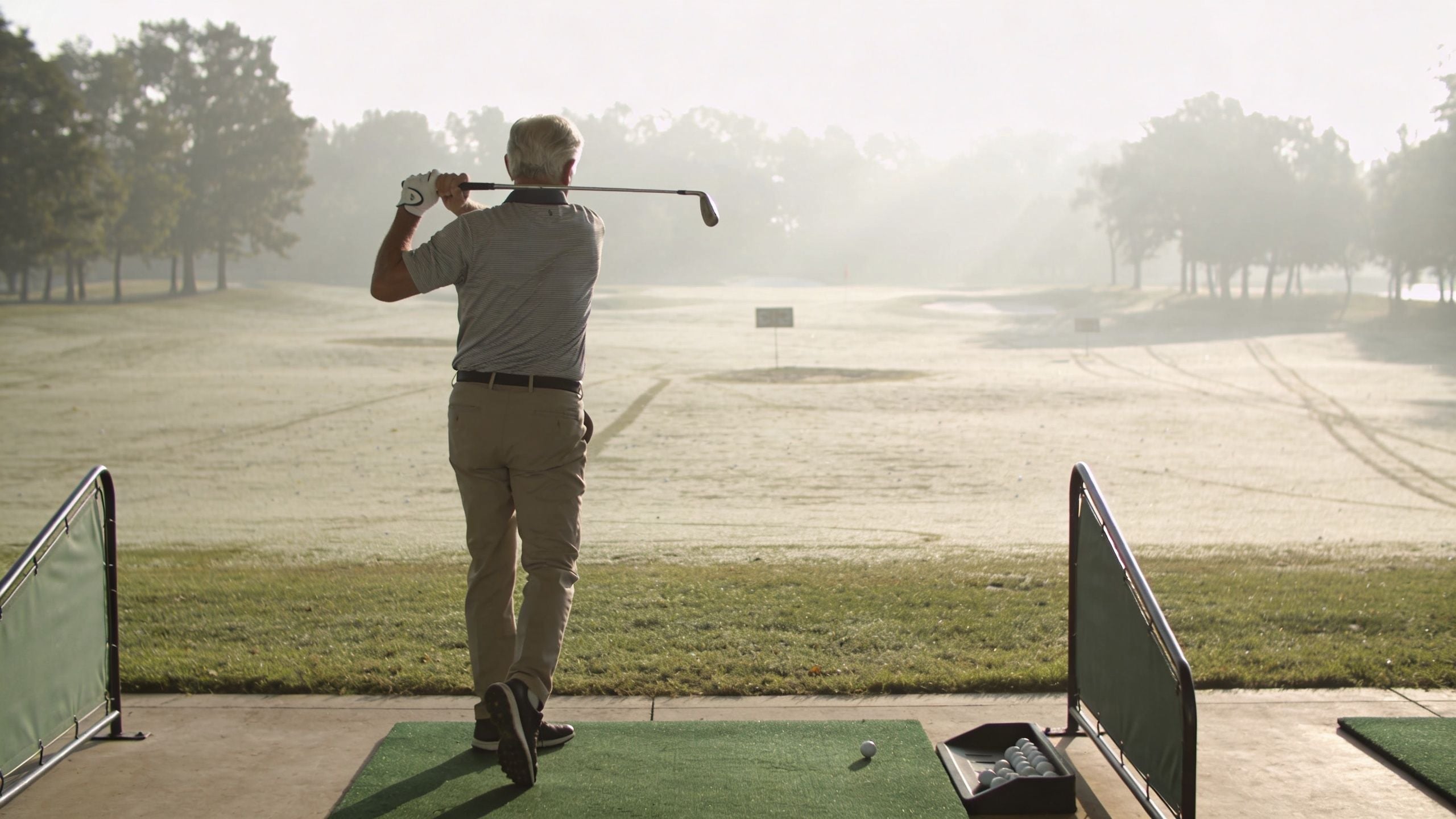
You step out of the car feeling fine, take a few practice motions, then ask your body for a full shoulder turn on the first tee. That is where many senior golfers irritate the back, pull across the ball, or lose balance before the round has even settled in.
Golf may not feel explosive like tennis or pickleball, but the swing still asks for coordinated rotation through the hips and upper back, enough shoulder motion to get the club in position, and enough lower-body control to stay centered. If those pieces are stiff, the body borrows motion from the wrong place. In clinic, I see this most often as extra twisting through the lower back and a steeper, more arms-driven swing.
That is why warm-up matters. Mobility work before a round is not about becoming more flexible in a general sense. It is about giving the joints you rely on for golf enough usable motion for that day’s swing.
What to loosen before the first tee
Put your attention on the areas that commonly tighten with age and sitting: the thoracic spine, shoulders, hips, and hamstrings. Before a round, dynamic movement is usually the better choice because it raises tissue temperature and rehearses the positions you are about to use. Long static stretching has more value after play or as part of separate mobility work at home.
A simple pre-round sequence can include:
- arm circles and shoulder rolls
- standing trunk rotations
- hip circles
- gentle leg swings
- ankle rocks
- two or three slow practice swings that gradually get longer
If you want a model to follow, this dynamic stretching routine for golfers and active adults is a practical place to start.
Practical rule: Your first full swing of the day should not happen on the first tee.
Keep the goal specific. You do not need a bigger backswing at any cost. You need enough motion to turn without forcing the lumbar spine, standing up out of posture, or yanking the club back with the arms.
Match mobility work to the swing you can repeat
Senior golfers often play better when they stop chasing a huge turn and start building a comfortable one they can repeat for 18 holes. That trade-off matters. A shorter, cleaner turn usually costs less on the joints and often produces more centered contact than a bigger turn your body cannot control.
Use the range the same way. Start with putts or chips, then short wedges, then half swings with a mid-iron. Build speed in stages. That progression gives you time to notice whether the restriction today is in the hips, upper back, or shoulders before you ask for full speed.
Pain also gives useful information. If your back feels tight but eases once your hips and upper back loosen up, that points to a mobility problem. If pain sharpens as you swing harder, cut back and adjust the session. Pushing through a limited turn rarely improves ball striking, and it often makes the walk to the 14th tee a lot less enjoyable.
2. Strengthen Core and Rotational Stability Muscles
By the 12th or 13th hole, many senior golfers are not fighting their swing. They are fighting the slow loss of posture, balance, and trunk control that makes every shot harder on the back and less predictable at impact.
Core training for golf should support rotation, not just create fatigue. The job of the trunk is to let the hips and shoulders turn while keeping the spine controlled enough to transfer force cleanly. When that control drops off, the body often finds motion in the lumbar spine instead of the hips and upper back. That is a common setup for back tightness after a bucket of balls or a full round.
In practice, I see this problem less as a strength ceiling and more as a control problem. A golfer may be strong enough to hold a plank, but still lose rib and pelvis position during the swing. That matters. You can have enough force to swing the club and still leak speed because the trunk cannot stay organized long enough to deliver it.
Train for control first, then speed
Start with exercises that teach you to resist unwanted motion and connect the lower body to the torso:
- Anti-rotation press or hold: Trains the trunk to stay steady while the arms move.
- Side plank: Builds lateral trunk strength that helps with posture and balance.
- Dead bug: Improves rib, pelvis, and breathing control without loading the spine heavily.
- Chair squat or sit-to-stand: Reinforces leg drive and trunk control together.
- Split-stance band rotations: Helps you coordinate hip turn with upper body rotation.
Keep the reps clean and the tempo controlled. If the neck tightens, the low back arches, or the shoulders take over, the exercise is too hard or too fast.
Power still matters, especially if distance has dropped. The trade-off is that chasing speed without control usually shifts stress to the back, elbows, or shoulders. Senior golfers tend to do better with short sets of crisp rotational work, such as light medicine ball throws or band rotations, after they can first control posture and balance. That sequence protects the joints and gives the speed work a better chance of carrying over to the course.
Equipment can support that effort too. Lighter total club weight, grip changes, and shaft profiles sometimes reduce the amount of force your body has to create or absorb. For a practical overview, these insights on 2025 golf gear are worth reviewing alongside your physical training.
One more point. Endless sit-ups rarely help senior golfers play better. Golf asks for rotational control, pressure shift, and the ability to stay centered while the club moves around you. Train those qualities, and the swing usually holds up longer into the round.
3. Use Proper Equipment and Technology to Reduce Physical Stress
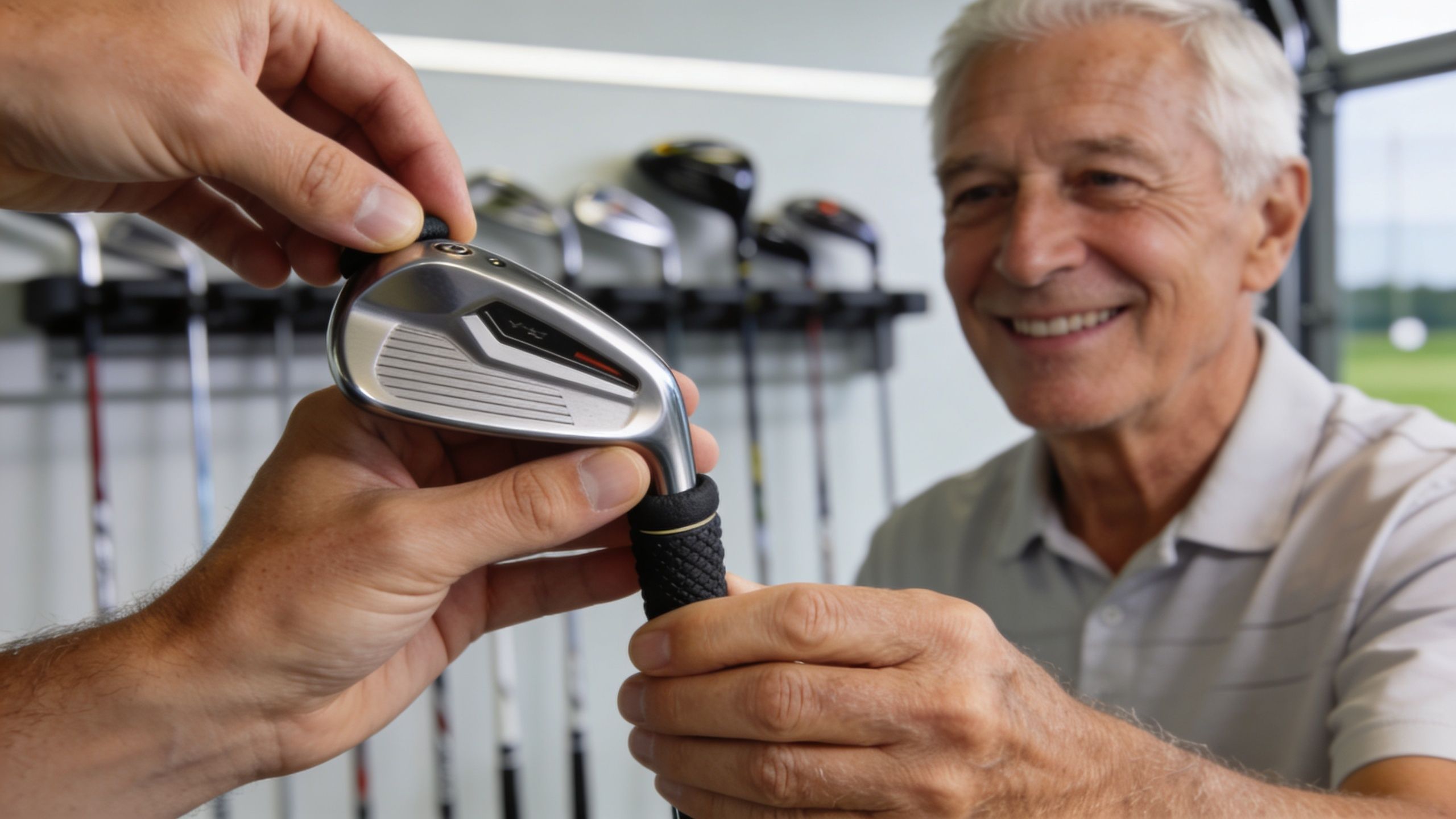
You get to the 12th tee, your hands are tired, your back is tightening, and the driver suddenly feels heavier than it did on the range. In many senior golfers, that problem starts before the swing. It starts with clubs that ask the body to work harder than necessary.
Equipment should match the golfer you are now. From a physical therapy standpoint, the goal is simple. Reduce the force your joints have to create, reduce the vibration they have to absorb, and make solid contact easier to repeat when mobility or strength is not what it was 10 years ago.
A good fitting can change the physical demand of the game more than golfers expect. The right setup can lower grip tension, improve launch without a forced effort, and make it easier to keep posture without overswinging. That matters for players managing stiffness in the hands, shoulders, hips, or lower back.
What to look for in a lower-stress setup
Senior-friendly equipment usually has a few common traits, but the best combination still depends on your body and ball flight.
- Lighter total club weight: This often reduces stress on the shoulders, elbows, and hands. The trade-off is feel. If the club gets too light, some golfers lose clubhead awareness and timing.
- More loft in the driver: Extra loft can help you launch the ball without trying to lift it with the hands or spine. That usually means less compensation through the low back.
- Shafts that match tempo and speed: A shaft that is too stiff often leads golfers to swing harder than their body tolerates well. A better match can make the swing feel smoother and less forced.
- Hybrids instead of long irons: Hybrids are often easier to launch and usually require less perfect contact. That can spare the wrists, shoulders, and back.
- Grip size and material: If the grip is too small, golfers often squeeze harder. That extra tension can irritate arthritic fingers, wrists, and forearms.
The right choice is rarely the most aggressive one on the rack.
If you are comparing new options, this outside overview offers additional insights on 2025 golf gear.
Fit the equipment to your physical limitations
I tell golfers to treat equipment like footwear or a brace. If it fits the body well, movement gets easier. If it does not, the body pays for the mismatch.
A golfer with hand arthritis may do better with softer, slightly larger grips. A golfer who has lost thoracic rotation may benefit from more loft and more forgiveness, because trying to create ideal launch through swing effort often leads to extra spinal extension. A golfer with reduced balance may score better with clubs that keep mishits playable instead of demanding precise speed and center-face contact.
That is why pride gets expensive. Clubs that looked right at age 60 can become a source of unnecessary strain at 70 or 75.
The best club is the one that lets you make a controlled swing without asking your joints to rescue the shot.
Technology can help too. A launch monitor session, pressure mat, or simple video review can show whether poor contact is really a technique problem or a setup problem. Sometimes the fastest way to reduce pain is not a bigger fitness program. It is changing the club, the grip, or the way the club interacts with the ground.
Use a cart on high-symptom days. Use gloves or grips that improve comfort if hand pain builds during the round. Those are practical ways to manage load and stay on the course longer.
4. Address Arthritis Pain and Joint Limitations Through Movement Modification
The round often starts fine. Then the second nine exposes the problem. The lead knee gets sore on downhill lies, the hands tighten on the grip, and the backswing gets shorter because the hip will not give you the turn it used to.
Arthritis changes how force moves through the body. That does not mean you need a perfect swing to keep playing. It means the swing has to match the joints you have today, not the ones you had 20 years ago. In clinic, I see this mistake all the time. Golfers keep chasing positions their knees, hips, or hands can no longer tolerate, and pain rises faster than performance.
Change the motion that irritates the joint
Start by identifying the movement that provokes symptoms. Pain on the takeaway points to a different problem than pain at impact or after 14 holes. That distinction matters, because the right modification depends on load, range of motion, and repetition.
Hand arthritis usually responds well to less grip tension, a quieter release, and fewer shots that require digging through heavy rough. Hip arthritis often improves with a shorter backswing, a slightly flared foot position, and a finish that does not force full rotation. Knee arthritis tends to prefer a narrower range of motion, less squat at address, and less aggressive weight shift onto a painful lead side. If the lower back is the main limiter, reduce the size of the turn and let the club travel shorter rather than asking the spine to create motion it no longer has.
A shorter swing is often the first change I recommend. Many senior golfers lose very little by going to a three-quarter backswing, but they cut down the joint stress that comes from forcing the last bit of turn. Smooth tempo helps too. Fast effort through a stiff joint usually creates compensation somewhere else, often in the back, wrists, or shoulders.
Protect the joint without getting passive
The goal is not to baby every ache. The goal is to remove the movements that flare symptoms and keep the movements that maintain function.
Try these adjustments on the range, one at a time:
- Reduce backswing length: Stop at the point where turn starts to feel blocked or pinchy.
- Open the feet slightly: This can make hip rotation easier and lower twisting stress at the knees.
- Stand a bit taller at address: Less knee and hip flexion can make setup more tolerable for arthritic joints.
- Use more club and less swing: Let the club do more of the work instead of forcing speed.
- Choose the lower-stress shot: A punch out or layup often costs less than one painful hero swing.
Course management matters here because pain changes decision-making. Golfers with arthritis often lose strokes by trying to hit shots their body no longer supports. Moving up a tee box, riding on high-symptom days, or avoiding repeated bunker exits with a sore knee are not signs of decline. They are load-management choices that keep you playing.
There is a difference between stiffness that improves as you warm up and pain that builds with each swing. If symptoms rise during the round, swelling increases, or you start changing your gait, the body is asking for less load. That is also a good time to work on your broader fall prevention strategy before problems start, especially if joint pain has already made uneven lies or bunker edges feel less stable.
Respecting joint limits is not giving in to arthritis. It is a smart movement strategy. The golfers who stay on the course longest usually are not the ones who force the old swing. They are the ones who adapt early, swing within their capacity, and save their joints for the next round.
5. Maintain Proper Balance and Fall Prevention Strategies
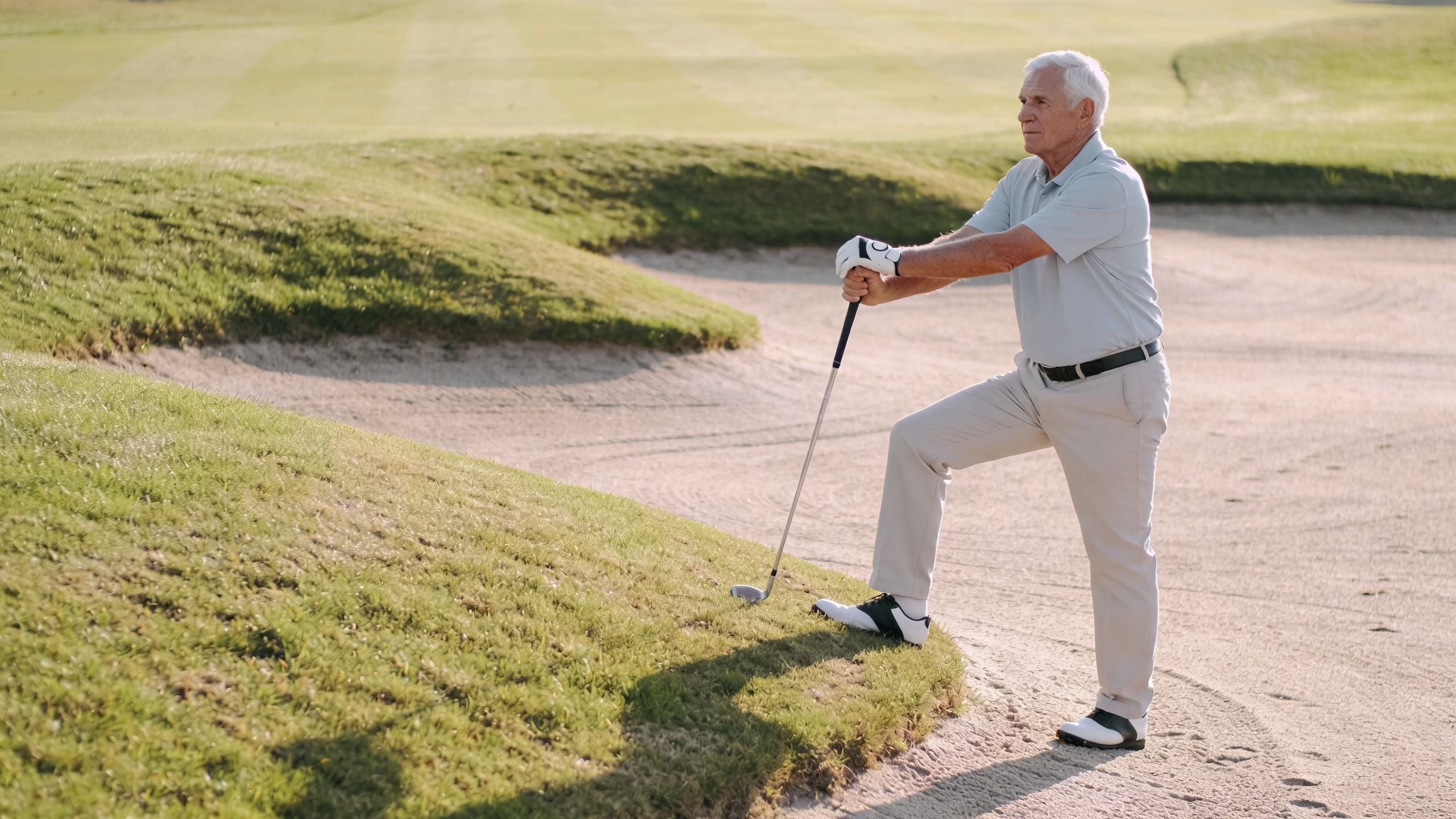
The risky moment often is not the swing. It is stepping onto a wet slope, climbing out of a bunker, or trying to hold posture on a sidehill lie with tired legs.
Balance on the course depends on three things. You need enough lower-body strength to control your position, enough foot and ankle awareness to feel where your weight is, and enough judgment to choose a lower-risk play when the ground is working against you. From a physical therapy standpoint, that matters because balance problems rarely come from one cause. I usually see a mix of reduced hip strength, slower reaction time, stiff ankles, and a pressure shift that has become less precise over time.
Practice balance in golf positions, not just standing still
Static drills help, but golf is dynamic. A senior golfer may pass a simple single-leg balance test at home and still struggle to stay centered during setup or finish in control after the swing. That is why training should include the positions that appear on the course.
A useful home routine can include:
- Single-leg stance near a counter: Keep the pelvis level and the standing knee soft. Aim for clean control.
- Tandem stance and heel-to-toe walking: These drills challenge narrow-base balance and help on uneven terrain.
- Golf posture holds: Set up in your address position and hold it while keeping pressure even through the feet.
- Slow weight-shift drills: Move pressure from trail foot to lead foot without swaying the torso.
- Sit-to-stand practice: This builds leg strength that carries over to walking hills, bunker entries, and fatigue resistance late in the round.
The goal is not to stand on one leg for the longest time possible. The goal is to control where your body goes.
If you feel unsteady before the club starts back, the lie has already changed the shot. Play the shot your balance can support.
Course decisions are part of fall prevention
Golfers often treat balance as an exercise issue only. On the course, it is also a decision-making issue. A downhill chip from wet grass, an aggressive bunker exit with a bad lip, or a rushed walk across a cart path can create more risk than the swing itself.
Wear shoes with reliable traction. Use the handrail on steep steps if the course has them. Park the cart so you do not have to step out onto a slope. If the lie feels unstable, widen your stance a touch, shorten the swing, or take the safer route back into play.
Fatigue matters here too. Balance usually drops late in the round, especially in golfers dealing with knee pain, back stiffness, or foot numbness. If your legs feel heavy or your reactions slow down on the back nine, that is a good time to simplify decisions and avoid recovery shots that demand perfect footing. If soreness tends to build as you play, it also helps to know when cold or heat is better for sore muscles so you can recover more effectively after the round.
If balance feels less reliable in daily life, keep the existing plan to prevent falls before they happen. Golf usually exposes the same weak points that show up at home, just on less forgiving ground.
6. Develop a Post-Round Recovery and Injury Prevention Protocol
Most golfers think about how to get loose before a round. Far fewer think about what to do after one. Recovery matters more as you age because stiffness and soreness last longer, and repeated irritation adds up fast.
A round of golf may not feel brutal in the moment, but it still includes repetitive rotation, walking, gripping, bending, and asymmetrical loading. If you finish 18 holes and immediately sit for the rest of the day, you’re setting yourself up for a rough next morning.
Don’t wait for pain to become your routine
Good post-round recovery is simple. Walk for a few minutes instead of dropping straight into the car seat. Do gentle static stretching for the areas that tighten on you most often. Hydrate. If one joint reliably gets irritated, manage it the same day rather than hoping it settles on its own.
This doesn’t have to be elaborate. The golfers who stay active longest are often just more consistent than everyone else. They notice patterns early and respond before a minor annoyance turns into a month-long problem.
A practical recovery sequence might include:
- Cool down on purpose: A short walk and easy stretching can help reduce the “car ride lock-up” many golfers feel.
- Target the usual trouble spots: Hips, hamstrings, shoulders, forearms, and low back are common.
- Use temperature strategically: Some golfers do better with cold for irritated joints, while others prefer warmth for general stiffness. This guide on whether cold or heat is better for sore muscles can help you decide.
Recovery supports performance too
Golfers often frame recovery as injury prevention only. It’s also a performance tool. If your hips and back are less irritated between rounds, you can practice more effectively and swing with less guarding.
Launch monitor work and movement data can help identify where your body may be leaking efficiency. In the YouTube discussion on launch monitor benchmarks for senior golfers, key metrics for seniors include club speed in the 70 to 85 mph range, attack angle, and smash factor. You don’t need to obsess over every number, but recovery influences all of them because a stiff, fatigued body doesn’t deliver the club the same way a fresh one does.
Recovery isn’t a reward for playing hard. It’s part of the plan that lets you play again without paying for it.
What doesn’t work is chasing pain only when it becomes severe. In practice, the earlier you address recurring soreness, the easier it is to keep it from changing your swing.
7. Optimize Swing Mechanics Through Professional Instruction and Movement Analysis
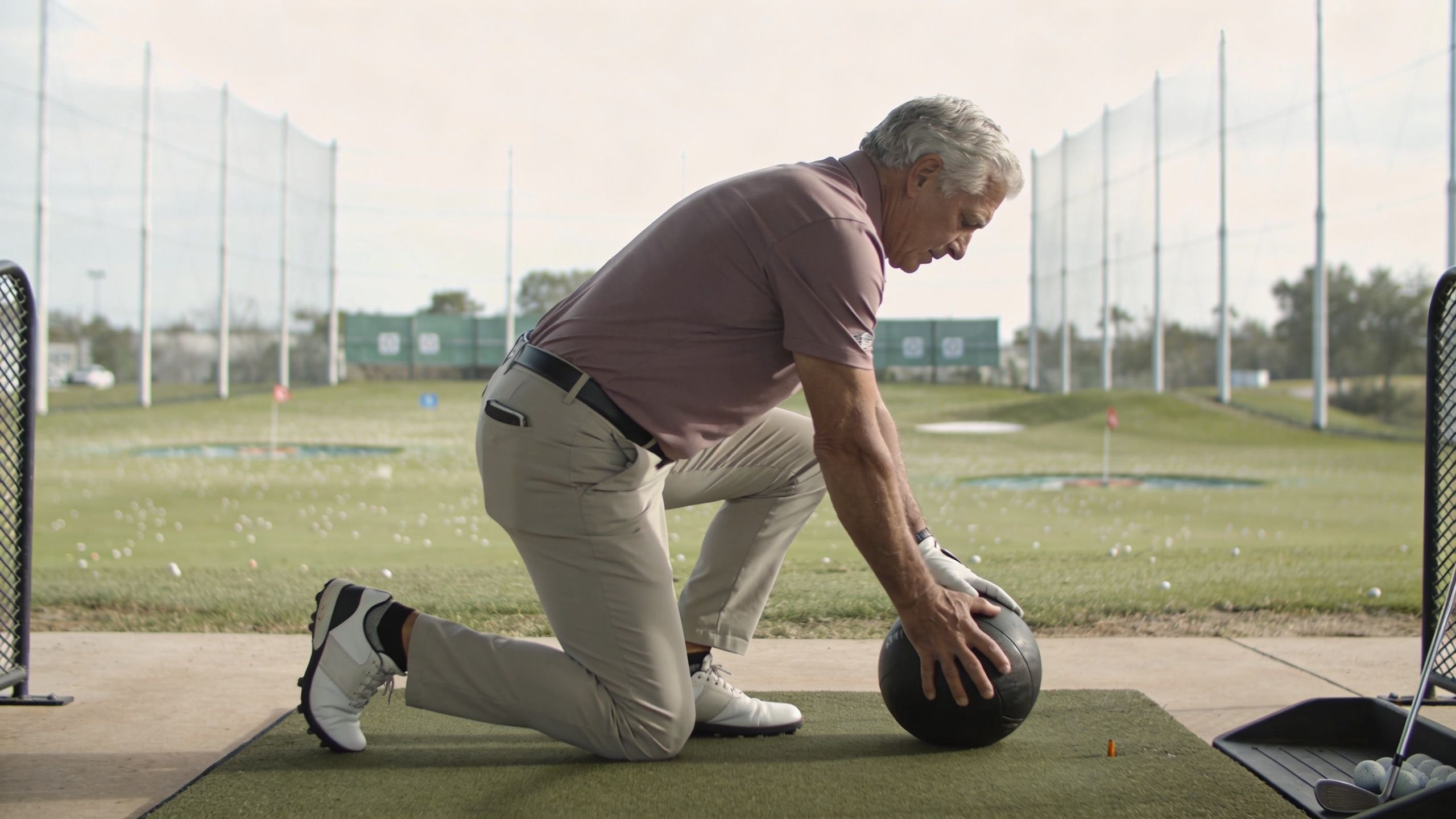
You get to the 12th tee, your back feels tight, and the swing thought that worked on the range suddenly produces a weak slice. In many older golfers, that pattern starts with physical limits, not poor effort or bad focus. Reduced hip rotation, stiff thoracic spine motion, and painful shoulders all change how the club gets delivered.
Professional instruction works best when it accounts for those limits instead of fighting them. I often see seniors trying to copy positions their joints cannot reach comfortably. The result is predictable. They chase a bigger turn, lose balance, and ask the low back to create motion that should have come from the hips and upper trunk.
A useful lesson should answer three questions at the same time: what the club is doing, what the body is doing, and which one is driving the miss. That is where movement analysis earns its keep. Video, launch monitor numbers, and a basic screen of hip, shoulder, and trunk mobility can separate a correctable setup issue from a compensation pattern caused by stiffness or weakness.
Ask direct questions during instruction:
- Can I make this move without forcing my back, shoulder, or knee?
- Is this change improving contact and direction, or just asking for more speed?
- What physical restriction is shaping this pattern?
- Would a shorter backswing or different finish reduce stress without costing control?
For many senior golfers, the best swing change is a smaller one. A shorter backswing can improve center-face contact. A wider stance can steady balance. Less sway and better pressure shift can clean up strike quality without asking for extra spinal rotation. Those changes may look modest, but they often hold up better over 18 holes than a technically prettier move your body cannot repeat.
Practice should reflect that reality. Ten focused swings with feedback are usually more productive than a large bucket hit through fatigue. If you want a simple place to rehearse setup, chipping, or putting mechanics at home, this landscaping guide for backyard golf gives practical ideas for building a usable practice area.
Pain is useful feedback. If a new move creates joint pain, pinching, or next-day soreness that feels sharper than normal muscle work, reconsider the change. Good mechanics should improve efficiency and reduce compensation, not demand that irritated tissues absorb more load.
7-Point Comparison: Senior Golf Tips
A common pattern shows up by the back nine. The swing gets shorter, balance gets less reliable, and the joints that felt manageable on the first tee start dictating every decision. That is why senior golf advice works best when it matches the body in front of you, not an ideal swing on video.
This comparison puts each tip in practical terms. It focuses on physical demand, what it takes to apply, and where a physical therapy lens changes the decision.
| Item | Implementation complexity | Resource requirements | Expected outcomes | Ideal use cases | Key advantages |
|---|---|---|---|---|---|
| Prioritize Flexibility and Mobility Work Before Playing | Low to moderate. Simple drills, but they only help if done consistently and with good form | Minimal. 10 to 15 minutes, a small open area, optional PT input if stiffness is persistent | Better joint motion, easier turn early in the round, lower risk of straining cold tissues | Golfers who start rounds stiff, especially in the hips, thoracic spine, or shoulders | Fast return for little time. Helps the body rotate from the right places instead of borrowing motion from the low back |
| Strengthen Core and Rotational Stability Muscles | Moderate. Requires progression, technique, and recovery between sessions | Moderate. Resistance bands, weights, or gym access, plus 2 to 3 sessions weekly | More stable posture, better pressure transfer, less low back overload, improved club control | Seniors who lose posture late in the round or want more speed without swinging harder | Builds force control, not just force output. That usually holds up better over 18 holes |
| Use Proper Equipment and Technology to Reduce Physical Stress | Low. The work is mostly in choosing and testing the right setup | Moderate to high. Club fitting, possible equipment cost, and time to adjust | Less stress on hands, wrists, shoulders, and back, with easier launch and more forgiveness | Players with slower swing speed, hand pain, shoulder limits, or recent surgery history | Equipment can lower physical demand right away, often without asking for a major swing rebuild |
| Address Arthritis Pain and Joint Limitations Through Movement Modification | Moderate. Needs a clear look at which joint is limited and which motion is provoking symptoms | Low to moderate. Professional assessment and some practice with specific adjustments | Less pain during and after play, better tolerance for practice, continued participation | Golfers with arthritis in the hands, knees, hips, or spine, or recurring flare-ups during golf | Protects irritated joints while preserving function. Useful changes are often smaller grip, stance, and swing-volume decisions rather than dramatic mechanical changes |
| Maintain Proper Balance and Fall Prevention Strategies | Moderate. Progression matters, especially if there is a fall history or vestibular issue | Low to moderate. Short balance sessions, stable support nearby, optional PT guidance | Better stance control, safer movement on uneven lies, more reliable finish position | Seniors who feel unsteady on slopes, in bunkers, or during weight shift | Improves on-course safety and shot consistency at the same time |
| Develop a Post-Round Recovery and Injury Prevention Protocol | Low. Easy to do, harder to do every time | Minimal. 10 to 20 minutes, hydration, light mobility work, and attention to sleep and soreness patterns | Less next-day stiffness, fewer overuse flare-ups, and better readiness for the next round | Frequent players, tournament weeks, travel golf, or anyone who stays sore for more than a day | Reduces the small repeat stresses that often become tendon or joint problems over time |
| Optimize Swing Mechanics Through Professional Instruction and Movement Analysis | High. Physical limits and technical habits both need to be addressed | High. Lessons, movement screening, and deliberate practice over time | Better contact, less compensation, clearer link between body limits and swing changes | Golfers with persistent pain, repeated faults, or swings that break down under fatigue | Connects instruction to physical capacity, which makes changes more durable and safer to repeat |
No single row stands alone. In practice, the best results usually come from combining two or three of these at the same time. A golfer with hip stiffness may benefit more from mobility work, a shorter backswing, and more forgiving equipment than from chasing strength alone.
Take the First Step to a Better Game
Playing good golf later in life doesn’t mean pretending age hasn’t changed anything. It means recognizing what has changed and responding well. That shift matters. The senior golfers who keep playing comfortably usually aren’t the ones fighting their bodies every round. They’re the ones making better decisions about preparation, mechanics, recovery, and workload.
That starts with mobility. If your shoulders, upper back, or hips don’t move well, your swing has to borrow motion from somewhere else. For many golfers, that “somewhere else” is the lower back. A better warm-up and regular mobility work can reduce that compensation and help your swing feel smoother before you even think about distance or scoring.
Strength matters too, but only the kind that carries over. Golf rewards control, sequencing, and the ability to rotate around a stable base. Core and hip strength support that. They also make it easier to hold posture, transfer pressure, and finish the round without falling apart physically over the last few holes.
Equipment can make a bigger difference than many golfers want to admit. The right shaft, loft, grip, and club type can lower the physical demand of the swing and improve contact quality at the same time. That’s not a shortcut. It’s good problem-solving. The same goes for course management. Moving up a tee, taking a cart on a flare-up day, or choosing the safer shot from an uneven lie are all ways to protect your body while keeping the game enjoyable.
If arthritis, stiffness, or balance issues are part of the picture, you don’t need to guess your way through them. You need a plan that matches your body. That may include changing setup, shortening the backswing, adjusting practice volume, or building a recovery routine that keeps small problems from becoming season-ending ones.
Professional help is often the turning point. A golf instructor can help you simplify mechanics. A physical therapist can identify why certain moves are difficult, painful, or inconsistent in the first place. Together, that’s a strong combination. It gives you a way to work on your swing without ignoring the body that has to produce it.
The best tips for senior golfers all point in the same direction. Play smarter. Move better. Recover sooner. Use tools that help instead of forcing techniques or equipment that no longer fit. Golf is one of the few sports you can enjoy for decades, but longevity in the game rarely happens by accident.
If pain has become part of every round, or if you’ve stopped swinging freely because you don’t trust how your body will respond, get it checked. A movement assessment can uncover limits in strength, mobility, balance, or joint function that are affecting both comfort and performance. With the right treatment plan, many golfers can keep playing, practice more effectively, and feel more confident standing over the ball.
You don’t need to chase your 30-year-old swing. You need a body and a strategy that let you enjoy golf now. That’s the version worth building.
If pain, stiffness, or balance problems are limiting your time on the course, Highbar Physical Therapy can help you move better and play with more confidence. A physical therapist can identify what’s restricting your swing, build a plan to improve mobility and strength, and help you stay active for the long run. Find a PT and take the first step toward a more comfortable game.