Ever felt a sharp, nagging pain on the outside of your hip during a run or after climbing a flight of stairs? It's easy to chalk it up to a simple muscle strain, but that specific pain is often the hallmark of iliotibial band syndrome at the hip—a condition that can sideline you from the activities you love.
To understand what’s happening, you have to stop thinking of your iliotibial (IT) band as a muscle you can just stretch out. It’s not. Instead, picture it as a thick, fibrous strap of connective tissue that runs all the way from your hip down to just below your knee.
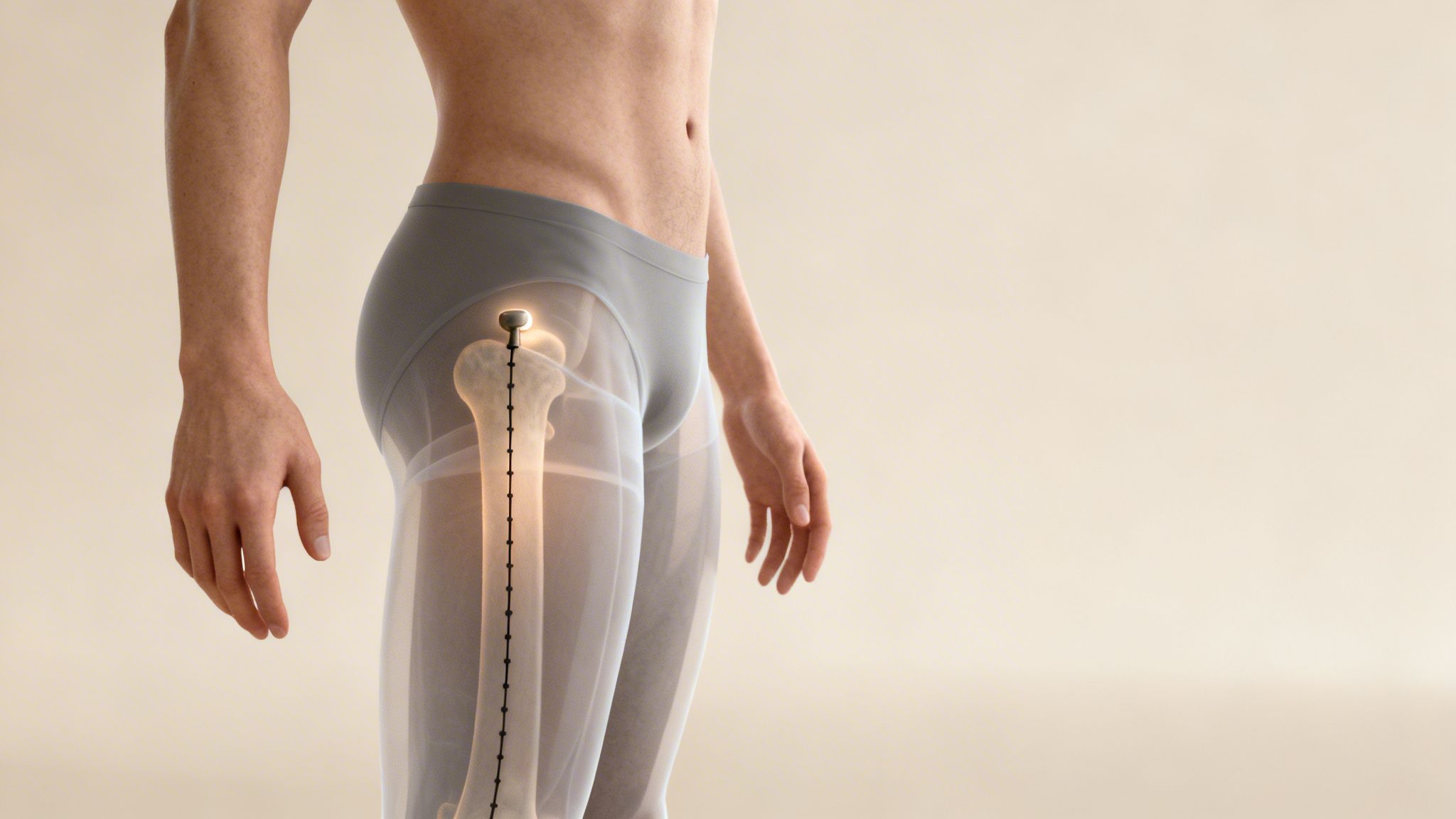
We used to think this was an inflammation or "friction" problem. Modern evidence tells a different story: it’s really a compression issue. When the key hip muscles that control the IT band—specifically your gluteus maximus and tensor fasciae latae (TFL)—are weak or aren't firing correctly, they can’t manage the tension on the band.
The real problem is almost always a biomechanical one, rooted in muscle weakness, not just "tightness." This is a critical distinction that guides our entire treatment philosophy at Highbar, and it's the key to helping you find lasting relief and get back to living a fuller life.
The True Source of Your Hip Pain
That pain you feel is the direct result of this poorly managed tension. As the IT band gets pulled taut, it presses down on the sensitive, fat-filled tissue that sits between the band and the bony point on the outside of your hip (the greater trochanter). That compression is what lights up the pain signals, especially during repetitive motions like running, hiking, or cycling.
This is exactly why endlessly stretching your IT band often fails to help, and in some cases, can even make the compression worse. Real recovery comes from fixing the underlying cause:
- Weak hip muscles: The muscles on the side of your hip (your hip abductors) are supposed to keep your pelvis stable. When they're weak, your hip can drop with each step, yanking on the IT band.
- Poor movement patterns: Over time, we all develop habits to compensate for these muscle imbalances. These dysfunctional movements just feed the cycle of compression and pain.
This link between weak hips and IT band problems isn't just a theory; it’s well-documented. For instance, a study on athletes found that a staggering 81% had significant IT band issues that originated from their hip mechanics. This highlights just how central the hip is to this condition. You can explore the findings of this research about IT band tightness in more detail.
What Causes Hip IT Band Pain and Who's at Risk?
If you're struggling with that stubborn pain on the outside of your hip, the big question is usually, "Why is this happening to me?" The truth is, it’s rarely one single thing. More often, it’s a mix of factors that gradually overload the area until the pain prevents you from doing what you love. This kind of pain doesn’t just show up overnight; it’s usually the end result of subtle biomechanical issues and training habits.
One of the biggest culprits we see is weakness in the hip muscles, especially the gluteus medius. These muscles are your pelvis's main stabilizers. When they aren't strong enough to hold your pelvis level with each step, it can drop to one side, tugging on the IT band and creating compression where it crosses the hip.
This underlying weakness often gets exposed by specific training mistakes. The good news is that once you understand these triggers, you can start to take back control and get back to living better.
Common Training Mistakes and Body Mechanics
Certain habits dramatically increase your risk of developing IT band pain at the hip. If any of these sound familiar, you might be onto a key piece of your own pain puzzle.
- Doing Too Much, Too Soon: A classic mistake. Ramping up your running mileage or hiking elevation too quickly simply doesn't give your tissues enough time to adapt to the new demands.
- Running on Tilted Surfaces: Always running on the same side of a crowned road or an indoor track forces your pelvis to tilt, creating a functional leg length difference that strains the IT band on your "uphill" leg.
- Poor Movement Form: When your core and glutes are weak, your body finds a way to compensate. This often looks like letting your knees collapse inward when you run, squat, or land from a jump—a pattern that directly pulls on the IT band.
- Skipping Warm-Ups and Recovery: Diving into intense activity without prepping your muscles, or forgoing crucial rest days, leads to fatigue. Fatigued muscles are poor stabilizers, setting the stage for an overuse injury.
Think about the classic weekend warrior. They sit at a desk all week with "sleepy" glutes, then hit the trails for a long run on Saturday. Their hip stabilizers aren't ready for the job, so other tissues take on extra strain. This is a story we see all the time, and it perfectly illustrates how lifestyle and activity can collide to cause pain. It’s our job to help you fix this cycle.
This isn't just theory; research confirms it. Runners are especially prone to this issue. One large-scale study on ultra-marathoners found that the risk for ITBS was highest among younger, less experienced runners. This highlights just how critical both biomechanics and smart training load management are for preventing iliotibial band syndrome at the hip. You can discover more about how training impacts IT band risk in this detailed study.
Ultimately, identifying these root causes is the first real step toward getting back to an active life without that nagging pain holding you back.
How to Recognize Hip IT Band Syndrome Symptoms
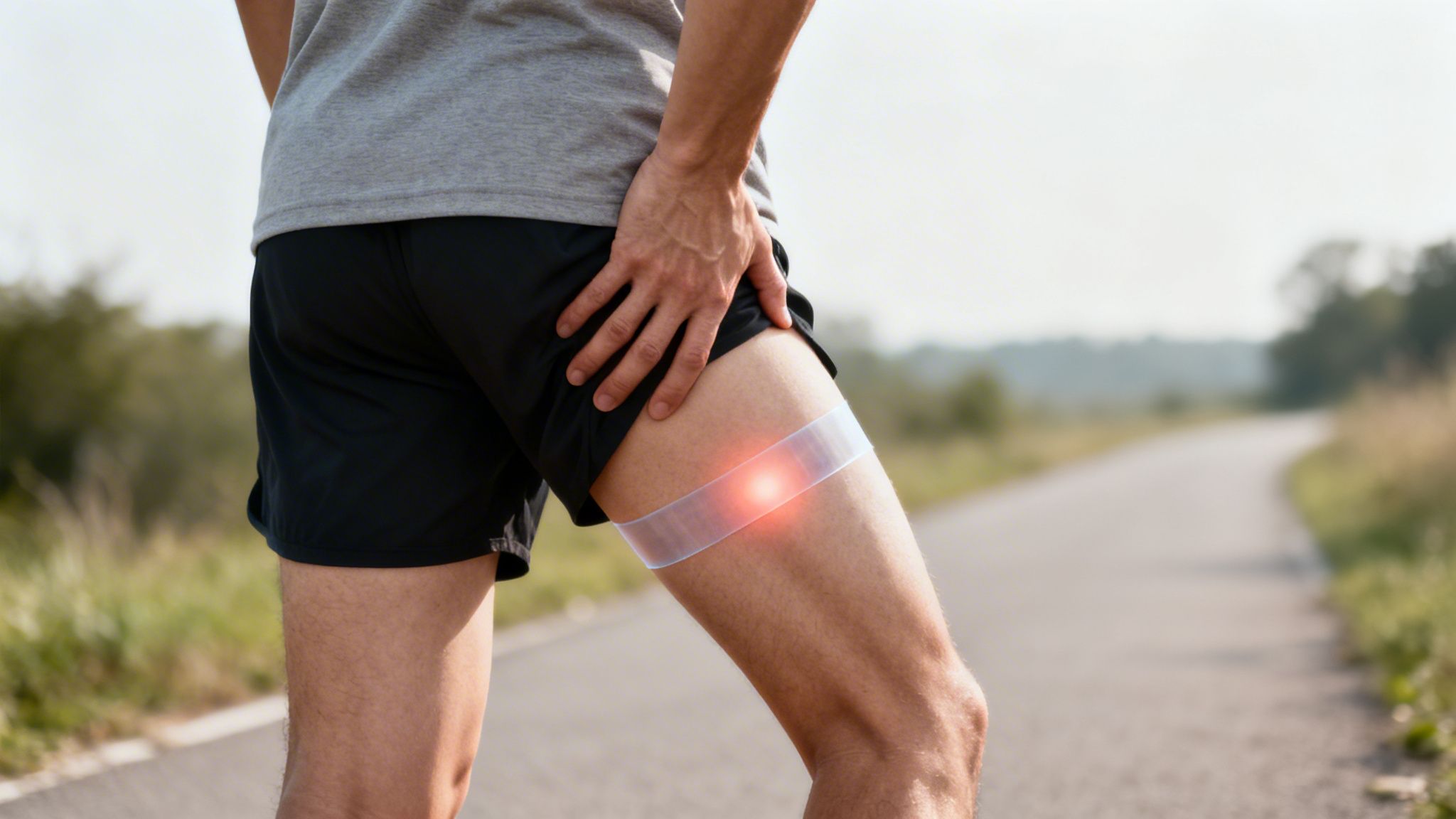
Figuring out exactly what you're feeling is the first real step toward getting the right help. When it comes to iliotibial band syndrome at the hip, the discomfort is often very specific. It’s not just general soreness. You might describe a sharp or burning ache right on the bony point on the outside of your hip.
This pain isn't random—it’s directly tied to what you’re doing. You’ll likely notice it flare up during or after repetitive activities like running, cycling, or even just climbing stairs. Each of those movements compresses the IT band against your hip bone, triggering that familiar, frustrating ache.
Pinpointing Specific Sensations
Getting a handle on the unique characteristics of hip ITBS pain can provide a lot of clarity. It’s more than just a vague ache; the pain often shows up in distinct patterns that help differentiate it from other hip problems, empowering you to get the right treatment.
- A Snapping or Popping Feeling: Some people feel a noticeable “snap” or “pop” on the outside of their hip when they move. This is the sound of the tight IT band gliding over the bony bump of your hip (the greater trochanter).
- Pain That Worsens at Night: This is a classic sign. Lying on the affected side puts direct pressure on the already irritated tissue, making a good night's sleep feel almost impossible for many people we help.
- Ache After Sitting: Does your hip hurt the moment you stand up after sitting for a while? We call this "start-up" pain, and it’s common as the IT band gets pulled taut when you go from a seated to a standing position.
Think of it like a rope being pulled too tight over the corner of a building. The rope itself isn't the problem, but its constant tension against that hard corner is what causes the friction and eventual fraying. Your IT band’s tension against your hip bone creates that same kind of localized, sharp pain you feel. Getting you better means fixing the tension, not just rubbing the corner.
Distinguishing Hip ITBS from Other Conditions
It’s easy to mistake the symptoms of iliotibial band syndrome at the hip for other common issues. However, the location and triggers are the key clues that set it apart.
For example, hip arthritis pain is usually felt deep in the groin or the front of the hip, not on the outer point. A muscle tear or strain typically happens after a single, traumatic event and usually comes with swelling or bruising—neither of which is common with ITBS.
By paying close attention to where it hurts and when it hurts, you can start to piece together a clearer picture. This empowers you to seek the right care and get on the path to a fuller, better life.
How a Physical Therapist Diagnoses Hip ITBS
Figuring out the true cause of hip pain requires more than just pointing to where it hurts. At Highbar, our physical therapists act like movement detectives, piecing together clues to understand why you’re in pain so we can get you better, faster. This all starts with a comprehensive evaluation that goes far beyond a quick chat.
Your story is the first and most important piece of the puzzle. We’ll listen as you talk through when the pain began, what activities make it flare up, and how it’s limiting your life. This conversation gives us crucial insights that guide our entire hands-on assessment.
The Hands-On Evaluation Process
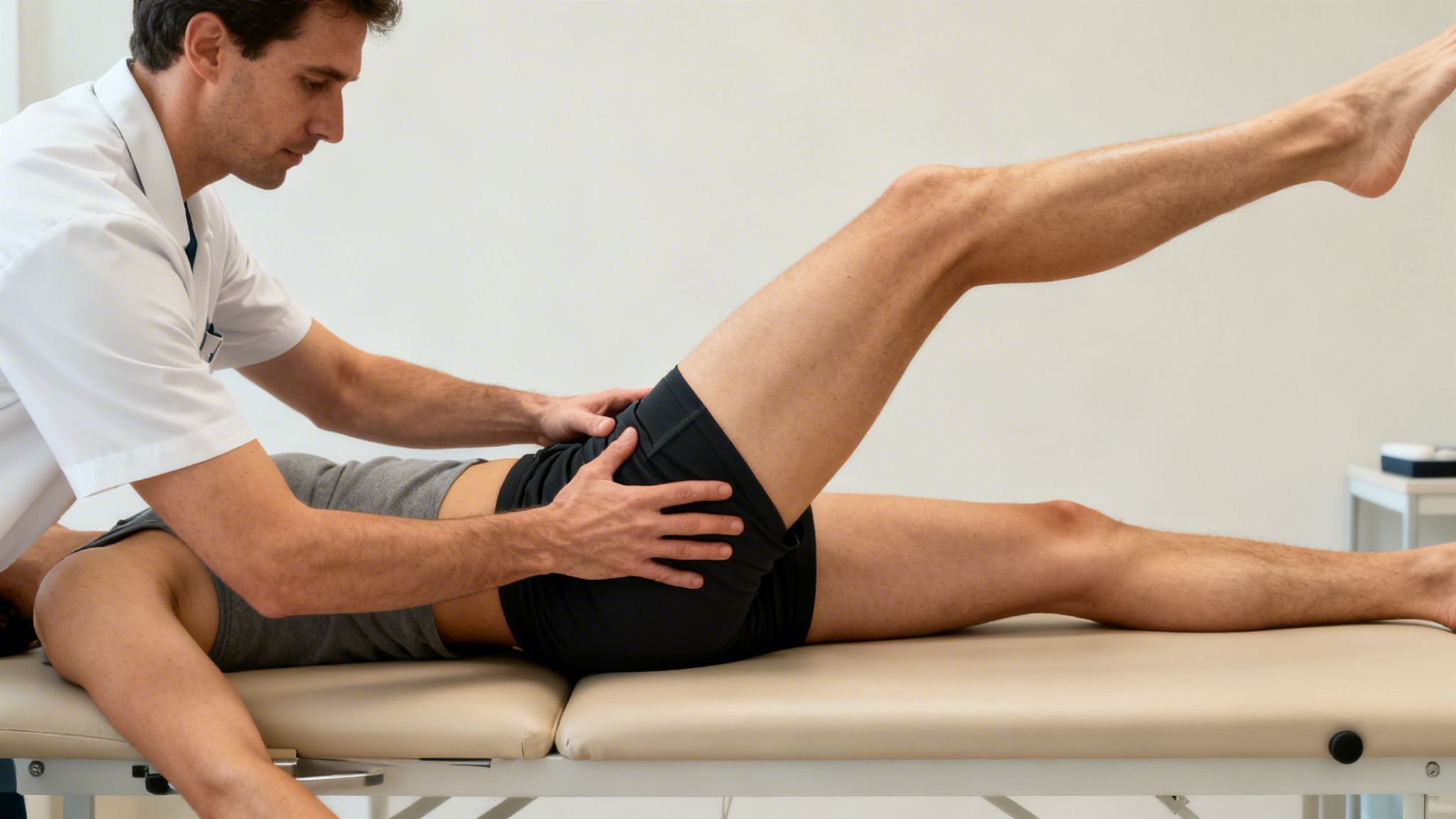
Once we understand your experience, we move on to the physical exam. This is where an expert therapist’s hands-on skill really makes a difference. We use specific clinical tests to zero in on the exact structures causing your discomfort. For hip-related IT band issues, one of our go-to assessments is the Ober's Test.
During an Ober's Test, you'll lie on your side while your therapist gently guides your leg through a specific range of motion. This simple, hands-on test allows us to feel the tension in your IT band and the surrounding hip muscles, giving us a direct window into the mechanics at play. Our goal is to find the root cause, not just treat the symptom.
Research backs up the power of these clinical tests. In a study of 421 athletes, the Ober's test had a positivity rate as high as 81%, confirming its value in identifying hip-level tension. The same study found that runners had a 46.6% prevalence of positive ITBS findings, while cyclists had a 30% prevalence, which highlights just how important it is to assess the entire chain of movement.
Another key part of our diagnosis is watching you move. We need to see your body in action to spot the subtle patterns that contribute to pain.
- Gait analysis: We’ll watch you walk, looking for tell-tale signs like a hip drop with each step.
- Squat assessment: This shows us how your hips, core, and knees work together under load.
- Single-leg balance tests: These tests are fantastic for revealing weakness in the small stabilizer muscles that are so often the real culprits.
The Role of Medical Imaging
You might be asking if you need an MRI or X-ray. For iliotibial band syndrome at the hip, the answer is almost always no—at least not right away. A thorough physical exam by a skilled therapist is the most powerful and accurate diagnostic tool we have to get you started on a plan to get better.
We typically reserve imaging for situations where we suspect a different issue, like a possible stress fracture or a significant muscle tear, or if your symptoms aren't improving as expected. This approach saves you time and unnecessary medical costs while getting you started on an effective recovery plan from day one. If your pain tends to show up after you’ve been sitting for a while, you might also find our guide on hip pain when standing up from a sitting position helpful.
Effective Treatment Strategies to Heal Your Hip
Getting a diagnosis is one thing; having a real plan to get you better is another. When we treat iliotibial band syndrome at the hip, we use a modern, phased approach that does more than just chase the pain. Our goal is to build strength, restore proper movement, and get you back to your life—and the activities you love.
Let’s get one thing straight: forget the old advice to aggressively foam roll or stretch the IT band itself. That often just compresses the irritated tissue even more and can make things worse.
Instead, we start with the most important first step: getting the angry tissue to calm down. This means making smart, temporary changes to your routine to stop poking the bear and start getting better.
Phase 1: Calm the Hip and Modify Your Activity
The initial goal is simple—reduce the pain to create a window for healing. This is not about shutting everything down and sitting on the couch. It's about smart activity modification. If running is what sets it off, we’ll need to hit pause on that for a bit while we fix the real problem.
During this phase, your physical therapist will use hands-on techniques to give you some immediate relief. This might involve:
- Soft Tissue Release: We’ll focus on the muscles that actually pull on the IT band, like your glutes and TFL, to ease that constant tension.
- Manual Therapy: Gentle, hands-on joint mobilizations can improve your hip's mechanics and take the strain off the overworked tissues.
- Pain-Free Movement: We’ll help you find cross-training activities you enjoy, like swimming or using an elliptical, that don't cause pain. This lets you stay active while you heal.
The point here isn't to just mask the pain. It's to reduce the irritation enough so we can start the real work. This first phase sets the stage for lasting change by creating a pain-free foundation to build upon so you can start living a better, fuller life.
Phase 2: Strengthen Your Hip Stabilizers
This is where we get to the root of the problem. For the vast majority of people we see, the primary cause of iliotibial band syndrome at the hip is weakness in the hip abductor muscles—especially the gluteus medius. Building up these muscles is the key to stabilizing your pelvis and finally taking the tension off your IT band.
Your physical therapist will guide you through a specific progression of exercises designed to wake up and strengthen these crucial stabilizers. These foundational movements retrain your body to support your hip the right way. We often find that targeted manual therapy, like trigger point therapy, can be incredibly helpful here. You can learn more about this in our guide on what is trigger point therapy.
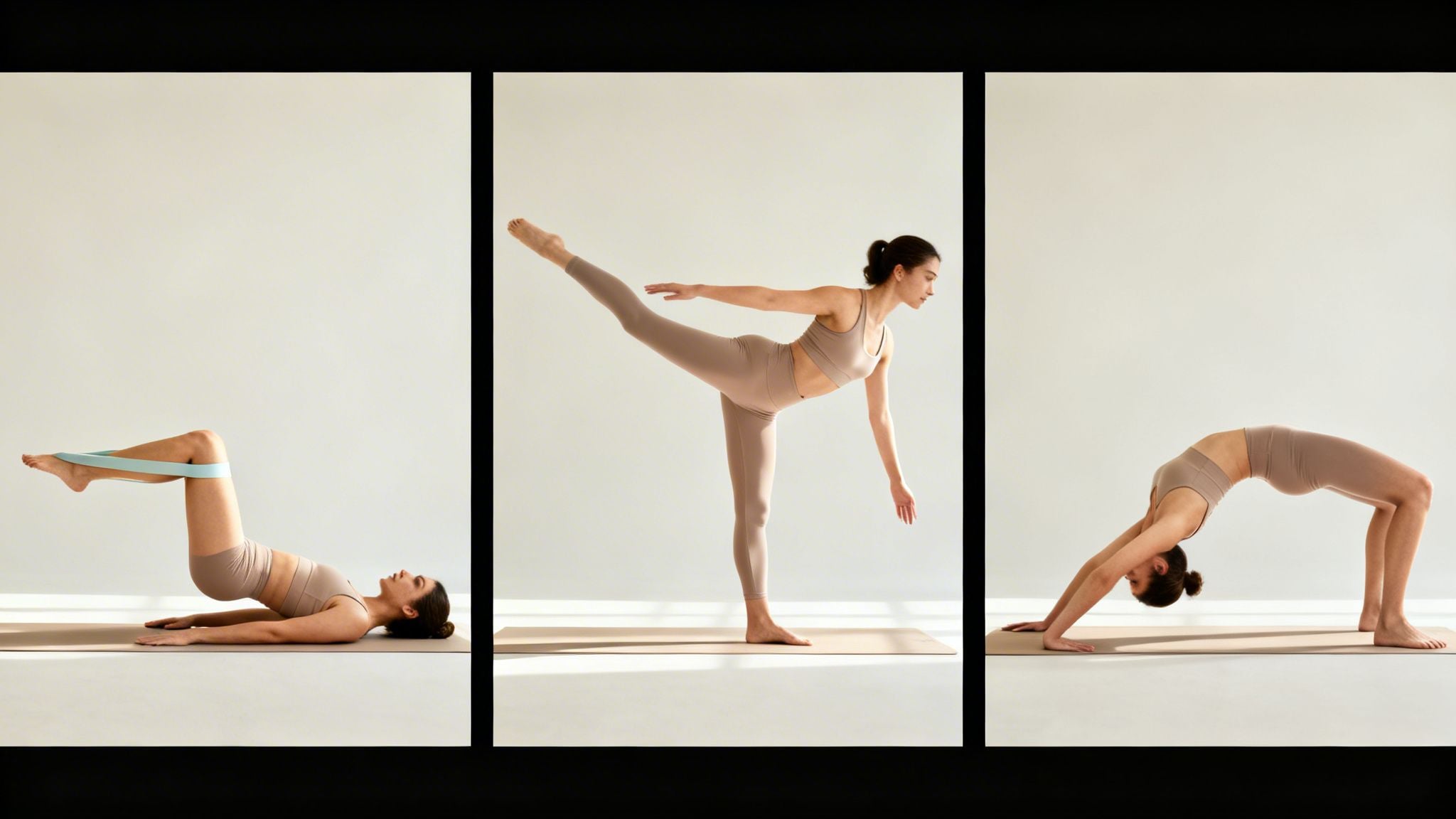
Some of the foundational exercises we almost always include are:
- Clamshells: An excellent way to isolate and activate the gluteus medius without putting it under compressive load.
- Side Leg Raises: These build endurance in the hip abductors, which is absolutely crucial for keeping your pelvis stable when you walk or run.
- Hip Bridges: A powerhouse move that strengthens your entire glute complex and core, which work together to support your hip.
Phase 3: Return to Your Favorite Activities
Once your hip is stronger and the pain is under control, it's time to start getting back to what you love. This phase is all about retraining your movement patterns to make sure this problem doesn't become a recurring character in your life.
Your therapist will work with you on drills specific to your sport or activity, zeroing in on proper form. We'll analyze your running gait, your cycling posture, or whatever movement is important to you, ensuring your newly strengthened muscles are actually firing when they’re supposed to.
We'll create a gradual plan to reintroduce your activities, keeping you from falling into the "too much, too soon" trap. It's this careful, guided progression that turns short-term relief into long-term resilience, helping you live a fuller, more active life.
How Highbar Physical Therapy Helps You Live Fully
This guide gives you the "what" and "why" behind IT band syndrome at the hip, but real recovery happens with the "how." That’s where we come in. Our job at Highbar Physical Therapy is to take that knowledge and turn it into a concrete action plan that gets you out of pain and back to the life you want to live.
We’ve made it as simple as possible to get started. With convenient clinic locations across New England, you can book an appointment right away without needing a doctor's referral. Our goal is to bridge the gap between injury and recovery, making expert care easy to access the moment you need it.
Your Partner in Recovery
At Highbar, you’re never just another appointment on the schedule. Our compassionate, top-rated team is dedicated to creating a personalized plan that gets you moving freely and feeling better. We know how frustrating hip pain can be, and our entire approach is built on helping you reclaim the activities you love.
It's time to stop letting hip pain dictate your life. Our physical therapists are movement experts who will partner with you to develop a plan focused on one thing: getting you better so you can live a fuller, better life.
We also offer telehealth options to fit your busy schedule, so you can keep making progress no matter what life throws your way. Our goal is to empower you with the strength, knowledge, and confidence to manage your condition and prevent it from coming back. The journey back to doing what you love starts here, and there are countless benefits of physical therapy that go far beyond just pain relief.
Frequently Asked Questions About Hip ITBS
We've gone deep into the what, why, and how of treating iliotibial band syndrome where it starts—at the hip. But from our experience, people often have a few lingering questions before they feel ready to tackle recovery.
Here are the straightforward answers to the questions we hear most often in our clinics, aimed at helping you get better.
How Long Does Recovery From Hip ITBS Take?
This really depends on how long you've been dealing with symptoms and how severe they are. The good news is that with a consistent physical therapy plan that gets to the root cause—usually weak hip muscles—most people feel a major difference within 4 to 8 weeks.
The key isn't endless rest; it's consistent, targeted strengthening exercises that fix the underlying problem so you can get back to your life.
Can I Still Exercise With Iliotibial Band Syndrome?
Yes, absolutely—but you'll need to be smart about it. For a little while, you'll have to pause activities that trigger your pain, like running downhill or cycling with poor bike fit.
Your physical therapist will help you find cross-training options that don't cause pain, like swimming or using an elliptical. This way, you can maintain your fitness while the therapeutic exercises do their job to get you better.
It’s a common myth that you should aggressively stretch your IT band. In reality, this can actually increase compression and make the irritation at your hip worse. Modern physical therapy focuses on strengthening your hip muscles to relieve tension naturally, paired with soft tissue work on the muscles around the IT band. This is the path to getting better.
Do I Need a Doctor's Referral for Highbar Physical Therapy?
Nope, you don't. Both Massachusetts and Rhode Island are Direct Access states. This means you can book an appointment directly with a licensed physical therapist at Highbar without seeing a doctor first.
This lets you get a diagnosis and start a personalized treatment plan right away, which helps you get on the road to recovery faster so you can live a better, fuller life.
Don't let hip pain sideline you from the activities you love. The expert team at Highbar Physical Therapy is ready to create a personalized plan to help you move freely and live fully. Book your appointment online today and start your journey back to feeling your best.