By Friday afternoon, a lot of people notice the same pattern. Their inbox is a mess, their shoulders are up near their ears, they’ve been sitting too long, and a deep ache starts settling into the low back. Nothing dramatic happened. No lift, no fall, no obvious injury. But the pain is real.
That kind of back pain caused by stress is common, and it isn’t “just in your head.” Stress changes how muscles hold tension, how your nervous system processes danger, and how your body regulates inflammation. In the U.S., 29% of adults attribute their back pain to stress and anxiety, and people reporting high stress are twice as likely to see pain progress from acute to chronic, according to Mainstay Medical’s overview of stress and back pain.
I want patients to hear that clearly: stress is a physical event.
It can tighten the muscles that support your spine, change your breathing pattern, disrupt sleep, and keep your body in a guarded state long after the stressful moment has passed. That’s why “just relax” usually isn’t useful advice. Often, a more practical plan is needed.
If stress has been showing up in your body, not just your thoughts, it helps to look at recovery the same way. Movement, breathing, sleep, and load management all matter. If you want a broader starting point for that connection, this piece on move your way to mental wellness is a helpful companion.
Introduction That Familiar Ache When You're Overwhelmed
Stress-related back pain often has a subtle beginning. You wake up stiff. You feel a pulling sensation when you stand after sitting. By the evening, your lower back feels tired and heavy, even though you didn’t do anything physically demanding.
That pattern matters. Pain that flares during deadlines, family strain, poor sleep, or constant mental overload often behaves differently from pain after a clear injury. It may come with neck tightness, jaw clenching, shallow breathing, or the feeling that your whole body is bracing.
Why this pain feels so convincing
Your body doesn’t separate mental stress from physical threat as neatly as you might think. When stress ramps up, muscles tighten, breathing changes, and the nervous system becomes more protective. The back, especially the low back, often takes the hit because it’s already doing postural work all day.
Practical rule: If your back pain tracks more closely with your stress level than with exercise or lifting, stress may be a major driver.
That doesn’t mean every stressful week causes back pain, and it doesn’t mean every episode of back pain is stress-related. It means the connection is strong enough that you shouldn’t ignore it.
What helps more than vague advice
Patients usually do better when they stop treating this like a character flaw and start treating it like a pattern. The goal isn’t to “think positive.” The goal is to reduce threat in the body. That can include easier movement, better pacing, calmer breathing, less guarding, and sometimes professional treatment to break a cycle that has gotten stuck.
If that sounds familiar, the next step is figuring out whether your symptoms fit the usual profile of stress-driven pain, or whether something more urgent needs medical attention.
How to Tell If Stress Is Your Back Pain Culprit
Stress-related back pain has a recognizable pattern, but it’s still important not to guess blindly. The key question isn’t just “Does my back hurt?” It’s “How does it behave?”
A landmark study found that high levels of stress are associated with a 2.8-time increased risk of developing chronic lower back pain. That tells us the relationship is measurable, not anecdotal. But it still doesn’t replace clinical judgment.
Common clues that point toward stress
This type of pain is often diffuse rather than sharply localized. Patients describe a dull ache, tightness across the low back, or stiffness that spreads into the upper back and shoulders. It may worsen after long periods of concentration, conflict, poor sleep, or emotional strain.
It also tends to fluctuate. You may feel better after a walk, a hot shower, gentle stretching, or a weekend when your schedule eases up. That up-and-down pattern is common when the nervous system and muscle tension are involved.
Symptom checker
| Symptom Area | Common in Stress-Related Pain | Potential Medical Red Flag (Seek Immediate Care) |
|---|---|---|
| Pain onset | Gradual buildup during demanding periods, no clear injury | Sudden severe pain after major trauma |
| Pain quality | Dull ache, tightness, stiffness, muscle “gripping” | Severe unrelenting pain that doesn’t ease with position changes |
| Pain location | Lower back, often with neck or shoulder tension | Pain with numbness in the groin or saddle area |
| Activity response | Often improves with gentle movement or relaxation | Progressive weakness, collapse, or inability to bear weight |
| Daily pattern | Worse after stress, sitting, poor sleep, or long workdays | Loss of bladder or bowel control |
| Body symptoms | Jaw clenching, shallow breathing, general muscle tension | Fever, unexplained illness, or other signs of infection |
| Leg symptoms | May feel tight, but not necessarily true nerve symptoms | New severe numbness, tingling, or radiating pain with weakness |
Questions worth asking yourself
A few simple questions can help you sort the pattern:
- Did it start after overload rather than injury? If your pain showed up during a stressful stretch and not after a specific physical event, stress may be part of the picture.
- Does your body feel globally tense? Many people with stress-driven pain also notice shoulder elevation, clenched glutes, a rigid abdomen, or shallow chest breathing.
- Does it ease when your system calms down? If light movement, heat, breathing drills, or better sleep reduce symptoms, that supports a stress component.
- Are you avoiding movement because you feel fragile? Fear can amplify guarding, which often keeps the pain going.
If your symptoms fit the stress pattern, self-care and physical therapy are reasonable next steps. If you have red flags, skip self-treatment and get medical evaluation promptly.
What stress pain is not
Stress can cause real pain, but it shouldn’t become a catch-all explanation. If your back pain came on after a significant accident, if you have marked neurological symptoms, or if something about the pain feels medically abnormal, you need proper assessment.
The safest approach is simple. Respect the stress connection, but don’t use it to dismiss warning signs.
The Science Behind the Stress-Pain Connection
When patients hear that stress affects the back, they often assume that means posture got a little worse and muscles got a little tighter. The actual biology is more interesting than that.
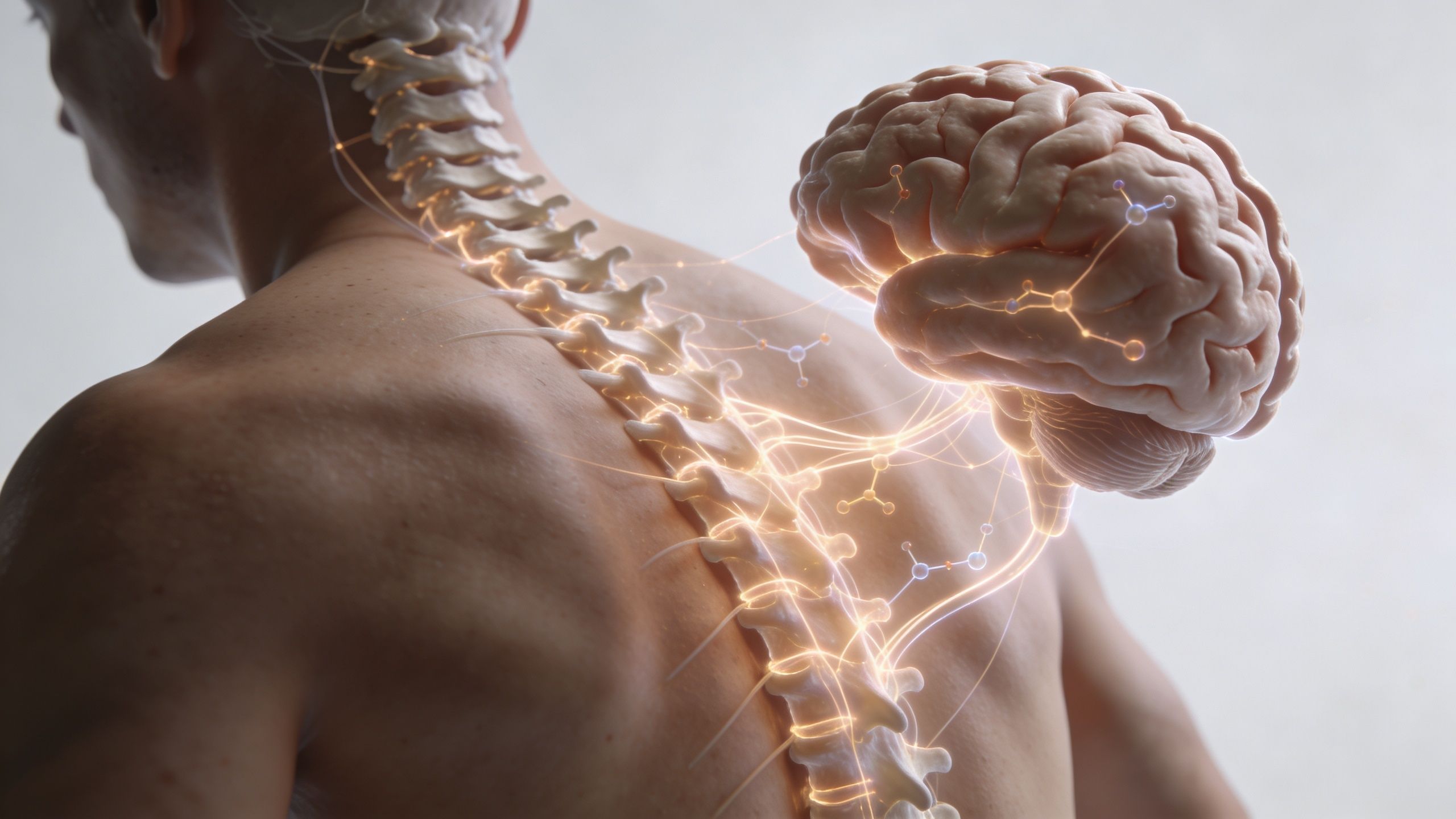
Your body has several built-in systems for threat protection. Under short-term stress, those systems can help. Under repeated stress, they can stay switched on too long, and that’s when back pain caused by stress becomes much harder to shake.
Protective muscle guarding
The first mechanism is muscle guarding, operating like a fist that clenches and never fully opens. When your brain reads life as stressful, your body often responds by bracing. The muscles along the spine, hips, shoulders, and rib cage may stay partially contracted for hours at a time.
That isn’t efficient support. It’s protective overwork.
Over time, those tissues become sore, less tolerant of load, and less coordinated. People often try to stretch harder or push through workouts, but if the body is still in a guarded state, the relief usually doesn’t last.
The cortisol cascade
The second mechanism is hormonal. Chronic stress causes hyperactivity of the HPA axis, which changes how the body regulates cortisol and inflammation. A study discussed in this PubMed Central article on stress and chronic low back pain found that higher stress levels correlated with an odds ratio of 2.45 for developing chronic low back pain.
In plain language, cortisol is helpful in the right context. But when stress is frequent and prolonged, the system becomes dysregulated. Instead of settling irritation down normally, the body can become more reactive.
That helps explain why some patients say, “My scans don’t look that bad, but my pain feels intense.” Tissue findings matter, but so does how your system is processing stress.
If you want a broader non-PT perspective on that interaction, this guide to total wellbeing gives a clear overview of how mental and physical strain can reinforce each other.
Central sensitization
The third mechanism is central sensitization. The simplest analogy is a volume knob. In a calmer nervous system, the pain volume is set at a reasonable level. Under ongoing stress, the system can turn the volume up.
That means normal stiffness may feel more threatening. Mild mechanical strain may feel bigger than it is. Recovery takes longer because the alarm system is too sensitive.
A sensitive nervous system doesn’t mean the pain is fake. It means the alarm is louder than it needs to be.
Why this changes treatment
Many individuals incorrectly assume the answer is to attack the back harder with stretching, random core work, massage gadgets, or long periods of rest. But stress-driven pain usually responds better when treatment lowers threat first, then rebuilds capacity.
That can include breathing mechanics, graded movement, sleep improvement, load management, and exercises that teach the trunk how to relax and support at the right times. The best plan usually isn’t all strength or all stress management. It’s the right amount of both, in the right sequence.
Actionable Self-Care Strategies for Stress Relief
If your pain pattern fits stress, home care should focus on one goal first. Calm the system down enough that the back can move normally again.
That sounds simple, but many people do the opposite. They brace harder, stretch aggressively, or start intense ab workouts because they’ve heard they need a “stronger core.” In some cases, that backfires. Some PT approaches now prioritize relaxation and deactivation work because over-strengthening an already tense core can worsen pain by reinforcing muscle guarding patterns, as described in Mather Hospital’s discussion of stress and back pain.

Start with movements that reduce bracing
Choose movements that make your back feel less defended, not more challenged.
- Cat-cow gently: Move slowly through spinal flexion and extension. Don’t force range. The goal is to reduce stiffness and improve comfort.
- Pelvic tilts on your back: These help you feel the difference between gripping and releasing through the trunk.
- Walking at an easy pace: A short walk can decrease stiffness without asking the back to produce high force.
- Supported child’s pose or hook-lying rest: These positions often help when the back feels “on guard.”
For more ideas, this collection of back pain relief exercises at home is a practical place to start.
Use breathing to change the nervous system
Breathing drills aren’t fluff. They are one of the fastest ways to reduce unnecessary guarding.
Try this:
- Lie on your back with your knees bent or sit supported.
- Place one hand on your chest and one on your lower ribs.
- Inhale through your nose and aim to expand the lower ribs, not just lift the chest.
- Exhale slowly and let your shoulders, jaw, and abdomen soften.
- Repeat for a few minutes without forcing a huge breath.
This type of diaphragmatic breathing helps shift your system away from fight-or-flight and toward a calmer resting state.
Don’t judge the drill by whether it feels profound. Judge it by whether your body feels less braced afterward.
Change your work setup and your work rhythm
Perfect posture won’t solve stress back pain. A less provocative setup helps, but static positions are the bigger problem.
Useful adjustments include:
- Screen placement: Keep the top of the screen near eye level so you’re not folding forward all day.
- Chair support: Use a small towel roll or lumbar support if slumping makes symptoms build.
- Micro-breaks: Stand, walk, or reset your breathing between tasks instead of waiting until you’re already hurting.
- Task batching: If possible, avoid stacking your most mentally demanding work into one uninterrupted block.
Treat sleep as part of pain care
A stressed nervous system rarely recovers well without sleep. If your back pain spikes during poor sleep weeks, that’s not coincidence.
A few basics help:
- Consistent bedtime: Your body likes predictable cues.
- Less late stimulation: Cut back on work, doomscrolling, and conflict close to bedtime.
- Position support: A pillow under the knees on your back, or between the knees on your side, can reduce tension.
- Wind-down routine: Gentle stretching, breathing, or journaling often works better than trying to “force” sleep.
If anxiety is a major part of the cycle, broader mental health coping mechanisms can support the physical strategies above.
What usually doesn’t work well
People often ask what to stop doing. Three things commonly keep stress back pain going:
- Aggressive core circuits when you’re already gripping
- Long bed rest
- Constant symptom checking and testing your back
Those habits keep the body focused on threat. The better target is steady, calm reintroduction of movement.
How Physical Therapy Breaks the Stress-Pain Cycle
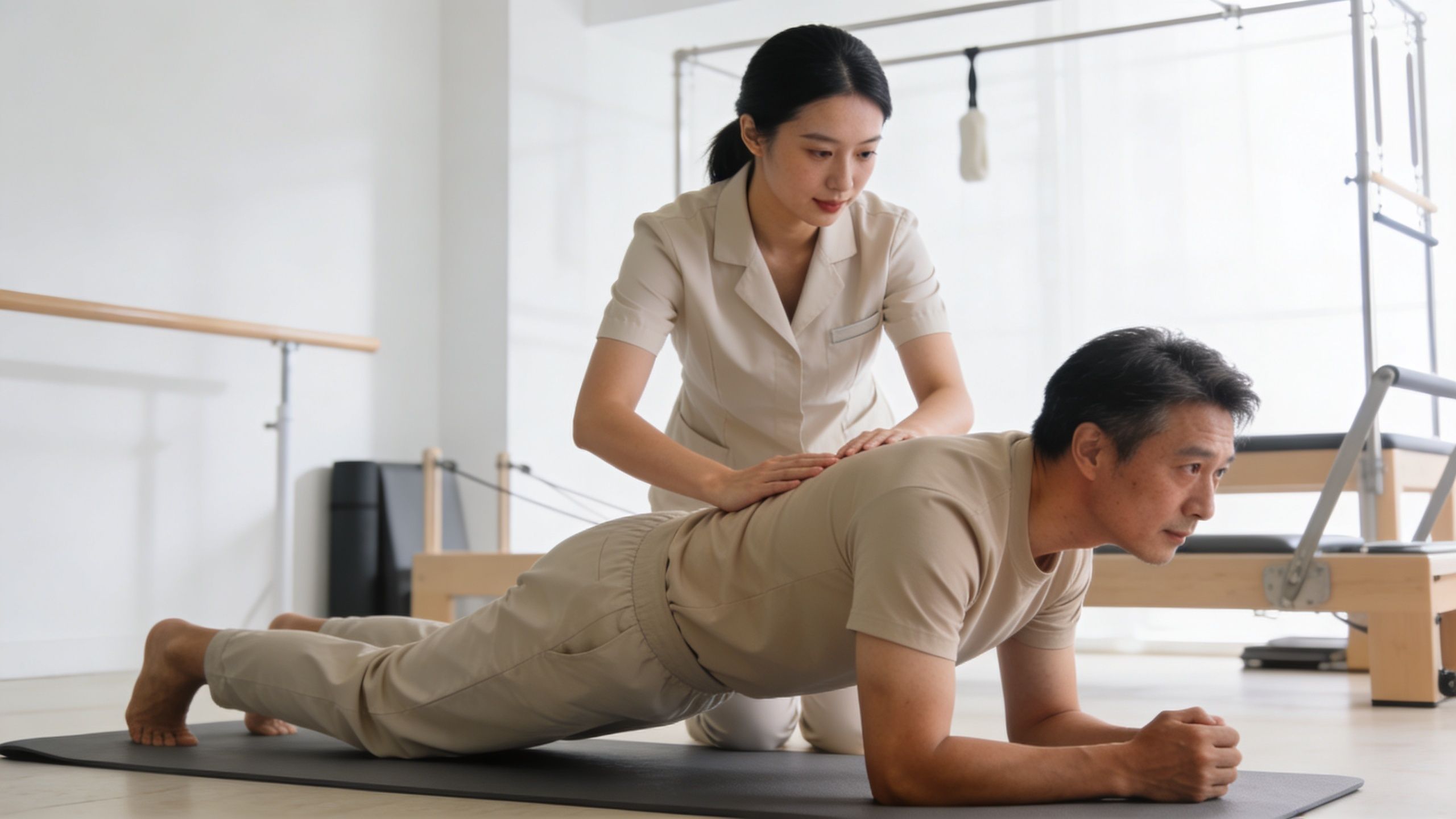
When self-care isn’t enough, a physical therapist adds something important. Not just exercises, but pattern recognition.
A trained PT can tell the difference between a back that needs more capacity, a back that needs less guarding, and a back that needs medical referral first. That matters because stress-related pain often looks simple from the outside and acts complicated in real life.
What a therapist assesses that you might miss
A good evaluation looks beyond where it hurts. It checks how you breathe, how you hinge, where you substitute with tension, how your trunk responds to load, and whether your pain behavior matches a mechanical, stress-related, or mixed presentation.
That distinction changes treatment. Someone with stress-driven over-bracing may need less cueing to “tighten the core” and more cueing to let the ribs, diaphragm, pelvic floor, and trunk coordinate naturally.
Techniques that can reduce the threat response
Stress can disrupt the brain’s normal pain-dampening systems, amplifying perceived back pain intensity by 30 to 50 percent via central sensitization, according to The Bone & Joint Center’s overview of how stress affects back pain. That’s one reason PT often includes more than strengthening.
A plan may include:
- Manual therapy: Soft tissue work, joint mobilization, or trigger point techniques can reduce guarding enough for movement to improve.
- Graded exercise: Instead of generic workouts, the therapist chooses doses your system can tolerate and build from.
- Breathing and trunk coordination work: This helps replace constant bracing with adaptable support.
- Mindfulness-based stress reduction: MBSR can help restore balance in the pain system when stress is a major amplifier.
- Pain neuroscience education: Understanding why pain is happening often reduces fear and improves movement quality.
One option for people starting that process is a structured outpatient evaluation such as what to expect at physical therapy for lower back pain, which outlines how lower back pain is assessed and treated.
Why generic exercise can miss the mark
“Exercise helps back pain” is true, but incomplete. The wrong exercise at the wrong time can reinforce the exact pattern you’re trying to undo.
The best program isn’t the hardest one. It’s the one your nervous system can trust enough to stop fighting.
That’s why a patient may fail with random online workouts and do well with a far simpler PT plan. Precision beats intensity.
Your Path to Lasting Relief and Prevention
Back pain caused by stress is real. It has real physiology behind it, and it responds best when you address both the body and the stress response instead of picking one and ignoring the other.
For some people, that means a short stretch of self-care is enough. They improve when they sleep better, move more consistently, breathe better, and stop over-bracing. For others, the cycle has been running too long. The back stays tight, the nervous system stays protective, and pain keeps returning unless someone helps interrupt the pattern.
A practical decision guide
Use this checklist to decide your next step:
- Keep working on self-care if your pain is mild to moderate, your symptoms clearly rise and fall with stress, and you’re noticing some improvement with gentle movement, breathing, and better pacing.
- Book a physical therapy evaluation if pain keeps coming back, your back feels constantly guarded, movement is becoming more limited, or you’re unsure whether your “core work” is helping or worsening the problem.
- Seek medical care promptly if you have any red-flag symptoms like bowel or bladder changes, saddle numbness, progressive weakness, fever, or severe pain after significant trauma.
Prevention is usually less dramatic than people expect
Long-term prevention doesn’t come from one magical stretch, one perfect chair, or one heroic workout phase. It usually comes from repeatable habits.
The habits that matter most are often these:
- Move before stiffness becomes pain. Short walks and position changes work better than waiting until the back locks up.
- Notice bracing early. Many people clench the jaw, hold the breath, or tighten the abdomen before they even notice back pain.
- Match exercise to your state. On high-stress days, recovery-focused movement may help more than high-intensity training.
- Build capacity gradually. Once symptoms settle, strength and endurance matter. They just need to be layered in without feeding guarding.
- Treat stress management as musculoskeletal care. If your nervous system stays overloaded, your back often pays for it.
What lasting progress looks like
Progress usually isn’t linear. A stressful week can cause a flare even when you’re doing well overall. That doesn’t mean you’re back at the beginning.
A better sign of recovery is this: when pain shows up, you understand why, you know how to respond, and the episode settles faster.
That’s the true win. Less fear, less guarding, more confidence, and a back that doesn’t feel hijacked by every hard week.
If you need help getting there, a physical therapist can build a plan around your specific pattern, not a generic diagnosis. The right plan should help you move more freely now and make future flares less disruptive.
If stress keeps showing up in your back, it may be time for a personalized plan. Highbar Physical Therapy offers physical therapy evaluations and evidence-based treatment for lower back pain, including care that addresses movement patterns, muscle guarding, and stress-related contributors. You can use Highbar to learn more about treatment options and find a PT who can help you build a recovery and prevention strategy that fits your life.