How to Break Up Scar Tissue and Improve Movement
After an injury or surgery, your body gets to work healing. Its go-to repair material is scar tissue. But sometimes this internal “patch” causes stiffness, nagging pain, and limited movement.
The key isn’t to simply accept it. It’s to help your body remodel that tissue, making it more flexible and functional so you can get back to living a fuller, better life.
What Is Scar Tissue and Why Does It Cause Problems?
Think of healthy tissues—muscles, skin, and ligaments—as fibers organized in neat, parallel lines. This alignment allows them to glide, stretch, and contract smoothly.
When you get injured, your body repairs the damage by laying down new collagen fibers. However, this initial repair job can be messy. Instead of forming in neat parallel lines, new scar tissue may develop as a dense, disorganized mesh. This structure can make the area less flexible than the original tissue.
In many cases, a scar matures naturally over several months, becoming softer and more pliable. A healthy, well-healed scar is generally pale, flat, and does not interfere with movement.
Problems can develop when the scar becomes thick, dense, or attached to surrounding structures. These attachments, often called adhesions, may affect nearby muscles, nerves, or layers of skin.
Problematic scar tissue may:
- Limit range of motion.
- Create a deep feeling of tightness.
- Cause persistent pain or sensitivity.
- Interfere with normal muscle function.
- Lead to compensatory movement patterns.
The goal isn’t to violently “break up” scar tissue. It’s to intelligently remodel it. Treatment helps guide the tissue so it becomes more organized, flexible, and functional.
Why You Shouldn’t Ignore Problematic Scar Tissue
Leaving restrictive scar tissue untreated can create a frustrating cycle of pain and limited movement.
For example, stiffness after knee surgery may change the way you walk and eventually contribute to discomfort in the hip or back. Adhesions following a rotator cuff repair may prevent you from reaching overhead, making ordinary daily activities difficult.
Actively managing the scar with safe, progressive techniques can be an important part of recovery. By encouraging the collagen fibers to align appropriately, you may improve flexibility, reduce discomfort, and restore strength.
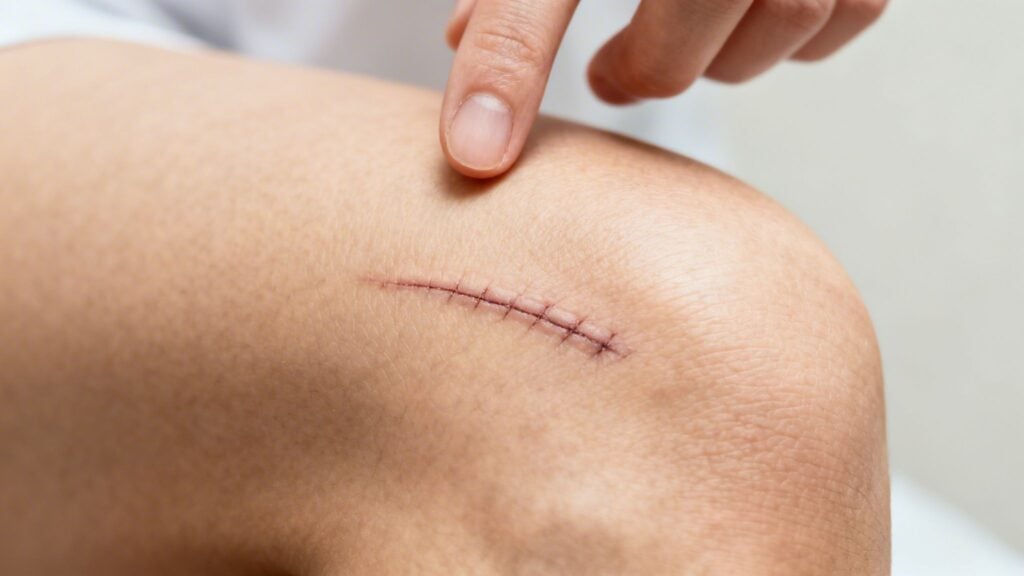
How Scar Tissue Forms
After an injury, the body begins a predictable healing process.
The first stage is inflammation. During this phase, blood and healing cells move to the injured area to begin repairing the damage. Swelling, redness, and sensitivity are common.
Next is the proliferation phase. This is when scar tissue construction begins. The body quickly lays down collagen to stabilize and repair the injured area. Because this collagen is produced rapidly, it can form in a disorganized pattern.
The final stage is remodeling. This phase may last for several months or longer. During this time, the body gradually replaces weaker, disorganized collagen with stronger fibers that align with the normal stresses placed on the tissue.
This is where appropriate movement can influence the outcome. Gentle, controlled stress may encourage collagen fibers to become more organized and help prevent restrictive adhesions.
Factors That Influence Scarring
Not all scars are the same. The way your body heals depends on several factors:
- Age: Healing and tissue elasticity may change as we get older.
- Nature of the injury: A clean surgical incision may heal differently from a severe muscle strain or irregular wound.
- Overall health: Conditions that affect circulation, such as diabetes, may slow healing.
- Smoking: Smoking can reduce the oxygen and nutrients available to healing tissue.
- Genetics: Some people are more likely to develop thick scars, including keloid or hypertrophic scars.
Understanding these factors helps you and your physical therapist create a treatment plan that fits your specific needs.
Knowing When to Act and When to Wait
Timing is important. If you become too aggressive too early, you can irritate the area, increase inflammation, and interfere with healing. Your body needs time to complete the early inflammatory and repair stages.
Waiting too long can also make treatment more difficult. Fully mature scar tissue may become dense and rigid, requiring more time and consistency to improve.
A physical therapist can assess your injury, stage of healing, and individual risk factors to determine when it is safe to begin scar remodeling.
At-Home Techniques for Scar Remodeling
Once your physical therapist or doctor gives you approval, you can begin taking an active role in your recovery at home.
The goal is not to force the tissue to change. Instead, these techniques gently encourage the tissue to become more flexible and functional.
Gentle Scar Massage
Scar massage is one of the most common techniques used to improve the mobility of a healed scar. It may help the skin glide over the tissue underneath and reduce the feeling of restriction.
Before beginning, make sure the incision is completely closed and healed, with no scabs or open areas. You may apply a small amount of lotion to reduce friction.
Common massage movements include:
- Small, slow circular motions over and around the scar.
- Gentle side-to-side mobilization.
- Gentle up-and-down mobilization.
The pressure should be firm but not painful. A stretching sensation or mild discomfort may be expected, but sharp, shooting, or worsening pain is a sign to stop and contact your physical therapist.
Your therapist can recommend the appropriate amount of pressure, frequency, and duration for your scar.
Targeted Stretching
As the tissue becomes more pliable, gentle stretching can help lengthen the scar and the surrounding muscles.
Stretching should create a mild, steady pulling sensation—not sharp pain. The appropriate stretch will depend on the location of your injury or surgery.
For example:
- After knee surgery, stretching may focus on restoring movement in the knee, calf, and hamstring.
- Following abdominal surgery, gentle trunk or overhead movements may help restore mobility when medically appropriate.
- After shoulder surgery, supported shoulder and chest stretches may gradually improve movement.
Always follow the specific precautions provided by your doctor or physical therapist.
Progressive Exercise
Controlled, low-load exercise helps teach the healing tissue how to respond during movement. Once massage and stretching improve flexibility, progressive exercise can help restore strength and function.
Your program may include supported joint movements, balance exercises, or slow strengthening activities. These exercises should progress gradually based on your healing stage and symptoms.
Consistency is important, but doing more is not always better. Exercise should never cause a sudden increase in pain, swelling, or sensitivity.
When to Seek Professional Care
At-home care can be helpful, but some scars require professional treatment. Deep scars, extensive injuries, or scars located near complex joints may continue to limit movement despite consistent self-care.
If your progress has stalled or the restriction keeps you from doing the activities you enjoy, consider consulting a physical therapist.
A licensed physical therapist does more than examine the scar. They assess how the restriction affects:
- Joint movement.
- Muscle strength.
- Coordination.
- Sensitivity.
- Daily activities.
- Overall movement patterns.
Based on the evaluation, the therapist can create a personalized treatment plan combining exercise, education, stretching, and appropriate hands-on techniques.
Manual Therapy and Specialized Techniques
Manual therapy is a hands-on approach used to address restrictions in the scar and surrounding soft tissue. A physical therapist applies controlled pressure and movement to improve tissue mobility.
This treatment is not about using brute force. The goal is to identify the layers of tissue that are not moving properly and apply an appropriate technique to restore mobility.
For denser or more mature scar tissue, a physical therapist may use Instrument-Assisted Soft Tissue Mobilization, or IASTM. This technique uses specialized tools to assess and treat restricted areas.
The therapist may also use other treatments when appropriate, but the specific approach depends on the type of scar, stage of healing, symptoms, and functional limitations. These techniques should always be part of an individualized plan rather than used as a one-size-fits-all solution.
Understanding the Recovery Timeline
Scar tissue recovery is a marathon, not a sprint. Every person’s healing process is different, and the timeline depends partly on the age and severity of the scar.
A newer scar—one that is several weeks or months old—is generally more pliable because the collagen is still organizing. With consistent care and professional guidance, some people notice improved flexibility and reduced tightness within several weeks.
Older scars can be more resistant to change. If a scar is a year old or more, the collagen has had time to settle into a denser pattern. Improving its mobility may require several months of consistent treatment.
However, it is rarely too late to improve the function of an old scar. Even mature adhesions may become more mobile and less painful with an appropriate physical therapy program.
When to Stop and Seek Medical Help
As you work on your scar, listen to your body. Mild stretching or sensitivity may occur, but sharp or worsening pain is not normal.
Stop self-treatment and contact a healthcare professional if you notice:
- Redness spreading away from the scar.
- Increased warmth.
- Yellow or green drainage.
- Pus or an unpleasant odor.
- Fever.
- A sudden increase in sharp pain.
- New or worsening numbness or tingling.
- Unexpected or persistent swelling.
- An incision that begins to open.
These symptoms may indicate infection, excessive irritation, nerve involvement, or another complication that requires evaluation.
Frequently Asked Questions
Can You Completely Get Rid of Scar Tissue?
The goal isn’t to completely remove scar tissue. Scar tissue is a normal and necessary part of healing.
Instead, physical therapy focuses on remodeling it. Treatment helps the tissue become more organized, flexible, and functional so that it behaves more like the surrounding healthy tissue.
The scar may remain, but its effects—such as stiffness, pain, and restricted movement—may be significantly reduced.
Does Scar Tissue Treatment Hurt?
The phrase “breaking up scar tissue” sounds aggressive, which is why “remodeling” is usually a better description.
Some techniques may cause mild discomfort or a strong stretching sensation, but treatment should never be excruciating. Sharp, stabbing, or worsening pain means the technique or pressure should be changed.
Your physical therapist should communicate with you throughout treatment to make sure the pressure remains safe and productive.
How Long Does It Take to See Results?
The timeline depends on the person and the scar.
Newer scars are generally more pliable and may respond within several weeks. Mature scars often require more consistency over several months.
Following both your in-clinic treatment plan and your at-home program can help you achieve the best possible result.
Is It Too Late to Treat an Old Scar?
It is almost never too late to improve the function of old scar tissue.
Although older scars may be more difficult to remodel, physical therapy may still improve mobility, sensitivity, and pain. The process may take longer, but meaningful improvement is often possible.
Take the Next Step
Scar tissue is a normal part of healing, but it should not keep you from moving comfortably or doing the activities you enjoy.
The goal is not to forcefully break the tissue apart. It is to remodel it safely through appropriate movement, progressive exercise, and professional guidance.
If scar tissue is causing pain, stiffness, or limited movement, the physical therapists at Highbar Physical Therapy can evaluate your condition and create a personalized recovery plan. Book an appointment today and take the next step toward moving and feeling better.
Esta versión mantiene gran parte del lenguaje original, pero elimina:
- Repeticiones sobre la organización del colágeno.
- Explicaciones duplicadas sobre cicatrices antiguas y recientes.
- Promesas demasiado contundentes sobre algunas terapias.
- Ejemplos poco relacionados, como infartos, tratamientos con exosomas y láser para acné.
- La tabla extensa de ejercicios específicos.
- Repeticiones promocionales de Highbar.
- Detalles excesivos sobre IASTM, ultrasonido y dry needling.
| Technique | When to Start (Post-Injury/Surgery) | How It Works | Highbar PT Pro-Tip |
|---|---|---|---|
| Knee (e.g., ACL) | Slow Step-Downs: Stand on a small step. Slowly lower your non-surgical heel to the ground, controlling the movement. | This places a controlled, lengthening load on the quadriceps and patellar tendon, guiding scar tissue to align with the muscle. | Focus on keeping your knee aligned over your second toe. Don't let it dive inward! |
| Shoulder (e.g., Rotator Cuff) | Towel Slides: Place a small towel on a table. With your arm straight, use your hand to slide the towel forward and back. | This creates gentle, active motion in a supported range, encouraging glide and preventing adhesions from re-forming. | Keep your shoulder blade down and back. Don't let your shoulder shrug up toward your ear. |
| Ankle (e.g., Sprain) | Calf Raises with Slow Lowering: Go up on your toes quickly, then take 3-5 seconds to slowly lower your heels back down. | The slow lowering is an eccentric load that helps remodel scar tissue within the Achilles tendon and calf muscles. | Hold onto a counter for balance so you can focus entirely on the control of the movement. |