Surgical scar tissue is your body's natural way of healing after an incision, but it’s far more than just a mark on the skin. This fibrous tissue replaces normal skin and can run deep below the surface, sometimes creating tightness, pain, and restricted movement that can get in the way of your daily life.
Understanding Your Body's Natural Healing Process
Think of your body's healing process like a road crew fixing a pothole. After surgery, your body hurries to fill the “hole” left by the incision. The quickest fix is to lay down a fast, strong patch made of collagen fibers. That patch is surgical scar tissue. At first, this repair material is disorganized and lumpy—a lot like a hastily filled pothole.
Most of the time, your body gradually smooths this patch over, making the scar flatter, softer, and more flexible. But sometimes, the repair job is a bit too enthusiastic. The body either makes too much collagen, or the new fibers don't line up correctly.
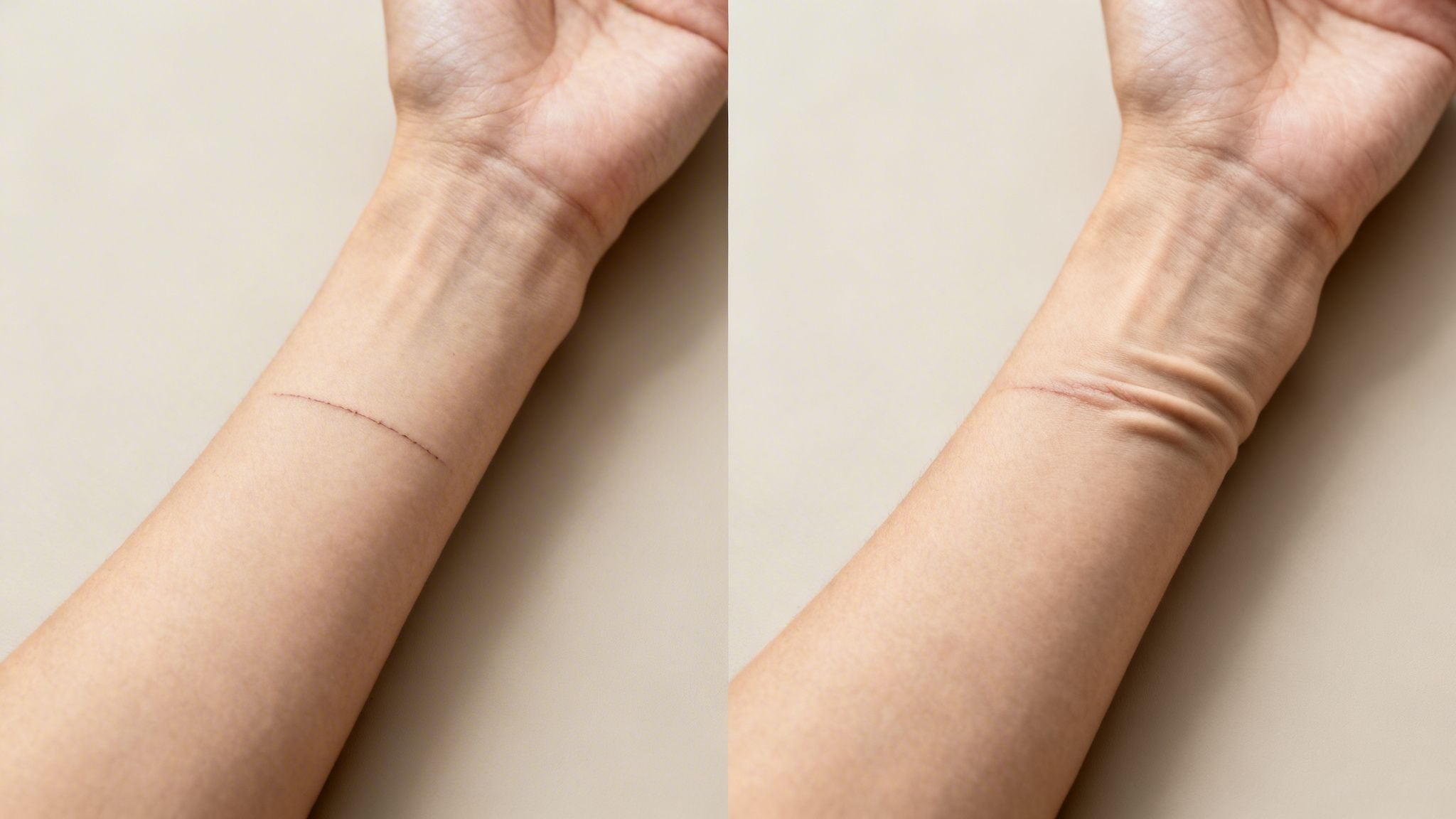
This process can lead to problematic surgical scar tissue that feels thick, tight, and looks more prominent. It’s a very common outcome, with significant scarring affecting around 100 million patients in developed countries each year. In the U.S. alone, with over 50 million annual surgeries, an estimated $20 billion is spent managing scars. An international survey found that nearly half of all people have at least one scar, many from surgery. You can read more about the global impact of scarring and its management to understand just how prevalent it is.
Normal Scars vs. Problematic Adhesions
Not all surgical scar tissue is the same. It's crucial to understand the difference between a normal, well-healed scar and the more restrictive scar tissue we call adhesions.
- A Normal Scar: This is the ideal result. The scar tissue is pliable, it moves freely with the skin around it, and it doesn't cause pain or limit your range of motion. It’s the “smooth patch” on the repaired road.
- Adhesions: This is where the trouble often begins. Adhesions are bands of surgical scar tissue that can bind together structures that should move independently. Imagine the repair patch sticking not just to the road surface, but also to the pipes and cables running underneath.
Adhesions can anchor your skin to underlying muscles, tendons, or even organs. This "stuck" feeling is a primary reason for post-surgical pain and stiffness, preventing you from moving freely and getting back to the activities you love.
How Scar Tissue Affects Your Life
When surgical scar tissue becomes restrictive, its effects go much deeper than the skin. For example, after a knee replacement, adhesions can stop you from fully bending or straightening your leg, making it a struggle to climb stairs or even sit comfortably. After abdominal surgery, internal scar tissue can create pulling sensations, digestive issues, or chronic pain.
Understanding that scar tissue is a normal part of healing is the first step. It doesn’t mean you did something wrong or your body healed incorrectly. It's simply a biological process that can sometimes go into overdrive.
The good news is that with the right physical therapy and expert guidance, this disorganized tissue can be remodeled. A skilled physical therapist can help make it stronger, more flexible, and less restrictive, helping you get better and live a fuller, better life.
Why Some Surgical Scars Become Problematic
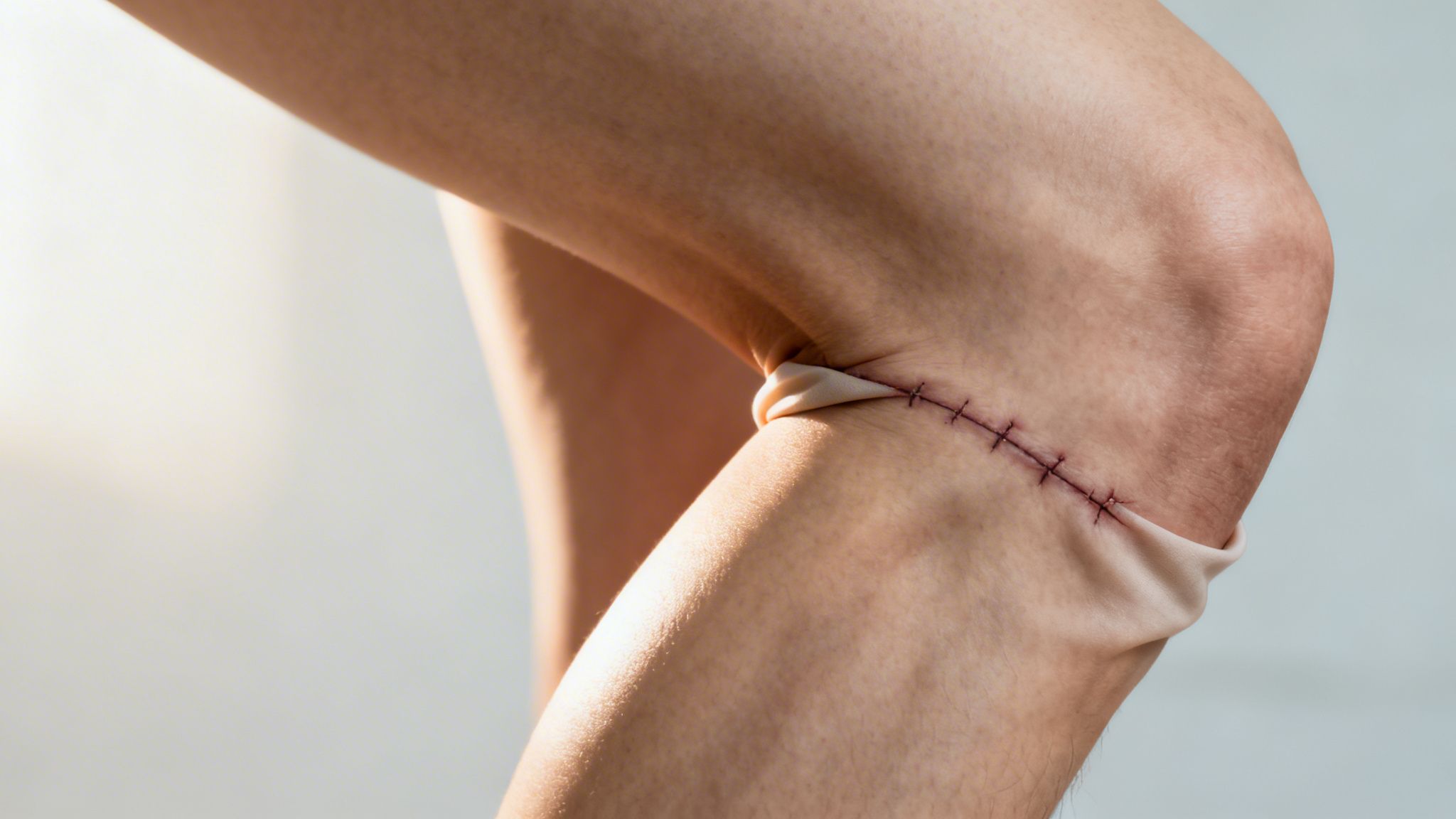
Ever wonder why one person’s surgical scar heals into a fine, silvery line while another’s becomes thick, tight, and painful? It’s a common question we hear from patients. The answer isn’t about luck; it’s a physical process driven by biology and mechanics.
When your body heals, it’s not just closing a gap—it’s rebuilding. Sometimes, that rebuilding process goes into overdrive. One of the biggest reasons for this is mechanical tension.
Think of it like trying to glue two pieces of wood together while someone keeps pulling them apart. To make sure they hold, you’d have to slather on a thick, heavy layer of glue. Your body does the exact same thing with an incision under constant strain, flooding the area with collagen to create a stronger, but much thicker, repair. The result is often a raised, firm scar that restricts your movement and causes discomfort.
Location, Location, Location
Where your surgery is located plays a huge role in how much tension the incision has to handle. Some parts of the body are simply more challenging to heal smoothly.
- Scars Over Joints: An incision over a mobile joint like a knee, shoulder, or elbow is constantly being stretched and pulled every time you move. This sends a persistent signal to your body: “Reinforce this area!” The result is often thick, restrictive scar tissue that can actually limit your range of motion.
- High-Tension Areas: Other areas, like the chest, upper back, and shoulders, have skin that is naturally taut. A surgical cut here is under tension from day one, putting it in a high-risk zone for developing problematic hypertrophic or keloid scars.
On the other hand, an incision on a less mobile area, like the abdomen, often experiences less mechanical stress. This gives it a much better shot at healing flat and flexible.
The most important thing to understand is the 'why.' A problematic scar isn't a sign you did something wrong. It’s a predictable biological response to specific physical and physiological forces—a response that a physical therapist can help guide and improve.
Biological and Genetic Factors
Beyond pure mechanics, your own unique biology is a major player in how your scar develops. Everyone’s healing process is different, and some of us are just wired to produce more scar tissue.
Genetics can strongly influence your body's tendency to produce collagen. If you have close family members who tend to form thick or raised scars, you might have a similar predisposition. It's like your body's "scarring program" is set a little higher from the start.
Other factors like age, skin type, and overall health also tip the scales. A major disruptor is any complication during the initial healing, especially a post-operative infection. An infection keeps the body in an inflammatory state for too long, triggering an overzealous healing response that can leave behind more prominent and dysfunctional scar tissue.
This isn't a rare problem. Hypertrophic scarring, one of the most common types of excessive surgical scar tissue, happens in 32% to 72% of cases, particularly after major surgeries. The scale of the issue is massive—the global wound care market is approaching $20.8 billion annually, and the specific market for scar treatment is projected to hit $37.9 billion by 2026. You can dive deeper into the economic and clinical impact of excessive scarring to see the full scope of this research.
Once you understand these root causes—from mechanical tension to your personal biology—it’s clear that scar complications are a physical issue. And that’s the good news. Physical therapists are experts in managing these exact issues, using targeted techniques to remodel tissue, restore function, and help you get back to moving freely.
Navigating Your Post-Surgery Healing Timeline
Knowing what to expect after surgery can turn a lot of that initial anxiety into confidence. Your body’s healing journey follows a pretty predictable, three-act play, and understanding these phases helps you become an active partner in your own recovery. It’s the key to telling the difference between normal progress and a potential red flag.
Your scar won't look the same from one day to the next, and that's actually a good thing. The healing process for surgical scar tissue is dynamic and unfolds over many months—sometimes taking up to 18 months to fully mature. Let’s break down what you can expect to see along the way.
Phase 1: The Inflammatory Stage (First Few Days)
Right after your surgery, your body kicks into emergency response mode. This first phase is all about damage control and cleaning up the surgical site.
During this time, it's completely normal for the incision to look red, a bit swollen, and feel tender. You might even notice some clear or pinkish fluid, which is just a sign of your body’s natural inflammatory response bringing healing cells to the area.
Phase 2: The Proliferative Stage (First Few Weeks)
Once the initial cleanup is done, the rebuilding starts. This is when your body gets busy producing new collagen to close the wound. Think of it like a construction crew quickly laying down scaffolding to bridge a gap.
Your scar will probably look its most noticeable during this stage—often raised, and red or even purplish. It might also feel itchy or tight. This is a sign that a new network of blood vessels and collagen fibers is forming, creating the foundation for your new surgical scar tissue.
Phase 3: The Remodeling Stage (Months to a Year or More)
This is the longest and most transformative part of the process. Your body now works to replace that temporary, disorganized collagen with a stronger, more organized structure. Over many months, you'll see the scar gradually flatten, soften, and fade in color.
This is the critical window where physical therapy makes a profound impact. A therapist’s skilled interventions can guide this remodeling process, ensuring the new tissue aligns in a flexible, functional way rather than becoming a stiff, restrictive barrier.
While some discomfort and changes are a normal part of this journey, certain symptoms are not. Being able to spot the difference is crucial for a smooth recovery. If you ever feel that your healing has "stalled," or if you notice any of the warning signs below, it’s time to get in touch with your surgeon or a physical therapist at Highbar.
To help you know what to watch for, we've put together a simple chart.
Normal Healing vs. Red Flags Post-Surgery
| Symptom | What's Normal | What's a Red Flag (Contact a Professional) |
|---|---|---|
| Pain | Mild to moderate tenderness that gradually gets better over time. | Severe, worsening, or throbbing pain that doesn't improve with your prescribed medication. |
| Appearance | Initial redness and swelling that slowly goes down. The scar fades over several months. | Spreading redness, yellow or green discharge, a foul odor, or excessive swelling (all potential signs of infection). |
| Sensation | Some itching, tingling, or numbness around the scar as the nerves heal. | Complete loss of sensation that isn’t improving, or a persistent "stuck" feeling deep below the skin. |
| Movement | Initial stiffness that improves with the gentle, approved movements you've been given. | A progressive loss of motion or a hard, unyielding block that prevents you from moving normally. |
Think of this table as your guide. Sticking to the "What's Normal" column means you're likely on the right track. If you find yourself in the "Red Flag" column, don't wait—make the call.
For particularly stubborn or problematic surgical scars, some people explore advanced interventions like laser treatment options for scars to improve their appearance and texture. For most people, however, proactive physical therapy is the most effective way to manage surgical scar tissue. Understanding how to manage healing after a major joint procedure, for example, is vital. You can learn more by checking out our guide with tips for recovering from rotator cuff surgery.
How Physical Therapy Helps You Heal Better
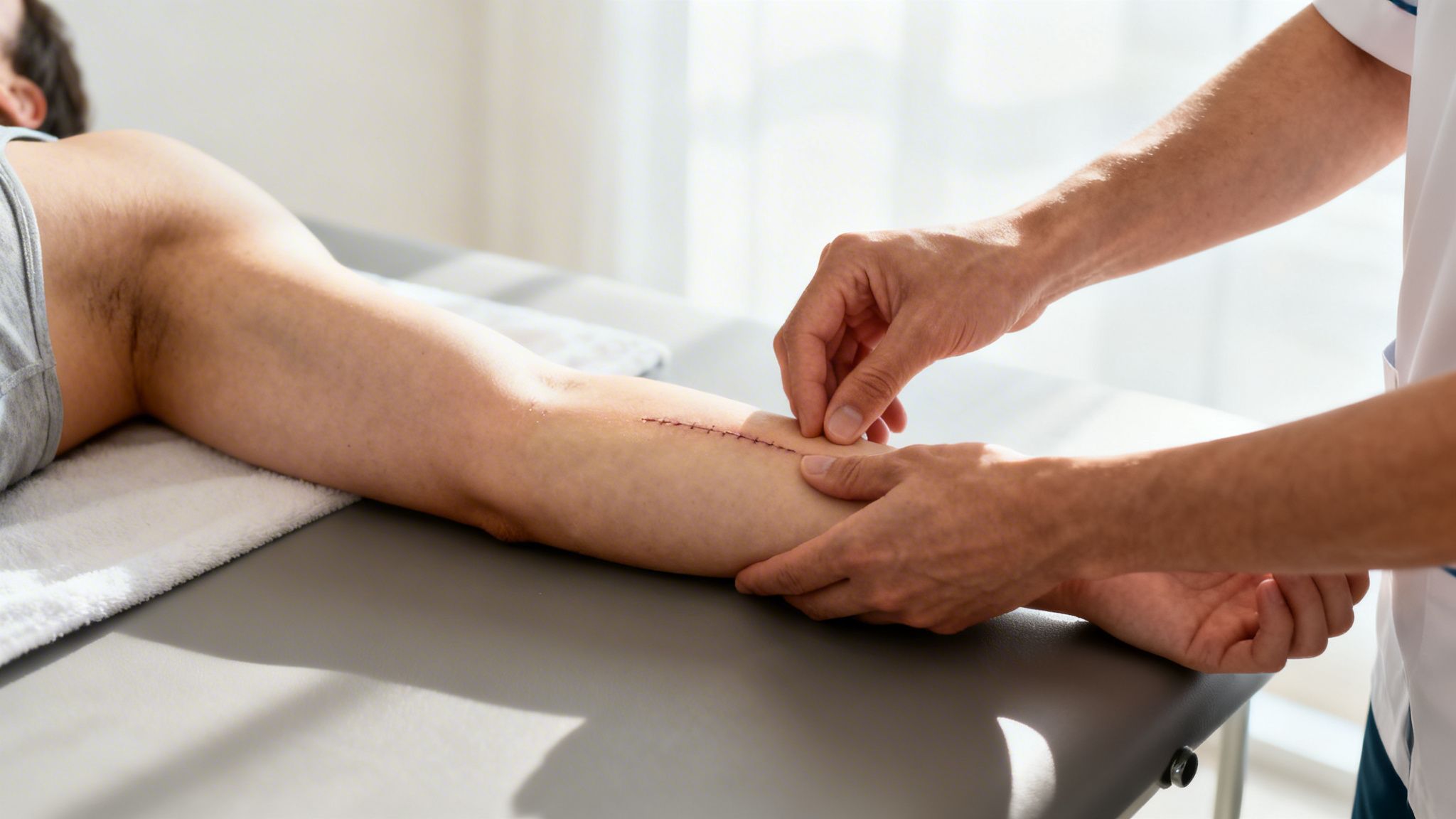
After surgery, your body gets to work healing the incision. But sometimes, the new surgical scar tissue that forms can feel tight, painful, and stuck. This is where the real work of recovery begins—and where a physical therapist can make all the difference.
Physical therapy isn’t just about exercises; it’s a skilled, hands-on approach to intentionally remodel that new tissue so it works with your body, not against it. Our goal is to guide that healing process, helping you feel better, move freely, and live a fuller life.
At Highbar, we see this every day. Our therapists use proven techniques to break down restrictions, improve mobility, and get you moving freely again. We act almost like a sculptor for your healing tissues, guiding them to become more organized, flexible, and functional.
Scar Mobilization: A Targeted Approach to Unstick Tissue
One of the most powerful tools in our toolkit is scar mobilization. Think of it as a highly specific, targeted massage designed to gently unstick the layers of tissue that have become "glued" together as you healed.
When scar tissue forms, it can create adhesions that tether your skin to the muscles and connective tissues underneath. This is what causes that pulling sensation and limits how far you can move. Scar mobilization applies precise pressure directly to the scar and surrounding area to free things up.
This focused, hands-on work helps to:
- Improve Tissue Glide: By gently moving the scar in different directions—up, down, side-to-side, and in circles—we encourage the layers of tissue to slide freely over one another again.
- Boost Blood Flow: The manual work increases circulation, bringing vital oxygen and nutrients that support the final remodeling phase of healing.
- Reduce Sensitivity: It’s common for surgical scars to become hypersensitive. The gentle, consistent pressure of mobilization helps desensitize the local nerve endings, making the scar much more comfortable.
We’ll also show you how to perform a modified version of this at home, empowering you to continue making progress between sessions. This direct work is often the key to unlocking movement that has felt restricted for weeks, months, or even years.
Manual Therapy and Stretching: For Deeper Freedom
While scar mobilization zeroes in on the scar itself, manual therapy and stretching address the bigger picture. A tight scar doesn't just affect the incision; it creates a ripple effect, causing tightness and problems elsewhere.
A C-section scar, for instance, can create tension through the abdominal fascia that contributes to low back pain. Scar tissue from a shoulder surgery can easily lead to stiffness in the neck and upper back. A great physical therapist is trained to see and treat these connections.
Manual therapy involves skilled, hands-on techniques that target deeper fascial restrictions, joint stiffness, and muscle tightness that have developed because of the scar and post-surgical immobility. It’s about restoring balance to the entire system.
After we create more mobility with manual therapy, we prescribe specific therapeutic stretches to maintain those gains. These aren't just generic stretches; they are targeted movements designed to lengthen the exact tissues that have become shortened around your scar. It’s this combination that ensures you not only regain mobility but also keep it for good. Of course, hands-on work is just one of the many benefits of physical therapy that help you recover fully.
Progressive Loading: Rebuilding Strength and Resilience
Once we’ve improved your mobility, the final and most important step is to safely rebuild your strength. We do this through progressive loading—a systematic process of gradually reintroducing force and demand to the healing tissues. This is what makes your body resilient enough for the demands of real life, whether that’s lifting groceries, playing with your kids, or getting back to a sport.
Starting with gentle activation exercises, your therapist will guide you through a program that slowly and safely increases in intensity. This process accomplishes two crucial things:
- It strengthens the new tissue. The mechanical load tells your body to align the new collagen fibers in a strong, organized pattern, making the scar more resilient and less prone to re-injury.
- It rebuilds your confidence. After surgery, it’s natural to feel hesitant about using that part of your body. Progressive loading provides a safe, controlled way to regain trust in your body’s ability to move and perform without pain.
This methodical approach prevents you from doing too much too soon, which can easily set back your recovery. It ensures that the surgical scar tissue and surrounding muscles become strong, capable, and fully integrated back into your body’s functional movements, helping you move far beyond the limitations of your scar.
At-Home Care to Support Your Recovery
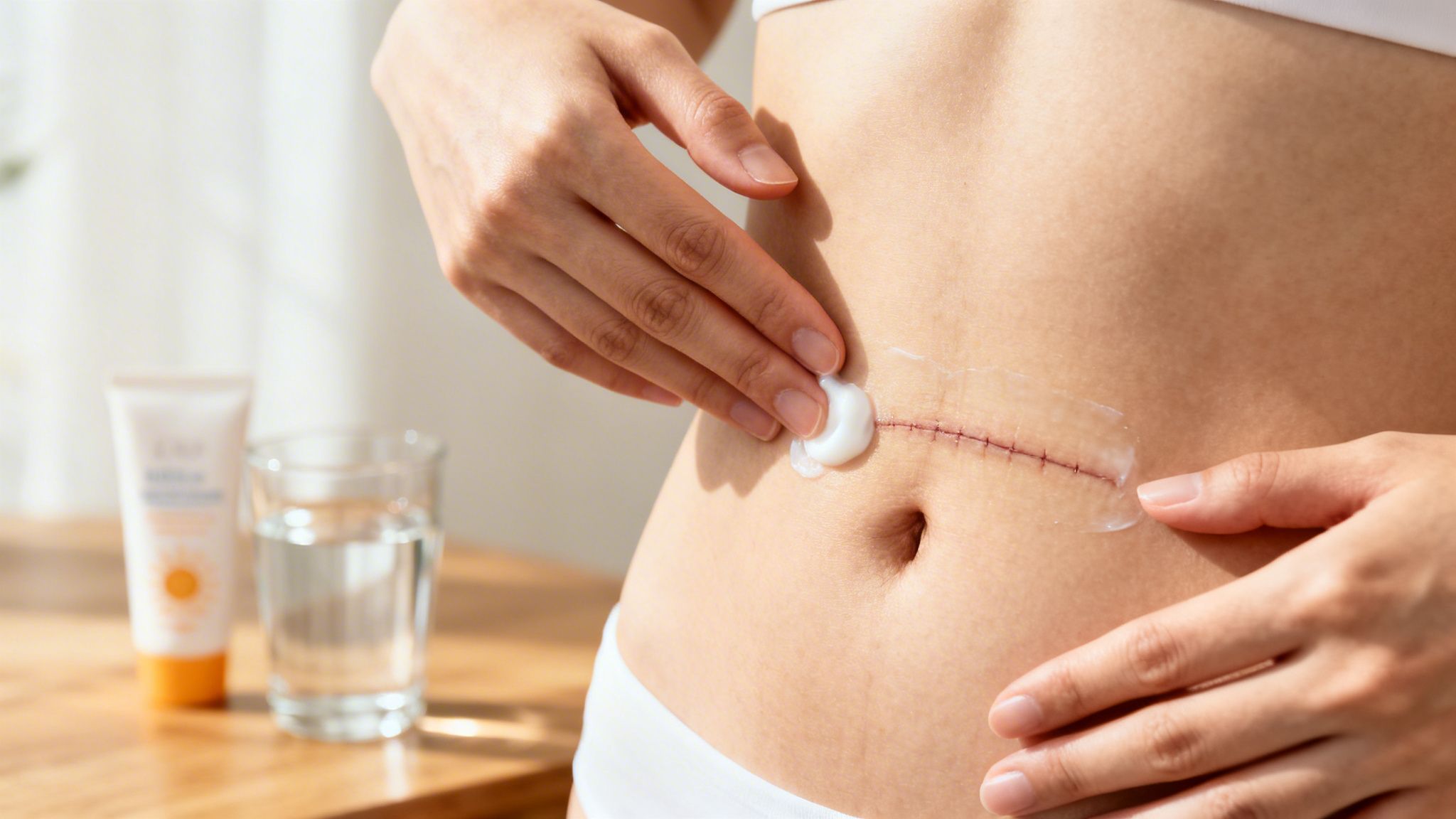
The work you do in our clinic is a huge part of your recovery, but the progress you make at home is just as critical. Think of it as a partnership. The hands-on treatment we provide in the clinic sets the stage, but your daily habits are what ensure your surgical scar tissue heals as smoothly and functionally as possible.
Of course, this all starts with good wound care from day one. Following your surgeon's instructions for caring for surgical incisions is the single most important first step you can take.
Gentle Self-Massage for Your Scar
Once your incision is fully closed and your physical therapist gives you the go-ahead—which is usually around 2-3 weeks after surgery—you can start doing gentle self-massage. This is one of the most powerful things you can do at home to keep the scar from getting tight and restrictive.
It’s basically a continuation of the mobility work we do in the clinic. The idea is to keep all the new layers of tissue moving freely against each other, preventing them from getting stuck.
- How to Do It: With clean hands, use a small amount of lotion or oil to reduce friction. Apply gentle but firm pressure right on the scar.
- What It Does: Gently move the scar in all directions—up, down, side to side, and in little circles. This helps to remodel the tissue and improve its flexibility.
- How Often: We typically recommend 5-10 minutes, a couple of times each day. It should feel like a mild stretch or a pulling sensation, never sharp pain.
Smart Skin Care for Better Healing
Your skin is your body's first line of defense, and a healing scar is working overtime. Taking good care of the skin not only helps the scar mature properly but can make a huge difference in how it looks and feels down the road.
The two most important rules are: keep it clean and keep it hydrated. A moisturized scar is a more pliable scar. Using a simple, fragrance-free lotion will keep the new tissue soft and prevent it from drying out, which can make it feel even tighter.
Sun protection is absolutely non-negotiable for a new scar. UV rays can cause the scar to darken permanently (a condition called hyperpigmentation), making it far more noticeable. For at least the first year, keep your scar covered with clothing or be diligent about applying a broad-spectrum sunscreen with SPF 30 or higher.
The Building Blocks of Recovery
What you eat and drink has a direct effect on how your body rebuilds itself. After surgery, your body is a construction site, and it needs the right materials to build strong, flexible new tissue. Staying well-hydrated is fundamental for healthy skin and tissue.
On top of that, a diet rich in protein gives your body the essential building blocks it needs for tissue repair and collagen production. You don’t need to follow a complicated diet—just focus on getting enough protein from whole food sources. At times, you might also need to manage some local swelling or soreness. If you're unsure what to do, our guide on when to use ice versus heat for your symptoms can help you decide.
Find Your Way Back to Moving Freely with Highbar
That tightness, pain, and restricted movement you're feeling after surgery isn't your new normal. It's a physical problem that we can solve together. A full recovery isn’t just something to hope for—it's something you can actively work toward, starting today.
At Highbar Physical Therapy, our goal is straightforward: to help you feel better, move freely, and live fully. We love what we do, and as the leading teaching practice in New England, our therapists are some of the most dedicated clinicians you'll find. They bring a deep, practical understanding of how the body heals to every single patient they work with.
Take Control of Your Recovery
You don’t need to wait for a doctor's referral to get started. In fact, getting ahead of scar tissue formation is one of the smartest things you can do to prevent it from becoming a long-term problem. Our team is ready to get to work.
At Highbar, we don't just treat symptoms; we empower you. We give you the knowledge, hands-on care, and specific strategies you need to move past your limitations and get back to the life you want to live.
Whether you see us in one of our clinics or connect through telehealth, we’ll start with a thorough evaluation to understand exactly what's going on. From there, we build a clear, effective treatment plan focused on your goals.
Your recovery is a team effort, and we’re here to be your expert guides. We’ll help you through the complexities of healing so you can stop worrying about your scar and start living a better, more active life.
Begin Your Journey Back to a Fuller Life
Let us help you break free from the constraints of surgical scar tissue. Our evidence-based approach is built to restore your movement, get rid of pain, and give you the confidence to dive back into the activities you love. Your path to moving freely starts right here.
Frequently Asked Questions About Surgical Scar Tissue
We’ve walked through the what, why, and how of dealing with surgical scar tissue. Still, it's completely normal to have a few more questions as you start thinking about your own recovery. Here are the answers to some of the most common ones we hear from our patients.
How Soon Can I Start Physical Therapy for My Scar?
The honest answer is: it depends on your specific surgery and what your surgeon recommends. While we can often start gentle movement in the areas around your incision shortly after your procedure, any direct, hands-on work on the scar itself has to wait.
We need to be sure the incision is fully closed and healed before we begin. This is typically around 2-4 weeks after your surgery. Your Highbar physical therapist will always coordinate with your surgeon to make sure we start at the exact right time—safely and effectively guiding the healing process without getting in the way of it.
Will Scar Mobilization Therapy Be Painful?
Proper scar mobilization shouldn't be painful. You’ll likely feel some new sensations—maybe a pulling, a gentle stretch, or some deep pressure—but a skilled physical therapist is an expert at working right up to your comfort level, never past it.
The entire goal is to gently encourage your tissue to move and become more flexible, not to cause pain. We'll be in constant communication, making sure the pressure is just right for you and your healing scar.
Think of it as a constant dialogue between you and your therapist. This teamwork ensures the therapy is both comfortable and effective.
Can Physical Therapy Help an Old Surgical Scar?
Yes, absolutely. While starting therapy early can often lead to the best results, it is never too late to make a real difference, even with a scar that’s months or years old.
Even mature, stubborn scar tissue can be remodeled and changed. We use proven techniques like targeted manual therapy, instrument-assisted soft tissue mobilization, and very specific stretches to help break down those long-standing adhesions. These methods can still dramatically improve the flexibility, feel, and even the look of an old scar, helping you get back lost motion and reduce that feeling of chronic tightness.
How Many Therapy Sessions Will I Need?
This is unique to every single person. There’s no "one-size-fits-all" answer, because your recovery path depends on a handful of key factors:
- The scar's size, where it's located, and how old it is.
- How severe any movement restrictions are.
- How your own body responds to the treatment.
- Your personal goals for recovery.
After your very first evaluation, your Highbar physical therapist will map out a personalized treatment plan for you. They’ll give you a clear and realistic idea of the care you’ll need to start feeling better and get back to doing what you love.
Don't let surgical scar tissue hold you back from the life you want to live. Proactive, expert care at Highbar Physical Therapy can restore your movement and confidence. Book an appointment today and start your journey back to feeling, moving, and living better.