When you're dealing with back pain, deciding between physical therapy and chiropractic care can feel overwhelming. It's a question we hear all the time. The fundamental difference boils down to this: physical therapy is built around active, long-term solutions that empower you to get better and live a fuller life, while chiropractic care often centers on passive, immediate relief through spinal adjustments.
Your best choice really depends on the root cause of your pain and what you want to achieve for your long-term health and wellness.

A Quick Comparison for Your Back Pain
Back pain is one of the most common reasons people seek help—it affects an estimated 8 out of 10 people at some point in their lives. When that nagging ache or sharp twinge strikes, you just want a clear path to feeling better and getting back to your life. Both physical therapists and chiropractors are trained professionals who treat back pain, but their core philosophies and methods are quite different.
Understanding these distinctions is the first step toward making an empowered decision. A physical therapist acts as a movement expert. They diagnose the underlying reason for your pain and build a personalized plan to restore function, rebuild strength, and prevent the problem from coming back. This approach is all about empowering you to heal your own body so you can live a fuller, better life.
In contrast, a chiropractor typically focuses on the spine's alignment and its relationship with the nervous system. The primary tool is the adjustment, which is used to provide relief and restore joint mobility.
At a Glance Physical Therapy vs Chiropractic Care
To make it easier to see the differences side-by-side, this table breaks down the two disciplines, covering their core philosophy, common techniques, and what they aim to achieve for your back pain.
| Aspect | Physical Therapy (PT) | Chiropractic Care |
|---|---|---|
| Core Philosophy | Restore function, improve mobility, and build long-term strength through movement and exercise. Treats the whole body. | Correct spinal misalignments (subluxations) to improve nervous system function and promote self-healing. Focus is on the spine. |
| Primary Methods | Therapeutic exercise, manual therapy (joint and soft tissue mobilization), patient education, and functional training. | Spinal manipulation or "adjustments," which are controlled, high-velocity thrusts to specific spinal joints. |
| Treatment Focus | Active: You are an active participant in your recovery through prescribed exercises and lifestyle changes. | Passive: The treatment is primarily done to you by the practitioner through adjustments. |
| Goal of Care | Address the root cause of pain, achieve sustainable results, and empower you with self-management strategies for a fuller life. | Relieve immediate pain and discomfort, restore joint mobility, and improve nervous system communication. |
Thinking through the table above helps clarify the two paths. Each has its place, but the experience and long-term outcomes are quite different.
The fundamental choice comes down to this: Do you want to primarily receive passive adjustments for immediate relief, or do you want to actively participate in a program designed to build lasting strength and prevent future pain?
At Highbar Physical Therapy, our entire model is built around that second option. We believe in getting you better so you can live a fuller, more active life, free from the limitations of pain. You can learn more about how our dedicated team approaches back pain treatment to achieve lasting outcomes.
To really choose between a physical therapist and a chiropractor for your back pain, you need to get past the surface and understand the "why" behind what they do. These are two distinct professions, each built on a different philosophy of how the body works. Those philosophies directly influence their training, how they diagnose problems, and the treatment plans they create.
Getting this choice right is a massive deal for a lot of people. In 2020, the World Health Organization reported that low back pain was the single biggest cause of disability among musculoskeletal issues, impacting an incredible 619 million people globally. And it's not getting better—that number is expected to hit 843 million by 2050. When you're dealing with pain this common, finding the right, sustainable care is everything. You can read more about these staggering global back pain statistics on the WHO's website.
The Physical Therapy Philosophy of Movement Science
Physical therapists (PTs) come from a world of movement science and functional restoration. We are healthcare professionals—many with a Doctor of Physical Therapy (DPT) degree—trained to diagnose and treat the entire musculoskeletal system, not just the spine. This wide-ranging, evidence-based education makes us experts in how the body is supposed to move, function, and heal itself.
At Highbar Physical Therapy, this philosophy is at the core of everything we do. We don’t just treat your back; we partner with you and teach you how to get better and live a better life.
- Holistic Diagnosis: We look way beyond your immediate symptoms. Is the root cause a muscle imbalance from sitting all day? Poor posture? A weak core that isn't supporting you? Joint stiffness? We find the why.
- Patient Empowerment: Our main job is to give you the tools and understanding to manage your condition on your own. We teach you specific exercises and lifestyle adjustments that build long-term resilience so you can live your life to the fullest.
- Lasting Function: The entire focus is on getting you back to your life for good. We want you to be able to do your daily activities, enjoy your hobbies, and avoid future injuries. It’s about creating lasting results so you can live fully.
A physical therapist’s core belief is that targeted, active movement is the most powerful medicine for most types of back pain. The goal is to correct the underlying problem, not just mask the symptoms, so you can live a better life.
The Chiropractic Philosophy of Spinal Health
The chiropractic philosophy is built on the connection between the spine and the nervous system. The central idea is that misalignments in the spine, which chiropractors often refer to as vertebral subluxations, can interfere with nerve function and cause pain and other problems throughout the body.
This philosophy naturally leads to a different focus in treatment.
- Spinal Adjustments: The primary tool for a chiropractor is the spinal adjustment. This is a specific, controlled force applied to a joint to restore its proper alignment and movement.
- Nervous System Function: Chiropractors believe that by correcting these misalignments, they can take pressure off the nerves. This allows the body's natural, in-built healing ability to take over and work as it should.
- Symptom Relief: While chiropractors also work toward better overall health, the immediate goal of an adjustment is often to relieve pain and improve how the joints in the treated area are functioning.
Ultimately, these are just fundamentally different starting points. A physical therapist uses movement and exercise to rebuild your body's entire support system for long-term function. A chiropractor focuses on spinal adjustments to improve the communication between your spine and nervous system, primarily to relieve discomfort.
What to Expect During Your Treatment Sessions

When you’re weighing physical therapy vs. a chiropractor for back pain, it’s helpful to picture what actually happens when you walk through the door. Both providers want to get you out of pain, but the in-session experience couldn't be more different. It really boils down to an active, hands-on journey of rehabilitation versus a more passive, alignment-focused treatment.
A physical therapy appointment is a collaborative process. Here at Highbar, we see you as a partner in your own recovery—not just someone receiving treatment. Our sessions are built to empower you with the strength, knowledge, and tools to find lasting results so you can get back to living a fuller life.
In contrast, a chiropractic visit is almost always centered on the adjustment. The main event is the application of specific, controlled forces to your spinal joints to restore proper alignment and reduce discomfort. Let's break down what a typical visit looks like for each.
The Physical Therapy Session: An Active Path to Recovery
Your physical therapy journey kicks off with a detailed initial evaluation. This isn’t just about your back; it’s about you. A Doctor of Physical Therapy will assess how you move, test your strength and flexibility, and really listen to how your pain is limiting your daily life. This deep dive is crucial for finding the root cause of your pain.
From there, your sessions become a blend of different techniques, all tailored to your specific goals.
Common Components of a PT Session:
- Manual Therapy: Your therapist will use hands-on techniques, like joint mobilizations or soft tissue work, to improve your mobility, dial down stiffness, and decrease pain. Think of this as preparing your body for the active part of your recovery.
- Therapeutic Exercise: This is the core of what we do. You’ll be guided through a personalized exercise program designed to strengthen weak muscles, stretch tight areas, and correct the very imbalances that caused your pain in the first place.
- Patient Education: A huge piece of every session is learning. Our clinicians have a passion for physical therapy and are committed to teaching you better posture, safer body mechanics for lifting, and strategies to keep the pain from coming back so you can live life on your terms.
The goal in physical therapy is real progress, not just temporary relief. Every exercise and piece of advice is a building block toward getting your function back and putting you in control of your own health. This focus on education is key to our practice, ensuring you leave each session more capable of living a better life.
For a more detailed look at the process, check out our guide on what to expect at physical therapy for lower back pain.
The Chiropractic Session: A Focus on Spinal Adjustments
A typical chiropractic session is usually shorter and more focused than a physical therapy appointment. Following an initial assessment—which might include a postural check or X-rays—most visits center on the spinal adjustment.
You’ll likely lie on a specialized table that helps the chiropractor position your body correctly. Then, using their hands or a small instrument, they apply a quick, controlled thrust to a specific spinal joint. Many people hear a “popping” or “cracking” sound, which is just the release of gas from the joint—similar to cracking your knuckles.
What Happens During a Chiropractic Adjustment:
- Positioning: You'll be placed in a specific way to isolate the joint that needs attention.
- The Thrust: The chiropractor applies a high-velocity, low-amplitude (HVLA) thrust. It's a quick but gentle force.
- Immediate Sensation: Many people report an immediate sense of relief, less pressure, or more movement in the treated area.
While some chiropractors might add in other therapies like massage or stretching, the adjustment is the star of the show. The process is largely passive; it's something being done to you. The primary goal is to correct what are seen as misalignments, restore joint mobility, and reduce nerve irritation, which can bring significant symptom relief.
Looking at the Evidence for Long-Term Results

When you're trying to decide between physical therapy and chiropractic care, it’s easy to focus on one thing: immediate relief. And that’s understandable. But the real goal isn’t just feeling better by Friday; it’s building a back that’s strong and resilient enough to let you live your life without constantly worrying about pain coming back.
The research and clinical guidelines are becoming increasingly clear about what actually works for the long haul. The evidence consistently shows that active, exercise-based approaches are the most effective way to manage chronic pain and, more importantly, reduce the chances of it returning.
This is the core philosophy of physical therapy. It’s a model of care designed not just to treat your current symptoms, but to give you the strength, tools, and understanding to manage your back health for good and live a fuller, better life.
Active vs. Passive Care: What It Means for Your Recovery
To make sense of the evidence, it helps to see treatments as either active or passive. Passive care is anything done to you—like a spinal adjustment, massage, or heat pack. Active care is what you do for yourself, like performing specific exercises or learning better ways to move.
While passive treatments feel great and can provide powerful short-term relief, clinical research shows that active care is the key to lasting success.
What the Evidence Tells Us:
- Managing Chronic Pain: Systematic reviews time and again find that therapeutic exercise—the foundation of physical therapy—is highly effective for reducing pain and improving function for people with chronic low back pain.
- Preventing Future Episodes: The single most powerful tool for preventing back pain from coming back is a stronger, more stable core and better body mechanics. This is exactly what a physical therapy program is built to accomplish.
- Following Clinical Guidelines: Major health organizations now recommend active therapies as the first-line treatment for most back pain, placing them ahead of passive modalities or medication.
The data is clear: An approach centered on patient education and active participation provides more durable results. By teaching you how to move better and strengthen your own body, physical therapy invests in your long-term wellness, helping you live a fuller life.
What Research Says About Lasting Outcomes
When researchers have compared physical therapy and chiropractic care head-to-head, they often find both can be effective for acute, short-term pain. No surprise there. But when the studies shift to look at long-term function and preventing recurrence, the active approach of physical therapy frequently demonstrates a clear advantage.
It’s the difference between a temporary fix and addressing the root causes of weakness and instability that led to the pain in the first place.
This focus on active care is also reflected in patient trends. For example, after leading health organizations updated their guidelines in 2016 to prioritize active treatments, data from the National Health Interview Survey showed that the use of physical therapy for low back pain grew at a significantly faster rate than chiropractic care. You can dig into the specifics in the full research about back pain treatment trends.
As the leading teaching practice in New England, Highbar Physical Therapy is committed to this evidence-based model. We practice at the top of our license through a culture of continuing education, translating the latest research into effective, action-oriented treatment plans. Our passion for physical therapy is rooted in helping you achieve a sustainable recovery so you can move freely and confidently for years to come.
Comparing the Costs and Overall Value
Financials are a real part of any healthcare decision. When it comes to choosing between physical therapy and chiropractic care for back pain, the conversation almost always turns to cost. So, let’s take an honest look at the expenses, what insurance typically covers, and what you’re really getting for your money.
At first glance, chiropractic care can sometimes seem less expensive on a per-visit basis. But it's so important to think beyond that initial sticker price and consider the total investment you're making in your long-term health. The way each treatment plan is structured directly shapes the overall cost.
Looking Beyond the Per-Visit Fee
When you’re comparing costs, it’s not about a single visit—it’s about the entire episode of care. A detailed economic analysis of adults with low back pain found that over a six-month period, chiropractic care was slightly cheaper, with total average costs $48.56 lower per patient than physical therapy. The same study noted the chiropractic group also had 20% fewer visits on average. You can see the full cost comparison findings for yourself.
This data shows that from a short-term perspective, the costs can be quite competitive. But the true value of care isn't just about the money you spend right now; it's about the results you get and how well you're set up to avoid future problems and expenses.
Physical Therapy as a Long-Term Investment
Physical therapy is designed to be an investment in your future. The goal isn't just to fix your current back pain, but to arm you with the knowledge and strength to keep it from coming back. This focus on education is where the real long-term value shines, helping you get better so you can live a better life.
- Self-Management Skills: Your physical therapist teaches you how to handle flare-ups and listen to your body’s signals, which means you’ll rely less on future medical visits.
- Injury Prevention: By addressing the underlying weaknesses and movement habits that caused the pain in the first place, you build a more resilient body that’s far less likely to get injured again.
- Reduced Future Spending: An effective physical therapy program can lower your overall healthcare spending over time by minimizing the need for ongoing treatments, pricey diagnostic tests, and time away from work.
The core principle of physical therapy is to make you the expert on your own body. This emphasis on education and empowerment is a powerful tool for living a fuller, better life, aligning with our commitment at Highbar to help you move freely and confidently.
Beyond just comparing the fees of physical therapists and chiropractors, you can also explore different strategies to reduce healthcare costs for your back pain treatment. Ultimately, choosing the care that gives you lasting results and self-sufficiency often proves to be the most valuable and cost-effective decision you can make.
How to Choose the Right Path for Your Pain
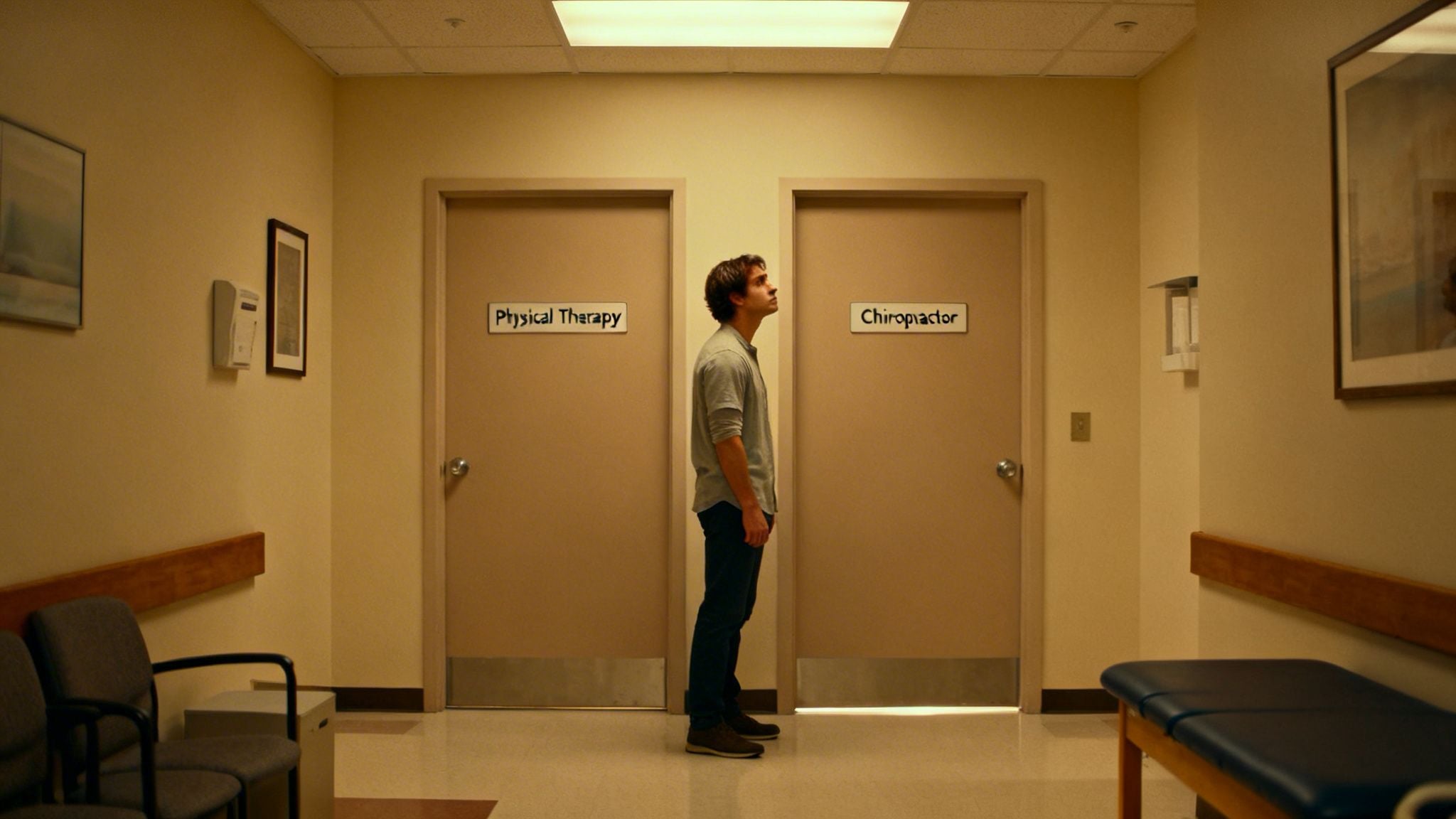
When you're staring down two different doors for back pain relief, making the final call between physical therapy and chiropractic care comes down to your unique situation. Both can get you out of pain, but they really shine in different scenarios. The right choice depends on the kind of pain you have, what's causing it, and what you hope to achieve long-term.
Let's walk through some real-world examples. This should help clear things up and give you the confidence to pick the path that not only quiets the pain now but also helps you build a more resilient, active future so you can live a fuller, better life.
When to Choose Physical Therapy
Physical therapy is the definitive choice when you’re looking for comprehensive, long-term rehabilitation. The focus is squarely on restoring function, building real strength, and teaching you how to manage your own body—making it ideal for complex or stubborn issues so you can get back to living fully.
You'll want to head straight for a PT if you're in one of these situations:
- Recovering from Surgery or a Major Injury: If your back pain comes from a surgical procedure or a significant injury like a herniated disc, a structured PT program isn't just a good idea—it's essential. A physical therapist will guide you through a safe, progressive recovery designed to rebuild strength and get your full range of motion back.
- Managing a Chronic Condition: For ongoing issues like spinal stenosis, arthritis, or that persistent low back pain that just won't quit, physical therapy gives you the tools for the long haul. The goal here is to improve your daily function and teach you how to stay active without being limited by your condition.
- Preventing Recurring Pain: Are you an active person who's sick and tired of your back "going out" every few months? This is where PT truly excels. We can pinpoint and correct the underlying muscle imbalances and faulty movement patterns that keep causing the same injury over and over.
Key Insight: Physical therapy is more than just a treatment; it's an education. It's built for anyone who wants to be an active participant in their own recovery and learn how to build a stronger, more resilient body to keep pain from coming back and live a better life.
When Either Approach Might Work
For a recent, straightforward case of back stiffness or a minor tweak, both a physical therapist and a chiropractor could offer relief. Maybe you just woke up with a stiff neck or overdid it with the yard work.
In this case, a chiropractic adjustment might provide faster initial relief by improving joint mobility. A physical therapist, on the other hand, will also work on the immediate pain but will pair that with exercises to make sure the supporting muscles are strong enough to prevent it from happening again.
Real-World Scenarios for Decision Making
Let's put this into practice with a couple of common patient stories to make the choice clearer.
The Office Worker with Persistent Aches
Sarah works at a desk all day and has been battling a nagging, dull ache in her lower back for months. A chiropractor might offer some temporary relief, but a physical therapist would perform a full evaluation of her workstation ergonomics, her posture, and her core strength. Her treatment plan would likely include manual therapy for the immediate ache, plus a targeted exercise program to strengthen the core and hip muscles that often get weak from sitting all day. After all, a huge part of long-term relief is learning the best ways to sit at work to avoid back pain so she can get back to her life pain-free.
The Active Adult Wanting to Avoid Re-injury
Mark loves his weekend golf game but finds his back is sore for days afterward. He’s determined to stay active without the pain. Physical therapy is the perfect fit here. A therapist would analyze his golf swing mechanics, identify mobility restrictions in his hips and mid-back, and design a program to improve his strength and rotational power—safely. This proactive approach helps him perform better on the course and dramatically lowers his risk of re-injury, letting him continue doing what he loves.
Ultimately, choosing the right provider is a critical step. For a deeper look at what makes a great clinician, you might find our guide on how to choose a physical therapist helpful.
Frequently Asked Questions About Back Pain Care
When you're dealing with back pain, choosing between physical therapy and chiropractic care brings up a lot of questions. We get it. Here are the answers to the most common ones we hear from our patients, designed to give you clarity and confidence in your next step.
Do I Need a Doctor's Referral?
Not anymore. Thanks to Direct Access laws in states like Rhode Island and Massachusetts, you do not need a doctor's referral to see a physical therapist. Chiropractic care usually has similar direct access.
This is a huge advantage because it means you can stop waiting and start your recovery right away. At Highbar, you can book an appointment instantly and get the process started on getting better.
How Long Until I Feel Better?
This is the big question, and the honest answer is: it depends entirely on what's causing your pain. A chiropractic adjustment might give you immediate, though sometimes temporary, relief. That's a valid goal for some.
Physical therapy, on the other hand, is built for lasting change. While you'll likely feel better after just a few visits, the real work is progressive. We focus on building strength, restoring proper movement, and giving you the tools to stay better for good so you can live a fuller life.
Key Takeaway: The timeline is different because the goals are different. Chiropractic often targets quick relief. Physical therapy is an investment in long-term strength and function that empowers you to keep the pain from coming back.
Can I Use Both Treatments Together?
Yes, some people do find a combined approach helpful. The most important thing, however, is that both providers are on the same page and communicating about your care. Without coordination, you risk getting conflicting advice.
A physical therapist is uniquely qualified to manage your overall rehabilitation plan. They can make sure that any adjustments are supported by a structured strengthening and mobility program—which is what truly creates lasting results and helps you get back to living a better life.
Ready to choose an active path to recovery that empowers you for the long run? The licensed physical therapists at Highbar Physical Therapy are movement experts dedicated to helping you feel better, move freely, and live fully. Book your appointment instantly at one of our convenient locations in Rhode Island or Massachusetts.