What Is a Physical Therapy Residency?
A physical therapy residency is a structured, post-graduate learning experience designed to help physical therapists grow with intention — clinically, professionally, and personally.
For many clinicians, residency isn’t about working harder. It’s about learning better: practicing alongside mentors, developing confidence through experience, and growing inside an environment that values education as much as outcomes.
At Highbar, this philosophy shows up everywhere — from how we support students to how we build long-term careers. (If you’re early in your journey, our student hub is a great place to explore how education fits into the bigger picture.)
Why Physical Therapy Residencies Exist
Most physical therapists graduate with strong foundations and a genuine desire to help people move and feel better — but limited opportunity to slow down, reflect, and learn in community.
Residencies exist to change that.
Rather than asking clinicians to “figure it out as they go,” a residency creates space for:
- Guided clinical growth
- Meaningful mentorship
- Structured learning beyond entry-level practice
This kind of environment doesn’t just build skills — it builds confidence. And for many PTs, that confidence is what keeps them engaged, curious, and fulfilled over the long term.
What Happens During a PT Residency?
While every program is different, most physical therapy residencies are built around three core experiences.
Purposeful Clinical Practice
Residents care for real patients every day — not as observers, but as clinicians — with time and support to think critically about what they’re doing and why.
This is where classroom knowledge becomes clinical intuition.
Mentorship That Feels Human
Residency mentorship is consistent and relational. Residents work alongside experienced clinicians who are invested not just in outcomes, but in growth.
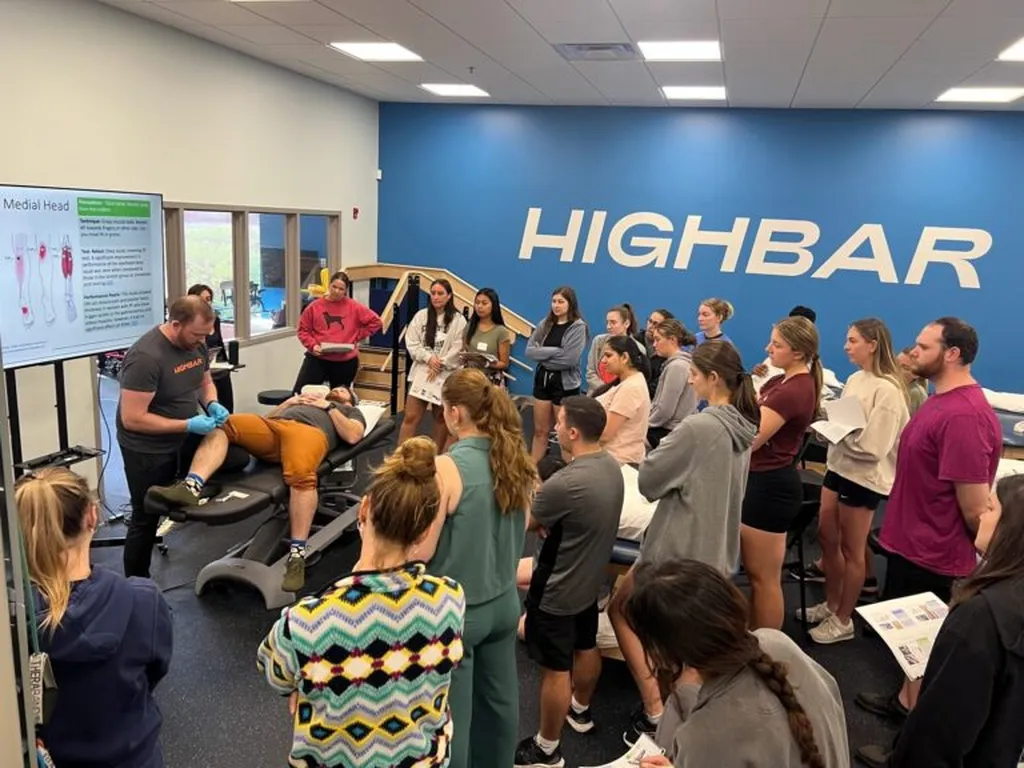
At teaching practices like Highbar, mentorship is embedded into daily work — not treated as an extra. That same mindset shapes how we support students and clinicians across all stages of development. You’ll see that reflected throughout our education pathways.
Structured Learning & Reflection
Residencies include coursework, case discussions, and skill development sessions that strengthen clinical reasoning and decision-making.
Learning isn’t squeezed between patients. It’s protected — because growth requires space.
How Long Is a Physical Therapy Residency?
Most PT residencies last about 12 months.
During that year, residents balance patient care with dedicated learning time — a key difference from many traditional outpatient roles, where education often happens after hours.
This balance matters. It’s one of the reasons residencies can feel both challenging and sustainable when they’re designed well.
Do PT Residencies Prepare You for Board Certification?
Many orthopedic physical therapy residencies are designed to support preparation for board certification, such as the Orthopedic Clinical Specialist (OCS) credential.
While completing a residency doesn’t automatically grant board certification, it often:
- Meets eligibility requirements
- Deepens clinical reasoning
- Builds confidence heading into the exam
(For general information on board certification, the APTA’s overview of specialty certification is a helpful external resource.)
Who Should Consider a Physical Therapy Residency?
A residency may be a great fit if you:
- Value mentorship as part of everyday practice
- Enjoy asking “why,” not just “how”
- Learn best in community
- Are thinking long-term about your career
Residency isn’t about proving something. It’s about choosing an environment where growth is built in — not something you have to chase on your own.
Is Residency Required to Be a Great Physical Therapist?
No — and it’s important to say that clearly.
Many exceptional physical therapists never complete a residency. But for clinicians who want structure, mentorship, and accelerated growth early in their careers, residency can be a powerful foundation.
The right choice depends on how you learn best and what kind of clinician — and teammate — you want to become.
What to Look for in a PT Residency Program
If you’re exploring residency, consider asking:
- Is the program accredited?
- Who will mentor me — and how often?
- Is learning time protected?
- How are residents supported, not just evaluated?
- What do graduates say about their experience?
A strong residency should feel challenging and supportive — never isolating.
A physical therapy residency is an invitation to grow with intention.
For clinicians who want to feel confident in their skills, connected to their mentors, and grounded in purpose, residency can shape not just a year — but an entire career.
At Highbar, that same commitment to people and growth extends beyond residency. Whether you’re a student, a new grad, or an experienced clinician, we’re always looking to connect with people who care deeply about their craft and the communities they serve.
Explore What’s Possible
- Learn more about education pathways on our student hub
- Or explore current opportunities and career paths at highbarhealth.com/careers
Common Questions About Physical Therapy Residencies
What’s the difference between a PT residency and a fellowship?
Residencies focus on post-graduate clinical development, while fellowships typically offer more specialized training after residency.
Are PT residencies paid?
Most residencies are paid positions, though compensation and structure vary.
Can new graduates apply for PT residencies?
Yes. Many programs are designed specifically for new and early-career clinicians.
Is residency worth it in orthopedics?
For clinicians seeking mentorship, advanced reasoning, and board preparation, residency can be a meaningful next step.