A patient walks in complaining of chronic headaches. They’ve tried medication, rest, and maybe even seen a specialist or two, but the pain keeps coming back. It’s a story we hear all the time. As clinicians, our first instinct might be to think of this as a symptom to be managed. But what if we could help them solve the problem?
This is where our role as physical therapists becomes transformative. Instead of just chasing symptoms, we have the skills to uncover and treat the underlying musculoskeletal issues in the neck, shoulders, and upper back that are often the real culprits. For patients with cervicogenic and tension-type headaches, this shift in perspective can be life-changing, moving them from a cycle of pain management to a path of genuine recovery.
Getting to the Root Cause of Your Patient's Headaches
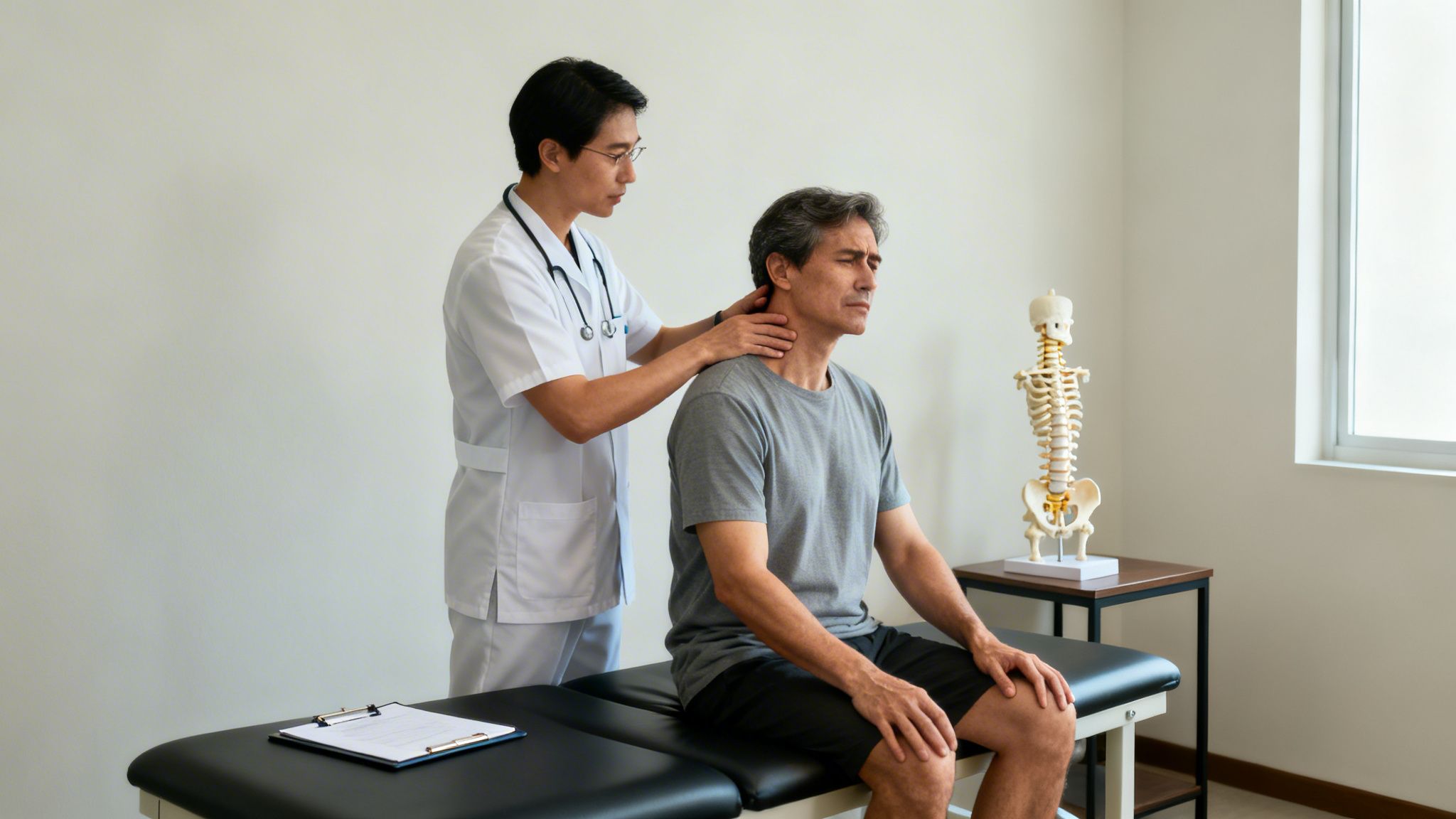
So many of our patients come to us with a familiar story. They’ve spent years trying to find a solution for their chronic headaches, bouncing from one temporary fix to another. For them, pain has become a constant companion—something to be managed, but never truly resolved.
This is where physical therapy completely changes the conversation. We look beyond the symptom—the headache itself—to uncover the mechanical issues that are triggering the pain. Our expertise is in identifying and treating the subtle joint restrictions, muscle tension, and postural habits that are often the true source of the problem.
Shifting from Passive Management to Active Recovery
The traditional approach to headaches often relies on passive strategies like medication. While medication can be essential for managing acute pain, it doesn't solve the underlying problem. This can create a frustrating cycle where a patient is always reacting to pain instead of getting ahead of it.
Our goal is to help patients break that cycle. By exploring the connection between physical therapy and headaches, we guide them from a state of passive symptom management to one of active, empowered recovery. This involves a few key steps:
- Finding the Source: We start with a thorough assessment to see how restrictions in their neck joints, muscle imbalances, or even the way they sit at their desk are contributing to headache patterns.
- Providing Hands-On Relief: Manual therapy techniques, like targeted soft tissue work or gentle joint mobilizations, can provide immediate relief from pain and stiffness. This creates a powerful window of opportunity where they can finally feel some hope.
- Empowering with Movement: From there, we teach specific exercises and strategies to take control of their own recovery, strengthening the right muscles and correcting the patterns that were causing the problem.
Think of it this way: Medication can turn down the volume on a fire alarm, but physical therapy helps you find and put out the fire. We address the mechanical stress that's triggering the alarm in the first place.
Your Partner in Finding a Sustainable Solution
When you're dealing with chronic headaches, your patients aren’t just looking for another quick fix—they're looking for a guide. A physical therapist acts as their movement expert, explaining the direct link between their posture, neck health, and headache frequency. This reframes their entire understanding of the problem.
This partnership transforms patient care. Instead of just getting temporary relief, they gain the knowledge and tools to build a sustainable solution. They learn that their daily habits, movements, and exercises are the keys to achieving long-term success. It’s this empowering, clinician-led approach that leads to meaningful, lasting results.
Your Clinical Framework for Headache Differentiation
When a patient walks in with headaches, it can feel like trying to solve a puzzle with half the pieces missing. But effective treatment doesn't come from a lucky guess—it comes from a clear, confident clinical framework. This is where your clinical reasoning becomes your most valuable tool.
Instead of getting bogged down in textbook definitions, we need a practical way to sort through the headaches we can actually influence: cervicogenic, tension-type, and migraine with cervical overlap. Building this diagnostic hypothesis gives you the confidence to know when physical therapy is the answer and which patients are the perfect candidates for your care.
The Subjective Exam: Where the Story Begins
Your subjective exam isn’t just about collecting data; it’s where you start cracking the code. The specific words a patient uses to describe their pain are often the most important clues you'll get.
Think about the classic presentations. A patient describing a one-sided headache that starts in their neck and creeps up into their forehead or eye is practically handing you a cervicogenic diagnosis. You’ll often hear that it gets worse with specific neck movements or sustained postures, like looking down at a screen for hours.
Then you have the person who describes a "tight band" or "squeezing pressure" wrapping around their whole head. This is the hallmark of a tension-type headache. It’s almost always connected to stress, fatigue, and palpable tension in the upper traps and neck muscles. While you'll still clear the cervical spine, your focus will likely broaden to include postural strain and stress management strategies.
And then there are migraines. These are neurological events, often defined by severe, throbbing pain, sensitivity to light and sound, and sometimes nausea. But here’s the critical part: neck stiffness and upper cervical dysfunction are incredibly common triggers for migraine attacks. Your job is to figure out if you can reduce the frequency or intensity of their migraines by addressing the underlying neck issues.
Headache Differentiation Cheat Sheet for Clinicians
Differentiating between these common headache types during the subjective exam is crucial for building your treatment hypothesis. This cheat sheet provides a quick reference to compare the key features you'll hear from patients, helping you start to form a clear clinical picture from the very beginning.
| Feature | Cervicogenic Headache | Tension-Type Headache | Migraine (with Cervical Overlap) |
|---|---|---|---|
| Location | Unilateral (one-sided), starting in the neck and radiating to the head. | Bilateral (both sides), often described as a "band-like" pressure. | Usually unilateral but can be bilateral; may or may not have a neck component. |
| Pain Quality | Dull, steady ache; non-throbbing. | Tightening, pressing, or squeezing; non-throbbing. | Severe, pulsating, or throbbing pain. |
| Associated Symptoms | Limited neck movement; pain triggered by neck postures. | Pericranial muscle tenderness (sore neck/shoulder muscles); often stress-related. | Nausea, vomiting, photophobia (light sensitivity), phonophobia (sound sensitivity). |
| Provocation | Specific neck movements or sustained postures reproduce the headache. | Stress, fatigue, poor posture. | Can be spontaneous or triggered by food, stress, sleep changes, or neck tension. |
Using these patterns helps you move from a broad complaint of "headaches" to a specific, treatable diagnosis. It’s the first step in creating a targeted, effective plan of care.
Objective Testing: From Suspicion to Certainty
Once your subjective exam points you in a direction, your objective tests provide the hard evidence to confirm it. These tests aren't just for show; they deliver measurable data that transforms your treatment plan from a guess into a targeted strategy.
Here are three high-impact tests that give you clear, actionable answers:
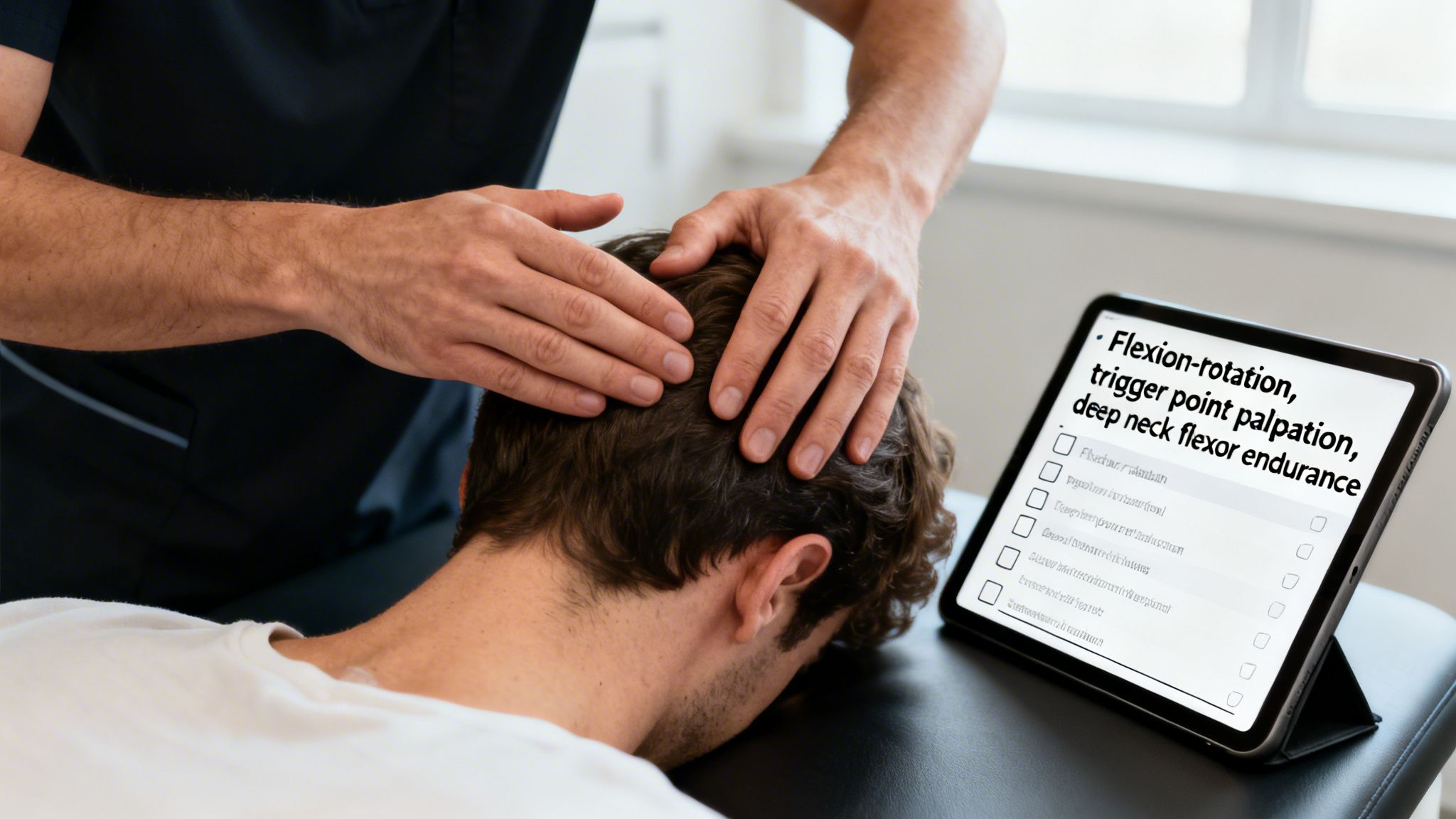
The Cervical Flexion-Rotation Test (FRT): This is your go-to for assessing C1-C2 mobility, a frequent culprit in cervicogenic headaches. With the patient lying supine, you'll passively flex their neck fully and then rotate their head to each side. A loss of rotation greater than 10 degrees from the norm (around 44 degrees) is a powerful indicator of atlantoaxial joint dysfunction.
Trigger Point Palpation: Never underestimate the diagnostic power of your hands. Systematically palpating the suboccipital muscles, upper trapezius, and levator scapulae can reproduce a patient's familiar headache. When you press on a specific spot in the neck and the patient says, "That's it! That's my headache," you've established a direct link. For many headache sufferers, a comprehensive approach to care may involve more than just addressing cervical spine mobility. For instance, understanding the overlap with head injuries can be crucial; you can explore this further in our guide to concussion management to see how these conditions can be interrelated.
Deep Neck Flexor (DNF) Endurance Assessment: Weakness in the deep neck flexors is a staple finding in people with chronic neck pain and headaches. To test it, have the patient lie supine and perform a gentle chin tuck, lifting their head just an inch off the table. The goal is to hold this position without the larger, superficial neck muscles kicking in to compensate. An inability to hold this for even 20-30 seconds is a clear sign of poor segmental stability—a perfect target for therapeutic exercise.
By combining a focused subjective history with these targeted objective tests, you build a powerful case for care. You're not just guessing; you're systematically connecting the patient's symptoms to identifiable, treatable impairments. This is the foundation of patient-centered, effective physical therapy for headaches.
Core Treatment Strategies for Headache Relief
Once we’ve pinpointed that the headaches are coming from a neck or muscle issue, the real work begins. For cervicogenic and tension-type headaches, effective treatment isn't a single magic bullet. It’s a two-part strategy designed to first calm down the irritated tissues and then build a stronger, more resilient system to keep the pain from coming back.
Think of it as a one-two punch for managing physical therapy and headaches. We start with hands-on manual therapy to create a window of opportunity by reducing pain and improving how the neck moves. Then, we follow up with specific exercises to lock in those gains, giving your patient both immediate relief and a long-term solution.
Unlocking Mobility with Manual Therapy
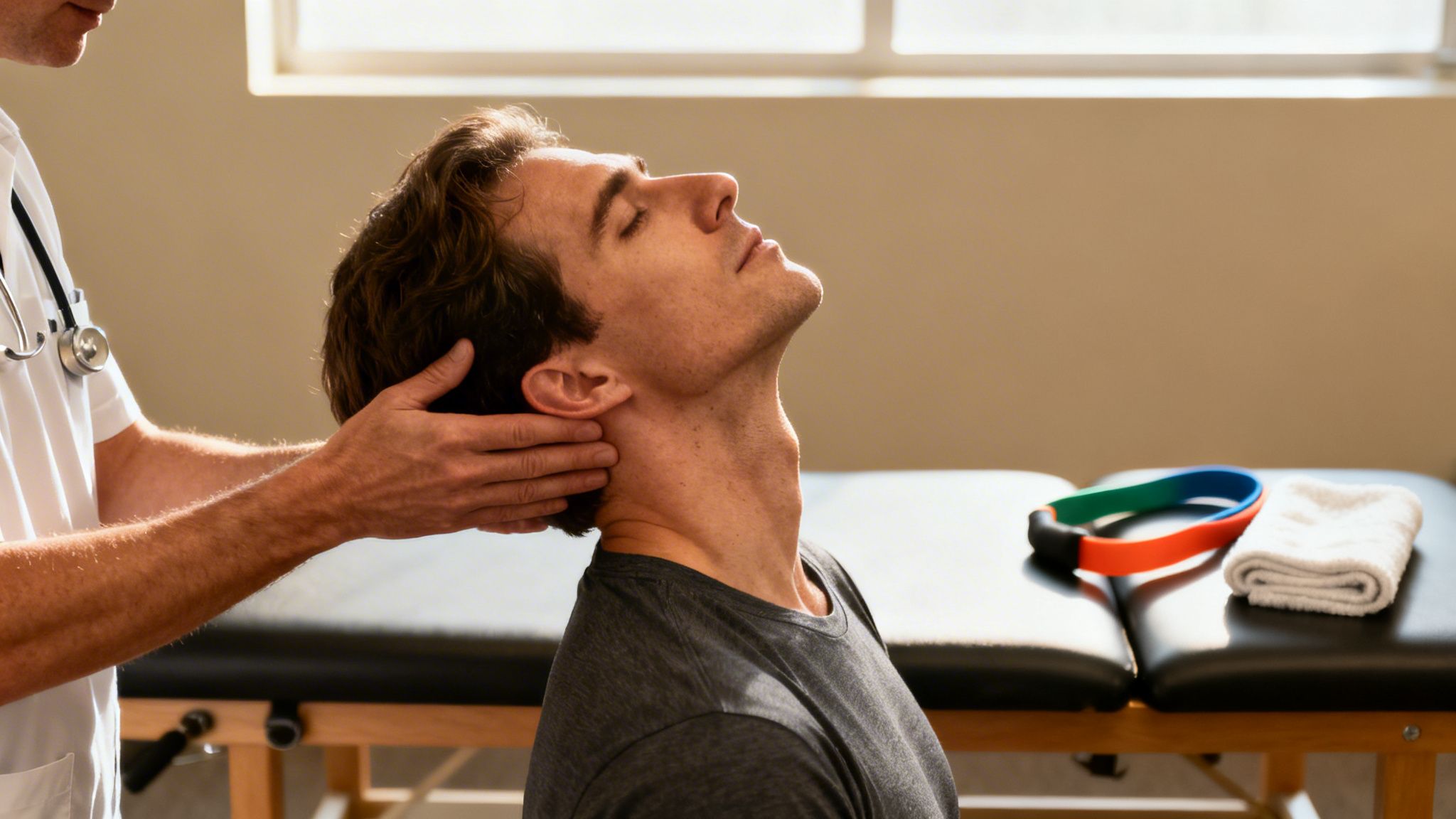
For many people suffering from these types of headaches, manual therapy is where they first feel real, meaningful relief. This is far more than just a neck massage; it's a set of precise, hands-on techniques aimed directly at the stiff joints and tight muscles we identified in the assessment. This is how we break the pain cycle.
By treating the mechanical source of the problem, we can often reduce the intensity and frequency of headaches right away. It feels better, of course, but it also shows the patient that improvement is possible, making it easier for them to commit to the active part of their recovery.
Our hands essentially provide a “reset” for the neck. By restoring normal movement and easing muscle tension, we create the space needed for the body to respond to strengthening and posture changes.
Key manual interventions include:
- Cervical Mobilizations: These are gentle, rhythmic movements applied to specific joints in the neck, especially in the upper cervical spine (C1-C2-C3). This helps restore the subtle gliding motions between vertebrae, which can quiet down the pain signals being sent to the head.
- Soft Tissue Mobilization: We use focused techniques to release tension in key muscles like the suboccipitals (at the base of the skull), upper trapezius, and levator scapulae. Easing the strain in these overworked muscles is critical for relieving both cervicogenic and tension-type headaches.
- Trigger Point Release: You might know these as “knots”—irritable spots in a muscle that can refer pain elsewhere, often directly into a headache pattern. Applying steady pressure can deactivate these points. For really stubborn trigger points, trigger point dry needling can be an incredibly effective tool to release deep-seated tension.
Building Stability with Targeted Exercise
Manual therapy opens the door, but targeted exercise is what walks your patient through it to lasting relief. Once we’ve improved the neck’s mobility, the next step is to build a better support system around it. This is where the patient shifts from being a passive recipient of care to an active participant in their own recovery.
The focus here is on precision, not power. We’re not trying to build a bodybuilder’s neck. We’re trying to wake up the small, deep stabilizing muscles that have likely gone “offline” and teach them how to do their job again.
The Exercise Progression Framework
We follow a specific progression to make sure patients build a solid foundation before moving on to bigger, more complex movements. This gradual approach is key to avoiding flare-ups and retraining the connection between the brain and neck muscles.
- Activate the Deep Neck Flexors (DNFs): The first and most important step is almost always re-engaging these small muscles in the front of the neck. The chin tuck is the cornerstone exercise here. We start patients off lying down, teaching them to perform a gentle nod without letting the big, powerful muscles on the sides of the neck take over.
- Improve Motor Control and Proprioception: Once they can activate their DNFs correctly, we’ll start challenging the neck’s control and position sense—what we call proprioception. This might involve subtle head lifts or performing exercises on an unstable surface (like a foam pad) to retrain that crucial brain-to-neck connection.
- Strengthen Posture and Scapular Muscles: A neck never works in isolation. The final step is to build up the postural endurance needed to support the head and neck all day long. Exercises like rows, prone I's, T's, and Y's, and wall angels strengthen the mid-back and shoulder blade muscles, which takes a huge amount of stress off the cervical spine.
This structured progression ensures the physical therapy provided for headaches is more than just a temporary fix. We’re methodically rebuilding the neck’s support system from the ground up, giving patients the strength and body awareness to manage their condition for good.
The PT's Role in Collaborative Migraine Management
For many clinicians, the word "migraine" feels like it belongs solely in a neurologist's office. It’s a complex neurological condition, after all. But as we see more and more patients with overlapping symptoms, it’s become undeniable that physical therapists have a vital role to play in collaborative migraine management.
While we don't treat the neurological event of a migraine itself, we can absolutely address the musculoskeletal factors that trigger or worsen the attacks. Think of it like this: the migraine is a fire, and neck tension is the gasoline. By removing the fuel source—the cervical dysfunction—we can significantly reduce how often the fire starts and how big it gets.
This doesn't make you a replacement for a neurologist. It makes you an indispensable partner in a comprehensive care plan. For many migraine sufferers, your musculoskeletal expertise is the missing piece of the puzzle.
A Safe and Effective Approach for Migraine Triggers
Working with a patient who has migraines requires a more delicate touch than treating a straightforward cervicogenic headache. The goal is to calm the system, not provoke it. An approach that’s too aggressive can easily trigger an attack, so our interventions have to be gentle and targeted.
Our strategy is built around three core pillars:
Gentle Manual Therapy: Instead of forceful manipulations, we use subtle techniques like soft tissue release for the suboccipitals and upper traps. Low-grade mobilizations for the upper cervical spine also help ease muscle tension and improve joint mobility without overstimulating a sensitive nervous system.
Postural Correction: We focus on offloading the chronic strain on the neck that builds up from daily habits. This means teaching patients how to find and maintain a neutral spine while sitting, standing, and even sleeping. Small ergonomic tweaks can lead to massive reductions in neck tension over time.
Stress and Tension Management: Since stress is a huge migraine trigger, we also teach relaxation techniques. Simple diaphragmatic breathing exercises or gentle neck stretches can empower patients to manage daily tension before it escalates into a full-blown headache.
By focusing on these contributing factors, you are not treating the migraine itself; you are treating the person who has migraines. You are improving the environment around the nervous system, making it more resilient and less susceptible to triggers.
Building Collaborative Care Relationships
To truly succeed with patients who have migraines, strong communication with their other healthcare providers is non-negotiable. When you identify a patient with a clear cervical component to their migraines, reaching out to their neurologist or primary care physician is the mark of a great clinician.
A simple letter or phone call explaining your findings—like a positive flexion-rotation test or significant deep neck flexor weakness—and outlining your treatment plan can build a powerful alliance. It shows you understand your role, respect their expertise, and positions you as a trusted collaborator.
This collaborative mindset often extends to other specialties, too. A holistic approach means understanding contributions from other health professionals. For instance, some dental professionals specialize in the intersection of jaw function and headaches; you can explore dental perspectives on TMJ and Headache Migraine Therapy to broaden your treatment toolkit.
By contributing your unique musculoskeletal expertise, you can deliver life-changing results for patients who thought they had run out of options. You help them regain control, reduce their reliance on medication, and get back to living their lives with fewer interruptions from pain.
Giving Patients the Tools for Self-Management
Real, lasting relief from headaches doesn't just happen inside the clinic. The progress we make in a session can be completely undone by the eight hours a patient spends hunched over a laptop or sleeping with the wrong pillow. This is why a huge part of our job is to act as a guide, teaching patients how their daily habits connect to their headache symptoms.
When someone truly understands why their posture is causing pain, they become an active partner in their own recovery. It's not just about handing them a sheet of exercises. It's about building their confidence and giving them the tools to manage their symptoms independently.
Our ultimate goal in managing physical therapy and headaches is to make ourselves less and less necessary. We do that by empowering patients with the knowledge to take control.
Ergonomics for Work and Life
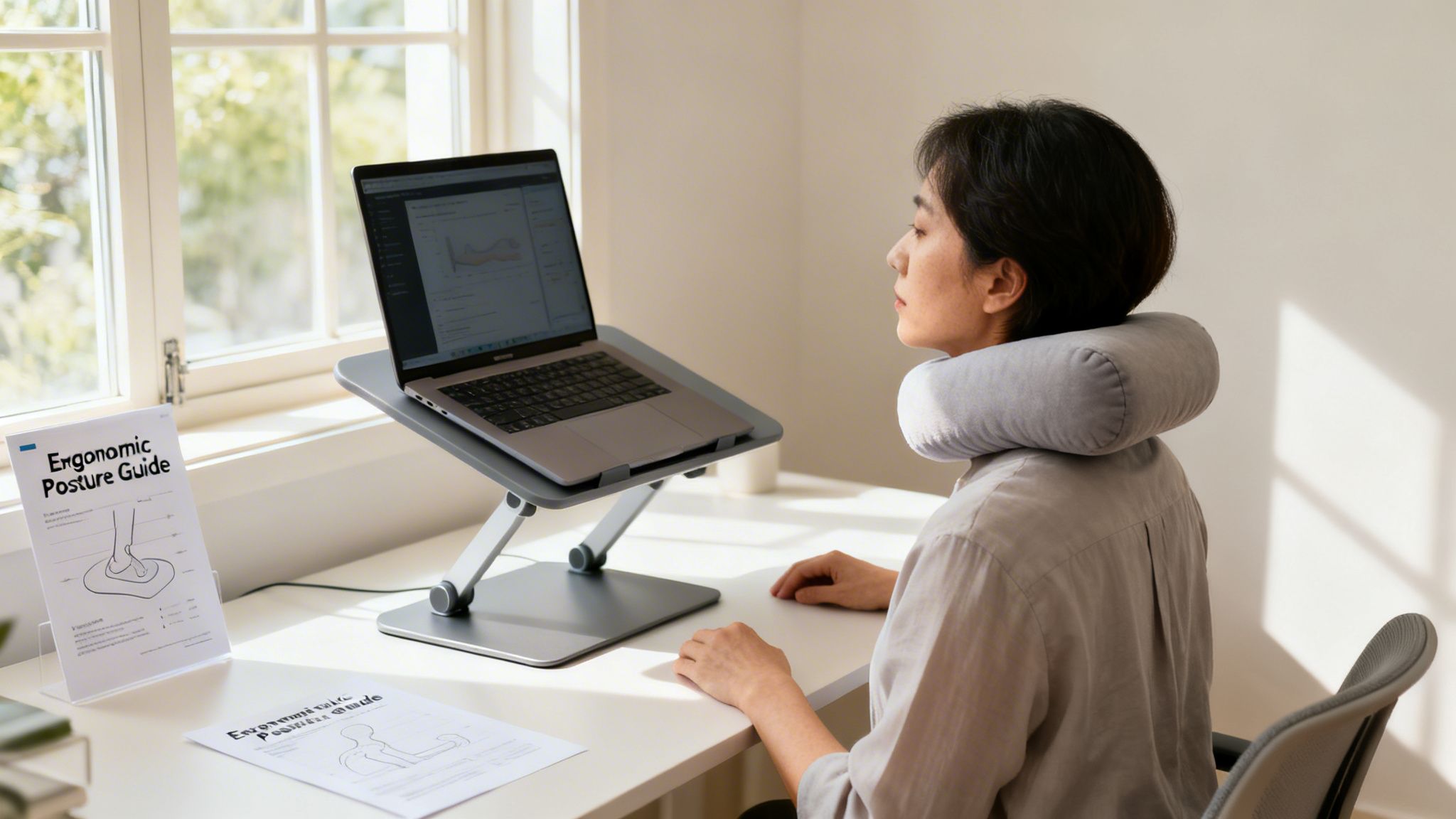
For both cervicogenic and tension-type headaches, small, repetitive postural strains are often the biggest culprits. By teaching a few simple ergonomic adjustments, we can make a massive difference in a patient's daily pain levels.
The Workstation Reset: This is a game-changer. We teach patients to adjust their monitor so the top third of the screen is at eye level. This one tweak helps prevent the "forward head" posture that overloads the neck muscles. Elbows should be bent at 90 degrees with wrists neutral, stopping tension from creeping up into the shoulders.
The "Microbreak" Habit: Static postures are the enemy. We encourage patients to set a timer for every 30-45 minutes as a reminder to simply stand up, roll their shoulders back, and look away from the screen. It's a simple habit that interrupts the muscle fatigue patterns that feed headaches.
Sleep Posture and Headache Prevention
Considering we spend about a third of our lives sleeping, it’s a critical piece of the headache puzzle. The wrong pillow or sleep position can mean a patient wakes up with the exact stiffness that triggers their daily headaches.
For back sleepers, we often recommend a thinner pillow or a cervical roll that cradles the natural curve of their neck. Side sleepers usually do better with a pillow firm enough to fill the gap between their ear and shoulder, which keeps the neck aligned with the spine. For a deeper dive, you can explore common questions about the relationship between sleep and pain in our detailed guide.
We frame these recommendations as experiments, not rigid rules. We'll ask a patient to try a rolled-up towel or a different pillow and simply pay attention to how they feel. This approach gives them ownership over the process and helps them find what truly works.
Key Exercises to Reinforce Progress at Home
A home exercise program isn’t just a list of things to do; it’s a direct extension of our hands-on work in the clinic. The best programs are simple and targeted, designed to reinforce the gains we’ve already made.
We’ve put together a simple toolkit that summarizes some of the most effective at-home strategies for headache relief.
Actionable At-Home Patient Toolkit
| Strategy | Instruction/Goal | Frequency |
|---|---|---|
| Chin Tucks | Gently draw your chin straight back to create a "double chin" without tilting your head. This activates deep neck stabilizers to counteract forward head posture. | 10-15 reps, several times a day, especially during screen time. |
| Doorway Pec Stretch | Place forearms on a doorway and gently step through to feel a stretch across your chest. This opens up tight chest muscles that pull the shoulders forward. | Hold for 30 seconds, 2-3 times per day. |
| Workstation "Microbreaks" | Set a timer to stand up, stretch, and look away from your screen. This interrupts static muscle loading and reduces eye strain. | Every 30-45 minutes. |
| Pillow Adjustment | Experiment with pillow height and firmness to keep your head and neck aligned with your spine, whether you sleep on your back or side. | Every night. |
By arming patients with this kind of practical knowledge, we're not just treating their current headache. We're giving them a lifelong toolkit to manage symptoms and prevent future episodes, cementing our role as a trusted partner in their long-term health.
Recognizing Red Flags and When to Refer
As physical therapists, our greatest strength is knowing exactly what we can treat. But just as important is knowing our limits—recognizing the signs that tell us a patient needs immediate medical attention. Most headaches we see are benign, but some are symptoms of something far more serious. In our role, we often act as a critical first line of defense.
True confidence in treating headaches comes from being equally confident in spotting the signs that fall outside our scope. Acting decisively on these red flags not only protects your patient but also solidifies your role as a trusted, responsible partner in the larger healthcare community.
Critical Warning Signs
These signs and symptoms demand an immediate referral to a physician or emergency department. They are non-negotiable and require urgent medical evaluation to rule out serious conditions like a stroke, meningitis, aneurysm, or tumor.
- Sudden, Severe Onset: A headache described as the "worst headache of my life" or a "thunderclap" that hits maximum intensity in under a minute.
- New Neurological Deficits: Any new or unexplained weakness, numbness, slurred speech, confusion, vision changes, or difficulty walking that shows up with the headache.
- Fever with Neck Stiffness: The combination of a headache, fever, and a stiff neck (nuchal rigidity) is a classic warning sign for meningitis.
- Headache After Trauma: Any new headache that starts after a head injury, even a minor one, needs to be medically cleared.
Think of these red flags as absolute stop signs in your clinical decision-making. There is no "wait and see" here. The most important treatment you can provide in that moment is a swift and correct referral.
Strengthening Collaborative Care
Knowing how to spot these red flags means understanding what an acute neurological emergency looks like. For a deeper dive into these critical events, A Healthcare Pro's Guide to the Stroke Code Protocol is an excellent resource for any clinician.
When you promptly refer a patient with these warning signs, you reinforce your expertise and build trust with physicians. It shows you're a discerning clinician who sees the bigger picture of patient safety. This collaborative spirit makes our professional relationships stronger and ensures every patient gets the right care at the right time.
Answering Your Clinical Questions on Headache Management
As clinicians, we're always looking for better ways to serve our patients. When it comes to adding headache treatment to your skillset, a few practical questions always come up about patient expectations, documentation, and scope of practice. Here are some straightforward answers we've learned from experience in treating physical therapy for headaches.
How Quickly Can Patients Expect Results?
This is the first thing most patients want to know, and it's a fair question. While every person is different, we find that many people with cervicogenic or tension-type headaches feel a real drop in headache frequency or intensity within just 4-6 visits. This initial phase is all about using manual therapy to get some early relief, which opens up a window to start effective movement retraining.
It’s important to set realistic expectations from day one. A full plan of care, the kind that creates lasting change, is more in the range of 6-12 weeks. We make it clear that their long-term success really depends on their commitment to the home program, which is designed to lock in the progress we make in the clinic.
What Is the Best Way to Document Progress?
Solid documentation is your best friend. It justifies the care you're providing and shows clear, undeniable value. The trick is to blend what the patient tells you with objective, measurable data that you track.
- Validated Outcome Measures: We use tools like the Neck Disability Index (NDI) and the Headache Impact Test (HIT-6) at the initial evaluation and then again at regular intervals to track functional improvement.
- Objective Data: Keep a running log of changes in cervical range of motion, deep neck flexor endurance (measured in seconds), and how sensitive specific trigger points are to palpation.
- Subjective Reports: A simple headache diary where patients log frequency, duration, and intensity (on a 0-10 scale) tells a powerful story. It provides the narrative context for all your objective data.
Putting these three pieces together paints a complete and compelling picture of their progress.
Can I Treat Headache Patients Under Direct Access?
Absolutely. In states with direct access laws, you can and should be the first person a patient sees for their headaches. This puts you in the perfect position to get them started on a safe and effective treatment plan right away, without the delay of waiting for a physician referral.
At Highbar, we fully embrace our role as primary care providers for musculoskeletal health. We always perform a thorough initial exam to screen for any red flags and start treatment on day one. If a patient’s plan of care goes beyond the state-mandated direct access period, we collaborate directly with their primary care physician to make sure their care continues without a hitch.
How Do I Treat a Patient with Both Migraine and Cervicogenic Symptoms?
This kind of overlap is incredibly common, and it calls for a clear, integrated game plan. As a physical therapist, your job is to zero in on the musculoskeletal issues you can actually treat—the cervicogenic components. By skillfully addressing things like upper cervical joint stiffness, postural strain, and myofascial trigger points, you can often knock down some of the biggest triggers contributing to their migraines.
It's just as important to encourage the patient to keep working with their physician or neurologist for the medical side of their migraine management. Your role is to be an essential partner on their care team, not a replacement. Open and clear communication with their doctor is always the best way to get them the best possible outcome.
At Highbar Health, we believe in empowering clinicians with the confidence and tools to effectively treat complex conditions like headaches. By elevating our clinical skills and embracing our role as movement experts, we can guide patients toward lasting relief and help them regain control over their lives. It's a leadership opportunity that raises the bar for our entire profession. Book an appointment today.