A rotator cuff injury can make ordinary movement feel unpredictable. Reaching for a coffee mug, pulling on a shirt, lifting a bag into the car, or trying to get through a workout can all wake up the same sharp reminder that your shoulder isn’t happy. The question asked first is, “What can I still do?” In clinic, the more important question is often, “What should I stop doing right now?”
The rotator cuff is a group of four small muscles and their tendons that help center and stabilize the shoulder joint. When that tissue is irritated, strained, or torn, certain motions increase compression, strain, or poor joint mechanics. Those positions can keep symptoms active and make recovery take longer. The good news is that recovery usually isn’t about avoiding all movement. It’s about avoiding the wrong movement, at the wrong time, in the wrong position.
If you’re sorting through the many movements to avoid with rotator cuff injury, start here. This guide breaks down high-risk gym lifts, daily activities, and stretches that commonly aggravate symptoms. It also explains what to do instead so you can keep moving without repeatedly provoking the same tissue. Even people exploring modified fitness options like Pilates programs need shoulder-specific adjustments when the rotator cuff is involved.
1. Overhead Pressing Movements

A lot of active adults test their shoulder with a press too soon. They grab dumbbells, try a military press, or use a machine chest press and assume a little pain is part of the process. Usually, it isn’t.
During recovery, overhead lifts and presses can create intense pressure on the shoulder muscles, especially in the acute phase. Clinical guidance also notes that bar position matters. Pressing with the load in front of the body is typically more shoulder-friendly than pressing behind the head because it allows a more natural movement pattern and reduces rotator cuff compression risk, according to guidance on movements that worsen rotator cuff problems.
What tends to go wrong
The problem isn’t just the weight. It’s the combination of load, arm position, and your shoulder’s need to stabilize while the injured tendon is already irritated.
Common aggravating examples include:
- Dumbbell shoulder press: The arm moves into a demanding overhead position where the cuff has to work hard to control the humeral head.
- Military press: A strict vertical path often exposes stiffness, poor shoulder blade upward rotation, and pain at end range.
- Bench press at deep range: Even though it isn’t fully overhead, the shoulder can still be stressed heavily when the elbows drift wide and the bar drops too low.
- Pike push-ups or handstand-style pressing: Bodyweight doesn’t make the movement safer if the position is provocative.
In the early stage after injury, I usually want patients to stop testing painful pressing patterns altogether. Repeatedly “checking” whether it still hurts is often what keeps the shoulder irritated.
Practical rule: If a press creates sharp pain, catching, or pain that lingers later that day, it isn’t a rebuilding exercise yet. It’s an aggravating one.
What to do instead
Early rehab usually starts with pain-free motion and low-load control. Pendulum work, supported range of motion, and controlled band work are often better fits than heavy vertical pressing. If you’re looking for a structured place to start, these best exercises for rotator cuff strengthening are a better match than jumping back into presses.
When someone is ready to return, the path is usually gradual. Start with lighter loads, shorter ranges, and front-of-body pressing variations only if they stay comfortable. What works is progression. What doesn’t work is trying to prove your shoulder is “back” in one session.
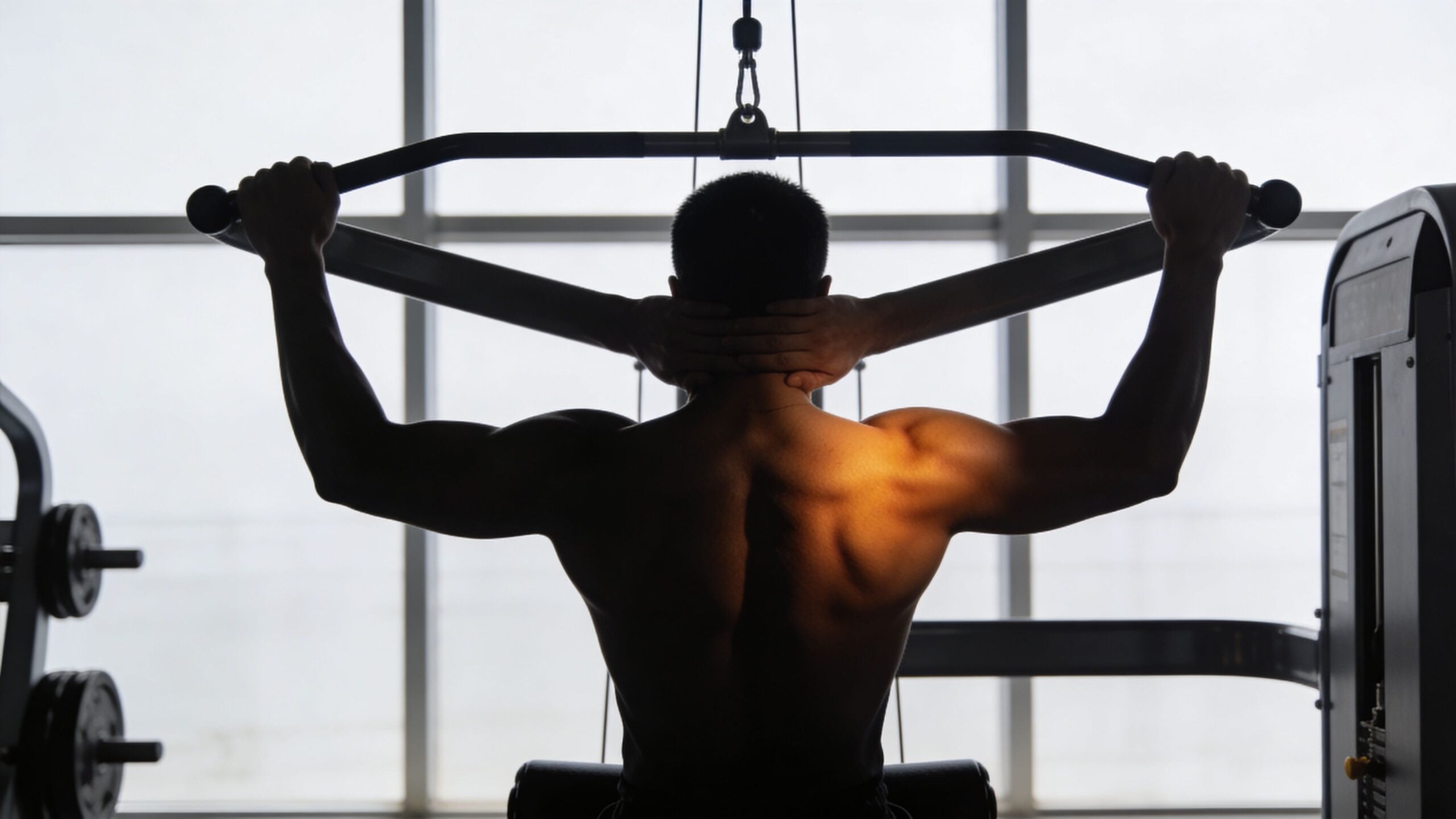
2. Behind-the-Neck Lat Pulldowns and Pull-Ups
A common setback in the gym looks like this. The shoulder is starting to calm down, pulling exercises seem reasonable, and then one set of behind-the-neck pulldowns brings the pain right back.
Behind-the-neck pulldowns and pull-ups combine several demands that an irritated rotator cuff often does not handle well. The arm is abducted, externally rotated, and pulled into an end-range position while the shoulder blade has to move cleanly around the rib cage. If you do not have that mobility and control, the body finds it somewhere else. Usually from the neck, low back, or the front of the shoulder. The American Council on Exercise notes that the behind-the-neck pulldown places the shoulder in a compromised position for many lifters, especially when mobility is limited, in its exercise review on the lat pulldown.
Why this position is risky
This is a high-risk gym movement because the challenge is not just strength. It is joint position. As the bar moves behind the head, many people extend through the spine, push the head forward, and lose the stacked rib cage and shoulder blade control that protect the cuff.
That matters even more in the acute phase. If the shoulder is painful, reactive, or recently strained, I usually pull this pattern out completely. Repeating a provocative overhead pulling position tends to keep symptoms alive. In a later or chronic stage, some people can tolerate vertical pulling again, but the bar still belongs in front of the body until motion, strength, and control are clearly back.
A detail that gets missed is the bottom of the rep. The last few inches behind the neck are often where symptoms show up. Patients describe a pinch on top of the shoulder, a sharp catch in the front, or a weak, unstable feeling. Those are not cues to stretch harder. They are signs that the joint is running out of space and control.
Better substitutes and how to progress
Pulling can still be part of rehab or training. The goal is to lower the positional stress while keeping the exercise useful.
- Front lat pulldown to the upper chest: Keeps the bar path in front of you and usually allows better shoulder blade motion.
- Neutral or moderate grip pull-downs: A narrower hand position often reduces strain compared with a very wide grip.
- Assisted pull-ups with a front-of-body path: A band or machine can help if bodyweight pull-ups are still too demanding.
- Chest-supported row: Useful when vertical pulling still causes symptoms but you want to keep training the upper back.
In our clinical experience, patients respond better when the bar stays in front of the body and the ribs, neck, and shoulder blades can stay organized through the rep. That gives the cuff a more manageable job.
If you are recovering after a procedure, the timeline is slower and the rules are tighter. Consequently, following practical rotator cuff surgery recovery guidance matters, because return to pulling strength usually comes after pain control, range of motion, and basic cuff loading are already in place.
3. Throwing Motions and Plyometric Shoulder Activities
Throwing looks simple until you break down what the shoulder has to do. It has to accelerate fast, control rotation, and then decelerate hard. That last part is where many injured shoulders struggle.
This category includes baseball throws, football passes, softball pitching, tennis serves, overhead smashes, medicine ball throws, and explosive slams. Even a casual toss in the yard can flare symptoms if you return too early.
Why explosive motion is different
A rotator cuff injury often tolerates slow, controlled exercise before it tolerates speed. That’s an important distinction. Someone may feel fine doing light band external rotation, then get immediate pain when they try an overhead serve or a hard chest pass.
Plyometric drills increase demand in a way that strength exercises don’t. You lose some of the control you have in slower rehab work, and the cuff has to react quickly. If the shoulder still lacks stability, force gets dumped into irritated tissue.
A familiar scenario is the recreational tennis player who says, “Groundstrokes feel okay, but serves don’t.” That pattern makes sense. The serve combines speed, overhead position, and deceleration demand.
When to hold off and how to restart
If you’ve had surgery or you’re recovering from a more significant tear, the threshold for returning is even higher. High-impact overhead work and heavy lifting typically stay off-limits until formal clearance, which is why sport return after surgery needs more patience than many people expect. This is especially important if you’re using advice meant for post-op recovery, such as these tips for recovering from rotator cuff surgery.
Good return-to-throw progressions usually start with control before power:
- Short distance before long distance: Keep the motion easy and repeatable.
- Lower velocity before max effort: A crisp but easy throw beats a hard, painful one.
- Sport-specific build-up: A swimmer, pitcher, and volleyball player don’t all return the same way.
If a movement is fast, overhead, and hard to stop once it starts, it usually belongs later in rehab, not earlier.
What works is an interval progression. What doesn’t work is feeling good one day and jumping straight back into full-speed reps.
4. Cross-Body Shoulder Stretches and Extreme Internal Rotation
A common setback happens at home, not in the gym. The shoulder feels tight, so someone pulls the arm hard across the chest or cranks the hand up the back to “loosen it up.” It feels productive in the moment. Later that day, reaching, dressing, or sleeping on that side hurts more.
Cross-body stretches, painful sleeper stretches, and behind-the-back mobility drills can all be aggravating with a rotator cuff injury, especially in the acute stage. The problem is not stretching by itself. The problem is forcing the shoulder into positions that close space around already irritated tissue.

Why these positions flare symptoms
Internal rotation, especially when paired with the arm pulled across the body or pinned behind the back, can increase compression and provoke a sharp, pinchy response in some shoulders. That matters most when pain is irritable, the cuff is weak, or the shoulder blade is not moving well enough to share the load.
I see this pattern often. A patient says the back of the shoulder feels stiff, so they stretch harder and harder. What they needed was a calmer shoulder and better control, not more force into end range.
This section matters because stretching risk changes by category and by stage. Early on, the goal is to reduce pain and restore comfortable motion. Later in rehab, selected mobility work can help, but it still has to match symptoms and mechanics.
Acute stage versus chronic stiffness
In the acute stage, avoid aggressive cross-body stretching, deep sleeper stretching, and repeated behind-the-back reaching if those motions reproduce pain during or after. A strong stretch sensation is not a green light.
In a more chronic, stiff shoulder, some internal rotation work may eventually be appropriate. It needs to be graded, supported, and free of the sharp joint pain that people often ignore because they assume all stretching discomfort is normal. It is not.
A simple rule helps here.
A useful stretch creates mild tension and settles quickly. An aggravating stretch feels sharp, pinchy, unstable, or causes a symptom spike later.
Safer mobility options and progression
Use mobility drills that calm the shoulder and improve motion without forcing the joint into a compressed position.
- Gentle assisted motion: Let the other arm guide the movement lightly, then stop before the shoulder braces or hikes up.
- Thumbs-up positioning: For raises and many mobility drills, this position is often better tolerated than rotating the thumb downward.
- Chest mobility with good setup: A controlled doorway stretch can help if the angle is adjusted to avoid a pinchy front-of-shoulder feeling. This pec stretch in doorway guide shows a better setup than cranking into painful internal rotation.
- Short holds, low intensity: Early rehab usually responds better to brief, repeatable exposures than long, forceful holds.
If a stretch leaves the shoulder more reactive for hours, scale it back. Reduce the range, lighten the assist, or switch to active motion for now. That trade-off can feel slower, but it usually keeps rehab on track better than forcing mobility and paying for it later.
5. Heavy Dumbbell Rows and Unilateral Upper Body Pulling
Rows are often recommended because pulling can help balance a shoulder program. That’s true in the right dose. It isn’t true when the movement is heavy, sloppy, or done too early on one side.
Single-arm dumbbell rows, heavy cable rows, kettlebell rows, and asymmetrical carries can all overload a healing shoulder if the cuff can’t control the arm well yet. The issue usually isn’t the row itself. It’s the load, the body rotation, and the lack of control during the lowering phase.
What makes unilateral pulling tricky
When you row one arm at a time, the shoulder has to manage both movement and stability. People often twist through the trunk, shrug the shoulder, or let the humeral head glide forward as fatigue sets in.
That matters because a recovering cuff often hates two things at once: heavy load and poor centering of the ball in the socket. A row done with good shoulder blade control can help. A row yanked from the neck and upper trap often does the opposite.
A common gym example is the person who says bent-over rows feel “fine” on the way up but painful when lowering the dumbbell. That’s a useful clue. The eccentric phase often exposes poor control.
How to modify pulling work
For many people, bilateral pulling is the better first step because the load is shared and the movement is easier to organize.
Try this progression mindset:
- Start with shoulder blade motion: Think about initiating the row from the shoulder blade, not the hand.
- Use chest support when possible: It limits torso compensation and lets you focus on the shoulder.
- Keep the load modest: If you have to twist or shrug, it’s too heavy.
- Pause before lowering: Control on the way down is often more important than the squeeze at the top.
What works is precision. What doesn’t work is treating rows as a safe exercise no matter how they’re performed.
6. Crawling Patterns and Quadruped Shoulder Loading
Bear crawls, shoulder taps, quadruped reaches, and long holds on hands and knees can look simple. They aren’t simple for an injured rotator cuff.
These positions load the shoulder directly through the arm. That’s useful later in rehab, especially when someone needs to return to floor transfers, sport, or bodyweight training. Early on, though, this can be more load than the cuff can organize.
Why weight-bearing changes the demand
In standing exercises, your arm moves through space. In quadruped, your arm becomes a support point. The cuff has to stabilize the shoulder while your body shifts over it.
That difference catches people off guard. Someone who can perform light band exercises comfortably may still get pain from a bear hold because the shoulder has to accept bodyweight and control subtle movement at the same time.
This also tends to expose shoulder blade weakness. If the shoulder collapses, wings, or hikes toward the ear, the cuff works in a poor position.
A better progression
You don’t need to ban all hand-supported work forever. You need to earn it.
A gradual sequence often looks like this:
- Wall support first: Leaning into a wall is often a gentler way to introduce closed-chain load.
- Short table or countertop loading: This gives more support than the floor.
- Static quadruped before dynamic crawling: Hold the position comfortably before adding taps, reaches, or movement.
- Weight shifts before locomotion: Small controlled shifts teach the shoulder to accept load without the chaos of crawling.
The mistake isn’t doing quadruped work. The mistake is doing advanced quadruped work before the shoulder can manage basic load without pain.
7. Repetitive Overhead Reaching and Shelf-Reaching Activities
Not all aggravating movements happen in the gym. Some of the biggest setbacks come from everyday repetition.
Putting dishes away, stocking shelves, painting, blow-drying hair, hanging clothes, reaching into the back seat, and grabbing bins from overhead storage can keep symptoms simmering all day. Each single rep may seem minor. The total amount adds up fast.
Daily life often causes more irritation than exercise
People usually notice gym pain because it feels tied to one workout. They miss the fact that their shoulder also hurts after unloading groceries into upper cabinets or spending half an hour organizing a closet.
This is one reason recovery stalls. You stop pressing at the gym but still spend the day repeatedly reaching above shoulder level.
The shoulder often tolerates an occasional reach better than sustained or repeated overhead work. Jobs that involve painting, maintenance, stocking, hair care, or assembly work can be especially provocative because the arm spends so much time raised.
Sometimes the best treatment change isn’t a new exercise. It’s moving the coffee mugs, detergent, and work supplies to chest height for a few weeks.
How to reduce overhead strain
Environmental changes matter more than people think.
- Lower frequently used items: Keep daily essentials between waist and shoulder height.
- Use a step stool: If the whole body can get closer to the object, the shoulder doesn’t have to overreach.
- Break tasks up: Shorter bouts are often tolerated better than one long overhead session.
- Ask for temporary help: This is common sense, not weakness, especially during the painful stage.
For many patients, this item is the turning point. Once they stop feeding the shoulder small doses of irritation all day, rehab starts to work better.
8. Wide-Grip Push-Ups and Excessive Elbow Flare Push-Up Variations
Push-ups can be a good exercise. Wide push-ups with elbows flared out often are not, especially for a painful shoulder.
When the hands are set wide and the elbows drift toward a right angle from the body, the shoulder takes on more rotational stress and horizontal abduction demand. Add bodyweight loading, and the movement can become a reliable symptom trigger.
The problem with the classic “chest push-up”
A lot of people learned push-ups as a chest exercise first and a shoulder control exercise second. They place their hands wide, drop the chest low, and let the elbows shoot straight out. Healthy shoulders may tolerate that. Injured ones often don’t.
The same concern applies to wide-grip bench press variations and explosive push-up progressions. A plyo push-up isn’t just a harder push-up. It’s a faster, less forgiving one.
This also overlaps with another common issue in rotator cuff pain: internal rotation and compression. Existing guidance on safe training after cuff injury points out that exercise selection should focus on controlled loading and shoulder-friendly positioning rather than just avoiding all strength work. It also highlights the gap between “don’t do this” lists and practical return-to-training advice in this discussion of exercises to avoid with a rotator cuff injury.
Better pressing mechanics
If push-ups are part of your goals, change the setup before you abandon the pattern.
A safer return usually looks like this:
- Use an incline first: A wall, countertop, bench, or Smith machine bar reduces load.
- Keep elbows closer to the body: Roughly halfway between tucked and flared is usually better than straight out to the sides.
- Control the shoulder blades: Don’t let them collapse or wing excessively.
- Progress range and load slowly: Floor reps come later, not first.
What works is a narrower, controlled push pattern. What doesn’t work is jumping back to full floor push-ups because the shoulder “sort of” tolerated one set.
8 Shoulder Movements to Avoid with Rotator Cuff Injury
| Movement | Implementation complexity | Resource requirements | Expected outcomes / Risks | Ideal use cases | Key advantages |
|---|---|---|---|---|---|
| Overhead Pressing Movements (Bench Press, Shoulder Press, Military Press) | Moderate–high (technique and control required) | Barbell/dumbbells/machine and stable bench | High compressive and abduction stress; risk of impingement, pain, delayed healing | Late-stage rehab or strength phases only, after PT clearance | Builds overhead pressing strength and functional pressing capacity |
| Behind-the-Neck Lat Pulldowns and Pull-Ups | High (extreme shoulder positions, poor tolerance) | Lat pulldown or bar; typically avoidable with alternatives | Severe impingement and posterior cuff stress; high re-injury potential | Rarely indicated; avoid during recovery, use front-of-neck variations when cleared | Minimal unique benefit; sometimes used for very specific ROM goals in healthy individuals |
| Throwing Motions and Plyometric Shoulder Activities | High (timing, coordination, high velocity) | Balls/medicine balls/space; sport-specific equipment | Very high eccentric and deceleration stress; highest re-injury rate | Return-to-sport protocols only, gradually reintroduced under sports PT guidance | Restores sport-specific power, velocity, and kinetic chain coordination when safe |
| Cross-Body Shoulder Stretches and Extreme Internal Rotation | Low (easy to perform but easily overdone) | None or therapist assistance | Can irritate inflamed tissue; risk of micro-tears and increased inflammation if aggressive | Gentle mobility work in later rehab phases; therapist-guided stretching | Improves internal rotation and posterior mobility when applied gently and progressively |
| Heavy Dumbbell Rows and Unilateral Upper Body Pulling | Moderate–high (control and load management needed) | Dumbbells/cables/kettlebells; stable support | High eccentric and rotational loading; risk of overloading healing tendons | Progression phases after bilateral control achieved; light unilateral work when cleared | Develops unilateral strength, lat recruitment, and scapular control when loaded appropriately |
| Crawling Patterns and Quadruped Shoulder Loading | Moderate (coordination and stability demands) | Open floor space, mat | Weight-bearing stress through shoulder; risk if progressed too early or in poor form | Advanced rehabilitation focused on dynamic scapular stability and core integration | Enhances dynamic shoulder stability, proprioception, and full-body coordination |
| Repetitive Overhead Reaching and Shelf-Reaching Activities | Low (simple but often unconscious) | Daily environment modifications or reach tools | Cumulative tissue irritation and chronic inflammation; delayed recovery | Functional retraining with ergonomic/environmental adjustments during recovery | Maintains independence in ADLs; retraining improves safe movement patterns |
| Wide-Grip Push-Ups and Excessive Elbow Flare Push-Up Variations | Low–moderate (easy but form-sensitive) | Bodyweight, benches or wall for regressions | High horizontal abduction and anterior capsule stress; aggravates cuff | Progression pathway from wall/incline push-ups to floor variations when cleared | Builds pressing strength and endurance; scalable regressions for gradual loading |
Your Path Forward Get Expert Guidance
Knowing the main movements to avoid with rotator cuff injury can protect your shoulder, but that list is only half of recovery. The other half is building back the right motion, the right strength, and the right tolerance at the right time. That process looks different for someone with acute inflammation, a partial tear, a longstanding overload problem, or a post-surgical shoulder.
Stage matters. In the early phase, the shoulder usually needs less irritation, simpler motion, and better load management. Later, it needs progressive strengthening and gradual return to demanding tasks. Many people get stuck because they do too much too soon, or because they avoid using the shoulder so much that it gets weaker and stiffer. Good rehab lives between those extremes.
It also helps to separate discomfort from danger. Mild muscle fatigue during a controlled exercise can be acceptable. Sharp pain, pinching, sudden weakness, loss of motion, or symptoms that linger and intensify afterward are different. Those signs usually mean the movement is too aggressive, the position is poor, or the tissue isn't ready.
Some symptoms deserve prompt medical evaluation. Seek immediate professional help if you have sudden severe pain, a complete inability to lift the arm, a visible deformity, or numbness and tingling that runs down the arm. Those findings can point to a more serious injury than a simple flare-up.
Weight training and exercise are not automatically off-limits with a rotator cuff problem. In many cases, they're part of the solution. The key is choosing movements that respect healing tissue instead of repeatedly compressing or overloading it. Thumbs-up positions often beat thumbs-down positions. Front-of-body pulling often beats behind-the-neck pulling. Controlled rows, band work, and guided mobility usually beat max effort pressing, explosive throws, or aggressive stretching.
If you're unsure where your shoulder stands, guessing usually costs time. A physical therapist can identify which structures are irritated, which motions are safe, what compensations you're using, and how to progress without repeatedly setting yourself back. That kind of plan is far more useful than a generic “rest until it feels better” approach.
If shoulder pain is limiting your workouts, sleep, work tasks, or daily routines, Highbar Physical Therapy can help you figure out what to stop, what to modify, and how to rebuild safely. A physical therapist can create a plan designed for your injury, your goals, and your stage of recovery so you can move with more confidence and less pain.