You wake up, yawn, and your jaw feels tired before the day has even started. Breakfast feels oddly effortful. By midafternoon, the ache has spread into your cheek, temple, or the side of your head. Some people notice clicking when they chew. Others notice they've been clenching through emails, traffic, or sleep.
That pattern is common, and it often gets mislabeled as “just stress” or “just TMJ.” In practice, one structure shows up again and again: the masseter, the thick jaw muscle at the side of your face that helps you bite, chew, and clench. When it's overworked, irritated, or poorly coordinated with the rest of the jaw and neck, pain can show up far beyond the jawline itself.
Jaw pain also rarely stays local. Many people dealing with facial tension are also dealing with head pain, which is why understanding the connection between jaw discomfort and headaches can be useful. If headaches are part of your picture, it also helps to understand how musculoskeletal treatment approaches overlap with physical therapy for headaches.
From a physical therapy standpoint, the masseter isn't mysterious. It's a strong working muscle in a biomechanical system. That matters, because muscles respond well to careful assessment, load management, hands-on treatment, movement retraining, and habit change. If your jaw hurts, clicks, feels tight, or leaves you with morning soreness, there's usually a practical path forward.
Introduction The Unseen Source of Jaw Pain and Headaches
A lot of jaw pain starts subtly. You chew on one side because the other feels “off.” You catch yourself pressing your teeth together during stressful tasks. You stop noticing the habit, but your muscles don't. The masseter keeps doing extra work.
Patients often describe this as a deep ache in the cheek, tension near the ear, or a headache that seems to start at the side of the face. Sometimes the jaw opens fine but feels stiff. Sometimes it opens with a detour, a click, or a sense that one side is pulling harder than the other.
Jaw pain can be mechanical even when it feels vague. That's good news, because mechanical problems usually respond to mechanical solutions.
The masseter deserves attention because it's one of the main engines of jaw closing. If that engine is overloaded, you can feel it while chewing, talking, yawning, sleeping, or doing nothing at all. That's why treatment isn't just about “relaxing.” It's about restoring how the jaw, neck, and surrounding muscles work together.
What makes this different from random facial tension
Not every face ache is a dental issue, a nerve problem, or a sinus problem. The pattern matters. Pain that worsens with chewing, clenching, wide opening, or prolonged talking often points toward the jaw muscles or temporomandibular system.
Common clues include:
- Morning soreness: Often linked with nighttime clenching or grinding.
- Cheek fatigue: The jaw feels worked out after normal meals.
- Temple pain: Tight jaw muscles can contribute to pain that feels like a headache.
- Clicking or shifting: The joint or the muscles may not be moving efficiently.
That doesn't mean every jaw problem is simple. It does mean the masseter is often worth evaluating early instead of after months of guessing.
Understanding the Masseter Muscle
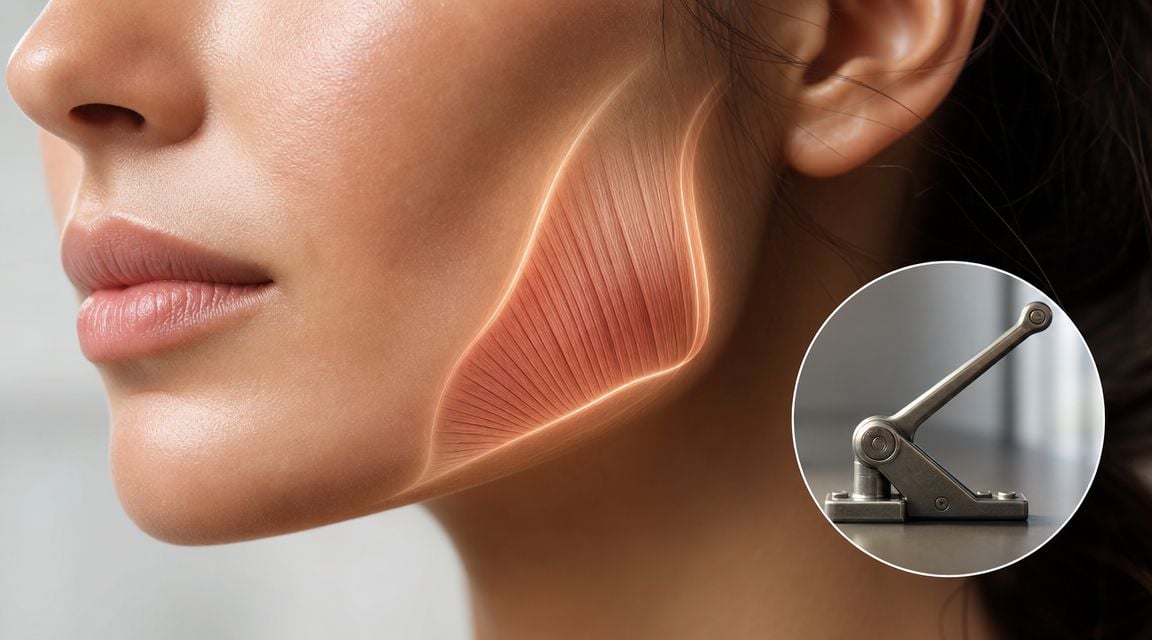
The masseter is the powerhouse of the jaw. It's one of the four primary muscles of mastication and is widely described as the most powerful jaw-closing muscle, with a paired, thick, rectangular shape that starts at the zygomatic arch and attaches to the lateral ramus and angle of the mandible. Its main jobs are elevation and protrusion of the mandible, according to this anatomical overview of the masseter.
Where it is and why that matters
Place your fingers on the side of your jaw and gently clench. The firm bulge you feel near the back of the cheek is the masseter contracting. Because it sits in such an exposed, high-force location, it can become tender, enlarged, or overactive in ways you can feel.
Its position also explains why masseter problems can mimic other issues. It sits close to the temporomandibular joint, close to the teeth, and close to areas where people often feel tension headaches. A sore masseter can make a patient think, “My joint is bad,” when part of the problem is really muscular overload.
What the masseter does all day
The masseter's main action is to close the jaw. That sounds simple, but it has to do that job with precision. It helps you bite through food, stabilize the jaw when you chew, and control force so your teeth meet effectively instead of crashing together.
It also helps move the jaw slightly forward. That forward component matters because jaw pain is rarely about one isolated direction. If a muscle contributes to both closing and forward motion, then dysfunction can affect chewing mechanics, joint loading, and the path your jaw takes when you open and close.
Clinical takeaway: A painful masseter isn't just a sore spot. It can change force, timing, and control across the entire jaw system.
Why PTs care about anatomy here
This anatomy directly shapes treatment. A thick, powerful muscle that closes the jaw can become overactive from repeated clenching. A muscle attached to the cheekbone and jaw can develop tenderness where patients press or rub without knowing what they're touching. And because it helps stabilize the area around the jaw joint, it can influence how the joint feels even when the joint itself isn't the only problem.
That's why conservative care starts with understanding structure, not chasing symptoms. If you know what the masseter is supposed to do, it becomes much easier to see why it hurts and how to calm it down.
Common Causes of Masseter Pain and Dysfunction
Masseter pain usually isn't random. In most cases, the muscle is responding to repeated load, sustained tension, altered mechanics, or some combination of all three.

An imaging study found mean adult masseter thickness of 13.57 ± 2.57 mm, with greater thickness in males than females, and thicker masseters in people with hypodivergent facial morphology in this ultrasound study on masseter thickness and facial pattern. That matters clinically because this isn't a tiny accessory muscle. It's a measurable, load-bearing structure whose size and behavior vary from person to person.
Habit load and overuse
The first driver is simple overwork. Common examples include clenching, grinding, chewing gum for long periods, frequently eating very tough foods, nail biting, or holding tension in the jaw during concentration.
The mechanism is straightforward. Muscles tolerate force best when force is intermittent and purposeful. They get irritated when force becomes constant, low-grade, and unconscious. Clenching is especially problematic because it often happens for long stretches without the recovery you'd naturally get during chewing.
Stress and guarding
Stress doesn't just change mood. It changes muscle behavior. Many people respond to stress with jaw guarding, meaning the jaw sits braced instead of relaxed. That can happen during the day or at night.
Here's the practical issue. A muscle doesn't have to be in full spasm to become painful. Mild, repeated tension is enough to keep the masseter sensitized, especially when sleep quality is poor or the neck and shoulder muscles are also overloaded.
Posture and movement pattern problems
Jaw mechanics don't exist in isolation. Forward head posture, upper cervical stiffness, and poor tongue or jaw resting habits can all increase strain in the chewing muscles. When the head drifts forward, the jaw often follows with subtle compensation.
That's one reason jaw treatment often overlaps with neck treatment. If you're trying to reduce masseter pain while ignoring posture and cervical mechanics, you may get temporary relief but not much staying power. For a broader overview of conservative TMJ solutions from a dental perspective, it can help to compare how different providers approach the same problem. For PT-specific care pathways, this overview of TMD treatment is a useful next step.
If your jaw hurts more on stressful days, after long desk work, or during periods of poor sleep, that pattern is meaningful. It points toward behavior and mechanics, not just damage.
How a Physical Therapist Assesses Jaw Pain
A good jaw evaluation feels less like a quick glance and more like an investigation. The goal isn't just to confirm that the masseter is sore. The goal is to identify why it's sore, what keeps it irritated, and which parts of the system need treatment.
The history matters as much as the exam
The first part is your story. A physical therapist will usually ask when the pain started, whether it's constant or intermittent, what makes it worse, whether there's clicking or locking, and whether you wake with symptoms. Eating, speaking, yawning, stress, headaches, sleep habits, and dental history can all matter.
We also want to know how the problem affects your day. Can you chew comfortably? Do you avoid certain foods? Do you feel like your jaw tires quickly? Those details help separate a mild overload problem from a more disruptive movement issue.
What we test in the clinic
The physical exam usually includes several pieces:
- Jaw opening and closing: We look at how wide you open, whether the movement is smooth, and whether the jaw shifts to one side.
- Palpation of the masseter and nearby muscles: Gentle pressure helps identify tenderness, trigger points, and whether symptoms reproduce in familiar areas.
- Joint behavior: Clicking, popping, catching, or guarded movement can offer clues about coordination and joint loading.
- Neck and posture screening: The cervical spine, head position, and upper quarter muscles often contribute to jaw symptoms.
- Resting habits: We look at whether the teeth are held together, whether the tongue is positioned well, and how much unnecessary muscle tension is present.
The exam should make your symptoms make sense. If it doesn't, keep asking questions.
What patients are often relieved to hear
Many people arrive worried that any jaw click means serious damage. Often, the findings are more manageable than they feared. A painful masseter may be part of a broader pattern involving clenching, poor rest position, neck stiffness, and movement imbalance.
That's important because it changes the treatment plan. Instead of chasing one painful spot, PT can address the whole pattern that keeps feeding the pain.
Evidence-Based Physical Therapy Treatments
The masseter is a primary jaw-closing muscle with anatomy built for strong elevation and some protraction of the mandible, which makes it central to chewing and temporomandibular loading patterns in this review of masseter biomechanics. Effective PT treatment works because it targets that exact biomechanical system instead of treating jaw pain as a vague stress symptom.
Hands-on treatment to reduce guarding
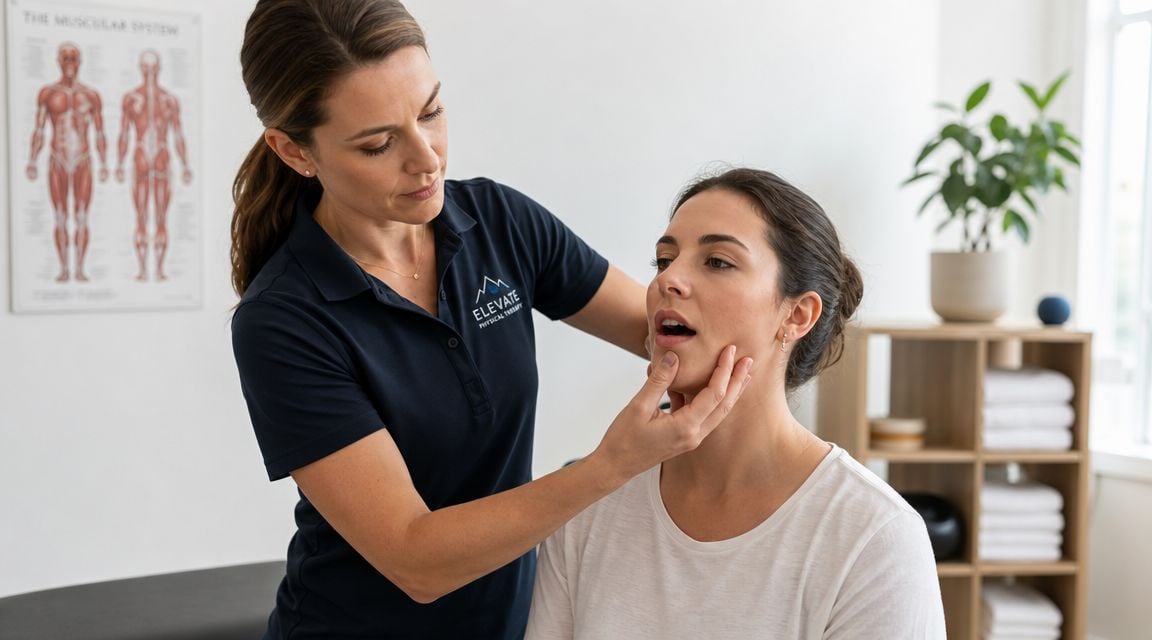
Manual therapy often helps first because it reduces local tension and gives the jaw a chance to move more normally. That may include work to the masseter from outside the face, treatment to related muscles in the temple and neck, and in some cases intra-oral techniques when clinically appropriate.
This isn't just “massage.” The purpose is to decrease guarding, improve tissue tolerance, and make movement retraining possible. When the muscle is less reactive, patients can usually practice better jaw mechanics with less pain.
For people dealing with highly irritable muscle knots, clinicians may also use approaches such as trigger point therapy as part of a broader plan.
Exercise and motor control
Jaw rehab works best when treatment doesn't stop at symptom relief. The jaw needs better control, not just less pain.
That often includes:
- Controlled opening exercises: These help the jaw open on a smoother path instead of deviating or jerking.
- Rest-position training: Patients learn the classic relaxed position of lips together, teeth apart, with the tongue resting comfortably.
- Cervical strengthening and mobility work: The neck often needs support so the jaw isn't constantly compensating.
- Scapular and postural work: Better upper-body support can reduce habitual forward-head loading that feeds jaw tension.
Behavior change is the long-term fix
If clenching stays the same, the masseter keeps getting overloaded. That's why neuromuscular re-education matters so much. Patients learn to catch daytime bracing, stop resting with their teeth touching, pace chewy foods during flare-ups, and build better stress responses.
A splint may help some people, especially for nighttime grinding, but it doesn't teach daytime habit control. Medication may dull symptoms, but it doesn't improve movement. Cosmetic approaches may reduce contraction, but they don't restore coordination. PT fills that gap by teaching the jaw how to work with less force and more efficiency.
What tends to work: A combination of manual therapy, movement retraining, posture correction, and habit change.
One option for guided conservative care is Highbar Physical Therapy, which provides outpatient PT services for musculoskeletal conditions, including movement-based treatment plans that can be adapted for jaw pain when clinically indicated.
Self-Care Strategies for Masseter Relief at Home
Home care matters because the masseter responds to what you do all day, not just what happens in the clinic.
What you can do today
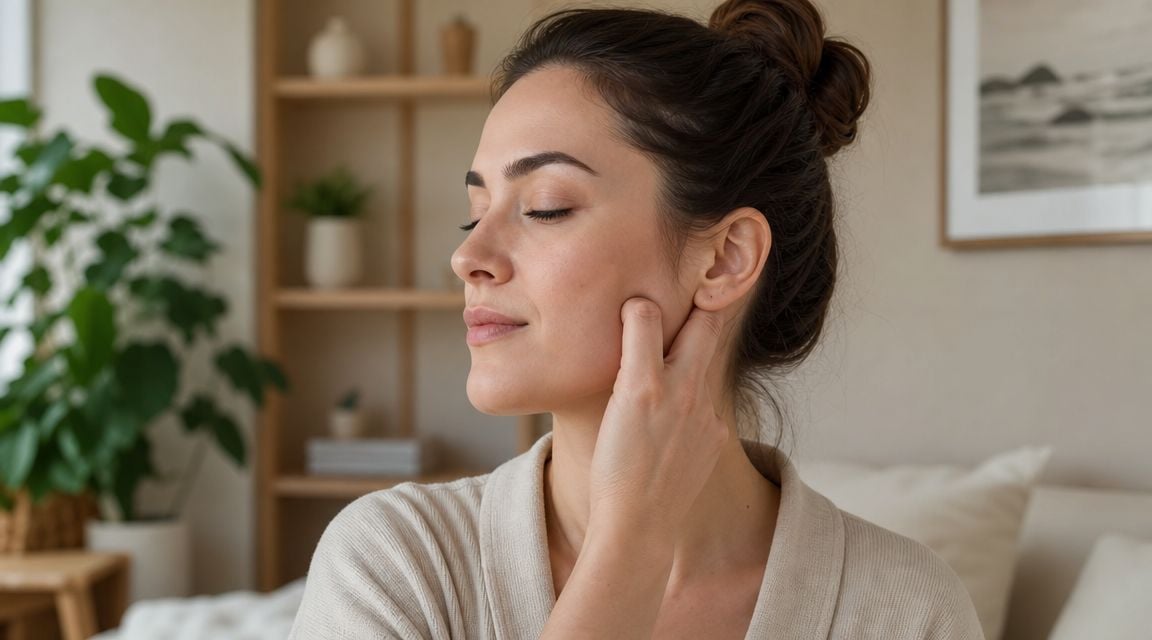
- Use gentle self-massage: Place two fingers over the bulky part of the cheek muscle and make small slow circles. The pressure should feel relieving, not aggressive. If pain spikes afterward, you used too much force.
- Apply heat before meals or exercises: A warm compress can help the muscle relax before chewing or stretching.
- Choose softer foods during flare-ups: This is short-term load management, not avoidance forever. The goal is to give the irritated muscle a quieter window.
- Check your jaw position during the day: Your teeth shouldn't stay lightly touching at rest. That “light touch” is still muscle work.
- Reset your desk posture: Bring the screen to eye level, keep the head stacked over the trunk, and avoid reaching your chin forward.
- Pair exhale with unclenching: Many people release the jaw more effectively when they breathe out slowly and let the tongue rest on the roof of the mouth behind the front teeth.
A simple rule for resting position
“Lips together, teeth apart” is one of the most useful cues in jaw rehab.
That phrase sounds small, but it changes load. Resting with the teeth apart reduces unnecessary masseter activity. Repeating that cue several times a day can interrupt a clenching habit before it builds momentum.
Where Botox fits, and where it doesn't
Botulinum toxin can reduce masseter contraction for some people with bruxism, but neutral clinical discussion also notes trade-offs such as facial asymmetry, temporary weakness, and even possible changes to the underlying bone in this overview of masseter Botox considerations. That's why conservative care remains a strong foundation.
For some patients, Botox may be part of symptom management. It isn't a substitute for learning how to reduce clenching, improve posture, manage load, and restore normal jaw mechanics. If the behavior and movement pattern stay the same, the underlying driver often remains.
When to See a Physical Therapist for Your Jaw
See a physical therapist if your jaw pain keeps coming back, lasts despite basic self-care, or starts affecting eating, talking, sleep, workouts, or concentration. You should also get assessed if you've developed a strong habit of clenching, frequent morning soreness, or headaches that seem tied to jaw tension.
A professional evaluation is especially useful when symptoms seem mechanical but confusing. Maybe the pain moves around. Maybe the jaw clicks but isn't always painful. Maybe the cheek feels tired more than sharply painful. Those patterns often respond well to a musculoskeletal exam.
Seek prompt medical or dental evaluation if you have jaw locking, sudden severe pain after trauma, obvious swelling, fever, or signs of infection. Those situations need more than routine self-management.
If nighttime grinding is part of the picture, practical education on solutions for clenching and grinding can help you understand the habit side while you pursue care. The key is not waiting until the problem becomes your normal. Jaw pain is common, but it isn't something you have to live with.
If your jaw feels tight, sore, clicky, or overworked, a movement-based assessment can help pinpoint the cause and build a plan for relief. Highbar Physical Therapy offers physical therapy care for musculoskeletal pain, including conservative treatment approaches that may help when jaw symptoms are linked to muscle tension, posture, and movement mechanics.