You see athletes plunging into icy tubs all over social media, but do ice baths for sore muscles actually work? The simple truth is that it depends entirely on your goal. While cold water immersion can offer immediate relief and get you back to living your life, it might not always be the best choice for long-term athletic development.
The Real Deal on Ice Baths for Sore Muscles
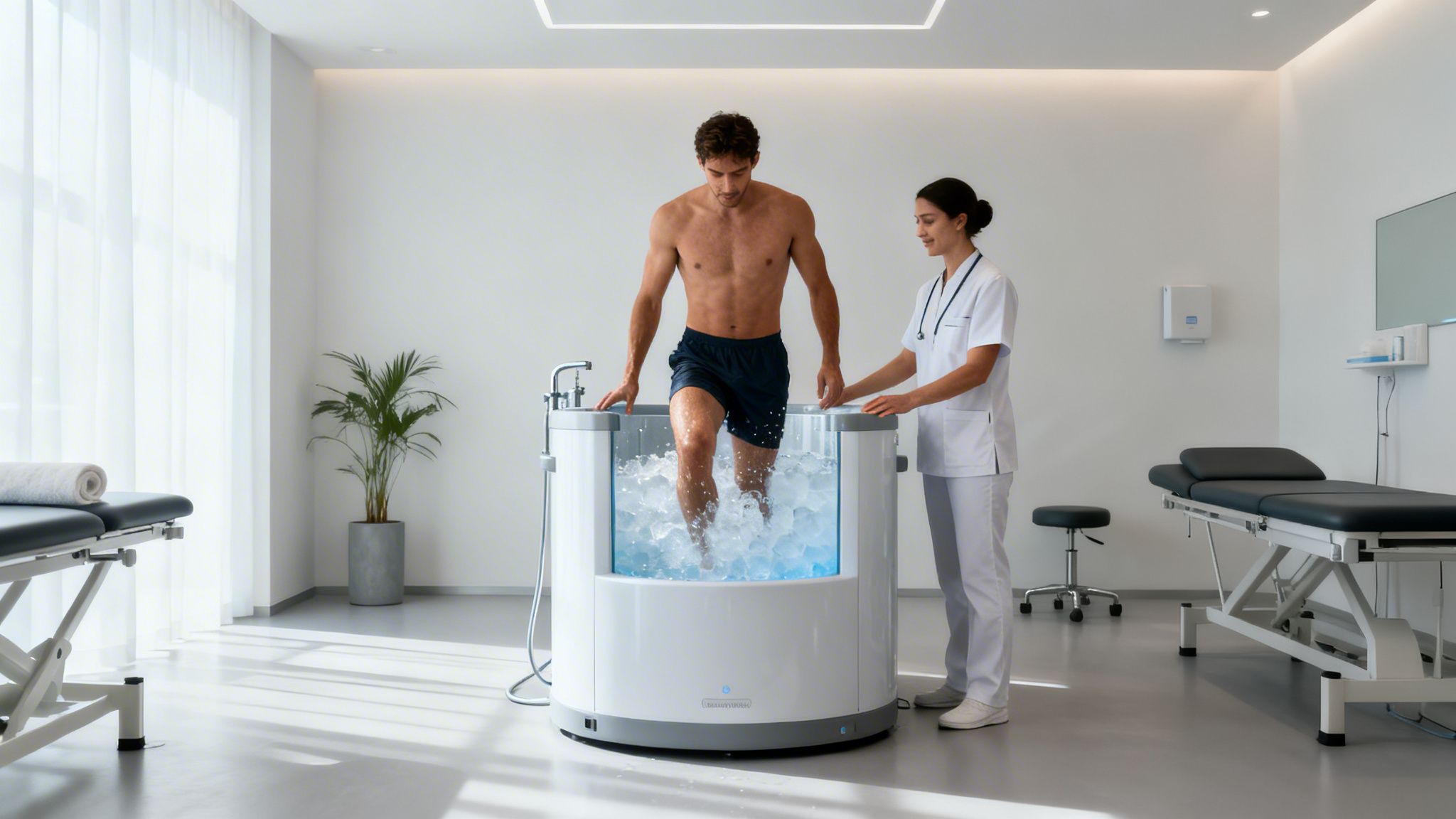
After a tough workout or a big game, the idea of a frigid plunge sounds like the fastest way to feel better. You've pushed your body to its limits, and now you want to blunt the inevitable aches so you can get on with your day. This is exactly where ice baths built their reputation.
The practice, known in the clinic as cold water immersion (CWI), is pretty straightforward: you submerge part or all of your body in water that’s typically between 50-59°F (10-15°C).
The main benefit is its ability to reduce inflammation and numb the pain signals that cause that classic post-exercise soreness. Think of it as a powerful, full-body cool-down designed to help you feel better, faster, and get back to doing what you love.
Why Your Recovery Goal Matters Most
Here’s the critical part: the "why" behind your ice bath changes everything. Are you trying to feel less sore for another game tomorrow, or are you focused on building muscle and strength over the next few months? Your answer completely changes whether this is the right tool for the job.
For quick recovery and performance: If you need to perform again very soon—think of an athlete in a weekend tournament or a runner with back-to-back race days—an ice bath can be a game-changer. It helps manage that immediate, acute inflammation, allowing you to get back out there with less perceived soreness.
For long-term muscle and strength gains: If your main focus is on building muscle (hypertrophy) or getting stronger, frequent ice baths might actually work against you. The very inflammation that causes soreness is also a key signal that tells your body to repair and rebuild muscle fibers stronger than before. Blunting that signal too often can slow down your progress.
To make it easier to decide, here’s a quick summary of when an ice bath might—or might not—be the right choice for your recovery.
Ice Bath Recovery At A Glance
| Recovery Goal | Ice Bath Effectiveness | Recommended Timing |
|---|---|---|
| Reduce immediate soreness | High | Within 1-2 hours post-exercise |
| Perform again quickly (e.g., < 24 hours) | High | Soon after your first event |
| Build long-term muscle & strength | Low to Negative | Avoid immediately after strength training |
| General recovery & well-being | Moderate | Use sparingly or on active recovery days |
Ultimately, choosing the right recovery method comes down to understanding what’s happening in your body and aligning your actions with your goals.
At Highbar Physical Therapy, our mission is to empower you with evidence-based knowledge so you can make informed decisions. We want to help you move beyond temporary fixes and build sustainable habits for a fuller, better life.
Think of this guide as a conversation with your physical therapist. We're here to cut through the hype and give you the straight facts based on current science.
By understanding how cold water specifically affects your body, you can learn precisely how, when, and if you should use an ice bath to support your personal goals. Our aim is to equip you with the knowledge to manage soreness effectively, prevent injury, and keep doing the activities you love.
How an Ice Bath Helps Your Body Recover
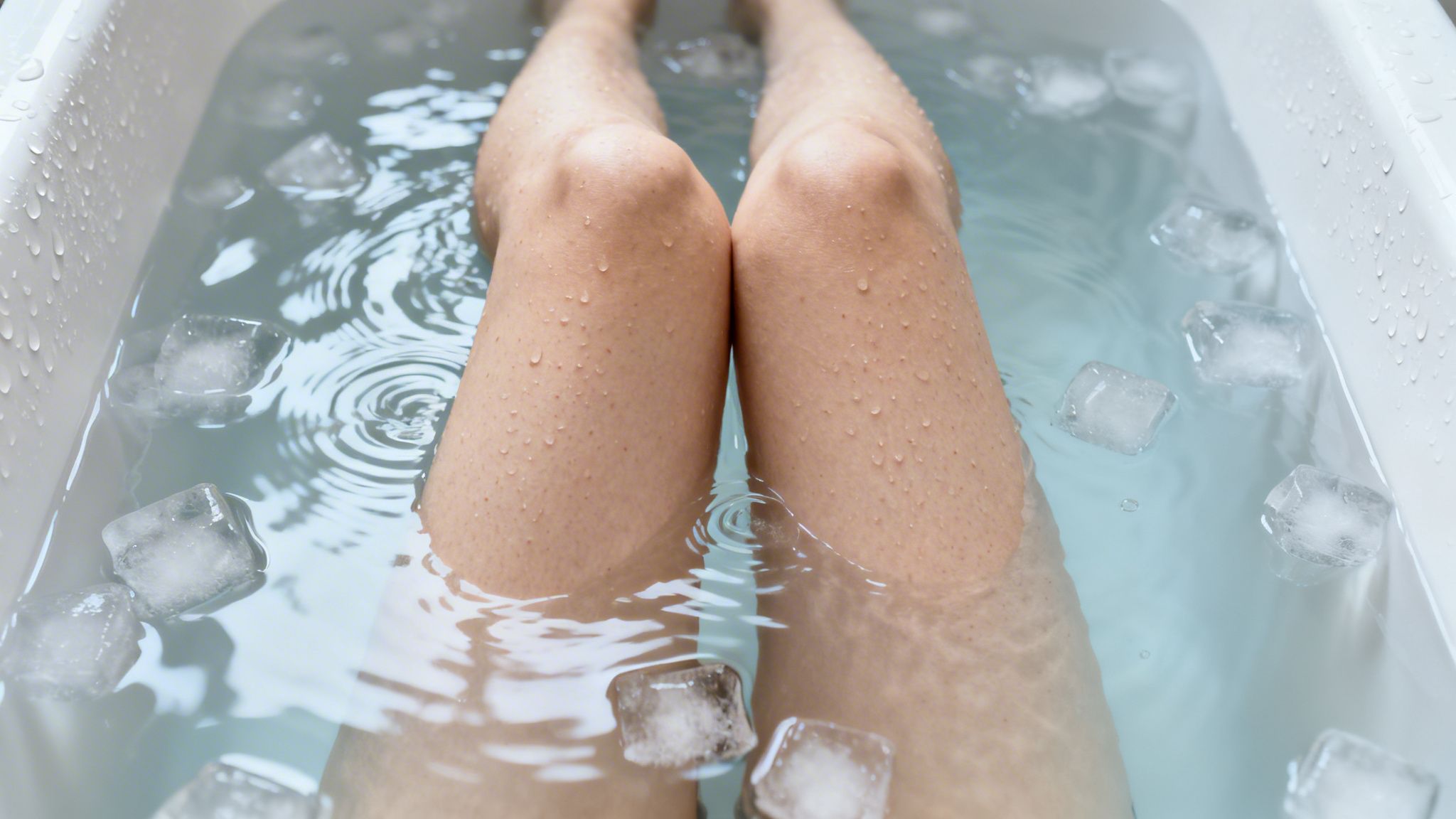
To get why ice baths for sore muscles work, you have to understand what happens inside your body after a tough workout. Think of your circulatory system as a complex highway network. Exercise creates traffic jams—metabolic byproducts like lactic acid build up, and your muscle tissues send out alarm signals that we feel as inflammation and swelling.
When you plunge into an ice bath, that intense cold acts like an emergency response system. Your body immediately shifts gears to protect your core temperature, triggering a system-wide change in blood flow and nerve signals. This powerful, instinctual reaction is the foundation of cold water’s effect on muscle recovery.
The Power of Vasoconstriction
The main thing happening at first is vasoconstriction. It’s your body’s way of clamping down and narrowing the blood vessels in your arms and legs. This has two immediate and powerful effects.
First, it physically reduces the amount of blood flowing into your sore muscles. This helps put the brakes on the swelling and inflammatory process that kicks in after a hard effort. Less swelling means less pressure on your nerves, which translates directly to less pain.
Second, the cold itself is a natural pain reliever, or analgesic. It literally slows down the speed at which pain signals can travel along your nerves, turning down the volume on that deep muscle ache. That numbing feeling is one of the most immediate benefits you feel during and after the plunge.
The "Flush" Effect on Metabolic Waste
While vasoconstriction slows everything down, what happens when you get out is just as important. As your body starts to warm back up, your blood vessels do the opposite—they rapidly open up in a process called vasodilation.
This creates a powerful "flush" effect. Fresh, oxygen-rich blood rushes back into your muscle tissues, helping to push out all the metabolic junk that built up during your workout. This process is key to clearing out the byproducts that contribute to muscle fatigue and soreness.
It's this cycle of constricting and then dilating that helps reset your system after intense exercise.
By forcing this circulatory reset, an ice bath doesn't just mask the pain; it actively helps manage the physiological aftermath of intense exercise. It’s a deliberate intervention that can give your body a head start on the recovery process, helping you feel better and get back to your life more quickly.
Key Biological Responses at Play
Your body’s reaction to cold water is more than just a change in blood flow. It’s a complex cascade of events that all contribute to recovery.
Reduced Inflammatory Response: Cold directly moderates the body's inflammatory process. While a little inflammation is good for muscle adaptation, too much can lead to prolonged soreness and even tissue damage. An ice bath helps keep that response in check.
Lowered Muscle Temperature: Submerging in cold water significantly drops the temperature of your muscle tissue. This reduces the metabolic activity within those muscles, which in turn can limit further exercise-induced damage.
Hormonal and Neurological Shifts: Cold exposure can also trigger the release of endorphins—your body's natural "feel-good" chemicals. This can lead to an improved mood and a higher pain threshold, making that post-workout ache feel a lot more manageable.
When you see all these mechanisms working together, it becomes clear why ice baths for sore muscles have become a go-to for athletes who need to recover fast. It’s not just about gritting your teeth through the cold; it's about using temperature to strategically guide your body’s natural recovery process.
The Science Behind Reducing Muscle Soreness and Damage

The physiological effects of cold water are compelling, but what does the actual research say about using ice baths for sore muscles? At Highbar Physical Therapy, our practice is rooted in evidence. We want to ensure the advice we give helps you recover effectively and get back to the life you want to live.
When it comes to ice baths, the science gives us some pretty clear insights into how these chilly plunges can make a real difference in how you feel after a tough workout.
Much of the research zeroes in on a specific type of soreness every single one of us has felt: Delayed Onset Muscle Soreness (DOMS). This is that familiar, deep ache that creeps in 24 to 48 hours after you’ve pushed your body past its usual limits. It's the main reason people turn to an ice bath in the first place.
When you go hard during a workout, you create microscopic tears in your muscle fibers. Your body’s natural repair process kicks in, which involves inflammation. While this process brings healing cells to the site, it also causes the pain and stiffness of DOMS. The evidence shows a well-timed ice bath can definitely take the edge off.
Proving the Impact on Muscle Damage
To figure out just how effective ice baths are, scientists look at more than just how sore people feel. They actually measure specific biomarkers in the blood that act as signals for muscle damage. One of the most important of these is creatine kinase (CK).
Think of it this way: when muscle cells are damaged, CK leaks out into your bloodstream. So, higher levels of CK are a direct sign of more significant muscle damage. If a recovery method can lower those CK levels after exercise, it’s a strong indicator that it’s actually helping to limit the damage.
Dozens of studies have tracked athletes’ CK levels after intense exercise, comparing those who used ice baths to those who didn't. The results are pretty consistent: cold water immersion helps keep CK levels lower. This gives us concrete proof that it can reduce the physiological toll of a hard workout.
By looking at biomarkers like creatine kinase, we move beyond just feeling less sore and into objective data. The research supports that ice baths can genuinely mitigate muscle damage, not just numb the pain. This is what an evidence-based approach to recovery is all about—giving you the confidence to get better.
The Most Effective Ice Bath Protocols
The science doesn't just tell us that ice baths work; it gives us clues on how to use them for the best results. The effectiveness of using ice baths for sore muscles is tied directly to the "dose"—the right mix of temperature and time. Just jumping into the coldest water you can find for as long as you can stand it isn't the best plan, and it can even be risky.
Recent research has pinpointed more effective protocols for reducing those biochemical markers of muscle damage. For example, a 2015 meta-analysis found that a moderate-duration, low-temperature plunge was the most effective strategy. This means there’s a sweet spot that delivers the biggest bang for your recovery buck.
This level of detail is critical. It helps us move from a vague "take an ice bath" recommendation to a precise, evidence-backed protocol that maximizes benefits while minimizing risks. It’s about being smart with your recovery, not just tough. Protecting your muscle tissue is a huge part of any good training plan, and if you're interested in that topic, you might want to learn more about how quickly you can lose muscle when you're sidelined.
How Ice Baths Help You Feel Better
While lowering CK levels is a great physiological win, what most of us really care about is simple: feeling less sore. The good news is that the scientific evidence strongly supports this subjective benefit, too.
Here’s how the research breaks down the benefits you can actually feel:
Reduced Soreness Scores: In study after study, participants who take an ice bath after a hard workout consistently report lower levels of muscle soreness in the following days compared to people who just rest.
Improved Perception of Recovery: Athletes often say they feel "fresher" and more ready for their next training session. This psychological boost is a powerful part of recovery, helping you stay motivated and get back to your life.
Faster Return to Performance: By managing both the physiological damage and the feeling of soreness, ice baths can help athletes get back to performing at a high level more quickly. This is especially crucial in a tournament setting or during an intense training block.
The evidence is clear: when used for the right reasons—mainly to reduce immediate soreness and speed up your recovery for the next performance—ice baths are a scientifically supported tool. Understanding this proof allows you to use them with confidence as part of a smart, well-rounded recovery strategy designed to help you live a fuller life.
When Ice Baths Might Be Holding You Back
While an ice bath can feel like a lifesaver for next-day soreness, it's a specific tool for a specific job. And for some fitness goals—especially building muscle and strength—using an ice bath for sore muscles can actually be a step in the wrong direction. The key is to understand that inflammation, as uncomfortable as it is, is a critical part of how your body adapts and gets stronger.
Think of it like this: a tough strength workout creates tiny, microscopic tears in your muscle fibers. Your body’s inflammatory response is the construction crew that rushes to the site. They don't just clean up the debris; they send out the signals to bring in new, stronger materials to rebuild the muscle—bigger and better than before.
An ice bath acts like a roadblock, stopping that construction crew from getting to the job site. By constricting blood vessels and muting those inflammatory signals, you’re also interrupting the very process that tells your body to grow.
The Adaptation Interference Phenomenon
This trade-off has a name: the "adaptation interference" effect. You get the short-term win of feeling less sore, but you might be sacrificing long-term gains in muscle size and strength. The cold doesn't just numb the pain; it dials down the biological conversation your muscles are having with the rest of your body.
If your main goal is hypertrophy (the scientific term for muscle growth), then consistently hopping into an ice bath right after lifting could be slowing you down. You're essentially telling your body to prioritize feeling good now over getting stronger later. It's a crucial distinction for anyone whose training is built around gaining mass or pure strength.
This doesn't mean inflammation is always your friend, of course. Deciding when to use ice versus heat can be a confusing part of recovery, and it's a common question we help our patients navigate. To learn more, you can check out our guide on when to use ice versus heat for injuries.
What the Research Says About Strength and Muscle Gains
This isn't just theory; scientific studies have looked directly at this interference effect. When researchers compare groups of people on identical resistance training programs, the results are pretty clear. The groups that consistently use cold water immersion after their workouts tend to see smaller improvements in both muscle size and strength compared to those who just cool down naturally.
A major meta-analysis combined the results of multiple studies on this very topic. It confirmed that while resistance training produced obvious muscle growth, adding post-exercise cold water immersion actually blunted those gains. In short, the cold got in the way of the body’s muscle-building response.
It's powerful evidence that recovery isn't a one-size-fits-all strategy. The best approach depends entirely on what you're training for.
How to Balance Recovery with Your Goals
So, how do you make the right call? It all comes down to matching your recovery method to your training goals.
If you're in a strength or muscle-building phase: It's probably best to skip the ice bath right after your workouts. Let your body's natural inflammatory and repair processes do their job. If you still want the general wellness benefits, you can use an ice bath on a rest day, far away from your training session, without getting in the way of your gains.
If you're an endurance athlete or in a competition: An ice bath can be an incredibly valuable tool. Think of a marathon runner or a tournament athlete who has to perform again with very little turnaround time. Here, reducing immediate soreness is the top priority. The short-term performance boost outweighs any potential hit to long-term adaptation.
Ultimately, understanding when ice baths for sore muscles might be holding you back is just as important as knowing when they can help. It empowers you to make smarter choices, ensuring your recovery routine is always working for you, not against you.
Smarter Recovery Strategies Beyond the Ice Bath
While ice baths for sore muscles get a lot of attention, they’re just one tool in a much bigger recovery toolkit. Relying only on cold plunges is like a carpenter trying to build a house with just a hammer—it’s useful, but it can’t do everything.
True recovery isn’t about finding one magic bullet. It’s about building a versatile strategy that you can adapt to your body’s needs, your training schedule, and your long-term goals. Here are a few evidence-based alternatives that can round out your routine and help you get back to living a better life.
The Gentle Power of Active Recovery
It might sound strange, but one of the best things you can do for sore muscles is to get them moving again. Active recovery is simply low-intensity exercise performed after a tough workout. Think of a light walk, an easy spin on a bike, or a casual swim.
This gentle movement helps flush out the metabolic waste that builds up during intense exercise and contributes to soreness. At the same time, it increases circulation, delivering fresh oxygen and nutrients to your tired muscles without adding more stress. It’s a simple, effective way to get your body’s natural healing process started.
Contrast Water Therapy: The Best of Both Worlds
If a straight ice bath feels a bit too extreme, contrast water therapy might be a perfect fit. This technique involves alternating between cold and warm water, which creates a powerful "pumping" action in your circulatory system.
- The Cold Plunge: Immersing yourself in cold water causes your blood vessels to constrict, pushing blood away from your extremities.
- The Warm Soak: Switching to warm water (around 100°F to 115°F) causes those same vessels to open up, or dilate, pulling fresh blood back in.
This cycle of constriction and dilation flushes out metabolic byproducts and reduces swelling more dynamically than cold alone. A standard protocol is to alternate one minute in cold water with one minute in warm, repeating the cycle for about 15 minutes. For more on the principles of cold application, our guide on using an ice pack in physical therapy offers some great insights.
Compression Garments and Targeted Stretching
Two other incredibly accessible strategies are compression gear and stretching. Compression garments, like tights or sleeves, apply steady, gentle pressure to your muscles. This can help minimize swelling, support tired tissues, and improve blood flow passively while you go about your day.
Meanwhile, targeted stretching is your go-to for relieving that tight, locked-up feeling that often comes with DOMS. Holding gentle, static stretches for 20-30 seconds can help release muscle tension and restore your range of motion, making it easier to move freely the next day. If you're looking to build a more complete routine, there are excellent resources that show you how to combine different methods to reduce muscle soreness and recover faster.
Building a recovery plan that actually works is all about listening to your body and having options. By incorporating active recovery, contrast therapy, compression, and stretching, you’re creating a versatile toolkit that does more than just manage soreness—it builds long-term resilience so you can live a fuller, better life.
When to See a Physical Therapist for Your Muscle Soreness
Most of the time, muscle soreness is a good thing. It’s that familiar ache that tells you you’ve pushed yourself, challenged your limits, and your body is getting stronger. It's a badge of honor after a great workout.
But sometimes, that pain isn't just a sign of progress—it's a warning light. So, how do you know when to push through with at-home remedies and when it's time to call in a professional?
Recognizing the Red Flags
Knowing the difference between normal post-workout soreness and a potential injury is one of the most important things you can learn for your long-term health and ability to live an active life. Delayed Onset Muscle Soreness (DOMS) has a predictable pattern: it usually shows up 24 to 48 hours after a workout and then starts to fade. Pain that doesn't follow that script is telling you to pay closer attention.
Keep an eye out for these warning signs:
- Pain that lasts over 72 hours: If the soreness isn't getting better after three days, something more than simple muscle fatigue is likely going on. Your body might be struggling to heal on its own.
- Sharp, shooting, or radiating pain: DOMS feels like a dull, generalized ache. Sharp, stabbing, or localized pain—especially if it travels down an arm or leg—can signal a specific tissue injury or even nerve involvement.
- Significant swelling or discoloration: A little puffiness can be normal, but obvious swelling, deep bruising, or warmth around a muscle or joint is a red flag for a more serious strain or tear.
- Loss of strength or function: This is a big one. If you suddenly can't bear weight on a leg, lift an arm, or notice a dramatic drop in strength, you need a professional evaluation.
When soreness sticks around or starts getting in the way of your daily life, it’s no longer something to just manage at home. It’s time to consult with professionals for physical therapy and fitness rehabilitation.
At Highbar Physical Therapy, we see recovery as a journey beyond temporary fixes. Our goal isn't just to treat the pain you're feeling now, but to uncover the root cause and empower you with the tools to prevent it from coming back, helping you live a fuller, better life.
A licensed physical therapist is an expert in how the body moves. We're trained to figure out exactly where your pain is coming from through a systematic evaluation—no guesswork involved. From there, we build a personalized plan to not only get you out of pain but to restore your mobility and teach you how to prevent the injury from happening again. It’s the difference between just managing symptoms and actually solving the problem for good.
Frequently Asked Questions About Ice Baths
We've covered a lot of ground on the science behind ice baths—what they do, how they work, and when they might not be the right tool for the job. Now, let’s get into the practical side of things.
Here are answers to the most common questions we get from patients and athletes, designed to help you use cold water immersion safely and get the results you're looking for so you can get back to living.
What Is the Ideal Temperature and Time for an Ice Bath?
The magic happens when you find the right balance between "cold enough to work" and "not so cold it's unsafe." Most research shows the sweet spot is a water temperature between 50-59°F (10-15°C).
Aim to stay in the water for 10 to 15 minutes. Pushing past the 15-minute mark doesn't seem to offer more benefits and significantly increases your risk for issues like skin irritation or nerve damage.
If you’re just starting out, don't be a hero. Begin with the warmer end of that range (59°F) for just 2-5 minutes. You can slowly increase your time and lower the temperature as your body gets used to the shock.
Should I Take an Ice Bath if I Want to Build Muscle?
This is a huge question, and the answer comes down to one thing: what is your number one goal for that training session?
If your main focus is building muscle size and strength (hypertrophy), you should skip the ice bath right after lifting weights.
The reason is that muscle growth is triggered by a natural inflammatory response. That post-workout inflammation is actually a signal for your body to repair and rebuild the muscle fibers stronger than before. An immediate ice bath blunts this signal, getting in the way of the muscle-building process.
If you want to use ice baths for general recovery without killing your gains, timing is everything. Wait at least 24 hours after your strength workout, or use them on a dedicated recovery day. This gives those crucial muscle-building signals plenty of time to work their magic.
Who Should Avoid Taking Ice Baths?
While many people find them beneficial, ice baths are definitely not for everyone. The sudden plunge into cold water puts a major shock on your cardiovascular system, and for some people, that shock is dangerous.
You should absolutely avoid ice baths if you have any of the following conditions:
- Cardiovascular Conditions: This includes high blood pressure, heart disease, or any history of heart problems. The cold causes blood vessels to clamp down, which can spike your blood pressure to dangerous levels.
- Circulatory Disorders: If you have a condition like Raynaud's disease, where blood flow to your hands and feet is already poor, cold immersion can make it much worse.
- Open Wounds or Skin Conditions: Don't submerge open cuts, sores, or certain skin rashes in an ice bath. It can slow down healing and increase your risk of infection.
- Cold Urticaria: This is a rare allergy to cold that causes a reaction like hives, welts, and swelling.
This isn't a complete list. If you have any health concerns at all, you need to talk to your doctor or physical therapist before trying an ice bath. They can review your specific health history and help you make a safe decision.
If you're dealing with persistent muscle soreness or have questions about the right recovery plan for your specific goals, don't guess. The licensed physical therapists at Highbar Physical Therapy are movement experts who can provide an accurate diagnosis and create a personalized plan to help you feel better, move freely, and live fully. Book an appointment instantly at highbarhealth.com.