Let's be honest: you can start to lose noticeable muscle in as little as two to three weeks of doing nothing. But the real answer to "how quickly do you lose muscle?" isn't that simple. It really depends on your specific situation—your age, your fitness level, and why you stopped training in the first place. For some, like those on complete bed rest, the process kicks in much, much faster.
The Truth About Losing Muscle
Think of your muscles as a "use it or lose it" system. When you consistently challenge them through activity, your body keeps them strong and ready for action. But when that demand disappears, your body wisely starts to conserve energy by breaking down that metabolically expensive muscle tissue. This process is called disuse atrophy.
The rate of this decline isn’t a one-size-fits-all scenario, though. A highly trained athlete taking a two-week vacation will see a very different, and much slower, rate of loss compared to someone who is stuck in a hospital bed or has a limb in a cast.
Why This Matters for Your Health
Understanding how quickly you can lose muscle is the first step in protecting it. It’s what empowers you to be proactive during those times when life forces you to be less active, whether from an injury, illness, or just a hectic schedule. Catching the signs early allows you to step in before you lose significant strength, helping you maintain your independence and get back to living a fuller life.
At Highbar Physical Therapy, we build our entire approach around this idea. We believe that when you understand what's happening in your body, you're better equipped to partner with us to get better and live a fuller life. Our goal is to give you a clear, science-backed plan to protect your strength, no matter what you're facing.
This is critical because muscle is so much more than what you see in the mirror. It’s a cornerstone of your metabolism and overall health. Strong muscles support your joints, improve balance, prevent falls, and even help regulate your blood sugar. You can dive deeper into the vital role of strength in your health in our other guide.
Here, we'll break down exactly what to expect in the most common situations. We will explore:
- The key physiological reasons why we lose muscle.
- Timelines for different scenarios, from a training break to being sick.
- The crucial factors like age and diet that can speed up or slow down muscle loss.
- How you can regain strength even faster than you lost it (thanks to muscle memory!).
By the end, you'll have a clear picture of how to manage your muscle health and a practical game plan for your recovery, putting you back in control of your strength and on the path to a better life.
The Science Behind Muscle Loss
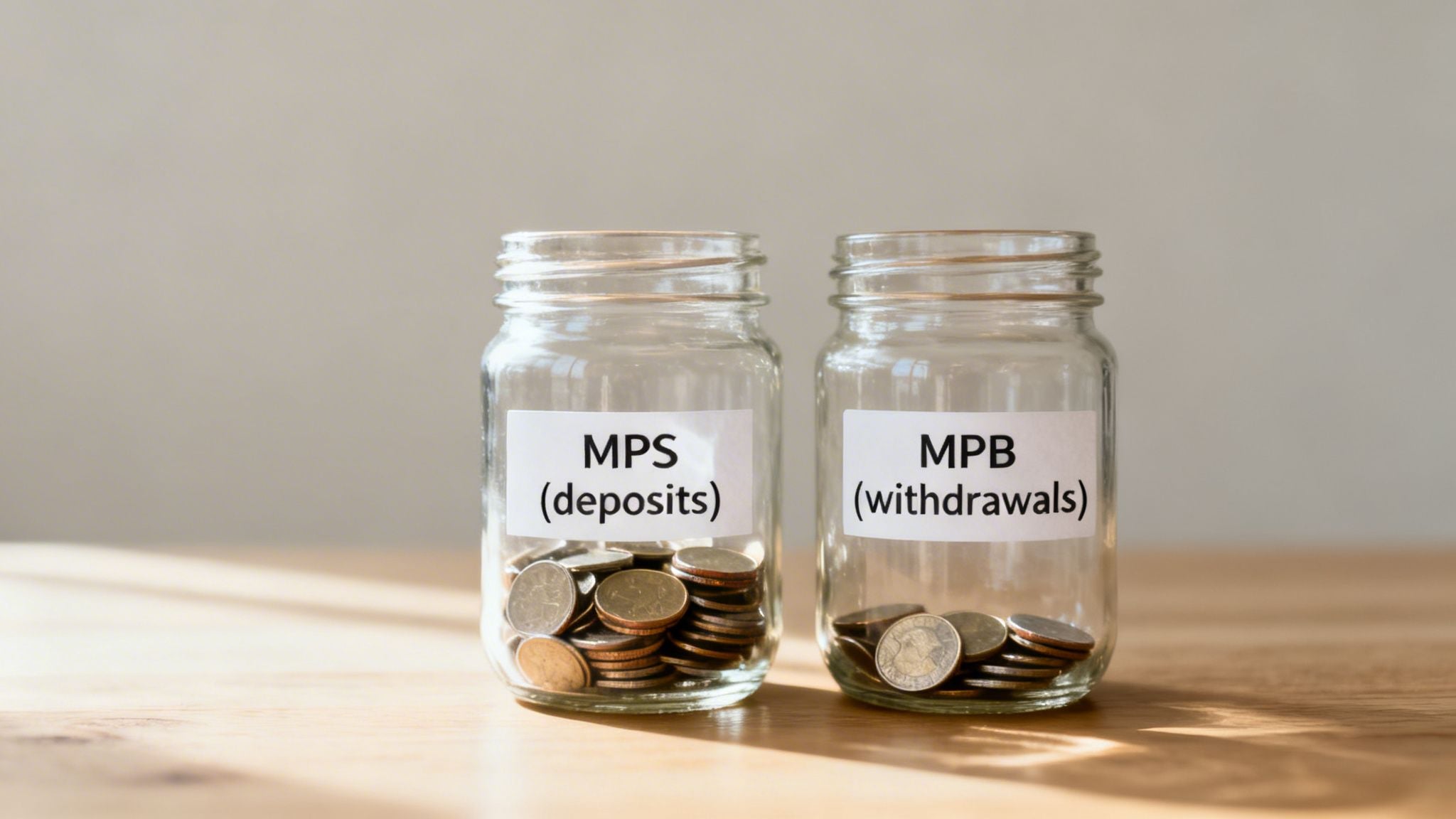
To understand why muscle seems to vanish when you stop training, it helps to look at what’s happening on a cellular level. Think of your muscle tissue like a bank account with constant daily transactions. Your balance—your muscle mass—is the result of two opposing forces.
The first is Muscle Protein Synthesis (MPS). This is your income. It’s the process your body uses to take protein from food and build new muscle fibers or repair existing ones. Every tough workout and every protein-rich meal is a deposit into your muscle account.
The other side of the ledger is Muscle Protein Breakdown (MPB). These are your expenses. Your body is always breaking down old or damaged muscle proteins to recycle their building blocks (amino acids) or use them for energy. A certain amount of breakdown is completely normal and healthy.
When you’re active and eating right, your deposits (MPS) keep pace with, or exceed, your withdrawals (MPB). This is how you maintain or build muscle. But the moment you stop training, that primary source of income dries up, while the daily expenses continue.
Your body enters a state where withdrawals outpace deposits, creating a negative balance. This net loss of muscle tissue is exactly what we call atrophy.
Why You Lose Strength Faster Than Endurance
During this process, not all muscle is treated equally. Your body is smart, and it prioritizes efficiency. You have two main types of muscle fibers that are important here:
- Type II (Fast-Twitch) Fibers: These are your powerhouses. They’re big, strong, and fuel explosive, high-force movements like sprinting, jumping, or lifting heavy weights. But they are metabolically expensive to keep around.
- Type I (Slow-Twitch) Fibers: These are your endurance specialists. They're smaller, more resistant to fatigue, and power sustained activities like walking, jogging, or simply holding your posture.
When you become inactive, your body’s “use it or lose it” policy kicks in hard. To conserve energy, it starts shedding its most costly assets first—those powerful Type II fibers. This is precisely why you’ll notice your strength and explosive power drop off long before your general endurance starts to fade.
The Impact of Severe Inactivity
This whole process shifts into overdrive during periods of extreme inactivity, like being on bed rest after a major surgery or illness. With virtually no stimulus to trigger muscle protein synthesis, the breakdown process runs wild.
Research has shown that during 90 days of complete bed rest, people who did no resistance training saw their quadriceps muscle volume shrink by a staggering 18%. That's nearly a fifth of your thigh muscle gone in just three months.
This rapid decline is why a proactive approach with a physical therapist is so crucial, as you can see in the full findings on muscle disuse. Understanding the science is the first step toward taking control and getting back to a fuller, better life.
Muscle Loss Timelines for Common Scenarios
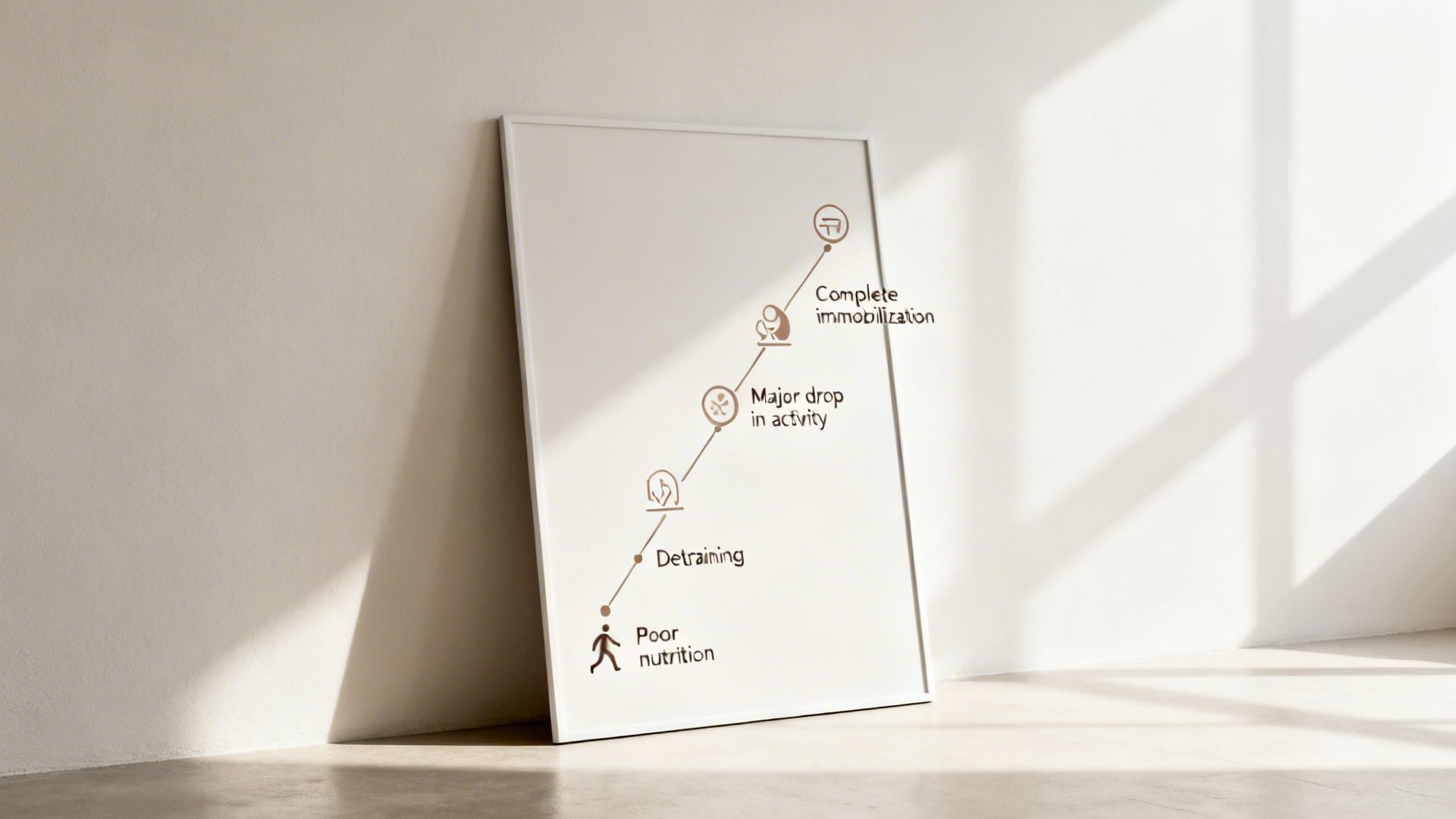
How fast you lose muscle isn't a one-size-fits-all answer. It all comes down to your specific situation. Taking a planned break from the gym is worlds apart from being stuck on bed rest after surgery.
Understanding what to expect in each scenario is the first step toward managing your health and planning a smart recovery. These timelines highlight just how important it is to have a proactive plan—something our physical therapists specialize in—to help you get back to living a full life.
Complete Immobilization
This is the most extreme scenario you can face. Think strict bed rest, or having an arm or leg completely immobilized in a cast after a serious fracture or surgery. With almost zero muscle stimulation, your body goes into overdrive breaking down muscle tissue.
Significant, measurable muscle loss can start in as little as 24 to 72 hours. The complete lack of weight-bearing activity or muscle contraction sends a powerful signal to your body: shed this metabolically "expensive" tissue to conserve energy.
Studies show that a leg immobilized for just one week can lose up to 5% of its muscle mass. Over a month, that number can climb to nearly a quarter of the muscle’s original size, with strength plummeting right alongside it.
A Major Drop in Activity
This situation applies when you aren't totally immobile, but your daily activity level has fallen off a cliff. It could be from a bad case of the flu, an injury that keeps you off your feet, or even a stressful project that leaves you sedentary for long periods.
While it’s not as severe as total immobilization, the sharp drop in daily movement is still enough to tip the scales toward muscle breakdown. You’ll likely start to notice changes within one to two weeks. You might feel weaker, and simple tasks can suddenly feel like a lot more work. This is your body adapting to a new, lower baseline of physical demand.
Detraining for Fit Individuals
This is a huge concern for regular gym-goers and athletes who have to take time off, whether it’s planned or unexpected. But there’s good news: if you have a solid fitness base, your muscles are much more resilient.
For a well-trained person, significant muscle loss doesn't really kick in until after three to four weeks of doing nothing. You might feel a dip in performance and strength sooner, but your body is primed to hold onto that hard-earned muscle much longer than someone who is untrained. Your muscles have a stronger foundation, which makes them more resistant to atrophy at first.
The Impact of Poor Nutrition
Think of nutrition as a multiplier for all these scenarios. A calorie deficit, especially one that’s low in protein, can put muscle loss on the fast track, no matter what your activity level is.
When your body isn't getting enough fuel from your diet, it has to find it somewhere else. Muscle tissue becomes an easy target for energy. This means that even a small dip in activity, when paired with a poor diet, can trigger muscle loss that otherwise wouldn't have happened.
On the flip side, keeping your protein intake up is one of the most powerful tools you have to protect your muscle mass during downtime. It gives your body the essential building blocks it needs and helps slow that breakdown process, giving you a major advantage in your recovery.
The table below gives you a clearer picture of what to expect in these common situations.
Estimated Muscle and Strength Loss Timelines
This table outlines the approximate rate of muscle and strength loss based on different levels of inactivity, from complete immobilization to a simple break from training.
| Scenario | Typical Onset of Loss | Potential Loss After 1 Month |
|---|---|---|
| Complete Immobilization | 24–72 hours | Up to 25% muscle mass in the affected area, with significant strength deficits. |
| Major Drop in Activity | 1–2 weeks | 5-10% loss of muscle mass, with noticeable decreases in strength and function. |
| Detraining (Fit Individual) | 3–4 weeks | Minimal to 5% loss of muscle mass, though strength declines may be more apparent. |
| Poor Nutrition | Varies (Can be rapid) | Greatly accelerates loss in all scenarios; can cause loss even with activity. |
These timelines show just how quickly things can change. But remember, loss isn’t permanent, and a strategic approach can make all the difference in how quickly you bounce back.
Factors That Speed Up or Slow Down Muscle Loss
Ever wonder why some people seem to hold onto their strength for weeks, while others feel weaker after just a few days of inactivity? The rate at which you lose muscle isn’t a one-size-fits-all timeline. It’s a highly individual process, with several key factors that can either hit the accelerator or gently tap the brakes.
How quickly you lose muscle really comes down to a mix of your age, how fit you were to begin with, what you're eating, and your overall health. Each of these can dramatically shift the outcome. At Highbar Physical Therapy, we know every patient is unique, which is why we always start by understanding these personal variables to build a plan that gets you back to living a fuller life.
Your Age and Baseline Fitness Level
Age is one of the biggest players here. As we get older, our bodies naturally become less efficient at building and keeping muscle. This process, known as sarcopenia, is a real physiological shift. After age 50, you can lose 1-2% of your muscle mass every single year, and strength often declines even faster. This detailed research paper offers more insight into these age-related muscle changes.
Your starting fitness level also makes a huge difference.
- Highly-Trained Individuals: Athletes and seasoned lifters tend to feel a drop-off in performance pretty quickly because their bodies are fine-tuned for a high level of output. The good news? They usually lose actual muscle mass more slowly and have a solid foundation to rebuild from, thanks to a higher number of myonuclei.
- Less Active Individuals: Someone who is less trained might not notice a decline as fast, but they have less muscle to begin with. This makes any loss more significant from a functional standpoint.
The Critical Role of Nutrition
What you eat—or don't eat—during a period of inactivity might just be the most important factor in how much muscle you keep. Your diet provides the essential building blocks your body needs to fight back against muscle breakdown.
Your protein intake is especially critical, both for slowing muscle loss and for rebuilding strength later. We cover this in our complete guide to protein intake. When your body doesn't get enough protein from your diet, it starts looking for it elsewhere, and your muscles become the primary source of amino acids. This puts muscle atrophy into overdrive.
Maintaining adequate protein intake is your best nutritional defense against muscle loss. Even if you can't train, giving your body a steady supply of protein sends a powerful signal to preserve muscle tissue, which can significantly slow down the rate of decline.
This is also a major concern for anyone using new weight-loss medications. As our guide on muscle loss with GLP-1 drugs explains, losing weight rapidly without enough protein and resistance training can lead to significant and unwanted muscle wasting.
Inflammation and Illness
Finally, being sick or injured does more than just keep you on the couch; it actively encourages your body to shed muscle. When you're fighting an infection or healing an injury, your system enters a highly inflammatory state.
This widespread inflammation ramps up stress hormones like cortisol, which directly tells your body to break down muscle protein for energy and to fuel the immune response. It creates a perfect storm for rapid muscle loss, as your body is not only inactive but also in a catabolic (breakdown) state. This is exactly why people often feel so profoundly weak after a serious illness, even if they weren't on complete bed rest.
How Muscle Memory Helps You Rebuild Faster
After learning how fast muscle can disappear, the idea of starting from scratch can feel pretty defeating. But there’s a silver lining, and it’s a big one for your recovery: regaining lost muscle is significantly faster than building it the first time. This isn't just a lucky break; it's a powerful biological advantage known as muscle memory.
Despite the name, this has nothing to do with your brain remembering an exercise. The "memory" is actually stored right inside your muscle cells. Think of it as a physiological cheat code that makes bouncing back from a break far more efficient. Understanding this process is central to our approach at Highbar Physical Therapy because it gives us a clear, scientific roadmap for getting you back to feeling strong and living a fuller life.
The Science of Your Cellular Managers
Imagine your muscle fibers are little factories. When you first start strength training, you’re not just building more machinery (the proteins that make your muscles contract). You’re also hiring more factory managers to oversee all that production. These managers are specialized cell nuclei called myonuclei.
Your body creates these new myonuclei in response to the demands of your workouts. The more you train, the more managers you have on the factory floor, with each one directing its own little section of the muscle cell to grow bigger and stronger. This process of adding myonuclei is slow and takes consistent effort—it's the hard part of building muscle from square one.
Now, let's say you have to stop training because of an injury or a long break. Your factory shuts down production, and the machinery gets packed away. The muscle fiber shrinks—that’s the atrophy we’ve been talking about. But here’s the game-changing part.
While the muscle fiber itself gets smaller, the expert managers—your myonuclei—stick around. They don’t get laid off. They simply remain dormant within the downsized muscle cell, waiting to be called back to work.
This is the secret sauce of muscle memory. When you start training again, you don't need to go through the slow hiring and training process for new managers. Your experienced myonuclei are already on standby, ready to fire up the protein synthesis "production line" at a moment’s notice.
Accelerating Your Comeback
This cellular head start has a massive impact on how quickly you regain strength and size. Because the framework for growth is already established, your muscles can adapt and rebuild at a much faster rate. What might have taken months to build the first time can often be regained in just a matter of weeks.
This is the principle that allows a physical therapist to guide your recovery with both confidence and precision. We know that even after a significant period of disuse, your body is primed for a rapid comeback. Our job is to provide the right stimulus at the right time to "reactivate" those dormant myonuclei safely and effectively.
Your personalized rehab program will focus on:
- Progressive Overload: Carefully and gradually increasing the demands on your muscles to signal those myonuclei to get back to work.
- Targeted Exercises: Focusing on the specific muscles that have weakened to ensure a balanced, functional recovery that supports your goals.
- Proper Nutrition Guidance: Making sure your body has the protein and energy it needs to fuel this rapid rebuilding process.
This scientific foundation completely changes the recovery game. It’s not about starting from zero; it’s about reactivating a system that is already built and just waiting for you to turn the key.
Your Action Plan for Rebuilding Strength
Knowing the science behind muscle loss is one thing. Actually turning that knowledge into a plan to get your strength back is the real work. That's where a licensed physical therapist becomes your partner, guiding you safely from where you are today to where you want to be—feeling better, moving without pain, and getting back to your life.
At Highbar Physical Therapy, our entire approach is about creating a practical, actionable plan that’s built specifically for you. We know that every recovery journey is personal. It's shaped by your unique history, your current challenges, and your goals. Our process is designed to cut through the noise and get you started on the path to recovery right away.
A Personalized Path to Recovery
Your comeback story starts with a comprehensive evaluation. A Highbar therapist will take the time to really understand your situation, whether you’re recovering from surgery, dealing with an illness, or just getting back into fitness after a long time off. We'll assess your current strength, mobility, and any functional limits to get a clear picture of your starting point.
From there, we build your personalized exercise plan. This isn’t some generic handout. It’s a carefully structured program that progresses at a pace that makes sense for your body. We tap into the principles of muscle memory by using targeted resistance training to reactivate those dormant myonuclei and rebuild muscle efficiently.
Our focus is always on functional strength—strength that you can actually use in your daily life. We want to help you get back to doing everyday tasks with confidence. This might include specialized techniques to speed things up. For example, you can learn more about how we use Blood Flow Restriction Training to build serious strength without putting a lot of stress on your joints.
Education and Empowerment for Lasting Results
Rebuilding muscle isn't just about what you do in the clinic. It’s also about supporting your body’s recovery from the inside out. A huge part of our action plan is giving you the knowledge you need to protect your progress and prevent future setbacks.
The most effective recovery plan addresses both movement and nutrition. Pairing targeted exercise with the right fuel is the key to maximizing muscle protein synthesis and achieving your goals faster.
To really optimize your body's ability to rebuild, knowing what foods that aid muscle recovery can be a game-changer. Your therapist will talk you through the importance of getting enough protein and calories to give your body the raw materials it needs to repair tissue and grow stronger. This guidance helps you make smart choices that support all the hard work you’re putting in.
Removing Barriers to Care
We believe getting started on your recovery should be simple and stress-free. At Highbar, we've designed our entire model to put patients first. This philosophy is built on three key pillars designed to help you fight muscle loss and get back to your life as quickly as possible:
- No Referral Needed: In most cases, you don’t need to wait for a doctor’s referral to see us. Thanks to direct access, you can book an appointment yourself and start your recovery immediately.
- Instant Booking: Scheduling is easy. With convenient clinic locations and simple online booking, you can find a time that works for you without playing phone tag.
- A Passion for Getting You Better: Our physical therapists are dedicated professionals who are truly passionate about helping people. We are a teaching practice, which means we’re committed to staying on top of the latest evidence-based methods to get you the best possible results.
Your action plan is more than a list of exercises—it's a partnership. We’re here to provide the expertise, support, and motivation you need to rebuild your strength and get back to the full life you deserve.
Frequently Asked Questions About Muscle Loss
When you’re working your way back from an injury, illness, or just a long break, it’s natural to have questions. Getting back to full strength is a process, and we want you to feel confident every step of the way.
We hear these questions all the time from our patients. Here are some quick, straightforward answers to help you understand your recovery.
How Long Does It Take to Regain Lost Muscle?
Here's the good news: thanks to muscle memory, regaining what you’ve lost is much faster than building it from scratch for the first time.
While everyone's timeline is a bit different, most people can get back a significant amount of lost muscle and strength within several weeks to a few months of consistent, targeted resistance training. A physical therapist will build a program to help you make that comeback safely and as efficiently as possible.
Can Cardio Prevent Muscle Loss?
Cardio is fantastic for your heart and overall health, but it won't stop muscle loss on its own. Your muscles need a specific signal to stick around, and that signal is resistance.
If you’re injured or not sure where to begin, a physical therapist can show you safe, modified strengthening exercises. This is crucial for fighting off disuse atrophy while you heal.
Remember, the primary stimulus for keeping muscle is resistance, not endurance. Even simple bodyweight exercises or light resistance bands can make a huge difference when you can’t do your usual routine. This is a core principle we use in every recovery plan we build.
Do I Need a Doctor's Referral for Physical Therapy?
Nope, you don't. At Highbar Physical Therapy, a system called direct access allows you to schedule an appointment with us directly.
Our licensed physical therapists are movement experts. We can evaluate your condition, figure out the cause of your muscle loss or weakness, and create a treatment plan to get you moving again—without the wait.
Is Age-Related Muscle Loss Permanent?
Absolutely not. It's not an inevitable or permanent part of getting older. While sarcopenia is a natural process, a smart strength training program can slow it down and even reverse many of its effects.
It is never too late to get stronger. Physical therapy gives older adults a safe and effective way to:
- Improve Muscle Mass: With tailored resistance exercises that work for any fitness level.
- Boost Strength and Balance: This directly reduces your risk of falls and makes daily tasks easier.
- Enhance Independence: Giving you the power to keep living an active, fulfilling life on your own terms.
Ready to stop worrying and start rebuilding? The expert team at Highbar Physical Therapy is here to create a personalized, evidence-based plan just for you. Book your appointment today and take the first step toward feeling stronger and living fully.