You go to bed feeling fine, then wake up with a stiff, aching elbow that doesn’t want to straighten. Sometimes it feels like a dull pull on the outside of the joint. Sometimes it’s a sharp spot on the inside, with tingling into the ring and little fingers. And sometimes the first few minutes of your morning are a negotiation with your own arm.
That pattern is frustrating, but it isn’t random. Elbow joint pain after sleeping often points to a mechanical problem that your sleep position keeps aggravating night after night. The good news is that mechanical problems usually respond to mechanical solutions. Change the angle, reduce the pressure, restore motion, then build tolerance back up.
Waking Up to a Painful Elbow You're Not Alone
Morning elbow pain is more common than often realized. Epidemiological data suggest that about 7 in every 1,000 people globally experience elbow joint pain after sleeping, with nighttime symptoms often worsened by sleep-related aggravation of conditions like osteoarthritis, tendinitis, and ulnar nerve entrapment (peakperformanceclinics.com).
What this often feels like
For many people, the story sounds familiar:
- You wake with stiffness and need a few minutes before the elbow loosens up.
- You notice pain in one spot on the inner or outer elbow when you push off the bed or lift a coffee mug.
- You feel tingling or numbness in the hand, especially if you slept with the elbow bent tightly.
- You blame the pillow or mattress, but the problem keeps returning.
That last point matters. The pillow might contribute, but it usually isn’t the whole issue. In clinic, the pattern I look for is whether the elbow hurts most after long periods of stillness, deep bending, pressure on the joint, or overhead arm positions during sleep. Those clues tell you much more than the pain alone.
Waking pain usually means the tissues weren’t resting overnight. They were being irritated while you slept.
Why this article matters
Generic advice usually stops at “sleep differently.” That’s incomplete. Some people need to unload an irritated tendon. Others need to reduce pressure on the ulnar nerve. Others need to address joint stiffness from arthritis or a mobility loss higher up the chain at the shoulder and neck.
The right plan starts with understanding what your elbow is reacting to. Then you match the fix to the problem. Specific physical therapy strategies then make the biggest difference.
The Nightly Culprits Behind Morning Elbow Pain
The elbow is a simple joint in one sense. It bends and straightens. But several sensitive structures pass through a small space there, and they don’t tolerate bad positioning for hours.
Imagine a garden hose. If you kink the hose, flow drops. If you keep pressure on the kink all night, the problem is waiting for you in the morning. Nerves, tendons, and joint surfaces react the same way.
Ulnar nerve entrapment
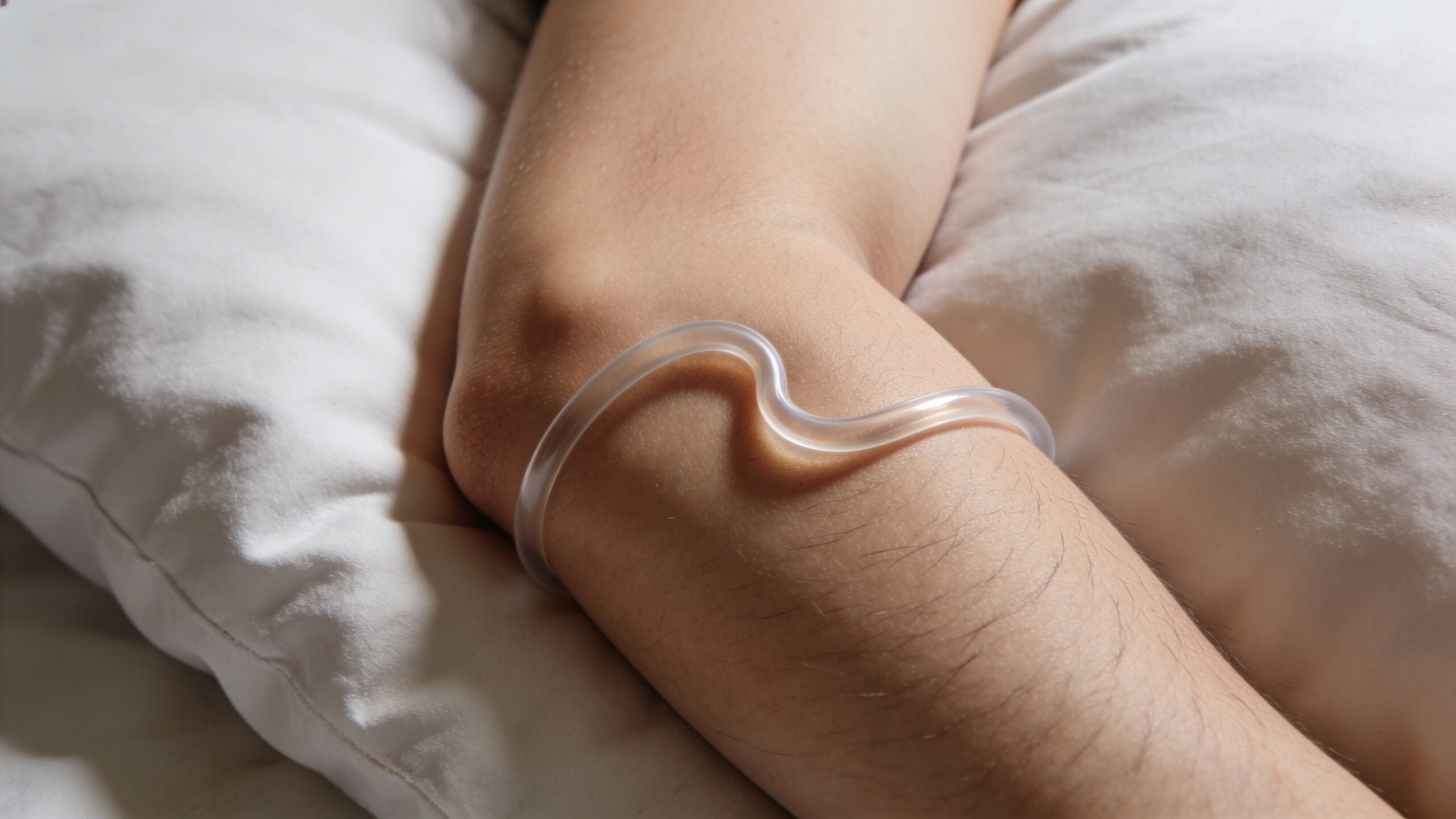
This is one of the most classic causes of pain after sleep. The ulnar nerve runs through the cubital tunnel at the inside of the elbow. When you sleep with the elbow bent tightly, you narrow that tunnel and increase pressure on the nerve.
Common clues include:
- Inner elbow pain that feels sore, burning, or tender
- Tingling into the ring and little fingers
- Symptoms that are worse overnight or first thing in the morning
- Irritation when resting your elbow on an armrest or desk
If the elbow stays flexed for hours, the nerve gets compressed and irritated. That’s why some people wake up needing to “shake out” the hand.
Tendinopathy on the outside or inside of the elbow
People often call outer elbow pain tennis elbow and inner elbow pain golfer’s elbow. The more useful way to think about them is tendon overload. A tendon that’s already irritated by gripping, lifting, typing, tools, racquet sports, or repetitive hand use can become more painful if sleep keeps it under tension or direct pressure.
The outside of the elbow usually hurts with wrist extension and gripping. The inside often hurts with gripping, lifting, or wrist flexion.
Here’s what matters at night:
- A bent elbow can keep some tissues shortened and stiff.
- Side sleeping can place direct pressure on the tender area.
- Overhead arm positions can create strain through the upper limb that the tendon doesn’t tolerate well.
Osteoarthritis and joint stiffness
Arthritic elbows often dislike inactivity. During the day, movement helps lubricate the joint. Overnight, the joint stays still, and the first motion in the morning can feel rusty, blocked, or painful.
This pattern tends to sound different from tendon or nerve pain:
- More stiffness than tingling
- A deep joint ache
- Difficulty fully straightening or bending at first
- Pain that improves somewhat after a little movement
If your pain eases as the joint warms up, stiffness is probably a major part of the problem.
What doesn’t usually work
People often try random fixes that don’t match the cause.
- Sleeping with the elbow tucked tighter usually makes nerve irritation worse.
- Aggressive stretching first thing in the morning can flare an irritated tendon.
- Ignoring numbness because it comes and goes can allow a nerve problem to linger.
- Changing mattresses repeatedly won’t help much if your arm position stays the same.
The point isn’t to guess better. It’s to identify whether your main driver is compression, tendon load, or joint stiffness.
How Your Sleep Habits Worsen Elbow Pain
Sleep posture can keep a mild elbow problem mild, or it can keep it going for months. The position that feels comfortable when you fall asleep isn’t always the one your tissues tolerate for six or seven hours.
A key example comes from a 2019 clinical study on lateral elbow pain. At a two-year follow-up, 82% of patients who used a nighttime arm restraint to prevent overhead sleeping remained asymptomatic, highlighting how strongly sleep habits can influence chronic elbow symptoms (pmc.ncbi.nlm.nih.gov).
The positions that usually cause trouble
The biggest offenders are predictable:
- Elbow sharply bent under a pillow
- Side sleeping directly on the painful arm
- Top arm draped overhead
- Hand tucked under the face with the elbow folded tightly
If your shoulder also gets sore at night, this guide on side sleeping and shoulder pain can help you clean up the whole upper-body setup instead of treating the elbow in isolation.
Sleep Position Impact on Elbow Pain
| Problematic Position | Why It Causes Pain | Recommended Modification |
|---|---|---|
| Elbow bent tightly under pillow | Increases pressure on the ulnar nerve and keeps tissues compressed | Sleep with the elbow more open and support the forearm on a pillow |
| Side sleeping on the painful arm | Loads the tender joint and compresses irritated tendons | Sleep on the opposite side or on your back |
| Arm overhead during sleep | Places stress through the shoulder and lateral elbow structures | Keep the arm lower, closer to the trunk, with pillow support |
| Hand curled under face or chest | Sustains flexion and awkward wrist position for hours | Hug a pillow to keep the arm in a more neutral position |
A better goal than perfect posture
You don’t need military-straight positioning. You need a position your tissues can tolerate. Typically, that means keeping the elbow slightly open, avoiding prolonged pressure on the painful side, and supporting the forearm so the arm isn’t dangling or folded in tightly.
If you’re also trying to improve the rest of your nighttime setup, this article on how to improve sleep quality naturally is a useful companion because elbow pain often improves faster when the whole sleep environment supports better recovery.
Immediate Self-Care Strategies for Morning Relief
The first goal is simple. Calm things down enough that the elbow stops starting every day irritated.
That means using the right kind of support, then choosing gentle motion instead of forcing the joint.

Try these changes tonight
Use one or two changes first. Don’t overhaul everything at once.
- Support the forearm on your back: Place a small pillow or folded towel under the forearm so the elbow rests in a relaxed, slightly open angle.
- Hug a pillow if you sleep on your side: This keeps the top arm from collapsing across your body and folding into a tight bend.
- Avoid direct pressure on the sore spot: If the outside or inside of the elbow is tender to touch, don’t sleep on that side.
- Consider a soft night splint: A splint that keeps the elbow in about 30 to 45 degrees of extension can reduce prolonged flexion stress, especially for ulnar nerve irritation (whatcompt.com).
A gentle morning reset
When you first wake up, don’t test the elbow with push-ups out of bed, hard gripping, or forceful stretching.
Try this instead:
- Bend and straighten slowly through a comfortable range.
- Turn the palm up and down with the elbow at your side.
- Open and close the hand several times if you’ve had tingling or stiffness in the fingers.
- Let warm water hit the area in the shower if the elbow feels rusty and stiff.
Morning rule: motion first, force later.
Heat or ice
People ask this all the time, and the answer depends on the dominant symptom.
- Use heat when the elbow feels stiff, achy, and hard to get moving.
- Use ice when the elbow feels hot, irritated, or flared after activity.
- Don’t use either as your only treatment. If the nightly position never changes, symptoms often come right back.
If you want a simple guide on matching symptoms to the right option, this overview of heat vs cold compress is worth keeping handy.
Where massage fits
Massage can help people who carry tension through the forearm, upper arm, or shoulder girdle, especially when guarding has built up around a painful elbow. It won’t fix a compressed nerve or overloaded tendon by itself, but it can reduce sensitivity and help movement feel easier. This discussion of the role of massage in managing arthritis and joint pain gives a balanced view of where hands-on care can support, but not replace, a fuller plan.
Physical Therapy Exercises for Long-Term Healing
The right exercise depends on which tissue is irritated. That matters more than the exercise name.
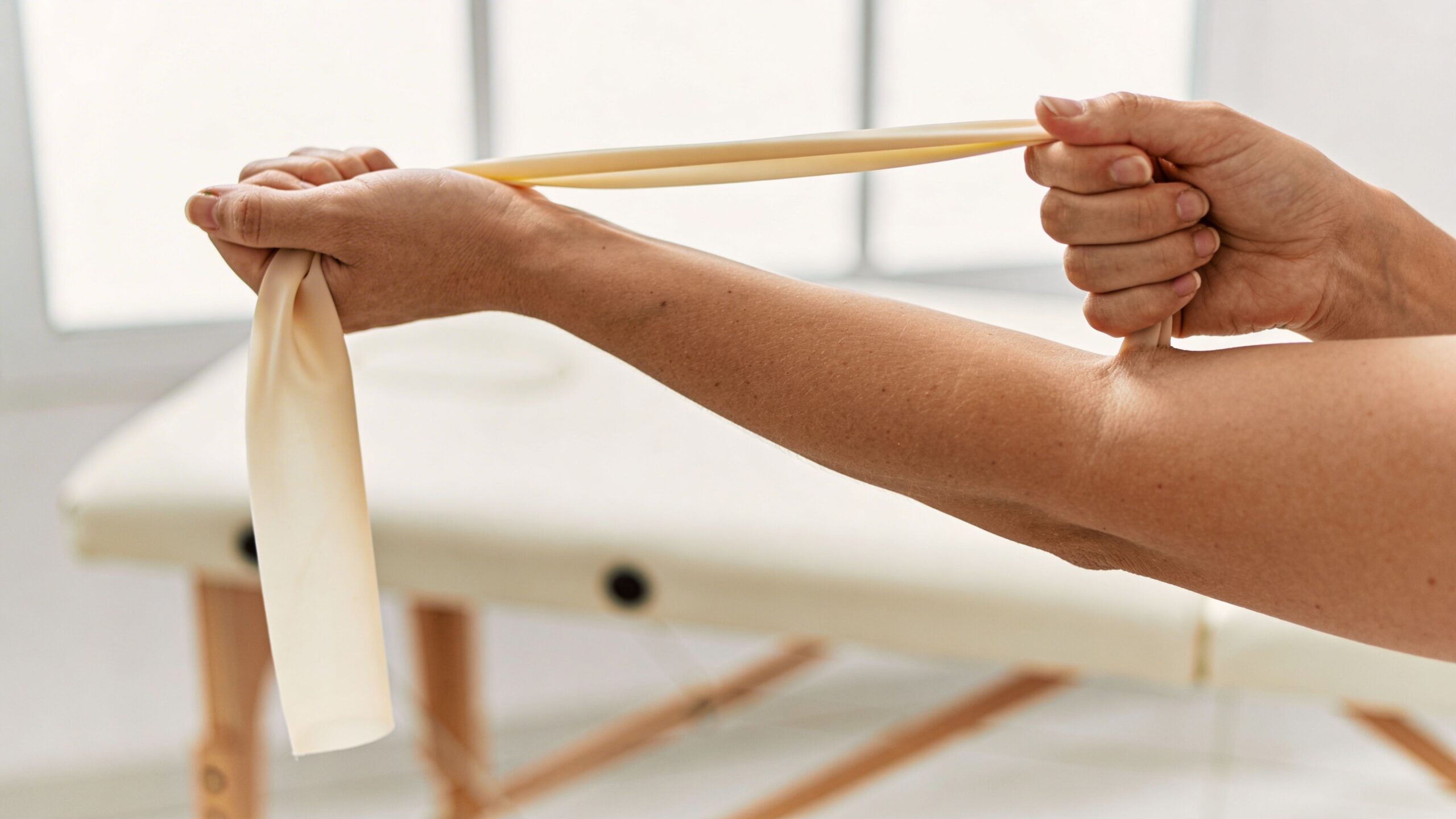
If your elbow hurts most after sleeping, home exercise should do two jobs. It should calm down the irritated structure, and it should improve the elbow’s tolerance so the same position does not keep triggering symptoms night after night. In clinic, I usually sort these cases into three broad buckets: nerve irritation, tendon overload, and joint stiffness. Each one responds to a different dose and a different style of movement.
For ulnar nerve irritation
Use nerve glides, not nerve stretches. The goal is to help the nerve move more freely through the tissues around the elbow, especially if you wake up with tingling in the ring and little fingers or soreness along the inside of the elbow.
A simple ulnar nerve glide:
- Stand tall with the shoulder relaxed.
- Bring the arm slightly out to the side.
- Bend the elbow and bring the hand toward the face.
- Straighten the elbow partway as you tilt your head away from the sore side.
- Return to the start slowly.
Stay with a mild pull or light tingling that eases as soon as you come back. Symptoms should not ramp up and linger.
A practical starting point is a small set of smooth reps once or twice per day. More is not always better with irritated nerves. If the hand feels more numb afterward, the dose was too aggressive.
For lateral elbow tendinopathy
If the pain sits on the outside of the elbow and gripping, lifting, or carrying makes it worse, controlled loading usually helps more than complete rest. Tendons need enough load to adapt, but not so much that they stay reactive for the rest of the day.
A reliable place to start is eccentric wrist extension:
- Rest your forearm on a table with the palm down.
- Hold a light dumbbell, hammer, or water bottle.
- Use the other hand to help lift the wrist up.
- Lower the weight slowly over 3 to 5 seconds.
- Repeat for 2 to 3 sets.
The lowering phase matters because it challenges the tendon in a controlled way. Mild effort is fine. Sharp pain, next-day flare, or soreness that lasts for hours means the load is too high.
As symptoms settle, progress to heavier loading, grip work, and tasks that match real life. A home plan works best when it eventually prepares you for opening jars, carrying groceries, typing, lifting at the gym, or whatever your elbow has to do. If you want to see what a more structured elbow physical therapy program can include, that page gives a good overview.
For general morning stiffness
A stiff elbow needs motion before strength. This is common with arthritis, postural guarding, or an elbow that has gotten less mobile because moving it has been uncomfortable for weeks.
Start with:
- Elbow flexion and extension through an easy range
- Forearm rotation with the elbow tucked at your side
- Supported reach and bend so the shoulder and elbow move together
- Gentle grip work with a towel or soft ball if the hand feels stiff too
The elbow should feel looser after this sequence. If it feels more compressed or irritated, the range is too large or the movement is too forceful.
How to choose the right dose
People often get stuck at this point. They find a good exercise online, then do too much of it.
Use a simple rule. During the exercise, symptoms should stay mild and controlled. Afterward, the elbow should return to baseline quickly. If pain or tingling clearly builds and persists, cut the reps, shorten the range, or switch categories entirely. A nerve problem treated like a tendon problem often gets irritated. A stiff joint treated like an inflamed tendon often stays weak and guarded.
The exercise has to match the problem. That is what drives long-term healing.
When to See a Physical Therapist for Your Elbow Pain
Some elbow pain after sleeping settles down with positioning changes and a smart home routine. Some doesn’t. Knowing when to stop experimenting matters.
Red flags that need prompt medical attention
Seek urgent medical evaluation if you have:
- Major swelling after trauma
- A visible deformity
- Fever, redness, or warmth with feeling unwell
- Sudden inability to move the elbow
- Progressive weakness in the hand or arm
Those signs can point to something more serious than positional irritation.
Signs it’s time for PT
A physical therapist is the right next step when:
- The pain keeps returning despite sleep changes
- You have ongoing numbness or tingling
- The elbow is limiting work, lifting, exercise, or sleep
- You’re not sure whether the problem is tendon, nerve, joint, or referred pain
A good evaluation usually looks beyond the sore spot. We check elbow motion, nerve sensitivity, grip demands, shoulder mechanics, neck contribution, and the exact positions that reproduce symptoms. That’s how you stop chasing relief and start solving the problem.
If you want to understand what a focused treatment plan can include, this overview of elbow physical therapy services is a helpful starting point.
Why earlier care usually works better
The longer a tissue gets irritated every night, the more sensitive it can become. People often wait because the pain seems small in the daytime. Then they realize they’ve changed how they sleep, train, work, and carry things just to avoid provoking it.
That’s the point to get it assessed. You don’t need to wait for severe pain to justify treatment.
Frequently Asked Questions About Elbow Pain and Sleep
A few questions come up in the clinic again and again. The answers matter, because the right next step depends on whether your elbow is dealing with joint compression, tendon overload, or an irritated nerve.
Should I wear a brace or splint at night
Sometimes. A night splint can help if you sleep with the elbow bent tightly for long periods, especially with ring finger or small finger numbness that suggests ulnar nerve irritation.
The goal is gentle positioning, not immobilizing the arm. A useful splint keeps the elbow from folding all the way up while still letting you rest comfortably. If the brace increases stiffness, pins and needles, or sleep disruption, it is the wrong setup.
Can my mattress or pillow cause elbow pain
They can contribute, but they rarely explain the whole problem. Bedding changes arm support, shoulder position, and how much pressure ends up through the inside or outside of the elbow.
I see this most often in side sleepers whose top arm hangs forward or whose bottom arm gets trapped underneath them. In that case, the mattress is part of the setup, but the tissue irritation still comes from repeated compression or awkward elbow flexion overnight.
How long does it take to improve
Simple positional irritation can settle within days if you stop feeding it every night. Tendon pain and nerve symptoms usually take longer because the tissue needs more than rest.
That is where specific exercise matters. Nerve glides can calm sensitivity when tingling is part of the picture. Eccentric or slow heavy loading can help when the pain is coming from an irritated tendon. If symptoms keep cycling despite those changes, the program probably needs better targeting.
Is it okay to stretch hard in the morning
Usually no. A sore elbow tends to respond better to heat, gentle motion, and light muscle activity first.
Hard stretching first thing in the morning can flare a compressed nerve or a reactive tendon. Start with easy elbow bending and straightening, wrist circles, or a few pain-free nerve glide repetitions. Save stronger mobility work for later, once the arm feels less guarded.
What if the pain shoots from my neck or shoulder to my elbow
That pattern often means the elbow is not working alone. Pain referred from the neck, shoulder, or the nerves that travel down the arm can feel like a local elbow problem, especially if you notice burning, tingling, or symptoms that change with neck position.
That is one reason elbow pain after sleep can be tricky. The sore spot is not always the source.
If elbow joint pain after sleeping is disrupting your mornings, the next step does not have to be guesswork. Highbar Physical Therapy helps people identify the driver behind elbow pain, whether it’s tendon irritation, nerve compression, joint stiffness, or a movement issue higher up the chain. With direct access scheduling, convenient locations across Rhode Island and Massachusetts, and telehealth options when travel is tough, Highbar makes it easier to get an expert plan that helps you feel better, move freely, and live fully.
