Foam rolling can be a game-changer for getting you better and helping you live a fuller life. It’s a simple tool with some serious power to reduce muscle soreness, improve your flexibility, and help you recover faster after a tough workout. Think of it as a way to give yourself a targeted massage, helping to release those painful muscle knots and get your body ready to move the way it’s supposed to.
Your Guide to Understanding Foam Rollers
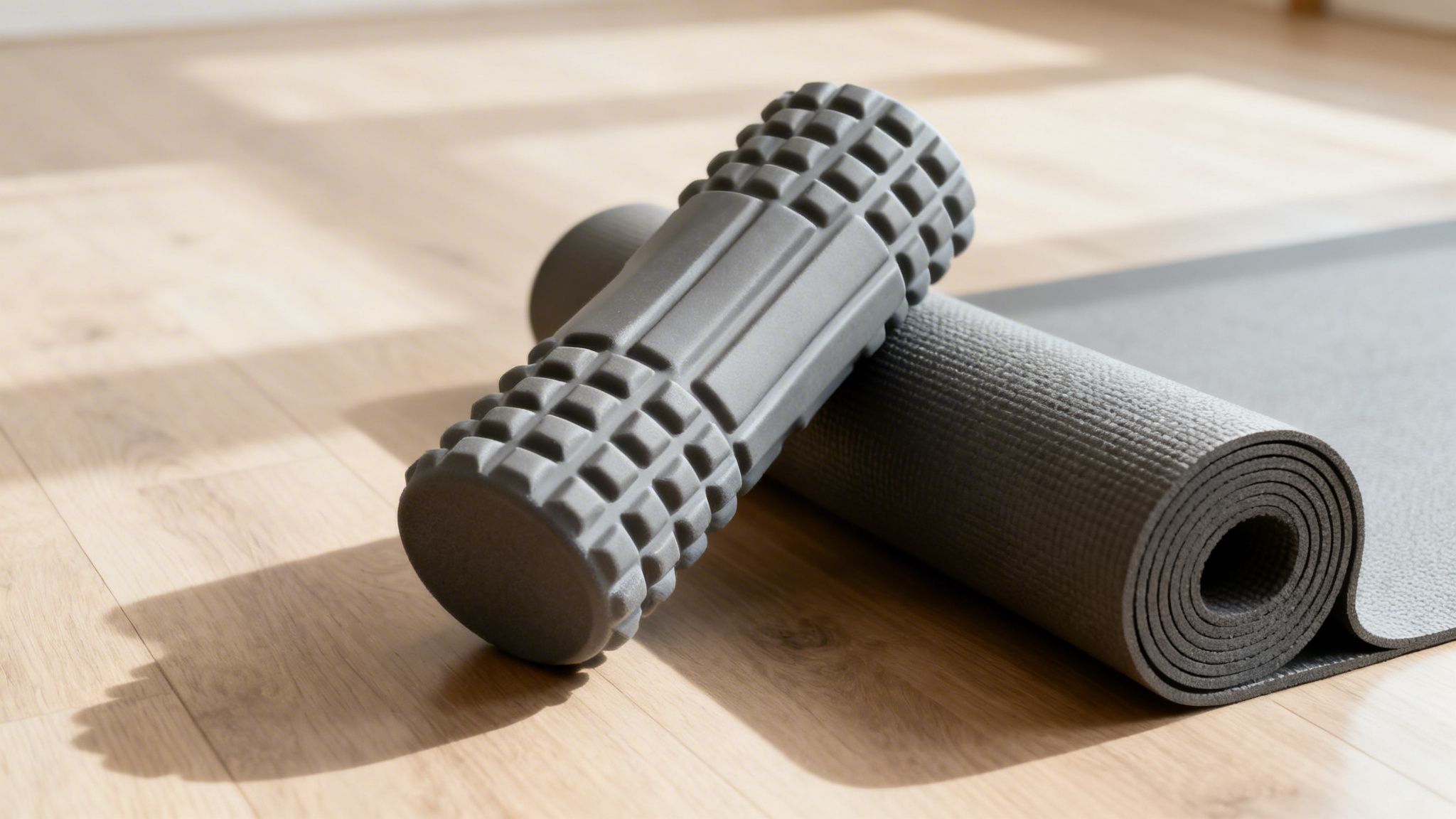
Ever stared at that cylinder of foam in the corner of the gym and wondered what it actually does? Let's break it down. At its core, a foam roller is a tool for what we call self-myofascial release (SMR). That’s just the clinical term for a DIY deep-tissue massage.
Imagine your muscles and the connective tissue wrapped around them—the fascia—as a single, smooth piece of fabric. When everything is working well, that fabric glides easily. But intense exercise, overuse, or even just sitting at a desk all day can cause that fabric to develop "knots" or adhesions. These are the tight, often painful spots that make you feel stiff and restrict your movement.
This is where the humble foam roller becomes your best friend. By applying slow, steady pressure across the muscle, you can help break up those adhesions, much like a physical therapist would use their hands to release a tight spot.
Why Foam Rolling Matters for Your Health
The benefits of foam rolling go way beyond just feeling good for a moment. That targeted pressure does something crucial: it increases blood flow to your muscles. This brings in more oxygen and nutrients that are vital for repair while helping to flush out the metabolic byproducts that make you feel sore. The result? You bounce back faster.
This is a key part of living a more active life. We always tell our patients that recovery and maintenance are just as important as the exercise itself for living a fuller, better life.
To help you see the advantages at a glance, here’s a quick summary of what foam rolling can do for you.
Quick Guide to Foam Rolling Benefits
This table summarizes the key advantages of using a foam roller for recovery, performance, and your overall well-being.
| Benefit Area | How It Helps You | Ideal For |
|---|---|---|
| Pain Reduction | Eases muscle tightness and calms down sensitive "trigger points" or knots. | Anyone with general muscle stiffness or post-workout soreness. |
| Improved Mobility | Increases joint range of motion by releasing tight fascia and muscles. | People who feel stiff from sitting or want to improve their flexibility. |
| Enhanced Recovery | Boosts circulation to flush out soreness-inducing byproducts after exercise. | Athletes, weekend warriors, and anyone starting a new fitness routine. |
| Performance Prep | "Wakes up" muscles before activity, improving their readiness to perform. | Individuals preparing for a workout, run, or sports competition. |
While a foam roller can’t replace an expert evaluation, it’s a fantastic tool for taking ownership of your physical health between appointments.
At Highbar Physical Therapy, we see foam rolling as more than just an accessory. It's a fundamental practice that empowers you to take control of your own body and keep yourself moving without limits, so you can live a fuller, better life.
Learning how to care for your body is a critical step toward long-term health. Foam rolling is one of the most practical and effective ways you can support your movement goals at home, perfectly complementing the hands-on care you get from a physical therapist. It's an active step toward managing your own mobility, which is truly a cornerstone of a healthy, fulfilling life. You can learn more about the crucial role of mobility in physical health in our detailed guide.
How Foam Rolling Actually Heals Your Body
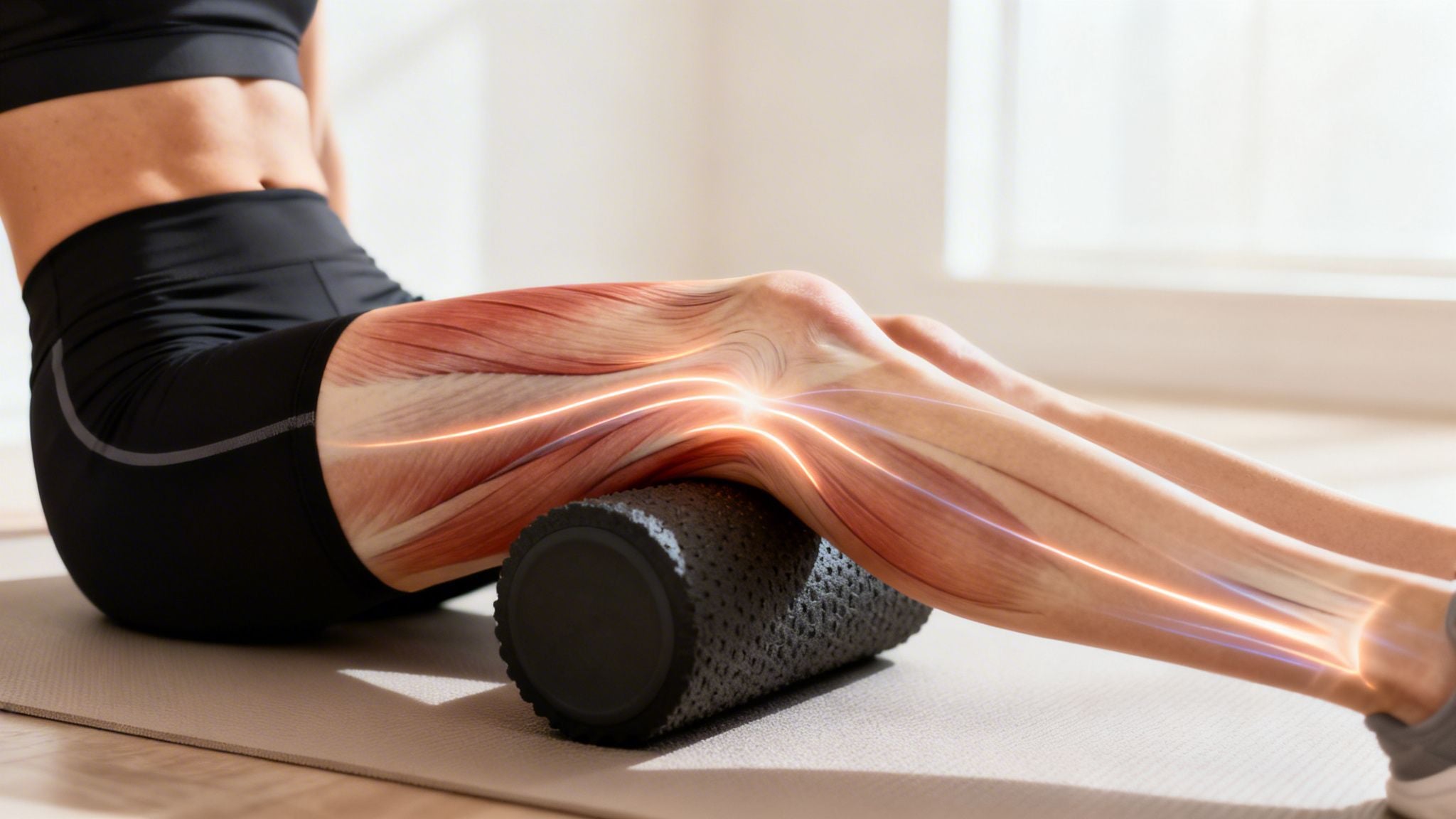
To really get why foam rolling works, you have to stop thinking of your muscles as separate parts and see them as a single, connected network. Everything is wrapped in a thin, tough web of connective tissue called fascia. When you're healthy, your muscles and fascia glide past each other without a hitch. But intense exercise, injury, or even just sitting at a desk all day can cause that smooth system to get gummed up.
These problems usually show up as "knots" or what we physical therapists call trigger points. Picture a small tangle in a rope—that one snag creates tension along the entire length, making the whole thing work less efficiently. Trigger points are just like that: tight, sensitive spots in the muscle that can restrict movement and cause pain, sometimes even in a completely different part of your body.
Foam rolling works by applying focused, steady pressure right onto these problem areas. That pressure helps physically break up the adhesions and knots in both the muscle fibers and the fascia, helping them return to their normal, smooth state. That's the mechanical side of the story, but there's a much deeper, physiological process happening at the same time.
The Neurological Response to Pressure
Your body has a complex system of checks and balances designed to protect itself from harm. When you use a foam roller with slow, sustained pressure, you’re actually sending a signal directly to your nervous system. This pressure stimulates special sensory receptors located within your muscles and tendons.
These receptors then fire off a message to your spinal cord that essentially says, "It's safe to relax." We call this process autogenic inhibition. It’s your nervous system’s way of overriding the muscle's instinct to stay tense, allowing the fibers to finally lengthen and release. This is exactly why you have to roll slowly; moving too fast can actually set off a protective reflex, causing the muscle to tighten up even more.
Think of it like a conversation with your muscles. Rushing through the movement is like shouting, causing the muscle to tense up defensively. Rolling slowly and pausing on tender spots is like a calm, reassuring discussion that encourages the muscle to let go of its tension.
This neurological calming effect is one of the key benefits of foam rolling. It helps dial down overall muscle tone, making you feel less stiff and more mobile. It also helps to reset the pain signals being sent from those trigger points, which is why you often feel immediate relief after a good rolling session.
Boosting Circulation for Faster Recovery
Beyond just releasing knots and calming down your nervous system, foam rolling has a huge impact on your circulation. The pressure from the roller acts like a pump, squeezing deoxygenated blood and metabolic waste products—like lactic acid—out of the muscle tissue.
Then, when you release that pressure, a fresh supply of oxygen-rich blood comes flooding into the area. This does two critical things:
- Nutrient Delivery: The new blood brings in the essential nutrients your body needs to repair muscle tissue that’s been damaged from a tough workout or overuse.
- Waste Removal: It efficiently flushes out the inflammatory byproducts that lead to delayed onset muscle soreness (DOMS)—that signature achy, stiff feeling you get a day or two after hitting the gym.
This boost in circulation is a cornerstone of effective recovery. By accelerating the body's natural healing process, foam rolling helps you bounce back faster, cuts down on your downtime between training sessions, and ultimately helps you perform better. At Highbar Physical Therapy, we teach our patients how to use this simple tool to take an active role in their own recovery, turning it from a passive waiting game into an empowered part of their routine for a fuller, better life.
The Science-Backed Benefits for Performance and Recovery
The immediate feeling of relief you get from a foam roller is great, but that’s only half the story. At Highbar Physical Therapy, we build our practice on evidence. While personal stories matter, measurable results are what create lasting change and help you live a fuller, better life.
Fortunately, the science behind foam rolling is strong. It’s proven its value for everyone from elite athletes to those of us feeling stiff after a long day at a desk. The research points to clear advantages that translate directly into how your body moves, recovers, and performs. This is why we confidently integrate it into our treatment plans—the data shows it works.
Reducing Post-Exercise Muscle Soreness
One of the best-proven benefits of foam rolling is its ability to reduce delayed onset muscle soreness (DOMS). This is that classic muscle pain and stiffness that shows up 24-48 hours after a tough workout or a new activity. Think about how your legs feel after the first big hike of the season—that's DOMS.
Rolling after you exercise helps by:
- Increasing Blood Flow: It helps flush out the metabolic byproducts that build up in your muscles and cause soreness.
- Calming the Nervous System: It sends signals that encourage tense, overworked muscles to relax, which turns down the volume on pain.
- Decreasing Inflammation: It can help manage the inflammatory response that naturally follows intense muscle use.
What this means for you is faster recovery and less downtime. For anyone trying to stay consistent with a fitness plan, that’s a game-changer for living a more active life.
Research confirms what athletes have known for years. Foam rolling post-exercise is a powerful tool for accelerating recovery and minimizing the performance drop-off that often comes with intense training.
A major meta-analysis of 21 studies drove this point home with some powerful numbers. The research found that foam rolling after exercise not only reduced the perception of muscle pain by +6.0% but also helped preserve athletic performance. Specifically, it cut the typical decrease in sprint performance by +3.1% and in strength performance by +3.9%.
These figures show that rolling doesn't just make you feel better; it helps you maintain your edge. You can explore the full findings of this foam rolling research to see the data for yourself.
Enhancing Flexibility and Range of Motion
Ever feel like your own body is fighting against you during a simple movement like a squat or reaching for something on a high shelf? That's often the result of tight muscles and restricted fascia. Another huge benefit of foam rolling is its ability to improve your flexibility and joint range of motion, often immediately.
By applying pressure, you can break up minor adhesions and send signals to your nervous system to let the muscles lengthen. It’s a bit different from static stretching, which focuses on the whole muscle. Rolling lets you zero in on specific tight spots or trigger points that are often the real source of the problem.
This can lead to noticeable improvements right away. Many people find they can squat deeper, reach further, or simply move with more freedom after just a few minutes of targeted work. Over time, this helps restore healthier movement patterns, reducing strain on your joints and lowering your risk of injury.
Boosting Your Athletic Performance
When you put it all together, better recovery and improved flexibility naturally lead to the ultimate goal for many: better performance. When your body is free of restrictions and recovers efficiently, it’s primed to work at its best.
Here’s how the benefits stack up to give you a performance edge:
- Improved Movement Efficiency: When your muscles move freely, you waste less energy fighting against your own stiffness.
- Increased Power Output: Muscles that can move through their full, intended range of motion are able to generate more force.
- Better Muscle Activation: Rolling before a workout can help "wake up" underactive muscles (like the glutes), making sure they’re ready to fire correctly when you need them.
Whether you're trying to set a new personal record in the gym, run your fastest 5k, or just keep up with your kids in the backyard, foam rolling helps build a solid foundation. It ensures your body is prepared for the demand, recovered from the effort, and resilient against injury—which is the core of what we help our patients achieve at Highbar.
Foam Rolling vs. Stretching: Which One Is Better for You?
It’s one of the most common questions we hear in our clinics: "Should I be foam rolling or stretching?" People often treat them as an either/or choice, but the reality is much more strategic. The best approach isn’t about picking a winner, but about understanding that rolling and stretching are two different tools with two very different jobs.
Think of it like this: if your muscle is a rope with a tight knot in the middle, just pulling on both ends (stretching) might only make that knot tighter. First, you need to work on the knot itself. That’s where a foam roller comes in.
The Role of Foam Rolling
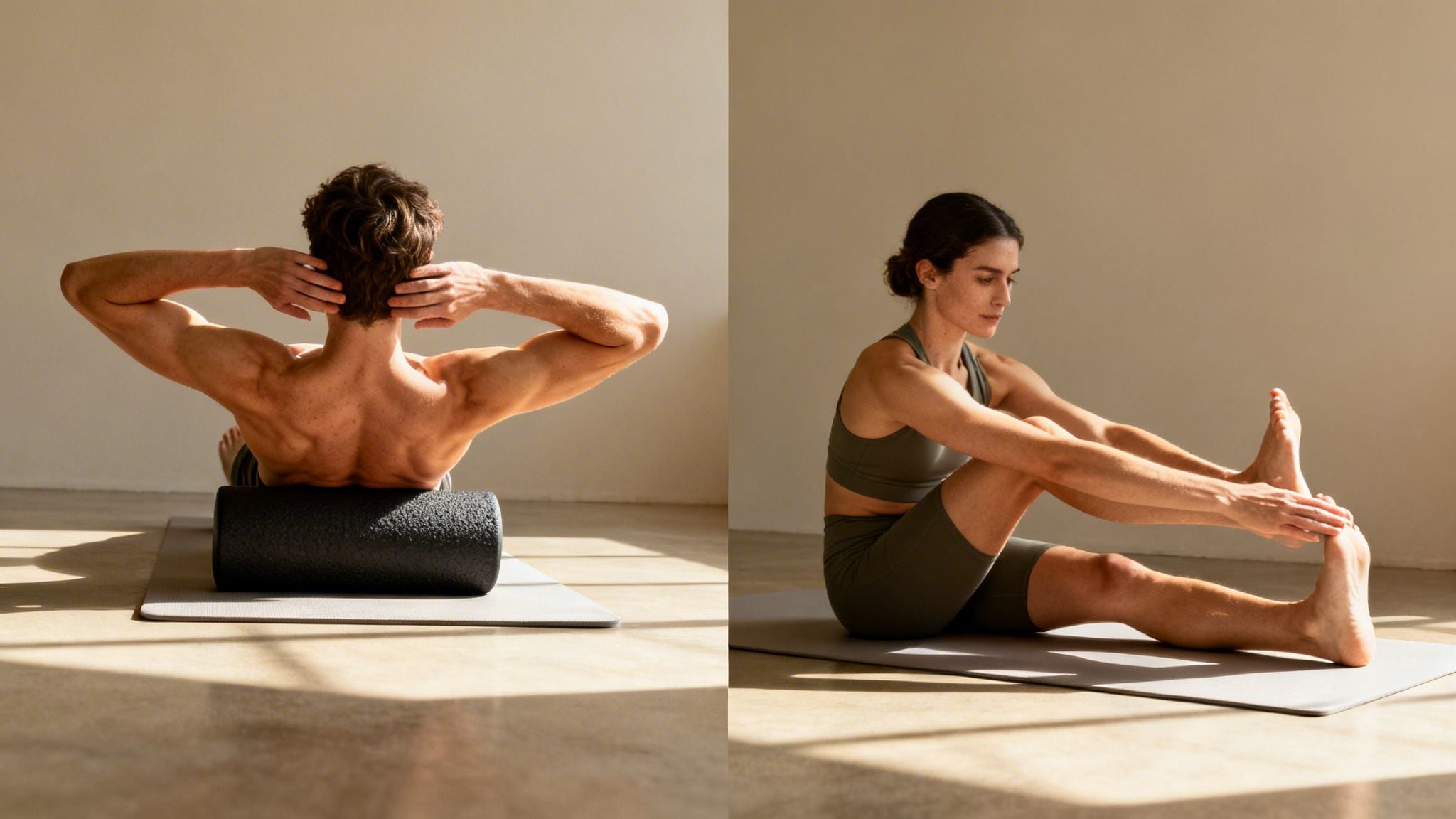
Foam rolling is all about self-myofascial release (SMR). That's the clinical term for applying focused pressure to break up adhesions or "trigger points." These are the specific, often painful knots that make you feel stiff and restrict your movement. By putting pressure right on those spots, you can:
- Release Specific Knots: Rolling helps physically loosen the tangled muscle and fascial fibers that are causing the tightness.
- Increase Local Blood Flow: It acts like a pump, pushing out waste products and drawing in fresh, oxygenated blood to a targeted area.
- Prime the Muscles for Activity: Using a roller before you exercise helps "wake up" the muscle tissue, making it more prepared to perform.
This focused approach delivers an immediate boost. In fact, research comparing the two methods found that a single session of foam rolling delivered an average performance increase of 2.19%, easily outperforming the 1.11% gain from stretching. It just goes to show how effective rolling can be for immediate readiness. For a deeper look at the numbers, you can read the full meta-analysis on foam rolling versus stretching.
The Role of Stretching
Stretching, on the other hand, has a different but equally important job. While the foam roller targets the knots, stretching works on improving the overall length and elasticity of the entire muscle. Its main goals are to:
- Improve General Flexibility: Static stretching—holding a stretch for a period like 30 seconds—helps lengthen the muscle from end to end.
- Increase Long-Term Range of Motion: Over time, consistent stretching trains your muscles and nervous system to relax into a greater range.
- Calm the Nervous System Post-Workout: A gentle stretching routine after you exercise can help signal to your body that it’s time to start the recovery process.
Static stretching is generally best saved for after a workout when your muscles are warm and pliable. If you're looking for something to do before you exercise, you’re much better off with active movements. You can check out our guide on creating an effective dynamic stretching routine for some great ideas.
It's not a competition between rolling and stretching. A smart routine uses both. Foam roll before activity to release knots and prime muscles. Stretch after activity to improve long-term flexibility and cool down.
At Highbar Physical Therapy, our physical therapists create personalized plans that integrate both techniques. We show you exactly when and how to use each tool to match your body's unique needs and help you achieve your goals—whether that's recovering from an injury, boosting athletic performance, or simply moving through your day with more freedom and less pain.
A Step-by-Step Guide to Rolling Key Muscle Groups
Alright, this is where the theory meets the mat. You’ve got the roller, and now it’s time to put it to work. We’re going to walk through how to safely and effectively roll the most common trouble spots we see in the clinic every day.
The goal here isn’t speed; it's deliberate, mindful movement. And the single most important tool you have isn’t the roller—it’s your breath. Focusing on deep, steady breathing sends a powerful signal to your nervous system to relax, especially when you hit a tender spot.
Before you start, let's cover a few ground rules to make sure you’re getting the most out of every roll.
- Go Slow: Think about moving at a pace of one inch per second. This isn’t a race. A slow pace gives your brain time to process the pressure and tell the muscle it’s okay to let go.
- Pause on Tender Spots: When you find a “knot” or a particularly tender area, just stop and hold gentle, consistent pressure for 20-30 seconds. Don’t force it. Just breathe and let the muscle release.
- Keep Your Core Engaged: Good posture counts, even on the floor. Avoid sagging your hips or arching your back, which can put unnecessary strain on other areas.
- You Control the Pressure: Use your arms and the leg that isn't being rolled to adjust how much weight you’re putting on the roller. It’s always better to start with less pressure and gradually increase it as the tissue relaxes.
Rolling the Lower Body
Your legs do a lot of heavy lifting, whether you're running marathons or just sitting at a desk. Targeting these major muscle groups is a game-changer for relieving stiffness and improving how you move.
1. Calves (Gastrocnemius and Soleus)
Your calves are unsung heroes, and when they get tight, it can lead to everything from foot pain and shin splints to ankle stiffness.
- Start by sitting on the floor with your legs out in front of you and place the roller under one calf.
- Use your hands behind you to support your weight.
- Gently roll from just above the ankle to just below the back of your knee.
- To get a little deeper, you can cross one leg over the other to add pressure.
2. Hamstrings
Tight hamstrings are incredibly common, especially for anyone who spends a lot of time sitting. That chronic tightness is a frequent contributor to lower back pain.
- Sit on the floor and place the roller under your thighs.
- Plant your hands behind you and lift your hips.
- Slowly roll from the bottom of your glutes down to the back of your knees.
3. Quadriceps (Quads)
The big muscles on the front of your thighs take a beating from running, cycling, and everyday life. Releasing them can make a huge difference.
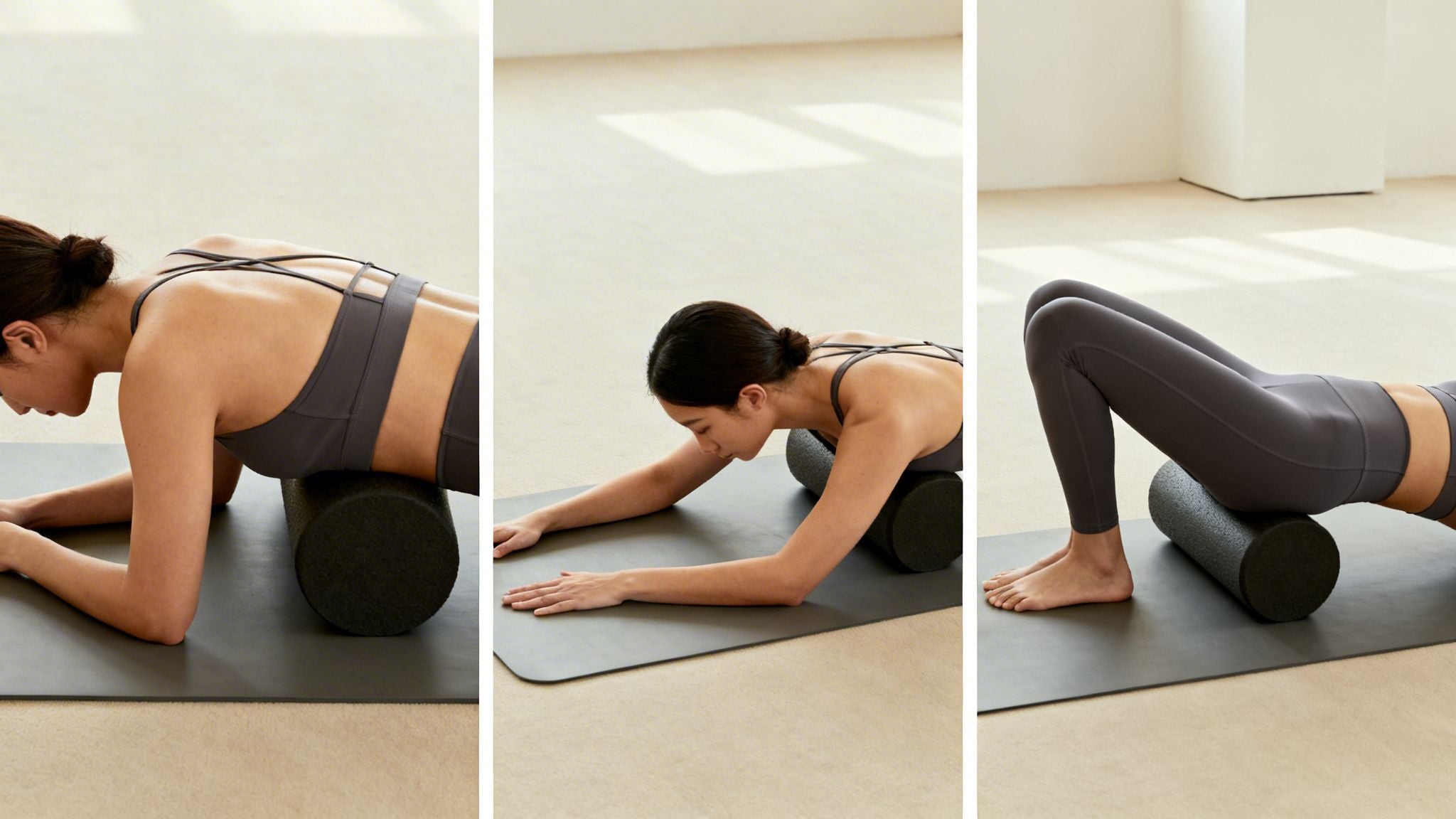
- Lie face down and position the roller under the front of your thighs.
- Prop yourself up on your forearms, like you're in a low plank.
- Roll from the top of your knees all the way up to your hip flexors.
Effective foam rolling isn't just about going through the motions; it's about listening to your body. When you pause on a tender spot, you are giving that muscle the specific attention it needs to release. This mindful approach is what transforms rolling from a simple exercise into a powerful therapeutic technique.
Rolling the Hips and Upper Back
From sitting at a desk to long drives, modern life creates a ton of tension in our hips and upper back. Releasing these areas is one of the best things you can do for your posture and to reduce nagging aches and pains.
4. Glutes and Piriformis
Your glutes are powerful muscles that can get incredibly tight. Tucked underneath is the smaller piriformis muscle, which can sometimes irritate the sciatic nerve when it’s overworked.
- Sit directly on the roller and cross one ankle over the opposite knee, creating a "figure-four" shape.
- Gently lean into the hip of the crossed leg to target the glute and piriformis.
- Roll back and forth over the area, exploring for any tender points.
5. Thoracic Spine (Upper and Mid-Back)
CRITICAL SAFETY NOTE: Never roll directly on your lower back (lumbar spine). Your rib cage and shoulder blades protect your upper back, but your lower back is far more vulnerable and rolling it can do more harm than good.
- Lie on your back with the foam roller positioned under your shoulder blades, perpendicular to your spine.
- Bend your knees and plant your feet flat on the floor. Cross your arms over your chest to open up the area.
- Lift your hips off the floor and use your legs to slowly roll between your mid-back and the top of your shoulders.
This guide is a fantastic starting point for taking care of yourself at home. But if you’re dealing with persistent pain or want a routine that's truly tailored to your body and your goals, nothing beats a physical therapist's insight. Our experts at Highbar Physical Therapy can get to the root cause of your discomfort and build a complete program that helps you move better and live fuller.
When to See a Physical Therapist for Your Pain
While a foam roller can be a fantastic tool, it’s important to know its limits. Think of it as great home maintenance for your body—perfect for managing general muscle tightness and the usual post-exercise soreness. But just like home maintenance, some jobs really do require a professional.
A foam roller can’t diagnose the root cause of your pain, and it’s certainly not a cure-all. Knowing when to pause the self-treatment and seek expert guidance is the key to protecting your long-term health. If you’re rolling consistently but your pain isn’t budging—or worse, it’s getting more intense—that’s a clear signal that something more is going on under the surface.
Red Flags to Watch For
Sometimes, pain is more than just a tight muscle. It’s a warning sign of a deeper issue that foam rolling can't fix and might even aggravate. It’s time to call a physical therapist if you experience any of the following:
- Sharp, Shooting, or Radiating Pain: If rolling triggers a zinger or an electric-like jolt that travels down your arm or leg, stop immediately. This often points to nerve irritation.
- Numbness or Tingling: Sensations like pins and needles aren’t a normal part of rolling and need to be properly evaluated.
- Pain That Lasts for Weeks: If you’ve been nursing the same ache for more than two weeks without any real improvement, it's time for a professional diagnosis.
- Pain Accompanied by Swelling or Bruising: Obvious swelling or discoloration around a painful spot could indicate a more significant injury, like a muscle tear or ligament sprain.
These symptoms go far beyond simple muscle soreness. A licensed physical therapist has the diagnostic training to pinpoint the true source of your pain.
At Highbar, our mission is to move you from temporary relief to long-term resolution. We use a combination of expert diagnosis, hands-on manual therapy, and personalized exercise programs to get you better, so you can live a fuller, pain-free life with confidence.
The Power of Professional Guidance
A physical therapist can build a comprehensive treatment plan that addresses the why behind your pain, something a foam roller just can’t do. This is where real, lasting progress happens.
Even with a tool like a foam roller, professional oversight makes a world of difference. For instance, a structured, 12-week warm-up program for professional basketball players that incorporated foam rolling led to dramatic improvements. They saw gains in ankle range of motion—by 6.5° on the left and 7.1° on the right—and significantly better balance. You can learn more about how guided programs improve biomechanics in this study.
If your pain just won’t quit, don't keep pushing through it. Schedule an evaluation at Highbar Physical Therapy. We’ll help you understand exactly what’s happening in your body and create a clear action plan to get you moving freely and confidently again.
Common Questions About Foam Rolling
As physical therapists, we get a lot of questions about foam rolling. It’s such a simple tool, but there’s a surprising amount of confusion out there. Let's clear up some of the most common concerns we hear so you can start rolling with confidence.
Think of this as a quick chat with your PT—just straightforward, practical answers to help you feel better and move more freely.
How Often Should I Foam Roll and for How Long?
When it comes to foam rolling, consistency beats intensity every time. For general mobility and keeping daily stiffness at bay, aiming for 3-5 times a week is a fantastic goal.
- Before a workout: A quick session of just 30-60 seconds per muscle group is perfect. The goal here is to wake up the tissues and get them ready for activity.
- After a workout: You can spend a little more time here to help with recovery. Aim for about 1-2 minutes per muscle group to help ease soreness.
Of course, if you're managing a specific injury or working through a tough limitation, a physical therapist can build a precise schedule tailored to what your body needs.
Does Foam Rolling Hurt and What if It Is Too Painful?
You should expect some mild discomfort when you hit a tight spot—that "good hurt" feeling, a lot like a deep-tissue massage. What you should never feel is sharp, shooting, or unbearable pain.
Pain is your body's alarm system. If rolling is truly painful, you're either applying way too much pressure or rolling over an area that's injured or seriously inflamed. You have to listen to your body and back off.
If a spot feels too intense, just shift some of your body weight off the roller to reduce the pressure. If you continue to feel sharp pain, stop immediately. That could be a sign of an underlying issue that needs a professional look to avoid making things worse.
What Type of Foam Roller Is Best for Me?
The right roller really depends on your experience and how sensitive your tissues are. For most people, especially beginners, a standard-density, smooth foam roller is the perfect place to start. It gives you effective pressure without being overly aggressive.
More experienced users or people with very dense muscle might get more out of a firmer or textured roller. On the flip side, softer options are great for those with higher sensitivity or conditions like fibromyalgia. A physical therapist can easily assess your tissue quality and recommend the ideal tool to help you hit your recovery goals.
To take your recovery even further, it helps to know when to use ice versus heat for muscle soreness. You can learn more in our guide on when to ice vs heat.
If you're dealing with pain that won't quit or you want a personalized plan to get the most out of your recovery tools, the experts at Highbar Physical Therapy are here to help. We can diagnose the root of your discomfort and build a plan that gets you back to living a fuller, better life. Book your appointment online today.