June is Men’s Health Month. And with Father’s Day right around the corner, there’s no better time to say something that dads don’t always hear: your health matters too.
We get it. Dads are the ones who show up. The ones who coach the last game of the season, fix the fence, mow the lawn, and somehow still find time to host the World Cup watch party. When everyone else’s needs get met, taking care of yourself tends to slide down the list.
But here’s the thing – the most important thing you can do for your family is stay healthy and stay in the game. Not just for the big moments, but for all the everyday ones that quietly make up a life.
This summer, we want to help you do exactly that.
The Summer Sports Surge (and Why Your Body Isn’t Ready)
School’s out. Spring sports have wrapped up. The kids are home. And suddenly, dads across New England are jumping back into activity at a pace their bodies weren’t quite prepared for.
We’re seeing it in our clinics every June and July. The guy who played college ball, lacing up for pickup basketball for the first time since last fall. The weekend golfer who goes from two rounds a year to three rounds a week. The dad who decides that this summer is the year he gets back in shape – and goes from zero to hero in about ten days.
Add to that the World Cup excitement (yes, you absolutely should be chasing your kids around pretending to be your favorite player), the NBA and NHL Finals generating backyard rivalry, and MLB giving you an excuse to be outside throwing a ball around – and you’ve got a recipe for one of our busiest seasons.
We’re not saying slow down. We’re saying warm up.
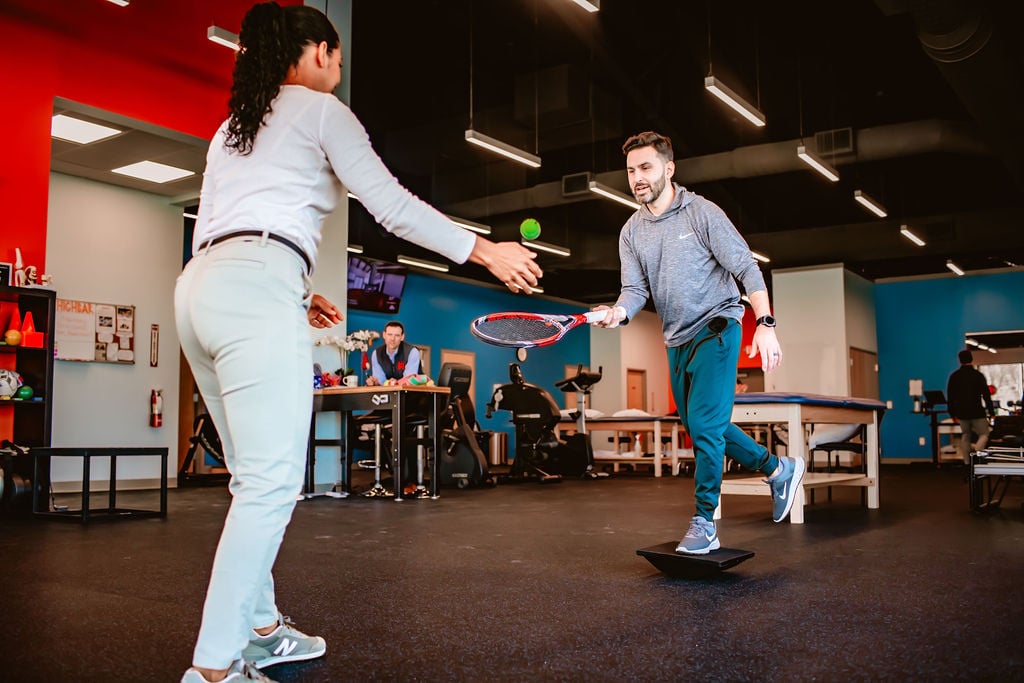
The 5 Most Common Summer Injuries We See in Active Dads
1. Rotator Cuff Strains (The Throwing Problem)
Whether you’re tossing a baseball with your kid, serving at a backyard tennis game, or celebrating a World Cup goal with an enthusiastic shoulder shimmy, the rotator cuff is one of the most commonly strained areas we treat in the summer.
The rotator cuff is a group of four muscles that stabilize your shoulder joint. It’s designed for repetitive overhead movement – but it needs to be conditioned for it. After months of relative inactivity, jumping into throwing games, swimming, or overhead yard work without warming up is a fast track to inflammation and pain.
Signs you may have a rotator cuff strain: A dull ache deep in the shoulder, pain when reaching overhead or behind your back, weakness when lifting your arm, or pain that wakes you up at night.
What to do: Don’t push through it. Early treatment with a physical therapist is far more effective (and faster) than waiting until it becomes a full tear. We can assess what’s going on and get you back to full function — including back to throwing with your kid.
2. Knee Pain from Running and Court Sports
Pickup basketball is a beautiful thing. It’s also one of the best ways to aggravate your knees if you’re not prepared.
The two most common culprits we see are patellofemoral pain (runner’s knee – pain behind the kneecap, often from the sudden increase in squatting, jumping, and cutting movements) and IT band syndrome (pain on the outer knee from running on hard surfaces or uneven ground).
Golf is another one. A full golf swing involves significant rotational force through the knees, and 18 holes on a hilly course is more mileage than most people realize.
Signs to watch for: Pain around or behind the kneecap during activity, swelling, clicking or grinding sensations, or pain that gets worse going up and down stairs.
What helps: Strengthening the hip abductors and glutes (yes, knee pain often originates above the knee), mobility work, and activity modification. You don’t have to stop playing – you just need a plan.
3. Lower Back Pain from Yard Work and Sitting
This one’s a two-headed monster in the summer. On one end: yard work. Raking, digging, hauling mulch, trimming hedges, and spending hours bent over in the garden puts an enormous load on the lumbar spine, especially when it’s done in a burst of weekend enthusiasm.
On the other end: watching sports. The World Cup. The MLB. Sitting on bleachers for youth sports tournaments. Sitting in a lawn chair. Sitting, sitting, sitting – interrupted only by explosive standing and yelling at a referee.
The combination of prolonged sitting and sudden bursts of heavy physical activity is exactly what causes the “I just bent over to pick up a garden hose, and now I can’t move” situation we see so often in June and July.
Prevention: Strengthen your core (not just your abs – the deep stabilizers), take regular breaks to stand and move during long sedentary stretches, and warm up before any heavy yard work the same way you would before a workout.
If you’re already hurting: Come in. Lower back pain responds incredibly well to physical therapy. There’s no reason to spend your summer lying on the floor waiting for it to “work itself out.”
4. Ankle Sprains
Summer means uneven terrain. Hiking trails, backyard obstacles, soccer fields, beach volleyball, and that classic of all classics: stepping off a curb while distracted by your phone watching World Cup highlights.
Ankle sprains are the most common musculoskeletal injury overall, and they’re especially prevalent when people are more active on variable surfaces. The tricky part? A sprain that isn’t fully rehabilitated dramatically increases your risk of re-injury. The ankle doesn’t heal in a straight line — it needs progressive loading and balance training to regain full stability.
If you roll your ankle, RICE (rest, ice, compression, elevation) in the first 48 hours is still valid, but don’t stop there. See a PT. We’ll assess ligament integrity and get you through a proper rehab progression so you’re not dealing with the same ankle all summer.
5. Golfer’s Elbow (and Tennis Elbow)
Not just for golfers and tennis players — we see these in dads who are doing a lot of gripping, lifting, and repetitive wrist motion. Gardening tools, carrying coolers, swinging a golf club or baseball bat, and even excessive screen time (yes, mobile gaming counts) can all contribute to tendinopathy at the inner or outer elbow.
The key difference: Tennis elbow affects the outer part of the elbow; golfer’s elbow affects the inner part. Both involve inflammation and microtrauma of the tendons that attach your forearm muscles to the elbow.
What helps: Eccentric strengthening exercises, load management, and, in some cases, dry needling or instrument-assisted soft tissue work. These conditions are very treatable — but they don’t respond well to just “resting” without addressing the underlying muscle weakness.
5 Simple Things You Can Do Right Now
You don’t need a gym membership or a two-hour morning routine. Here’s what actually makes a difference:
1. Warm up like you mean it. Five to ten minutes of dynamic movement before any physical activity — not static stretching, which is better saved for post-activity. Leg swings, arm circles, hip circles, light jogging in place. It takes ten minutes and it matters.
2. Hydrate before you’re thirsty. By the time you feel thirsty, you’re already behind. Aim for half your body weight in ounces of water daily, and add electrolytes if you’re sweating heavily.
3. Strength train at least twice a week. Not to get huge – to stay capable. Strong hips, a stable core, and resilient shoulders prevent the majority of the injuries we listed above. You don’t need a lot of time; you need consistency.
4. Don’t skip the cool-down. Static stretching after activity, when your muscles are warm, genuinely helps. Five to ten minutes of hip flexor, hamstring, and shoulder stretching goes a long way toward keeping you moving well.
5. Listen to your body, but don’t catastrophize. Soreness after activity is normal, especially early in the season. Sharp pain, swelling, or pain that doesn’t resolve within 48-72 hours is your body asking for help. Don’t ignore it, but also don’t assume the worst. Get it looked at.
A Word on Men and Asking for Help
Men are famously slow to seek treatment. We see it all the time – guys who’ve been dealing with shoulder pain for 18 months before finally making an appointment. Guys who’ve been compensating for a bad knee for years, which has now caused hip problems too.
Men’s Health Month exists in part because the data is clear: men are less likely to see a healthcare provider, more likely to delay treatment, and more likely to underreport symptoms. And it costs them — in quality of life, in time with their families, and in outcomes that get more complicated the longer they wait.
You don’t need to be “injured enough” to come see us. If something is limiting what you can do – if you’re avoiding activities you love, compensating in your movement, or just not feeling like yourself physically — that’s enough. That’s what we’re here for.
Physical therapy isn’t something you do when you’re broken. It’s something you do to stay whole.
This Father’s Day, Give Yourself the Gift of a Check-In
Here’s our Father’s Day challenge: make one appointment for yourself this month. Not for anyone else. Not because you’re in crisis. Just because you deserve to feel good and move well and be around, healthy and capable, for a long, long time.
We have locations across Rhode Island and Massachusetts, and we’re accepting new patients. Our team will do a full movement assessment, address what’s bothering you, and give you a real plan — not just a list of generic exercises, but a program built around your life, your goals, and what you want to be able to do.
Highbar Physical Therapy | Rhode Island & Massachusetts
Happy Father’s Day to all the dads out there.