A lot of people end up here after the same moment. You cough, sneeze, or clear your throat, and a sharp pain shoots through your lower back. It can feel startlingly specific, like your body just found one exact spot and lit it up.
That symptom gets people worried for good reason. Back pain is common, but back pain that spikes with coughing is a different clue. It suggests that the force of the cough is stressing a structure that’s already irritated, sensitive, or compressed.
That Sudden Jolt The Connection Between Coughing and Back Pain
You might notice it when you’re getting over a cold. You bend slightly forward, cough hard, and feel a jab in the low back. Or maybe the pain isn’t a jab at all. It’s a deep ache that only shows up when you cough, sneeze, or strain.
That pattern matters.
Back pain is the fourth leading cause of disability globally, and nearly 80% of the population experiences at least one episode of low back pain during their lifetime, according to research on low back pain and spinal mechanisms. But when coughing triggers or worsens that pain, it often points to an underlying structural issue rather than a simple muscle complaint, as noted in that same review.
In plain language, your cough is acting like a stress test.
If your back only hurts when you move a certain way, that can be useful information. If it hurts when you cough, that tells us something about how pressure is moving through your trunk and how your spine is tolerating it. A healthy, calm spine usually handles that force without much fuss. A disc, joint, nerve, or irritated muscle may not.
Why this symptom matters: Pain with coughing often says more than “my back is sore.” It can hint at pressure sensitivity, nerve irritation, or a spinal structure that doesn’t like sudden force.
That doesn’t mean the worst is happening. Many cases improve with the right diagnosis and conservative care. But it does mean this symptom deserves more attention than a random ache after yard work.
People often get confused because the trigger is in the chest or throat, but the pain is in the back. That mismatch makes it feel mysterious. It isn’t random. Coughing is a full-body mechanical event, and your lower back sits right in the middle of it.
Why Does Coughing Hurt Your Back The Biomechanics Explained
A cough seems simple from the outside. Inside your body, it’s a fast, forceful sequence.
Your diaphragm, abdominal muscles, and rib muscles contract together. Pressure builds inside your trunk. Air gets pushed out quickly. At the same time, many people fold forward a little and hunch their shoulders without realizing it.
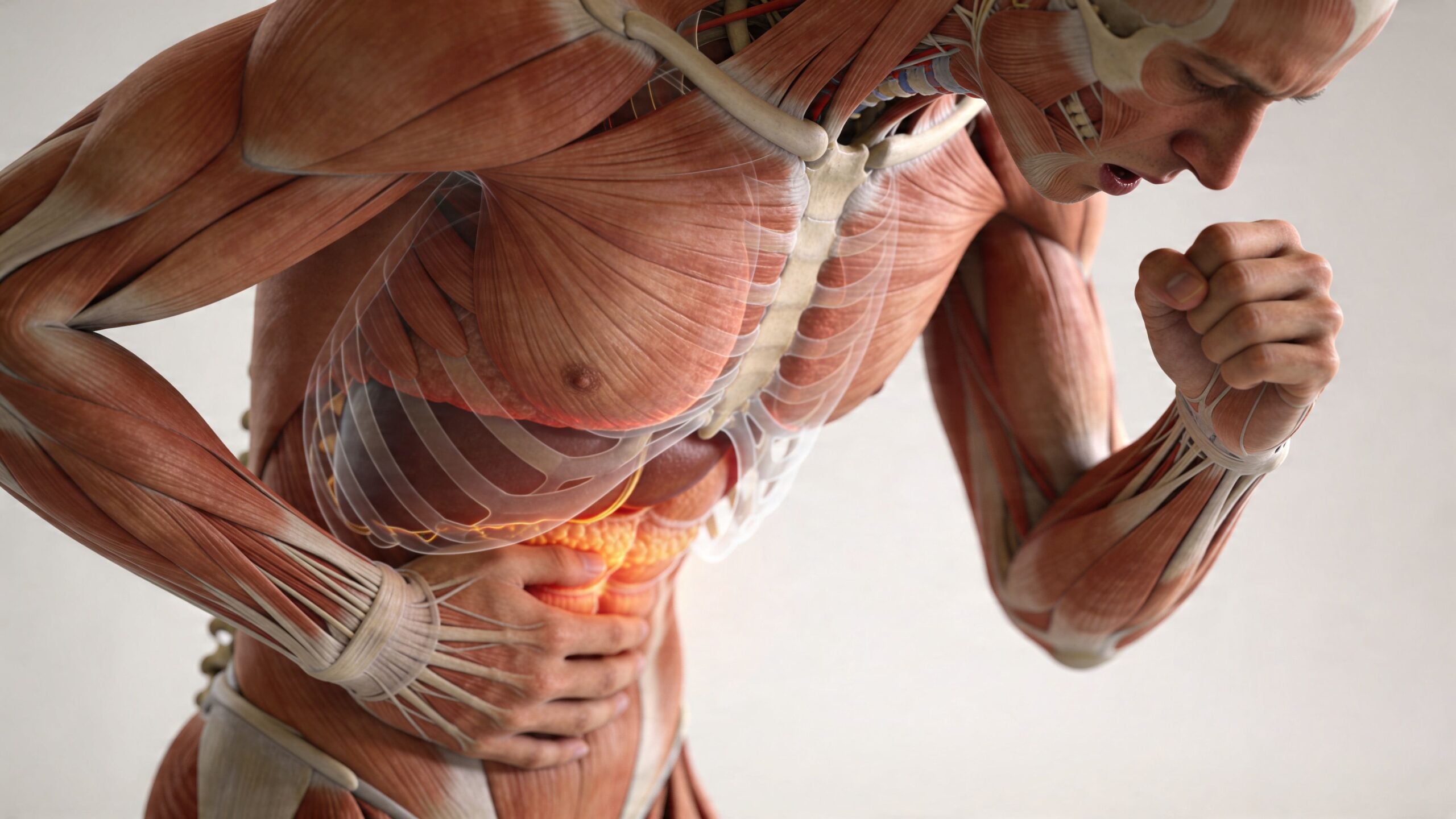
Your trunk works like a pressure canister
Think of your trunk like a sealed canister. The diaphragm forms the top. The pelvic floor supports the bottom. Your abdominal wall wraps around the sides. Your spine sits in the back of that system.
When you cough, pressure rises quickly inside that canister. If your back is healthy and your muscles coordinate well, that pressure is manageable. If one area is irritated, the force can land hard on it.
A useful analogy is a jelly donut. Press down suddenly, and the filling pushes outward toward the weakest area. Your spinal discs behave differently than pastry, of course, but the principle is similar. Pressure seeks somewhere to go.
Posture changes during a cough add force
When people cough, they often lean forward with shoulders rounded. That posture places more stress on the vertebrae and surrounding tissues, and the force can strain lower back muscles or temporarily compress nerves in people with spinal stenosis, according to this explanation of coughing-related lower back pain.
That’s one reason the pain may feel different depending on your position. A cough while standing may feel sharp. The same cough while lying down or bracing your abdomen might feel less intense.
Common ways people describe it include:
- A pinch in the center of the low back: Often linked with a pressure-sensitive spinal structure.
- A pull on one side: More suggestive of muscle or soft tissue strain.
- Pain into the buttock or leg: More concerning for nerve irritation.
- Pain near the ribs and spine: Sometimes related to the joints where the ribs meet the spine.
Coughing doesn’t just “shake” the body. It increases internal pressure, changes posture, and loads the spine all at once.
This is also why symptoms can show up outside the low back. Some people feel pelvic heaviness, groin discomfort, or abdominal wall strain with repeated coughing. If that sounds familiar, this guide on pelvic pain after coughing gives a helpful overview of how pressure can affect nearby structures.
Why the pain can feel sudden
The speed of a cough is part of the problem. Slow movement gives tissues time to adapt. A cough doesn’t. It’s abrupt. If a disc, facet joint, ligament, or nerve root is already irritated, that quick spike in force can trigger a very clear pain signal.
That’s why people often say, “I’m okay until I cough.”
Common Causes of Lower Back Pain When Coughing
Not every case of lower back pain and coughing points to the same diagnosis. The body can produce a similar symptom from several different structures. The trick is matching the pattern of pain to the likely source.
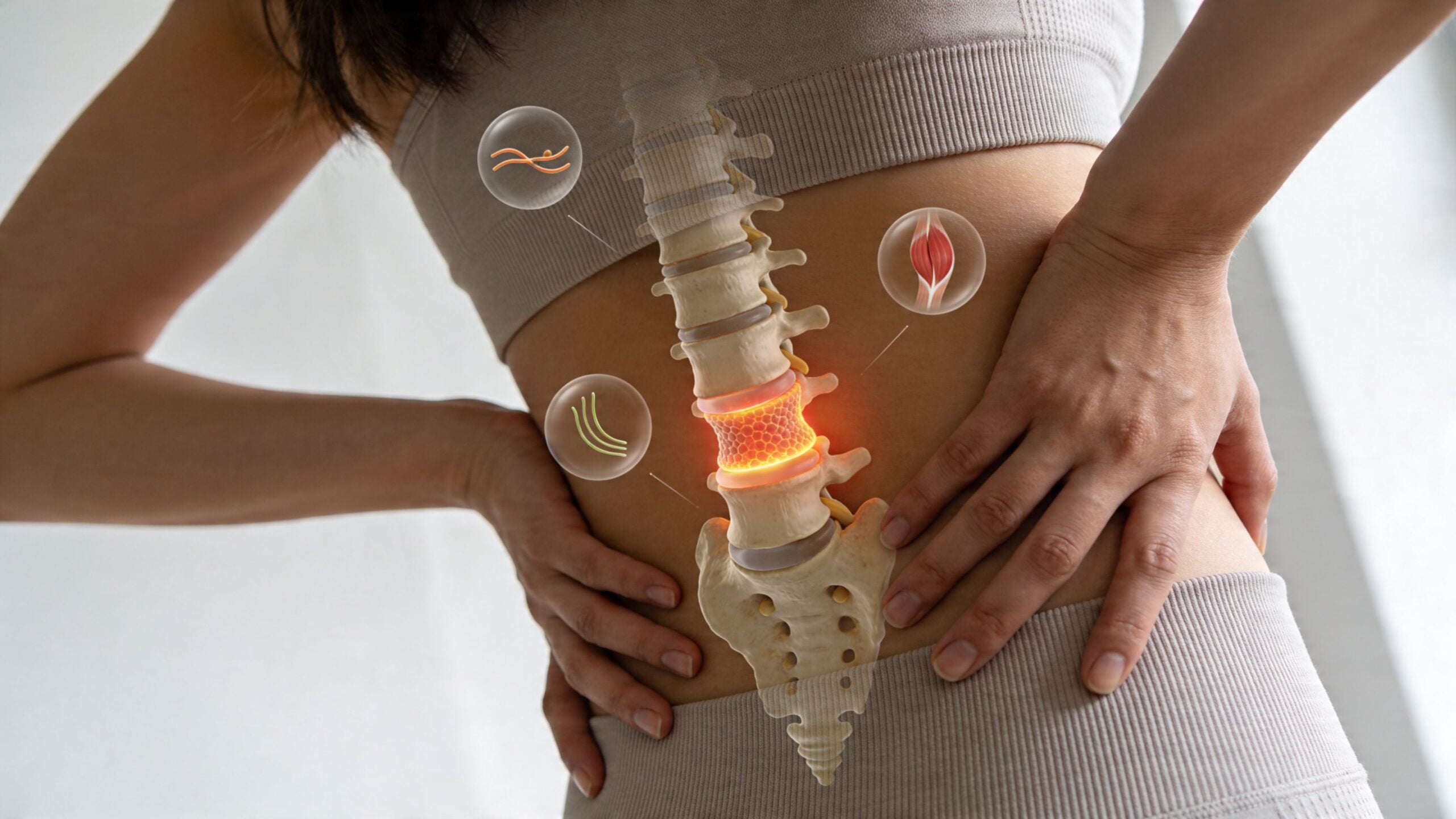
Muscle strain and muscle spasm
Sometimes the answer is the simplest one. Repeated coughing can overwork the muscles that support the trunk. If you’ve had days of hard coughing, your lower back muscles may become sore, tight, or spasm.
This often feels like:
- A broad ache or cramp
- Pain that’s worse when you change position
- Tenderness if you press on the muscles
- Stiffness more than nerve-like pain
Muscle pain can still be intense. A spasm can feel sharp enough to stop you in place. But muscle-driven pain usually stays local and doesn’t consistently travel below the knee.
Ligament strain and joint irritation
Coughing creates repeated jolts through the spine. That can irritate the small stabilizing ligaments and joints in the low back, especially if you already have a stiff or sensitive segment.
Two structures often involved are:
- Facet joints, which are the small joints at the back of the spine
- Sacroiliac joints, where the spine meets the pelvis
Facet irritation often causes pain on one or both sides of the low back, especially with extension, twisting, or standing upright after a cough. Sacroiliac irritation may feel lower, closer to the dimples of the pelvis or into the buttock.
Herniated lumbar disc
A lumbar disc herniation is one of the most important causes to consider when coughing reliably worsens pain. Coughing rapidly increases pressure in the trunk, and that can displace a compromised disc and irritate nearby spinal nerve roots. Evidence summarized in this review of herniated disc symptoms notes that 70% to 80% of acute disc herniations present with pain worsened by Valsalva maneuvers like coughing.
People often get confused by the word “disc.” Think of a disc as a cushion between two vertebrae. When healthy, it helps absorb load. When injured or bulging in the wrong direction, pressure from coughing can make it press on a nerve root.
Clues that raise suspicion for a disc problem include:
- Pain that shoots into the buttock or leg
- Numbness, tingling, or burning
- Pain that increases with coughing, sneezing, or straining
- Difficulty sitting for long periods
- A sense that one movement direction feels much worse than another
If leg symptoms are part of your picture, this article on a lower back pinched nerve may help you understand how nerve compression changes the symptom pattern.
A disc-related problem often announces itself through pressure sensitivity. Coughing, sneezing, and straining all tend to provoke it.
Lumbar spinal stenosis
Lumbar spinal stenosis means the spaces around the spinal nerves have narrowed. In some people, coughing increases pressure around those already crowded nerves and makes symptoms flare.
This pattern is more common in people who also notice:
- Leg pain, tingling, or heaviness with standing or walking
- Relief when leaning forward or sitting
- A back that feels better in slight flexion than in extension
- Symptoms that spread into both legs more than one
The pain may not be purely in the back. People with stenosis often say their legs feel unreliable, tired, or full of static.
Rib-spine joint irritation
Not all cough-related back pain comes from the lumbar spine itself. The joints where the ribs meet the spine can become irritated, especially after a respiratory illness with lots of coughing. This tends to create a more localized ache higher than classic low back pain, but some people feel it near the thoracolumbar junction, right where the mid-back and low back meet.
It usually hurts with:
- Deep breathing
- Coughing
- Twisting
- Pressing on a very specific spot
Sciatica made worse by coughing
Sciatica describes symptoms from irritation of the sciatic nerve pathway. Coughing doesn’t usually create sciatica on its own, but it can amplify symptoms when a nerve root is already irritated.
The hallmark pattern is pain that travels from the low back or buttock down the leg. Some people also notice tingling in the calf or foot. The cough acts like a trigger, not the root cause.
Causes outside the spine
A good clinician also keeps a wider differential in mind. Lower back pain during a cough isn’t always musculoskeletal. Kidney issues, infection, or other medical causes can refer pain to the back. If the story doesn’t fit a movement-based pattern, or if symptoms include illness-related warning signs, medical evaluation comes first.
Red Flags When to Seek Immediate Medical Attention
Most cases of lower back pain and coughing aren’t emergencies. Some are.
The hard part is that people often wait because they assume the cough caused “just a tweak.” If certain symptoms are present, the issue may involve significant nerve compression, infection, fracture, or another non-musculoskeletal condition.
Red Flag Symptoms Requiring Urgent Medical Care
| Symptom | What It Could Indicate |
|---|---|
| Loss of bowel or bladder control | Possible severe nerve compression requiring urgent evaluation |
| Numbness in the groin, inner thighs, or saddle area | Possible cauda equina involvement |
| Progressive leg weakness | Worsening nerve compromise |
| Severe pain after a fall, accident, or violent coughing episode | Possible fracture or significant structural injury |
| Fever, chills, or feeling systemically ill with back pain | Possible infection or another medical cause |
| Unexplained weight loss with persistent back pain | A non-musculoskeletal cause that needs medical workup |
| Pain that is constant, unrelenting, and not affected by position | A medical source rather than a mechanical one |
| Shortness of breath, chest symptoms, or major breathing difficulty with back pain | A condition needing prompt medical assessment |
When a PT is the right first step and when a doctor is
Physical therapists are trained to sort out musculoskeletal patterns from symptoms that need referral. But if you have any of the red flags above, don’t start with stretching videos or wait to “see if it settles.”
Get urgent medical care.
If your symptoms are more typical of nerve irritation, such as pain traveling down the leg, learning the difference between local pain and what radiating pain means can help you recognize when the nervous system is involved.
New bowel or bladder changes, saddle numbness, or rapidly worsening weakness are not watch-and-wait symptoms.
A simple decision rule
Use this practical split:
- Go to urgent medical care now if you have major neurologic changes, signs of infection, trauma, or severe unexplained symptoms.
- Book a physical therapy or medical evaluation soon if coughing repeatedly triggers back pain, leg symptoms are present, or the pain isn’t improving.
- Try brief self-management first only if the pain is mild, clearly mechanical, and you have no red flags.
That approach keeps you safe without turning every episode into a crisis.
Immediate Self-Care and Cough Control Strategies
If you’ve ruled out red flags, the next goal is simple. Calm the area down and reduce the force each cough sends through your back.
This matters even more if your symptoms fit a stenosis pattern. In lumbar spinal stenosis, coughing can increase pressure around already narrowed nerve spaces, and physical therapy approaches focused on neutral spine stabilization and flexion-based exercise can help decompress those spaces and ease symptoms, according to this discussion of back pain when coughing and spinal stenosis.
Reduce the jolt before you cough
Individuals frequently cough passively. If your back is irritated, that’s a mistake.
Try this sequence:
- Sit or stand tall instead of collapsing forward. You don’t need a military posture. Just avoid folding sharply at the waist.
- Gently brace your lower abdomen. Think about tightening your trunk as if preparing for a light poke.
- Support the painful area with your hand or a small pillow. This can reduce the sense of sudden give or strain.
- Cough with your mouth open instead of clamping down. A less forceful cough often means less pressure spike.
That won’t fix the cause, but it can make the symptom much more manageable.
Settle irritated tissues
Use basic pain control strategically.
- Heat for muscle tightness: A warm pack can help if the area feels stiff or spasmed.
- Ice for a sharp flare: A cold pack may feel better after a sudden pain spike.
- Short walks: Gentle movement usually beats total bed rest.
- Position changes: Don’t stay in one posture so long that everything stiffens up.
A common relief position is lying on your back with pillows under your knees. If your symptoms ease in a slight forward bend, lying on your side with knees slightly bent may also help.
Avoid the movements that pile on pressure
For a few days, be careful with tasks that combine bending, twisting, and lifting. Those movements can load the same structures that already dislike coughing.
Good short-term swaps include:
- Log roll out of bed instead of jackknifing up
- Hinge at the hips instead of rounding
- Bring objects close to your body before lifting
- Break up sitting time with brief standing or walking
Practical rule: If a movement plus a cough creates a sharp spike, modify that movement for now.
Make the cough less violent if you can
You don’t always control the cough, but you can sometimes reduce how explosive it feels.
A few reasonable steps:
- Sip water regularly if your throat feels dry
- Use a humidifier if dry air is aggravating your cough
- Follow medical advice for the respiratory illness itself
- Avoid repeated throat clearing, which can become its own repetitive strain
If the cough persists, gets worse, or seems out of proportion to a simple cold, it’s worth talking with a medical provider. Calming the cough often helps the back because it reduces the repeated mechanical insult.
How Physical Therapy Can Resolve Your Back Pain
Self-care helps manage symptoms. Physical therapy aims to identify why your back reacts to coughing in the first place, then correct the movement and loading problem behind it.
That distinction matters. You don’t just want fewer painful coughs this week. You want a spine that handles daily life better next month.

The evaluation looks for the pain generator
A strong PT exam usually starts with pattern recognition. Your therapist will ask when the pain started, whether you had an illness or heavy coughing spell, where the pain travels, and which positions make it better or worse.
They’ll also look at how you move.
That often includes:
- Repeated movement testing
- Posture assessment
- Walking and sit-to-stand mechanics
- Nerve tension signs
- Core control and breathing strategy
- Hip mobility and strength
The key question isn’t just “Where does it hurt?” It’s “Which structure is most likely being stressed when pressure rises?”
If you want a fuller overview of the process, this guide on what to expect at physical therapy for lower back pain walks through the evaluation and treatment experience.
Treatment depends on the pattern, not just the diagnosis
The best PT plan matches the symptom behavior.
For disc-related pain, therapists often use directional exercises and position strategies to reduce nerve irritation and improve tolerance to spinal loading. Some people respond well to extension-based work. Others need a different route. The point is matching exercise to response, not guessing.
For stenosis-like symptoms, treatment often favors a more neutral or slightly flexed posture, trunk endurance work, and movement strategies that open space for irritated nerves.
For muscle strain or joint irritation, the focus may be different:
- Restore normal motion without provoking a spasm
- Improve trunk and hip coordination
- Decrease guarding
- Build tolerance for daily movements like lifting, coughing, turning, and getting out of bed
What PT often includes
A session may involve several layers of care rather than one “magic exercise.”
| PT focus | Why it helps |
|---|---|
| Symptom-guided exercise | Helps calm irritated tissues and improve movement tolerance |
| Core stabilization | Builds a more reliable support system around the spine |
| Breathing retraining | Improves pressure management so coughs and strain are less provocative |
| Manual therapy | Can reduce stiffness and help movement feel less guarded |
| Nerve mobility work | Useful when symptoms radiate along the leg |
| Posture and body mechanics coaching | Reduces repeated stress during daily tasks |
One underappreciated piece is breathing. If you habitually grip through the chest, collapse the trunk, or bear down during exertion, pressure can move through your body inefficiently. A PT can teach you how to create support without over-bracing.
The goal isn’t to make you move cautiously forever. The goal is to make normal forces, including a cough, feel normal again.
PT helps prevent the next flare too
Pain with coughing often appears during a vulnerable moment, like after a long drive, a workout lull, poor sleep, or a respiratory illness. Once symptoms improve, many people stop there.
That’s usually where recurrence begins.
A good rehab plan also addresses:
- Strength deficits in the hips and trunk
- Mobility restrictions that push strain into the low back
- Poor lifting habits
- Deconditioning after pain
- Fear of movement
Those issues don’t show up on every scan, but they matter in real life. If they’re ignored, the next cough, sneeze, lift, or awkward twist can reactivate the same problem.
When PT should lead and when it should refer
Physical therapists are musculoskeletal experts, but they don’t work in isolation. If your symptoms suggest a fracture, infection, severe neurologic issue, or another medical cause, a good PT refers you out quickly.
That’s a strength, not a limitation.
The value of PT is not just exercise prescription. It’s clinical sorting, targeted rehab, and a plan that adapts based on how your body responds.
Your Path to Recovery and Lasting Relief
Lower back pain and coughing can feel strange because the trigger seems far away from the pain. But the pattern usually has a mechanical explanation. The cough creates force. A sensitive disc, joint, nerve, or muscle reacts to that force.
The most important step is knowing which situation you’re in. Red flag symptoms need medical attention right away. Mechanical symptoms without red flags often improve with smart self-care and a focused rehab plan.
Your home setup can help too. If back pain is disrupting sleep while you recover, resources like the best mattress brands for back pain relief can be useful for thinking through comfort and support at night.
Individuals don’t need to stay stuck in the cycle of cough, brace, wince, repeat. With the right diagnosis and treatment, the spine can become much less reactive and much more resilient.
Frequently Asked Questions
Can a cold or flu cause lower back pain when I cough
Yes. Sometimes the coughing itself overworks the trunk muscles and causes soreness or spasm. In other cases, the illness doesn’t create the spinal issue but exposes one that was already there. If the pain is sharp, keeps returning with every cough, or travels into the leg, get it evaluated.
Is it safe to exercise if I have back pain when I cough
Usually, some movement is better than complete rest, but the type of exercise matters. Gentle walking and symptom-free mobility work are often reasonable. Heavy lifting, repeated bending, twisting, or high-impact workouts may aggravate the problem. If exercise consistently increases pain during or after coughing, back off and get guidance.
How can I tell if it’s a muscle strain or a disc problem
A muscle strain often feels sore, tight, and tender in one area. A disc problem is more likely to be pressure-sensitive and may cause symptoms into the buttock or leg, such as tingling, burning, or numbness. That said, symptoms can overlap, so an exam is often the fastest way to sort it out.
Should I keep coughing if it hurts my back
You shouldn’t suppress a necessary cough in a way that affects breathing, but you can modify it. Brace gently, support the area with your hand or a pillow, and avoid collapsing forward. If the cough itself is persistent, address the respiratory issue with a medical provider.
How long does it take to get better
That depends on the cause. A mild strain may settle fairly quickly. A disc or nerve-related problem often takes longer and usually improves best with a targeted plan rather than rest alone. If you’re not noticing progress, or if symptoms are worsening, don’t keep guessing.
If lower back pain and coughing keeps showing up in your daily life, a physical therapist can help identify the source and build a plan that fits your symptoms. Highbar Physical Therapy offers expert evaluation and evidence-based care to help you feel better, move freely, and get back to normal activities with confidence.