Nothing sinks a great run faster than that sudden, seizing muscle. If you get a cramp while running, the first and most important step is to immediately slow down or stop and gently stretch the muscle that’s screaming at you. For a side stitch, it’s all about shifting your focus to deep, controlled breathing to help your diaphragm relax and ease the pain.
What to Do the Moment a Running Cramp Hits
It’s a scenario every runner dreads. You’re in the zone, feeling strong, and then—bam. A sharp, involuntary pain clamps down on your calf or side, forcing you to a dead stop. That sudden muscle cramp is your body sending a loud and clear signal that something is off.
Trying to just "push through it" is rarely the answer and can often make the cramp even worse. Instead, reacting quickly and correctly is the key to getting things under control so you can get back to enjoying your run and living a fuller life.

Respond Immediately to the Muscle
The second you feel that cramp starting—whether it’s in your calf, hamstring, or quad—your first move should be to stop running. Now, gently stretch the seizing muscle. This action helps interrupt the overactive nerve signals, basically telling the muscle it's okay to relax.
- For a calf cramp: Stop, find something to brace against if you need to, and press your heel toward the ground. You should feel a gentle stretch up the back of your lower leg.
- For a hamstring cramp: Straighten the affected leg out in front of you with your heel on the ground. Slowly hinge forward at your hips until you feel a light pull in the back of your thigh.
Hold the stretch for 15-30 seconds, but never force it into pain. You're trying to coax the muscle out of its locked-up state, not irritate it further. A light massage with your hand can also help boost blood flow and encourage the muscle to let go. For post-run soreness, knowing when to use heat versus ice for muscle pain can also make a big difference in your recovery.
A cramp is an involuntary contraction. By performing a gentle, static stretch, you are manually helping the muscle lengthen and sending a neurological signal to "reset" the faulty contraction message.
Tackle a Side Stitch with Breathing
That sharp, stabbing pain under your rib cage, often called a "side stitch," is technically known as exercise-related transient abdominal pain (ETAP). It feels different from a leg cramp but can be just as debilitating, and it's often tied to your diaphragm.
To get rid of a side stitch, slow your pace to a walk immediately. As you walk, concentrate on deep belly breathing—push your stomach out as you inhale and let it fall as you exhale. You can also try pressing gently on the painful area with your fingers while you breathe. This combination helps relieve the pressure on the irritated nerves and diaphragm.
Running cramps are incredibly common, especially during long or tough events. Research on Brazilian trail runners revealed that 36% experienced cramps over a 12-month period, with calves being the number one culprit. Since nearly half of these cramps happen in the final quarter of a race, it really underscores how much of a role muscle fatigue plays.
Once the immediate pain subsides, ease back into your run slowly. Pay close attention to your body’s signals—it will tell you if you’re ready to pick up the pace again.
Why Do I Cramp When I Run? Decoding the Real Causes
To finally get rid of cramps for good, we have to look past the immediate, searing pain and figure out what’s actually going on inside your body. That sudden, vice-like grip on your calf or hamstring isn’t random; it’s a signal.
For years, the go-to advice has been to eat a banana or just drink more water. But the science—and our experience helping countless runners get better—points to two much bigger culprits: muscle fatigue and an electrolyte imbalance. Figuring out which one is derailing your runs is the first real step toward a cramp-free future where you can live life to the fullest.
Theory #1: The Overworked Muscle
The leading scientific explanation for cramping is something called altered neuromuscular control. That sounds complicated, but the idea behind it is pretty straightforward. When you push your muscles to run harder or longer than they're conditioned for, the nerves that control them start to misfire.
Think of it as a faulty electrical circuit. The nerve signals telling your muscle to contract become over-excited, while the signals that should be telling it to relax get drowned out. The result? A muscle that gets stuck in the "on" position—what we feel as a full-blown cramp.
This explains why cramps so often show up late in a race or during a particularly brutal training run. It’s not just about the distance; it’s about demanding more from your muscles than they're prepared to give. This can happen when you:
- Increase your weekly mileage too quickly.
- Jump into speed work without building a solid foundation first.
- Race at a pace that's significantly faster than what you've trained for.
In essence, a fatigue-related cramp is your nervous system hitting the emergency brake. It’s a protective reflex designed to stop you from causing serious damage to an overworked muscle.
Theory #2: The Electrolyte and Hydration Factor
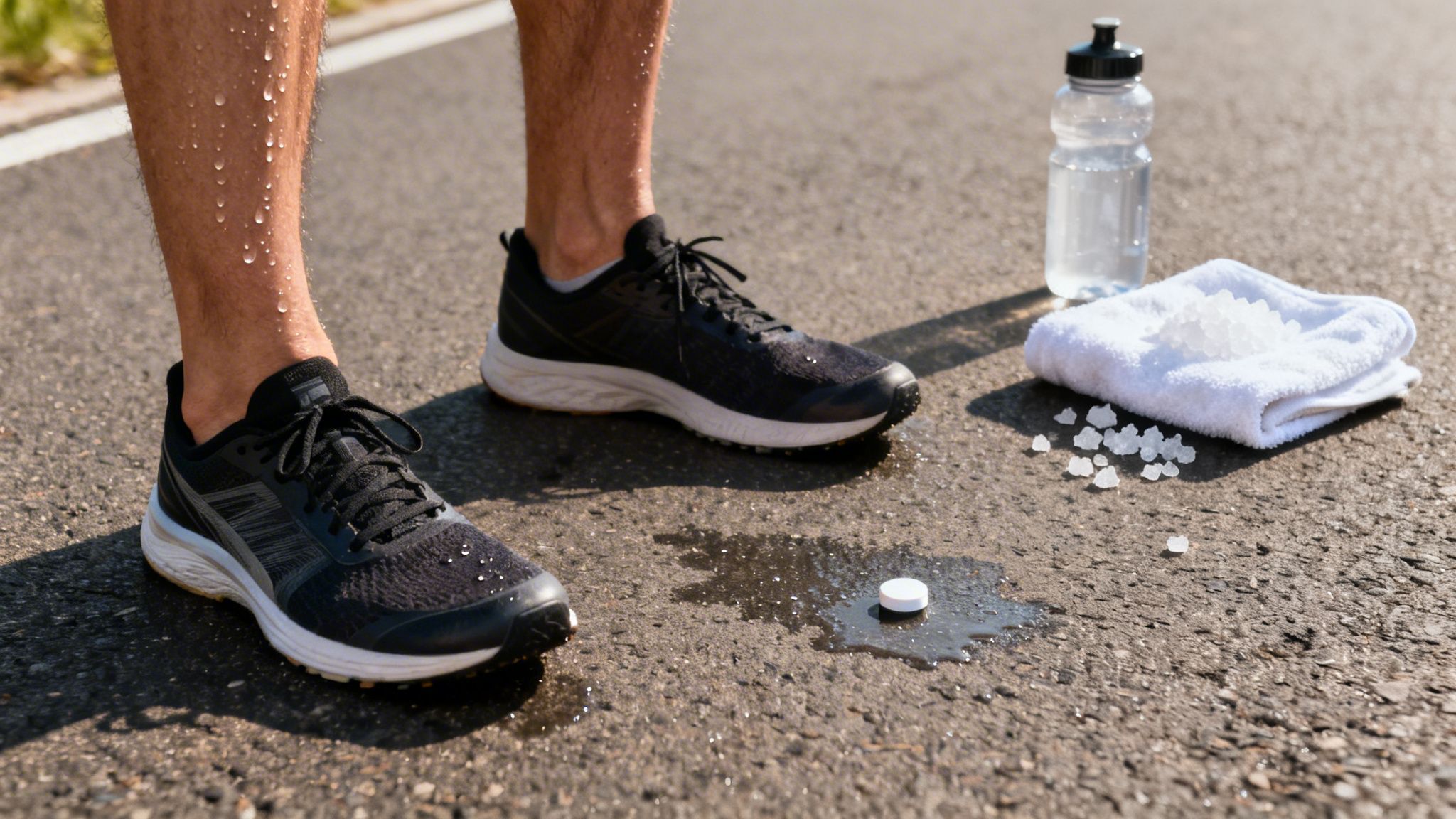
The second major cause revolves around dehydration and the loss of crucial electrolytes—especially sodium. When you run, you sweat. And that sweat isn’t just water; it's full of minerals that are absolutely essential for your muscles to function correctly.
Sodium, in particular, is a key player in how your nerves transmit impulses and how your muscles contract. When your sodium levels dip too low from heavy sweating, this delicate electrical balance gets thrown off. Your muscles become more irritable and much more likely to contract spontaneously and uncontrollably.
This is the kind of cramp that often ambushes you during a long run on a hot, humid day when you're sweating buckets. If you’re a "salty sweater"—the type of runner who ends up with white, chalky stains on your gear or skin—you're at an even higher risk.
In these situations, just chugging plain water isn't the answer. In fact, it can make things worse by further diluting the sodium concentration in your body.
Decoding Your Personal Cramp Triggers
To build a prevention plan that actually works, you have to become a detective. Pay attention to when and how your cramps happen. This table can help you connect the dots between your symptoms and the likely cause.
| Cramp Trigger | What's Happening in Your Body | Actionable Solution |
|---|---|---|
| End of a hard, fast run or race | Neuromuscular Fatigue: Your muscles are firing faster and harder than they're used to, causing nerves to misfire. | Improve your conditioning with targeted strength work and a more gradual training progression. |
| Late in a long run (especially a new distance) | Muscular Endurance Fatigue: You've pushed past your muscles' endurance limit. | Build your mileage slowly (follow the 10% rule) and incorporate long-run-specific strength exercises. |
| Hot and humid weather | Dehydration & Sodium Loss: You're sweating out more electrolytes and fluid than you're replacing. | Pre-hydrate with an electrolyte drink, consume sodium during your run, and acclimate to the heat. |
| Hilly courses or new terrain | Unfamiliar Muscle Strain: You're using muscles in a new way (e.g., calf strain on uphills), leading to localized fatigue. | Add hill repeats and terrain-specific drills to your training; strengthen calves and glutes. |
| Night cramps after a hard workout | Residual Muscle Fatigue & Dehydration: Your muscles haven't fully recovered and may be low on fluids and minerals. | Focus on post-run recovery: rehydrate with electrolytes and perform gentle stretching or foam rolling. |
Once you have a better idea of whether you’re dealing with fatigue, electrolytes, or a combination of both, you can start using the specific, targeted strategies we're about to cover.
Building a Body That Resists Cramps
While in-the-moment fixes are great, the real long-term solution to running cramps is building a body that’s resilient enough to prevent them in the first place. Think of it as a proactive strategy to help you keep doing what you love. A focus on specific strength and mobility work is your strongest defense against muscle fatigue, which we know is the primary culprit behind most cramps.
This isn’t about adding hours in the gym to your already busy schedule. It's about being strategic. By adding a few high-impact exercises to your routine, you can directly target the muscles that cramp most often: your calves, hamstrings, and quads. When you make these key running muscles stronger and more resistant to fatigue, you effectively raise your cramp threshold.
Targeted Strength for Cramp-Prone Muscles
General strength training is good, but for a problem like cramps, targeted exercises are much better. To build a truly cramp-proof body, we need to focus on movements that mimic the demands of running and improve how long your muscles can work under stress before giving out.
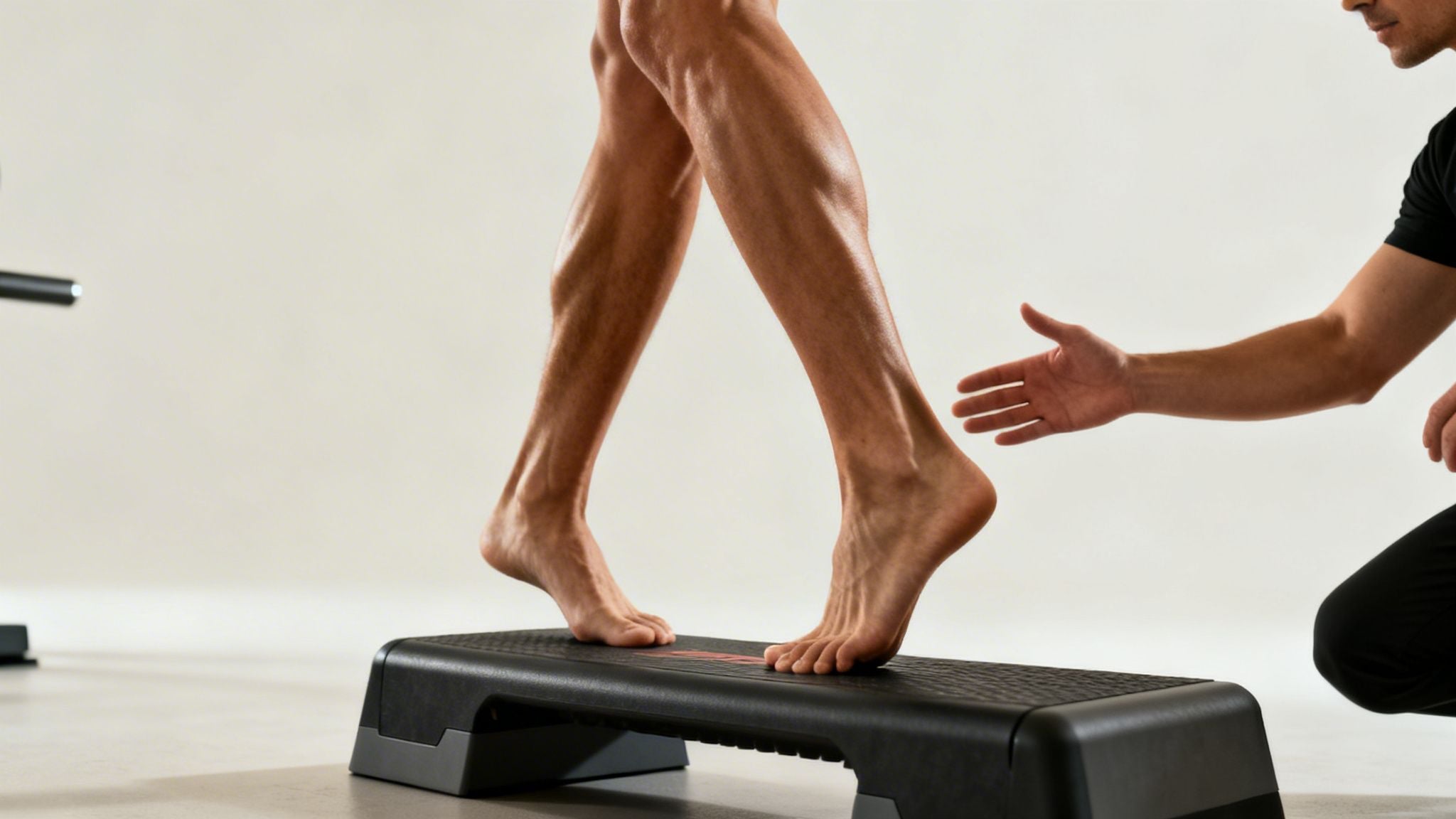
One of the most effective exercises we prescribe to help our patients get better is the eccentric calf raise. The magic happens during the eccentric, or lowering, phase of the movement. This is what builds truly resilient muscle fibers.
- How to do it: Stand on a step with your heels hanging off the edge. Rise up onto your toes using both feet, then lift one foot completely off the step. Very slowly—over three to five seconds—lower the heel of your other foot down below the level of the step. Bring your foot back up, and repeat for 12-15 reps before switching legs.
The data on exercise-associated muscle cramps (EAMC) shows just how common this issue is. Runners face a 30-50% chance of experiencing them, and for ultra-distance runners, that number climbs even higher. Calves are by far the most frequent victims, which is why progressively overloading them with exercises like eccentric calf raises makes such a huge difference.
The goal of targeted strength work is to push your muscles’ capacity in a controlled environment. This way, when you demand more from them on a run, they are prepared and less likely to falter.
Prepare for Movement With Dynamic Warm-Ups
How you start your run matters just as much as the run itself. A proper dynamic warm-up is non-negotiable for preparing your neuromuscular system for the work ahead, boosting blood flow, and improving mobility. Skipping it is like asking your muscles to go from zero to sixty without any warning—a recipe for trouble.
Ditch the old-school static holds before you run. Instead, focus on active movements that mimic running.
- Leg Swings (forward and side-to-side): These are fantastic for opening up your hips and waking up your hamstrings.
- Walking Lunges: A great way to activate your quads, glutes, and core all at once.
- High Knees and Butt Kicks: These classic drills get your heart rate up and prime the specific muscles you’re about to use.
A simple five-to-ten-minute routine is all it takes to wake up your body and get it ready to perform. For a complete pre-run plan, check out our guide on creating an effective dynamic stretching routine to boost your performance.
Of course, building a resilient body also involves smart post-run care. To help your muscles bounce back stronger, you might consider incorporating effective muscle recovery supplements into your regimen. Combining smart preparation with dedicated strength work is a physical therapist-approved formula for helping you live a fuller, cramp-free running life.
Smarter Fueling and Hydration to Prevent Cramps
There’s nothing more frustrating than being in a perfect running groove only to have a sudden, sharp cramp stop you dead in your tracks. If you’ve been told to just “drink more water” and are still cramping, it’s because that advice only tells part of the story.
To truly get rid of cramps while running, you have to think like a mechanic. Your muscles need the right fuel (carbs), coolant (water), and oil (electrolytes) to perform. Run low on any one of these, and the whole system can seize up. That’s what a cramp is—a system failure.

Why Sodium Is the Real Game-Changer
When we talk about cramps, everyone’s mind goes to potassium and bananas. But for runners, the most important electrolyte you lose through sweat is sodium, and it’s the one most directly tied to muscle cramping.
Sodium is essential for regulating your body’s fluid balance and, crucially, for the nerve signals that tell your muscles when to fire and when to relax. When your sodium levels dip too low from sweating, that communication system gets glitchy. Your muscles become irritable, confused, and much more likely to lock up.
Many runners are conditioned to avoid salt, but that’s a mistake for endurance athletes. Chugging plain water on a long, hot run can actually make things worse by diluting your body's sodium concentration—a dangerous condition called hyponatremia. This is exactly why sports drinks, electrolyte powders, and even salty snacks aren't just treats; they're essential tools for replacing what you’re sweating out.
Get Personal With a Sweat Test: Don't guess how much fluid you need. Weigh yourself nude right before and right after a one-hour run (without drinking anything during). For every pound you lose, you’ve lost about 16 ounces of fluid. This number is your personal hourly replacement target.
Smart Fueling Before and On the Go
Your muscles’ primary fuel source is carbohydrates, which are stored as glycogen. When those glycogen tanks run low during a long run, muscle fatigue sets in, dramatically increasing your risk of cramping.
The solution is two-fold: start full and refuel along the way.
Try to have a meal or snack rich in carbohydrates about 1-2 hours before you head out the door. Simple, effective options include:
- A banana with a tablespoon of peanut butter
- Toast with jam or honey
- A small bowl of oatmeal
If your run is going to last longer than 60-75 minutes, you need a fueling plan for while you're moving. The goal is to take in 30-60 grams of carbohydrates per hour. You can get this from energy gels, chews, or real-food options. A handful of pretzels is a fantastic choice because it delivers both carbs and that all-important sodium.
For a deeper dive into optimizing your fluid intake, these essential hydration tips provide a great framework.
Building Your Personal Fueling Plan
There’s no single perfect plan, but you can use this framework as a starting point and adjust it based on how you feel.
| Run Duration | Pre-Run Fueling | During-Run Fueling | Post-Run Recovery |
|---|---|---|---|
| Under 60 Mins | Light carb snack 1-2 hours before. | Water is likely enough. | Have a balanced meal within an hour. |
| 60-90 Mins | Carb-focused snack/meal. | Sip on water and an electrolyte drink. | Have a carb/protein snack, then a full meal. |
| 90+ Mins | Carb-focused meal 2 hours before. | Aim for 30-60g carbs + electrolytes per hour. | Immediate recovery drink/snack; full meal later. |
Dialing in your nutrition and hydration strategy is one of the most powerful and proactive steps you can take. You’re giving your body the raw materials it needs to perform, turning frustrating, cramp-filled runs into a thing of the past.
When to See a Physical Therapist for Running Cramps
You’ve tried all the usual tricks. Different stretches, new electrolyte drinks, carefully planned pre-run meals—and yet, you still find yourself pulled over on the side of the road with a muscle seizing up. It’s incredibly frustrating.
If you've put in the work but cramps continue to derail your runs, that’s a strong sign the root cause is deeper than hydration or a missed stretch. This is when an expert opinion isn't just helpful; it's essential for getting you back to the life you want to live.
Persistent, predictable cramping often points to an underlying biomechanical issue. It’s no longer a random event, but a pattern. Maybe it’s a subtle flaw in your running form, a hidden muscle imbalance that’s causing another muscle to overload, or even a nerve-related problem that simple solutions can’t touch.
Moving Beyond Guesswork
A physical therapist, especially one practicing at the top of their license, doesn't just treat the cramp—they investigate the why behind it. Our goal is to help you move freely and live fully, and that means uncovering the true source of your pain.
Your first visit will be a deep dive into you as a runner. We’ll look at everything.
- Detailed History: We'll talk about when your cramps happen, where you feel them, and what your training looks like. These details provide vital clues.
- Movement Screen: We’ll assess your mobility, flexibility, and strength to spot any significant imbalances or weaknesses that could be contributing.
- Video Gait Analysis: This is often a game-changer. By recording you running, a physical therapist can slow down the footage to pinpoint subtle form inefficiencies that are invisible to the naked eye.
A physical therapist acts as a biomechanics detective. Issues like overstriding, poor pelvic stability, or an asymmetrical foot strike can repeatedly overload specific muscles, making them fatigue faster and cramp.
Creating a Targeted Treatment Plan
The insights from this evaluation allow your physical therapist to build a plan just for you. This finally moves you away from the guessing games and toward targeted solutions that actually work.
The fact is, Exercise-Associated Muscle Cramps (EAMCs) are incredibly common, affecting up to 70% of marathoners. Things like pushing for a faster-than-usual pace and having prior injuries significantly increase your risk. This really highlights how crucial it is to address the underlying causes of fatigue. You can dive deeper into the research on how motion analysis and stretching can cut cramp risks and provide immediate relief.
Your treatment plan will likely involve a combination of powerful techniques:
- Manual Therapy: Hands-on techniques to release muscle tightness, ease tension, and improve how well your tissues move.
- Personalized Exercises: A corrective exercise program designed specifically to strengthen weak muscles and dial in your running form.
- Neuromuscular Re-education: Specific drills to retrain your movement patterns, making your running stride more efficient and less stressful on your body.
In some cases, stubborn muscle knots that contribute to cramping need a more direct approach. For instance, you can learn more about the benefits of trigger point dry needling and how it can provide relief.
If you’re tired of cramps dictating your running schedule, it's time to get an expert on your side. A physical therapist can give you the clarity and the concrete plan you need to finally run with confidence again.
Frequently Asked Questions About Running Cramps
When you're a runner, you hear a lot of locker-room advice about cramps. Pickle juice, salt tablets, magic stretches—it’s tough to sort fact from fiction. As physical therapists, we get these questions all the time from runners trying to figure out what actually works.
We want to give you clear, straightforward answers based on what we see in the clinic and what the science shows. Understanding why you cramp is the first step to stopping it for good.
Does Pickle Juice Actually Stop a Running Cramp?
Lots of runners swear by a shot of pickle juice to kill a cramp mid-run. And surprisingly, they're onto something. The science suggests it’s not about the electrolytes, though. Instead, the theory is that the intense sour taste triggers a neural reflex in your throat, which then helps to calm down the overexcited nerves causing the muscle to seize up.
It’s a reactive fix, a fast-acting band-aid that can get you moving again. But it’s not a long-term solution. A much more reliable strategy is to get ahead of the problem with consistent fluid and sodium intake before and during your runs, so the muscle doesn't get to that crisis point in the first place.
What Is the Difference Between a Side Stitch and a Muscle Cramp?
Both can stop you in your tracks, but they’re completely different beasts.
- A side stitch is that sharp, stabbing pain you feel just below your rib cage. This is all about your diaphragm and your breathing patterns. You can often get it to release by slowing down and focusing on deep, deliberate belly breaths.
- A muscle cramp is a powerful, involuntary contraction, usually in your leg muscles like the calf or hamstring. The muscle physically locks up, making it almost impossible to run until it lets go. This is usually caused by muscle fatigue or an electrolyte issue, not your breathing.
Should I Take Salt Tablets or Magnesium to Prevent Cramps?
For the vast majority of runners, exercise-induced cramps boil down to one main culprit: sodium loss from sweat. It’s almost never a magnesium or potassium issue, unless you have a specific, diagnosed deficiency. Popping supplements without knowing your levels is a shot in the dark and can sometimes cause more problems than it solves.
Instead of reaching for pills, focus on adding sodium to your hydration for any run lasting over an hour, especially when it's hot. A balanced diet full of whole foods will almost always cover your magnesium and potassium needs. If cramps are a constant battle, your best bet is to talk with a doctor or sports dietitian, not to self-prescribe supplements.
How Do I Know if My Running Form Is Causing Cramps?
If you always cramp in the exact same spot—say, it’s always your right calf that seizes up on hard runs—that’s a huge clue. Your body is sending you a signal that one specific muscle is being consistently overloaded.
Common form flaws like overstriding (landing your foot way out in front of your body) can put a ton of strain on your hamstrings. A bouncy, inefficient stride can burn out your calves in a hurry.
The only way to know for sure is to have a professional gait analysis done by a physical therapist who specializes in running mechanics. We can pinpoint exactly why that muscle is taking a beating and give you targeted drills to improve your efficiency, reduce the strain, and finally put an end to your cramps for good.
If recurring cramps are holding you back from enjoying your runs and living an active life, it’s time to stop guessing and start getting answers. At Highbar Physical Therapy, our expert physical therapists use advanced diagnostics like video gait analysis to uncover the root cause of your pain. We’ll build a personalized plan to get you moving freely and running with confidence again. Book your appointment today and take the first step toward a cramp-free future.