When it comes to treating a broken ankle, the path to recovery almost always starts with one key question: is the fracture stable or unstable? For stable fractures, a period of immobilization in a cast or boot is usually enough. For unstable fractures where the bones have shifted, surgery is often needed.
Regardless of the path, the goals are the same: get the bone perfectly aligned so it can heal, and then use targeted physical therapy to help you get better and live a fuller, better life—restoring your strength, motion, and confidence for a full return to daily life.
What Is a Lateral Malleolus Fracture
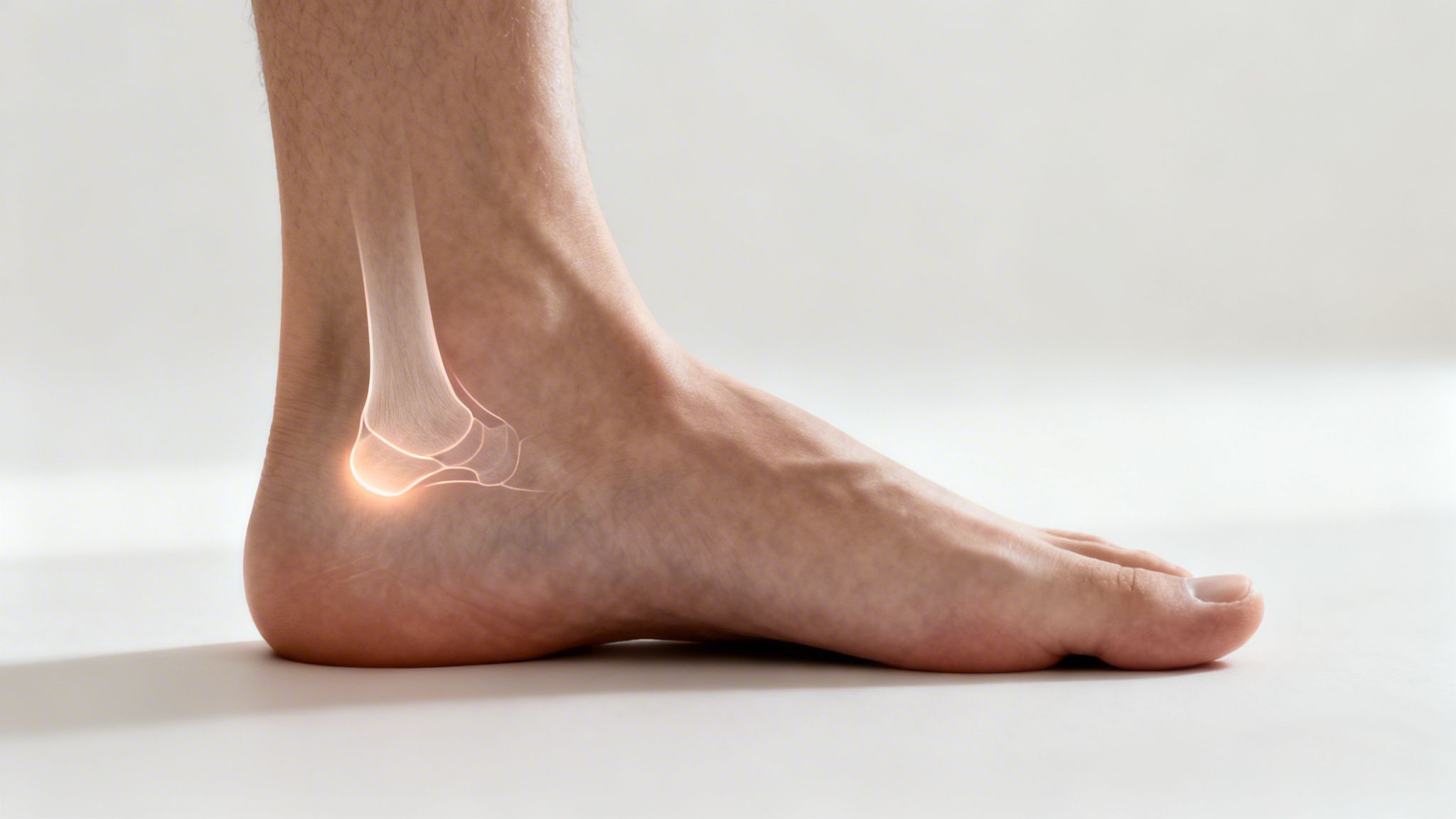
Hearing you have a "lateral malleolus fracture" can feel overwhelming, but understanding what it really means is the first step toward a successful recovery. Your ankle isn't just a simple hinge. It’s a complex, finely-tuned structure built to support your entire body weight with every single step you take.
The lateral malleolus is that prominent bony bump on the outside of your ankle. It's actually the very end of your fibula, one of the two long bones in your lower leg. When that specific bone breaks, it's called a lateral malleolus fracture.
A great way to picture this is to think of your ankle joint like a mortise and tenon joint used in fine woodworking. The top bone of your foot (the talus) fits perfectly into a socket created by your lower leg bones. The lateral malleolus acts as a crucial outer wall, keeping the whole structure stable and preventing it from shifting sideways. A fracture compromises this critical support beam.
This is an incredibly common injury. In fact, lateral malleolus fractures are one of the most frequent bone and joint injuries we see in adults. A study at Sweden's Sahlgrenska University Hospital documented 350-400 cases annually, making it the fifth most common fracture in the entire country. It just goes to show how often these injuries happen from everyday mishaps.
How Does This Fracture Happen?
A lateral malleolus fracture almost always results from a sudden twisting, turning, or rolling of the ankle. Your foot gets planted on the ground, but your body’s momentum keeps going, placing an overwhelming amount of force on the ankle joint.
This can happen in all sorts of scenarios:
- A simple misstep: Stepping off a curb the wrong way or rolling your ankle on uneven pavement.
- Sports-related injuries: Very common in sports that require quick changes in direction, like basketball, soccer, or tennis.
- Slips and falls: Losing your balance on a wet floor or an icy sidewalk.
- High-impact trauma: Less common, but can happen during a car accident or a fall from a significant height.
Stable vs. Unstable Ankle Fractures
Once you have a diagnosis, one of the first things your doctor will determine is whether the fracture is stable or unstable. This single distinction is the most important factor in your treatment plan and dictates whether you’ll need surgery.
Stable Fracture: In a stable fracture, the bone is broken, but the pieces are still perfectly aligned. Just as importantly, the ligaments holding the ankle joint together are still intact. This kind of fracture is at low risk of shifting out of place and almost always heals well without surgery, using a cast or a walking boot.
Unstable Fracture: An unstable fracture is more serious. It means the bone fragments have shifted out of their proper position. This often involves damage to the ankle ligaments, making the entire joint "wobbly" or insecure. These fractures typically require surgery to put the bones back in their proper place and fix them with plates and screws.
Understanding the specifics of your injury is the first step toward feeling empowered on your road to recovery. With a clear path forward—whether surgical or non-surgical—the goal is always the same: getting you back on your feet and back to a fuller, better life. At Highbar, our physical therapists specialize in guiding patients through every stage of foot and ankle recovery to help you regain your mobility and confidence.
Will You Need Surgery for Your Ankle Fracture?
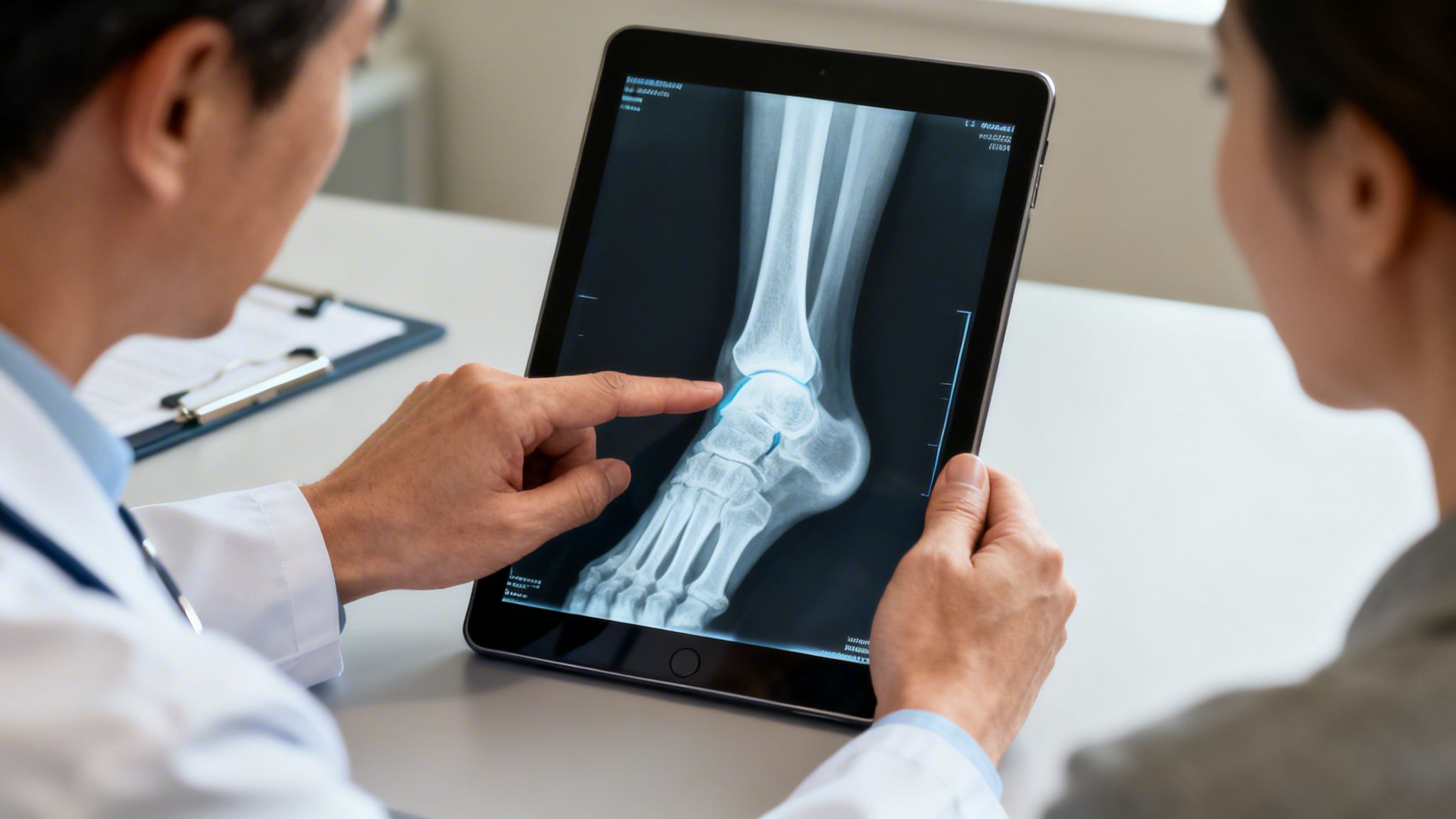
After you get the diagnosis, it's the first question on everyone's mind: "Will I need surgery?" That single answer sets the entire course for your recovery, so understanding how your doctor gets to "yes" or "no" is the first step in taking control.
The decision to operate on a lateral malleolus fracture all comes down to one thing: ankle stability. Is the joint structurally sound, or is it at risk of shifting out of place?
Your doctor will start with a hands-on exam, checking for swelling, tenderness, and any obvious signs that the ankle isn’t sitting right. But the real story comes from the imaging. Standard X-rays are the first look, showing exactly where the fibula is broken and whether the bone fragments have moved apart (displaced) or are still perfectly lined up (non-displaced).
But an X-ray taken while you’re lying on a table doesn't tell the whole story. To really understand how your ankle will behave in the real world, your doctor needs to see it under pressure.
Putting Your Ankle to the Test
This is where a specialized weight-bearing X-ray or a "stress" X-ray comes in. A weight-bearing X-ray is exactly what it sounds like—an X-ray taken while you stand on your injured leg. It’s a simple but incredibly revealing test. If the joint space stays even and the bones remain aligned under your body weight, it’s a great sign that the ligaments are holding everything together and the fracture is stable.
Another option is a stress X-ray. For this, a clinician will carefully apply a gentle force to your ankle, mimicking the rotational stress of walking or turning. If the joint "opens up" or shifts on the image, it exposes an instability that wasn't visible on the initial films.
Think of it like testing a wobbly chair leg. It might look fine when no one is sitting on it, but the moment you apply weight, its instability becomes obvious. A weight-bearing X-ray does the same for your ankle, providing the crucial evidence needed to make the right treatment call.
This diagnostic step is often the tipping point. The findings give your doctor a clear answer on whether your ankle can heal properly in a cast or boot, or if it needs surgery to restore its structural integrity.
To make this clearer, let's look at how these two paths typically compare.
Treatment Paths for Stable vs Unstable Fractures
| Fracture Type | Key Indicator | Primary Treatment | Typical Recovery Focus |
|---|---|---|---|
| Stable | The ankle joint remains aligned during a weight-bearing X-ray. Ligaments are intact. | Non-operative: Cast or walking boot for 4-6 weeks. | Gradual weight-bearing progression and physical therapy to restore motion and strength. |
| Unstable | The ankle joint shifts or "opens up" on stress X-rays. Key ligaments are often injured. | Operative (ORIF): Surgery to place a plate and screws to hold the bone in place. | Protecting the surgical repair, managing swelling, and a structured physical therapy plan to regain function. |
Ultimately, whether your fracture is deemed stable or unstable is the single most important factor that dictates whether you’ll be heading for the operating room or starting a non-surgical recovery plan.
A Global Shift Toward Conservative Care
For years, the decision to operate on certain types of ankle fractures was a gray area. But a major clinical trend has been gaining momentum, favoring a more conservative approach when possible.
A landmark study looking at treatment patterns across six major European countries between 2013 and 2022 found that the rate of surgery for isolated lateral malleolus fractures dropped significantly. The research, which you can read in full on the PMC website, showed up to a 6-fold difference in surgical rates between countries, reflecting a growing global confidence in non-operative care for stable fractures.
So, if your doctor recommends non-surgical treatment, know that it isn't a "lesser" option. It's a modern, evidence-based decision that aligns with the best practices in orthopedics today. This approach rightly prioritizes avoiding the risks of surgery when your fracture is stable enough to heal perfectly with immobilization and targeted physical therapy.
The Non-Surgical Recovery Roadmap
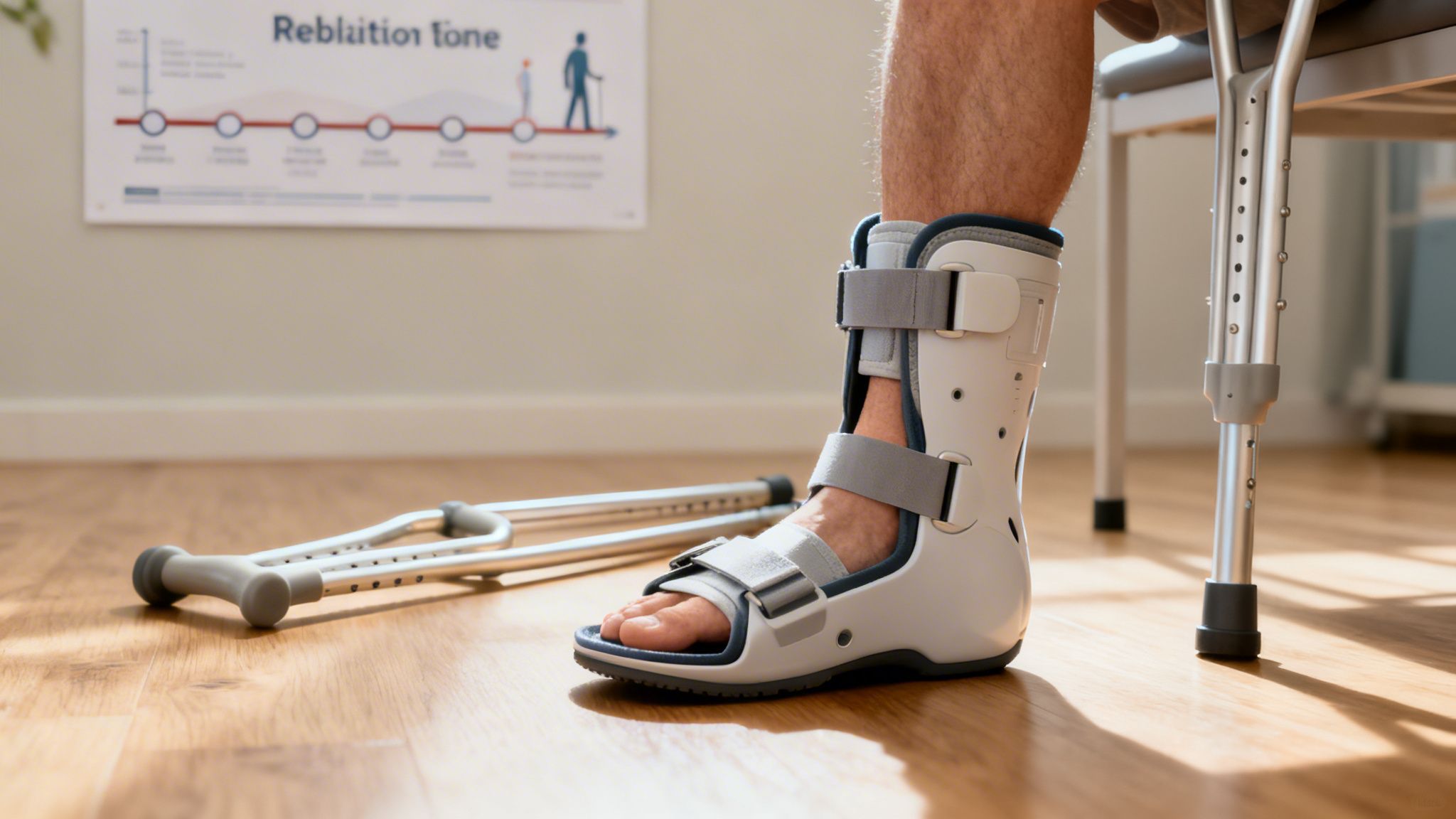
If your doctor has determined your fracture is stable, you can breathe a sigh of relief. This means you’ve likely dodged surgery and are on the non-operative path to recovery. While it’s a journey, it’s a predictable one, focused on protecting the bone while methodically restoring your mobility and strength.
Your recovery starts with a period of immobilization. In the past, this almost always meant a heavy plaster cast. Today, you’ll most likely be fitted with a modern walking boot.
This isn’t just about convenience. A growing body of research shows that removable braces often lead to better outcomes. In fact, one study found that removable ankle braces outperform traditional casts in both functional recovery and cost, with an impressive 80-85% patient acceptability rate. You can discover more about these findings from the 2022 study to see the evidence behind this modern approach.
The First Few Weeks: Protection and Healing
The initial phase is all about one thing: protection. For the first several weeks, your main job is to let your body’s natural healing process work without interruption. This almost always means you will be non-weight-bearing. No exceptions.
This phase zeroes in on two key goals:
- Protecting the Fracture: Keeping all weight off your injured ankle is non-negotiable. This ensures the broken bone ends stay perfectly aligned, allowing the soft callus to form and begin hardening into new bone.
- Managing Swelling: Swelling is a normal part of healing, but too much of it can ramp up pain and slow down recovery. Your best tools here are proper elevation and ice. You can check out our guide on when to ice vs. heat for more detailed advice.
During this time, you'll be relying on crutches to get around. For many people, a knee walker is a much more comfortable and mobile alternative, making it easier to navigate your daily life.
Your Recovery Timeline: What to Expect
While every recovery is unique, a non-surgical lateral malleolus fracture follows a fairly predictable timeline. Understanding these milestones can transform a daunting process into a manageable one, giving you clear goals to work toward with your physical therapist.
Think of your recovery like a road trip with clearly marked rest stops. The first stop is bone protection. The next is gradually bearing weight. The final destinations are restoring full motion, rebuilding strength, and confidently returning to your active life. Each stop is a crucial milestone on your journey back.
Here’s a general roadmap of what you can expect as you progress:
Weeks 2-4: The Transition Begins
Your focus remains on protection and healing. You'll continue to use your walking boot and crutches, keeping all weight off the ankle. A follow-up X-ray during this period is standard procedure to confirm the bone is healing in the correct position.
Weeks 4-6: Gradual Weight-Bearing
This is a major turning point. If your X-rays show good progress, your doctor will likely clear you to begin partial weight-bearing. This is where your physical therapist becomes your guide, showing you exactly how to put more weight on your foot while still in the boot. This controlled stress is a powerful signal that tells your body to strengthen the new bone.
Weeks 6-12: Reclaiming Your Movement
Around the 6-week mark, many patients get the green light to remove the boot and start walking in a supportive shoe. Now, physical therapy really kicks into high gear. The focus shifts from just protection to actively restoring function. Your therapist will guide you through exercises designed to:
- Restore range of motion: After weeks of being immobilized, your ankle will be stiff. Gentle, targeted exercises are key to getting that flexibility back.
- Rebuild muscle: The muscles in your leg will have weakened significantly. You’ll start specific exercises to rebuild that essential support structure around your ankle.
- Improve your gait: You’ll work on walking with a normal, smooth pattern, retraining your body to move confidently and leaving the limp behind.
This structured roadmap, guided by an expert physical therapist, is the key to a successful comeback. It’s not just about doing exercises; it’s about rebuilding trust in your ankle and preventing long-term issues so you can get back to living fully.
When Surgery Is the Right Answer
While many fractures heal beautifully without it, sometimes surgery is the clearest path to getting your ankle back to 100%. The decision almost always comes down to one critical factor: stability. If the broken bone has shifted out of place (a displaced fracture) or if the supporting ligaments are torn, your ankle joint is considered unstable.
An unstable ankle won't heal correctly on its own. Think of it like trying to build a house on a crooked foundation—nothing will line up right. Without surgery to restore your ankle’s original blueprint, you're setting yourself up for chronic instability, stiffness, and a high risk of developing arthritis down the road.
Demystifying ORIF Surgery
For a lateral malleolus fracture that needs surgical repair, the go-to procedure is an Open Reduction and Internal Fixation, or ORIF. The name sounds complicated, but the concept is actually quite elegant.
Open Reduction: This just means the surgeon makes an incision to directly see and access the fracture. This allows them to "reduce" the break—a medical term for putting the bone fragments back into their precise anatomical alignment.
Internal Fixation: Once everything is perfectly aligned, the surgeon uses specially designed hardware to hold the pieces together. This is almost always a small metal plate and a few screws that act as an internal splint, creating rigid stability from the inside.
Imagine a master carpenter mending a delicate, broken piece of furniture. They don't just slap some glue on it. They meticulously realign the pieces and then use internal braces to lock everything in place, making it strong and functional again. That's exactly what an ORIF procedure does for your bone.
This internal hardware provides a level of stability that a cast alone can't match, creating the perfect environment for the bone to heal correctly.
Why Surgery Is Just the First Step
It’s so important to understand this: the surgery fixes the bone, but it doesn’t fix your function. The operation is the starting line for your recovery, not the finish line.
After surgery, you'll have a period of immobilization to protect the repair while it begins to heal. But here's a key advantage: because the hardware provides so much stability, your surgeon will often have you start gentle range-of-motion exercises much sooner than you would with non-surgical treatment. This is a game-changer for preventing the severe ankle stiffness that can be so hard to overcome later.
Once your surgeon clears you to begin, a structured physical therapy program isn't just a good idea—it's absolutely essential. This is where the real work of recovery happens. At Highbar, our movement experts work hand-in-hand with your surgical team to build a post-op plan that gets you back to living your life. We focus on:
- Safely guiding you back to putting weight on your foot.
- Restoring your ankle's full, fluid range of motion.
- Methodically rebuilding strength in your entire leg, not just your ankle.
- Retraining your balance and proprioception so you can trust your ankle again.
Surgery sets the stage for an excellent outcome, but it’s the dedicated, one-on-one work in physical therapy that turns a repaired bone into a strong, stable, and reliable ankle—one that's ready to carry you back to the activities you love.
How Physical Therapy Drives Your Comeback

Whether your lateral malleolus fracture was treated with surgery or managed conservatively, the path back to a full, active life runs directly through physical therapy. It's the engine that powers your recovery, turning a healed bone back into a strong, mobile, and trustworthy ankle. A successful comeback is about so much more than just the bone mending; it’s about rebuilding function and confidence.
At Highbar Physical Therapy, our movement experts kick off your journey with a thorough evaluation. We don't just see a fracture; we see you—your lifestyle, your work demands, and your personal goals. This lets us craft a personalized plan, guiding you through a phased rehab process designed to help you get better and live a fuller life.
Phase 1: The Protective Phase
In the first few weeks, your body’s main job is healing, and ours is to support that process. The focus here is all about protection and creating the perfect environment for bone repair. Even while you're in a boot and not putting weight on your ankle, physical therapy plays a surprisingly critical role.
Our therapists will focus on:
- Controlling Pain and Swelling: We’ll show you the most effective ways to use elevation and icing to manage inflammation. Getting this right is key to reducing pain and helping the healing process along.
- Maintaining Strength Elsewhere: Just because your ankle is out of commission doesn't mean your whole leg should be. We’ll guide you through safe exercises for your hip and knee to prevent widespread muscle loss and stiffness.
- Introducing Gentle Motion: As soon as your doctor gives the okay, we’ll start very gentle, controlled ankle movements. This helps stop severe stiffness from setting in and starts waking up the connection between your brain and the injured area.
This phase is about laying a solid foundation. We're making sure that when you're ready for the next step, your body is prepared.
Think of your recovery like planting a new tree. In the beginning, you protect the young sapling from strong winds and make sure it has the right conditions to establish its roots. The early phase of physical therapy is that protective barrier, creating the perfect environment for your bone to heal and take root.
Phase 2: The Strengthening and Mobility Phase
This is where your comeback truly starts to take shape. Once your doctor gives you the green light to start putting weight on your foot, physical therapy shifts into a more active gear. Our main goal is to progressively load the ankle, a process that’s essential for signaling the bone to grow stronger and more resilient.
We'll methodically guide you from partial to full weight-bearing, making sure you regain a normal, confident walking pattern without a limp. This phase is all about rebuilding what was lost during immobilization. To effectively rebuild muscle around your ankle, integrating the right recovery protein supplements can make a real difference.
Your sessions will focus heavily on:
- Restoring Full Range of Motion: We use hands-on techniques and specific exercises to gently push past stiffness and get your ankle’s natural flexibility back.
- Building Foundational Strength: Exercises will target the weakened muscles in your calf, foot, and around the ankle, re-establishing the critical support structure for your joint. In some cases, your therapist might suggest a low-impact environment; you can learn more about how Highbar uses aquatic therapy to help patients heal with less stress on their joints.
Phase 3: The Return to Life Phase
With a normal walking pattern restored, the final phase is about getting your ankle ready for the specific demands of your life and activities. This is where we bridge the gap between basic function and high-level performance, empowering you to reclaim your active lifestyle with confidence.
Your therapist will design a program that becomes more dynamic and challenging, all tailored to your personal goals. This may include:
- Advanced Balance Training: We’ll challenge your proprioception—your ankle’s ability to sense its position in space—using unstable surfaces and dynamic drills. This is vital for preventing future sprains.
- Sport-Specific Drills: If you’re an athlete, we'll bring in jumping, cutting, and agility exercises that mimic the movements of your sport, ensuring your ankle is ready for the field or court.
- Building Endurance and Power: We focus on developing the strength needed for running, hiking, or just keeping up with your kids, making sure your ankle isn’t just healed, but truly resilient.
This entire process is designed to be gradual and safe. Below is a table that breaks down how we structure this journey from the initial healing phase to your full return to activity.
Phased Physical Therapy Protocol for Ankle Fractures
| Rehab Phase | Primary Goals | Example Exercises | Expected Milestone |
|---|---|---|---|
| Phase 1: Protective | Reduce pain & swelling. Maintain nearby joint mobility. | Ankle pumps, quad sets, gentle range of motion as cleared by MD. | Tolerating immobilization, swelling controlled. |
| Phase 2: Strengthening | Restore full range of motion. Regain normal walking pattern. | Seated calf raises, band exercises, balance on stable surfaces. | Walking without a limp, full ankle motion. |
| Phase 3: Return to Life | Improve balance and proprioception. Build power and agility. | Single-leg balance on uneven surfaces, box jumps, sport-specific drills. | Confidently returning to all desired activities. |
This phased approach ensures that every step of your lateral malleolus fracture treatment is purposeful, safe, and aimed at one thing: getting you back to living a full, unrestricted life.
Navigating Potential Complications
While nearly everyone with a lateral malleolus fracture makes a great recovery, it's important to remember that healing is rarely a perfectly straight line. Think of it less like a smooth highway and more like a path with a few bumps along the way. Knowing what's normal and what's not keeps you in the driver's seat of your own recovery.
Some stiffness and swelling, for example, are completely expected after you’ve been in a cast or boot for weeks. That's a normal part of the process. But if those issues just won't quit or start getting worse, that's your cue to lean on your physical therapist. A good PT can tweak your program to break through stiffness and give you smart, effective ways to manage that stubborn swelling.
When to Contact Your Doctor Immediately
While most bumps in the road are manageable, a few symptoms are what we call “red flags.” These are not things to wait on. They’re signals that you need to check in with your doctor or surgeon immediately to make sure a small issue doesn’t become a bigger one.
Get in touch with your medical team right away if you notice any of these signs:
- Signs of a Possible Infection (especially after surgery):
- Fever or chills.
- Your incision is getting redder, warmer, or has pus-like drainage.
- A sharp, sudden spike in pain that feels completely different from your usual soreness after activity.
- Signs of a Blood Clot (Deep Vein Thrombosis or DVT):
- New, major swelling in your calf or thigh that doesn't go down with elevation.
- A cramping feeling or tenderness deep in your calf muscle that isn't from exercise.
- The skin on your leg looks red or has a discolored, purplish tint.
- Signs of a Nerve or Circulation Problem:
- Numbness, tingling, or a "pins-and-needles" feeling in your foot that's new or getting worse.
- Your toes look extremely pale or have a bluish color.
Knowing these red flags isn’t about creating anxiety—it’s about empowerment. Recognizing an urgent signal early makes you an active partner in your own care, ensuring any potential detour is handled quickly and correctly.
Catching a problem early is the absolute key to keeping your recovery on track. With the right medical care and a dedicated physical therapy plan, almost all patients navigate these challenges successfully. Our goal is to get you back to doing what you love with an ankle that's strong, stable, and ready to support you.
Ankle Fracture Recovery FAQs
After an ankle fracture, it’s completely normal to have a lot of practical questions about what comes next. We hear them from our patients every day. Below are some straightforward answers to the most common concerns, giving you a clearer picture of the road ahead and helping you feel more in control of your recovery.
How Soon Can I Start Physical Therapy?
This really depends on whether you had surgery. For non-surgical fractures, we can often get started within the first 1-2 weeks. The focus at that point is all about managing swelling, controlling pain, and introducing gentle, safe movements to prevent stiffness.
If you had surgery, your physical therapy will begin once the surgeon gives the green light, which is usually between 2-6 weeks after your procedure. At Highbar, we’ll coordinate directly with your doctor’s office to make sure you start at the safest and most effective time for your specific recovery.
How Much Time Will I Need Off Work?
The time you need off depends entirely on the physical demands of your job. If you have a desk job and can keep your foot elevated, you might be back to work fairly quickly.
For jobs that require a lot of standing, walking, or any kind of physical labor, you could be looking at several weeks to a few months. Your physical therapist is a key partner here—we’ll work with you to create a plan for a safe return to work based on your specific duties and how your healing is progressing.
The goal isn’t just to get you back to work, but to get you back safely. We'll simulate work-related tasks and ensure your ankle has the strength and stability needed to handle your daily responsibilities without risk of re-injury.
When Can I Return to Sports?
Returning to sports is a milestone-based process that typically takes anywhere from 3 to 6 months, and sometimes longer for high-impact activities. It's important to understand this isn't just about time passing—it's about function.
Your physical therapist will guide you through a sport-specific program designed to rebuild your ankle’s power, agility, and balance. We only clear you to return to play after you’ve hit key strength and performance goals, ensuring your ankle is truly ready for the demands of your sport.
Do I Need a Referral for Physical Therapy?
No, you do not. Both Rhode Island and Massachusetts have direct access laws for physical therapy.
This means you can schedule an evaluation with a Highbar physical therapist without needing a physician’s referral, which allows you to get started on your recovery much sooner. We are always happy to communicate with your doctor to ensure your care is perfectly coordinated every step of the way.
At Highbar Physical Therapy, our mission is to help you feel better, move freely, and live fully. Don't let your recovery be a waiting game. Take an active role with a team of movement experts who are as invested in your outcome as you are. Book an appointment online today and start your journey back to an active life.