Stable, mobile, well-balanced ankles are the foundation of everything you do on your feet. After a sprain or fracture, these mobility, strengthening, and balance drills rebuild what you lost — and protect against the next injury.
Related Articles
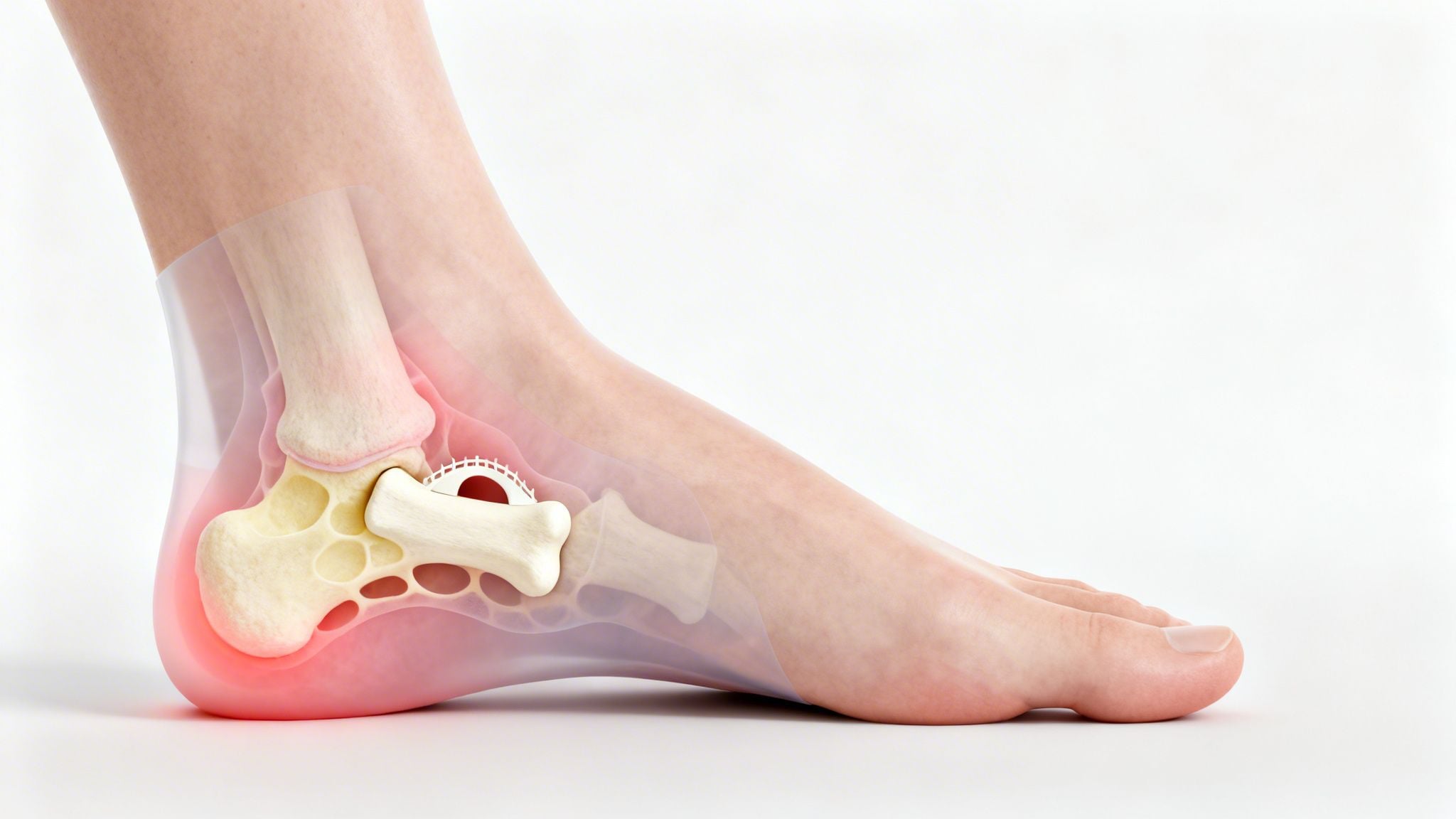
Effective exercises for ankle pain relief
The ankle needs three things to recover well: mobility, strength, and proprioception (balance). Address all three and the joint will tolerate far more than it did before injury.
- Ankle alphabet and circles — gentle early-stage mobility for stiff or post-immobilization ankles.
- Heel raises (double and single leg) — builds calf strength that supports walking, stairs, and running.
- Banded inversion and eversion — strengthens the peroneal and tibialis muscles that protect against re-sprain.
- Single-leg balance — starts on a stable surface, progresses to foam or eyes closed. Critical after ankle sprains.
- Calf and soleus stretches — restores dorsiflexion, the most commonly limited motion after injury.
- Step-ups and walking lunges — functional strengthening for daily life and return to sport.
Rehabbing a fracture? See our guides to lateral malleolus fracture treatment and lateral malleolus fracture healing time. Returning to running? Read how to prevent running injuries. For more on ankle care, visit our ankle pain overview.
Quick answers about ankle exercises
FAQS
How often should I do ankle exercises?
Most people do well with daily mobility and balance work plus 3–4 strengthening sessions per week. After a sprain or fracture, frequency matters more than load.
When can I start exercising after an ankle sprain?
Gentle mobility usually begins within the first few days. Strengthening and balance progress as swelling resolves and tolerance improves — a PT can guide the timing.
Which exercises should I avoid early?
Plyometric jumps, sport-specific cutting, and aggressive end-range stretching while still acute. Substitute with mobility, isometric strengthening, and balance work.
How long until I can run again?
For a mild sprain, often 2–4 weeks of progressive loading. Fractures take longer — see lateral malleolus fracture healing time.
Will balance training really help?
Yes — proprioceptive training is one of the strongest evidence-based interventions for preventing re-sprain. It belongs in every ankle program.
Do I need a brace?
A brace can help during return-to-sport, but it does not replace strengthening and balance work. Plan to wean off it as capacity returns.
When should I see a PT?
If swelling lingers past a week, you cannot bear weight, you have recurrent sprains, or you are returning to sport. Early intervention reduces chronic instability.