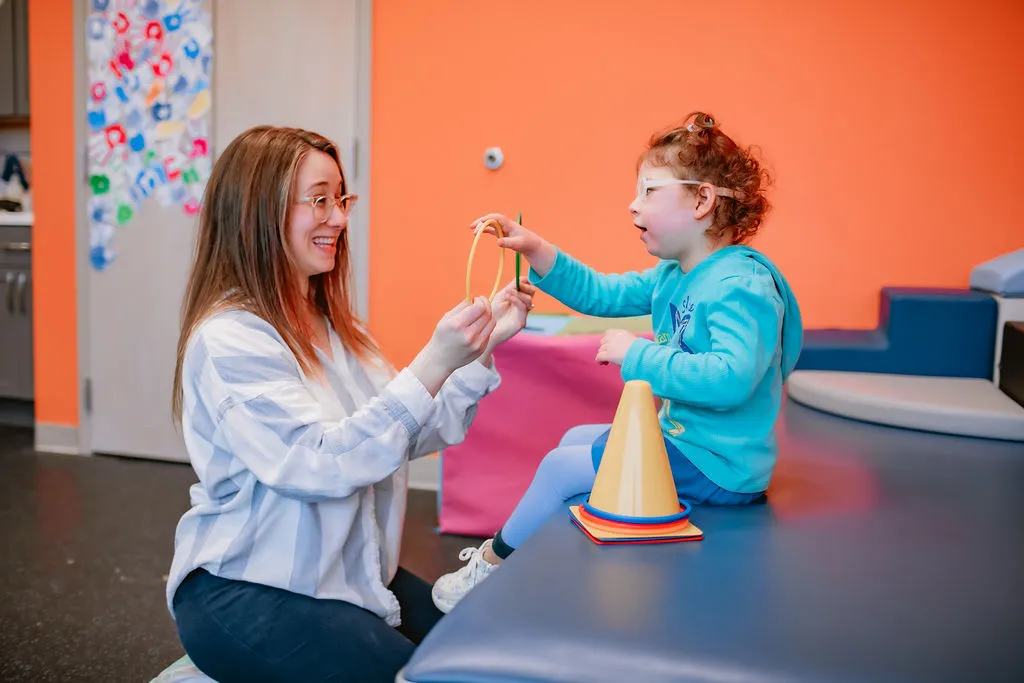
Pediatric physical therapy helps your child recover from injury or surgery, reach gross motor milestones, and live the most mobile life that they can. At Highbar, we use evidenced-based practice, provide one-on-one care, and communicate with your child’s referring doctor and pediatrician. Our goal is to make physical therapy fun for your child through play, which includes access to private treatment space, aquatic therapy services, and specialized equipment.
Pediatric Physical Therapy
Schedule an AppointmentWhat is pediatric physical therapy?
Find a Clinic for Pediatric Physical Therapy
Get Expert Pediatric Physical Therapy Treatment Near You
Why should my child see a pediatric physical therapist?
Our team is led by a Board-certified Pediatric Clinical Specialist, which means your child is going to be in the most capable hands when you enter our facilities. We provide continuing education to our pediatric doctors to ensure that your child is always receiving the best care. What sets pediatric physical therapy apart from traditional physical therapy is that your child will work with someone who is intentional about providing an experience specific for your child to reach their movement and functional goals.
Conditions We Treat
Our pediatric therapists treat a wide range of conditions across every stage of childhood, from infancy through adolescence.
Developmental coordination disorder
Developmental delays
Gait abnormalities
Genetic conditions
Neurological conditions
Orthopedic Issues
Sensory Processing Disorders
Torticollis and Plagiocephaly
Movement Disorders
- Cerebral palsy
- Muscle weakness or low/high muscle tone
- Developmental coordination challenges
- Gross motor delays (late sitting, crawling, walking)
- Neurological conditions (brain or spinal cord injuries, or cancers)
- Muscular dystrophy
- Toe walking or altered walking pattern
Developmental and Genetic Conditions
- Down Syndrome
- Autism Spectrum Disorder
- Global developmental delays
- Deletion or duplication syndromes
- Prematurity/premature birth
- Metabolic disorders
Bone, Joint, and Growth Conditions
- Scoliosis and posture concerns
- Hip dysplasia
- Leg length differences
- Clubfoot and other foot conditions
- Legg-Calve-Perthes disease
- Slipped capital femoral epiphysis
- In-toeing and out-toeing
Injuries and Sports-Related Pain
- Fractures and joint injuries
- Growth plate injuries such as a Salter-Harris fracture
- Overuse injuries (knee or heel pain)
- Muscle strains and general pain
Infant Head and Neck Concerns
- Torticollis (head tilt)
- Plagiocephaly (flat head shape)
Whole-Body Health and Strength
- Low endurance or weakness
- Obesity or deconditioning
- Chronic pain conditions
- Hypermobility syndrome and Ehlers-Danlos syndromes (EDS)
- Postural orthostatic tachycardia syndrome (POTS)
Questions about Pediatric Physical Therapy? We’ve got answers.
Don’t see what you’re looking for?
Ask Us a QuestionWhen should my child see a pediatric physical therapist?
When you think your child might need physical therapy, it’s normal to feel concerned. The pediatric physical therapists at Highbar are here to help you calm your nerves and answer any questions you may have. Request an appointment with our experienced pediatric physical therapists to start your child on the path to a full, happy life. But if you’re unsure whether physical therapy is right for your child, request a phone consult with one of our pediatric physical therapists to discuss your child’s needs.
How do I know if my child needs physical therapy?
The easiest way to know is that their pediatrician has recommended physical therapy. Most insurance allow direct access to care, so you can also call Highbar and speak with one of our doctors to find out if physical therapy is right for your child. Other signs to consider physical therapy include: muscle tightness, difficulty feeding, or difficulty moving in infants; delayed milestones, such as not walking by 18 months, in toddlers; complaints of pain that do not go away after a few days in school-aged children; and injury or recurring injury in teenagers.
Where can my child receive care?
Every Highbar clinic treats youth through high school athletes and adolescents with pain or injury. We also offer specialized pediatric care for younger children and children with more complex needs. Specialized pediatric care is available in Cranston, Warwick, Richmond, Providence, and Smithfield, Rhode Island.
Will Highbar work with my child's other providers?
We’re happy to fax clinic notes to your child’s care team and collaborate as needed for seamless communication and treatment. We work closely with your child’s pediatrician, orthopedist, neurologist, physiatrist, orthotist, and any other members of their care team.
What to Expect During Your Child's Care
- Analysis of motor skills
- Evaluation of range of motion, strength, and posture
- An individualized plan of exercises incorporating play
- Education for parents and children about their condition and what to expect
- An appointment experience that is joyful for your child
How do I schedule my child for physical therapy?
You can submit a request here or call us at 401-726-7100.
Do you accept my insurance?
- We accept most major insurance plans at Highbar. See our full list of accepted providers: highbarhealth.com/insurance
How long will my child need physical therapy?
- Every child’s plan of care is individualized. Some children need only a few visits, while others benefit from more continuous care. Your child’s physical therapist will discuss their specific needs and goals with you to help determine the right duration of care.