Specialist Certification · 8 Weeks · Online
Certified Therapeutic Pain Management
An 8-Week Hybrid Certification for PTs & PTAs
Pain isn't a region. It shows up in all of them.
Eight weeks of hybrid learning that combines structured, asynchronous modules with four live virtual sessions. You'll learn how to examine complex pain presentations, explain pain clearly, identify what may be driving the presentation, and dose treatment around the patient in front of you — especially when symptoms don't neatly match the physical exam.
For licensed PTs and PTAs in good standing. Fully online, with no weekend lab and no travel..
Starts Nov 2
8 Weeks
24 Contact Hours
4 Live Sessions
Fully Online
$349
Pick YOUR START DATE
8 weeks, self paced, hybrid certfication
✅ APTA MA approved
🔒 Secure registration
24 Hours
APTA Massachusetts-approved contact hours
8 Weeks
Self-paced modules + 4 live virtual calls
No Travel
Fully online. No in-person lab weekend.
$349
Free for current Highbar clinicians
100%
Confidence
Why pain gets its own course
The exam can come back clean and the pain can still be real.
Most clinicians can examine a shoulder or a low back with confidence. The harder moment is the patient whose pain doesn’t line up with what you found: symptoms that spread, flare without an obvious trigger, or keep going long after the tissue should have healed. Those patients are on every caseload, in every region.
This course is built for them, and it isn’t a pain neuroscience lecture series or a collection of chronic pain techniques. It’s eight weeks of reasoning practice: forming mechanism-informed working hypotheses without over-labeling the patient, using their story and context to set priorities, matching education and movement strategies to the barrier that matters most, and reassessing to decide what happens next.
Because pain crosses every region, it’s taught on its own. It stands alone, earns its own credential, and pairs with any of the four Region-Focused Certifications. Take it first, alongside a regional track, or after one.
The reasoning framework
Every lab includes
Pain mechanism is a working hypothesis, not a label.
Patient context refines the priority.
The main barrier guides the strategy.
Function anchors the plan.
Reassessment confirms, refines, or rejects the hypothesis — and decides whether care should progress, regress, modify, co-manage, refer, or pivot.
How the eight weeks run
Four Blocks. Eight Weeks. One Framework.
Four two-week learning blocks. Each pairs assigned lectures and required reading with a live, case-based virtual discussion and a short open-book quiz. The sequence moves from understanding pain, to assessing the patient, to matching behavior-change strategies, to integrating and adjusting the whole plan of care.
-
Weeks 1–2 · Block 1
Pain Science Foundations
Using pain mechanisms to guide clinical reasoning.
- Current pain terminology
- Nociceptive, neuropathic, and nociplastic presentations
- Sensitization and contributing factors
- The limits of tissue-only explanations
In the live call
Form a mechanism-informed working hypothesis, say what supports and challenges it, avoid premature labels, and identify the first education, dosing, and reassessment implications.
Live call · Wed, Nov 117:00–9:00 PM ETBlock quiz · open book · ~30 min -
Weeks 3–4 · Block 2
Pain Assessment and Patient Context
From patient story to clinical direction.
- Pain-focused subjective examination and yellow flags
- Patient-reported measures, chosen for a purpose
- Therapeutic alliance, beliefs, and adherence
- Motivational interviewing
In the live call
Use the patient story and the measures you selected to confirm, challenge, or refine the working hypothesis, then choose and defend the first care direction.
Live call · Mon, Nov 237:00–9:00 PM ET · holiday-adjusted MondayBlock quiz · open book · ~30 min -
Weeks 5–6 · Block 3
Education and Behavior Change
From explanation to action.
- Pain education and psychologically informed practice
- Graded exposure and graded activity
- Cognitive functional principles and storytelling
- Confidence and behavior change
In the live call
Match the patient's main barrier to a useful explanation and movement strategy, then reassess confidence, function, symptom response, and carryover.
Live call · Wed, Dec 97:00–9:00 PM ETBlock quiz · open book · ~30 min -
Weeks 7–8 · Block 4
Integrated Pain Management
Building the plan, and knowing when to co-manage.
- Exercise, sleep, and recovery
- Contextual, placebo, and nocebo effects
- Medical management and multidisciplinary care
- Referral and co-management
In the live call
Define what PT owns, supports, and refers; choose reassessment markers; and state what would make the plan progress, regress, modify, co-manage, or pivot.
Live call · Mon, Dec 217:00–9:00 PM ET · holiday-adjusted MondayBlock quiz · open book · ~30 min
Fit
Who This Is For, and Who It Isn't
Eight weeks is a real commitment, even at $349. Here's when this is the right course, and when a different one will serve you better.
This is built for you if…
The clinicians who get the most out of eight weeks on pain
- You regularly treat patients with persistent or complex pain and want a more structured way to manage them.
- You want better language for explaining pain to patients who are worried, guarded, or stuck.
- You want a framework, not scattered techniques, and you're preparing for leadership, specialization, or OCS pursuit.
- You need CE that fits around a full caseload — self-paced work at about two hours a week, plus four evening calls, and no weekend away.
- You're a licensed PTA. PTAs apply all content within the established plan of care, applicable state rules, and the PT/PTA collaborative model.
This isn't the right fit if…
Better to know now than in week three. Each of these is a different course we run.
- You want hands-on technique practice with faculty correcting you in person. Everything here happens online. A Region-Focused Certification runs eight weeks in one region and includes a two-day weekend lab.
- You want two full days of hands-on regional skill work and nothing longer. Weekend Lab Intensives are two days of high-repetition practice with faculty correcting you in the moment.
- You're looking for a single short session rather than eight weeks of coursework. Core-4 Series Labs run a case-based half-day in one region.
Not sure? Tell us what you’re treating most. You’ll get an honest answer, even if the right next step is a different course, and we respond within 24 hours.
Who's teaching this
Written and Taught by Highbar Clinicians
The same clinicians treating patients in Highbar clinics this week.
Jack Dixon, PT, DPT, OCS, is the primary instructor and leads all four live discussions. Like every Highbar certification track, the course is written and taught by board-certified Orthopedic Clinical Specialists who manage patients in pain every week. The live calls are theirs to run, not a recorded lecture with a moderator.
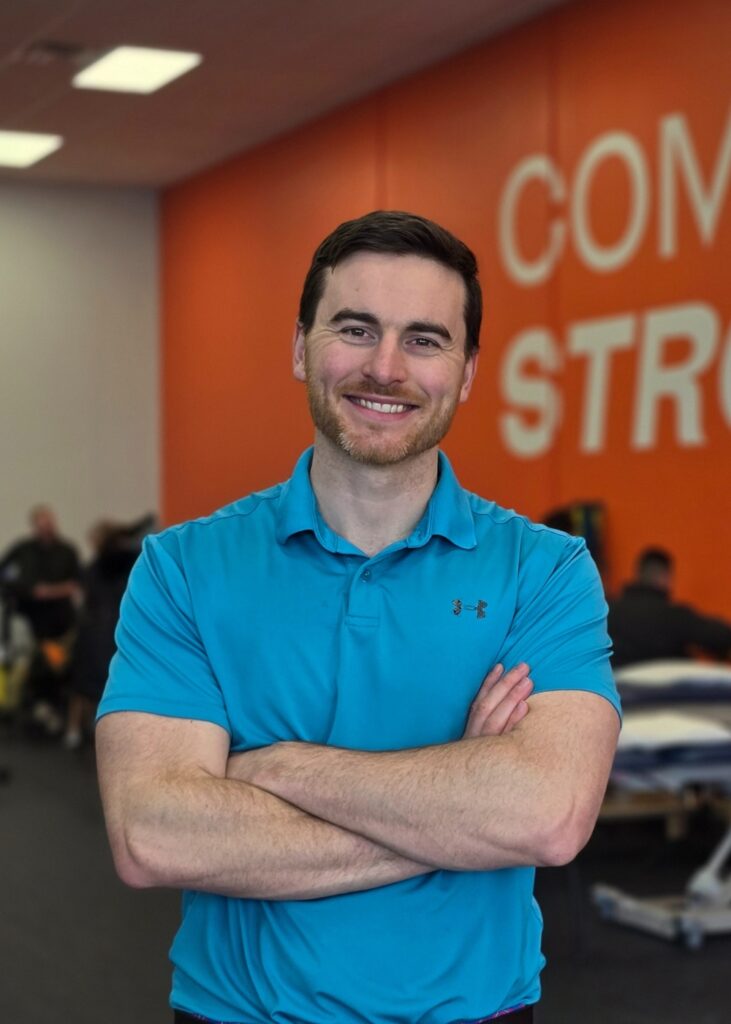
Jack Dixon
PT, DPT, OCS
Professional Development
“Some of our hardest patients aren’t limited by a lack of exercises—they’re limited by fear, confusion, low confidence, and a belief that pain means damage. This course gives therapists practical strategies to change those beliefs, improve difficult pain conversations, and help patients feel safe enough to move, engage, and recover.”
What you'll build
Twenty-Four Hours You'll Use in Every Region
By the end of the eight weeks, you'll be able to:
Use current pain terminology and mechanism concepts to reason through nociceptive, neuropathic, nociplastic, mixed, and uncertain presentations without over-labeling the patient
Form and refine working hypotheses using symptom behavior, examination findings, tissue and nervous-system sensitivity, patient context, and response to care
Conduct a pain-focused subjective examination that identifies meaningful beliefs, behaviors, yellow flags, recovery factors, functional goals, and co-management needs
Select and interpret patient-reported measures based on the clinical decision each one is meant to inform, and recognize the limits of screening tools
Use therapeutic alliance, shared decision-making, and motivational interviewing to improve engagement, confidence, adherence, and self-management
Match pain education, graded exposure, graded activity, and psychologically informed strategies to the patient's dominant barrier and functional goals
Integrate exercise, sleep and recovery, contextual effects, and medical or interdisciplinary co-management into a coherent pain management plan
Use meaningful reassessment markers and patient response to decide whether to confirm, refine, progress, regress, modify, co-manage, refer, or pivot
How the eight weeks run
Asynchronous lectures and readings — roughly 3–4 required articles per block, with optional resources for more depth
Four live virtual discussions, 7:00–9:00 PM ET — case-based application, not lecture review
Four block quizzes — open book, about 30 minutes each
About two hours a week on average, self-paced between the calls
No in-person lab weekend. The live discussions are where application happens
What's expected of you
Complete the lectures and required reading before each live discussion and quiz
Attend all four live discussions. An excused absence is remediated with a reflection on the recorded session
A cumulative quiz average of 80% or higher to pass the course
Come ready to defend a clinical decision with evidence, patient context, and response to care
No discussion boards or peer-response assignments
Included
Full syllabus published before you enroll
All course materials through our learning management system and downloadable course folders
Certificate and credential on completion
Documentation for employer CE reimbursement
Format
Fully online — asynchronous lectures and readings, four live virtual discussions, four block quizzes. No in-person lab.
Dates
Nov 2 – Dec 27, 2026
Enrollment closes Sunday, Nov 1, 2026
Live discussions
Nov 11, Nov 23, Dec 9, Dec 21
7:00–9:00 PM ET. Nov 23 and Dec 21 are holiday-adjusted Monday sessions.
Duration
8 weeks · 24 contact hours
Weekly commitment
About 2 hours a week, self-paced
Plus four 2-hour live discussions and a short quiz each block
Price
$349
Free for current Highbar clinicians
CEU approval
APTA Massachusetts approved. CE applicability varies by state and should be verified by each participant.
Who can attend
Licensed PTs and PTAs in good standing
Cohort size
Limited
Primary instructor
Jack Dixon, PT, DPT, OCS
Assessment
Four open-book block quizzes
Course materials
Provided through our LMS and downloadable course folders
Credential
Certified Therapeutic Pain Management
Syllabus
Full syllabus (PDF)
Prerequisite
None. No track is a prerequisite for another.
Next cohort
Being planned
If you already work here
Pain Management Is Free for Highbar Clinicians
Every program in the Education Hub. No exceptions.
Current Highbar clinicians enroll through their employee code and pay nothing. That holds for this course and for every Region-Focused Certification you stack alongside it, not just the first one.
Not on the team yet? We’re a teaching practice, and this is what that looks like from the inside.
What a Highbar clinician gets
01
Every certification track, free — including stacked tracks, via your employee code
02
24 structured mentorship hours in your first twelve weeks, with a named mentor
03
One-on-one care, every patient, every session — no double-booking
04
A 100% residency board-pass record if you keep going up the pathway
Questions
Before You Enroll
Why is this course $349 when the regional certifications are $599?
Because it’s a different amount of course. It’s 24 contact hours rather than 40, and it has no two-day in-person weekend lab, which is the single most resource-intensive part of the regional tracks. The price reflects the structure, not the value of the material.
Is there any in-person component?
No. Everything happens online: self-paced lectures and readings, plus four live virtual discussions on Nov 11, Nov 23, Dec 9, and Dec 21, 7:00–9:00 PM ET. There’s no weekend lab and nothing to travel to. Because there’s no lab, the live discussions are the main structured application space, and they’re built around real cases rather than lecture review.
How much time does it take each week?
About two hours a week on average for the lectures and required reading, which you fit around your own schedule. On top of that are the four live discussions, two hours each, and a short open-book quiz at the end of each block that takes roughly 30 minutes.
What if I can't make a live discussion?
All four are required. If illness or an emergency comes up, notify faculty before the session where possible, or within 24 hours. Excused absences are remediated as faculty direct, which typically means a written reflection on the recorded session showing how the material changes your assessment, communication, treatment, or next-step planning.
Is there coursework, and how am I assessed?
Yes. Each block ends with a short open-book quiz covering the assigned lectures and readings, and you need a cumulative quiz average of 80% or higher to pass the course. Faculty may also assign brief pre-call case preparation or a clinical reflection. There are no discussion-board posts or peer-response assignments.
Is this open to PTAs?
Yes. Licensed PTs and PTAs in good standing are both welcome. PTAs apply all course content within the established plan of care, applicable state practice rules, and the PT/PTA collaborative model.
Do I need a Region-Focused Certification first?
No. Each track stands alone, earns its own credential, and none is a prerequisite for another. Many clinicians pair this course with a regional track, before or after, because pain management carries into every region.
Does this lead to the COMT or COPTA program?
It can support progression toward either, though it isn’t a formal prerequisite for either one. Advanced therapeutic pain management is part of the COMT curriculum, so the work carries forward if you decide to pursue the full pathway.
What CEUs do I earn, and where are they accepted?
24 contact hours, APTA Massachusetts approved. CE applicability varies by state and should be verified against your own licensing board’s requirements.
Where do the course materials live?
Lectures, required readings, and optional resources are provided through our learning management system and downloadable course folders. You’re responsible for working through the required materials before each live discussion and quiz.
Can I see the syllabus before I commit?
Yes. The full syllabus is published as a PDF, and you should read it before you enroll, not after.
What if this cohort doesn't fit my schedule?
A next cohort is being planned, though the dates aren’t set yet. Join the waitlist and we’ll contact you as soon as it’s posted.
I work at Highbar. Do I pay?
No. Current Highbar clinicians enroll with their employee code, applied at checkout.
Enrollment
Start With the November Cohort
Eight weeks, 24 contact hours, and a framework for pain you'll use with patients in every region you treat.
- 24 APTA MA-approved contact hours over eight weeks
- Four live case-based discussions with faculty, 7:00–9:00 PM ET
- Fully online — no weekend lab, no travel, about two hours a week
- Documentation provided for employer CE reimbursement
✅ APTA MA approved
🔒 Secure registration
Also consider
Add a Region, or Go the Distance
Pain management pairs with any regional track, and it's part of the longer pathways too. If you want hands-on work or more depth, start here.
$599
Region-Focused Certifications
8-week tracks · 4 specialties
Eight weeks of depth in one region, with a hands-on weekend lab. Stack two or three over time.
- Free for Highbar clinicians
$449
WEEKEND LAB INTENSIVES
2 DAYS · REGIONAL FOCUS
Two full days of hands-on regional skill work, built for immediate Monday-morning carryover.
- Free / full salary – internal
$4,800
COMT
Longitudinal · 14–24 months
Residency-aligned manual therapy certification with a 100% OCS pass rate among exam-takers. 184 hours.
- Free / full salary – internal
$3,600
COPTA
PTA-specific · 184 hours
Advanced orthopedic certification built from the ground up for PTAs — not a PT course adapted down.
- Free / full salary — internal
Get Better at the Part Every Patient Shares
Eight weeks online, four live case discussions, 24 contact hours, and a clearer plan for the patients whose pain doesn't follow the exam.