Highbar Thrives | Clinical Education Series
Developing the Clinician
Advanced Clinical Mentorship Training
You know how to be a clinician. Learn how to develop one.
Developing the Clinician is advanced clinical mentorship training for clinicians who want a more intentional, repeatable way to help other clinicians grow. Learn how to understand what a learner needs, develop clinical reasoning and skills, deliver feedback that changes performance, navigate challenge, and progressively build independence.
For residency and fellowship faculty, clinical instructors, new-grad mentors, clinical leaders, peer mentors, preceptors, and anyone responsible for developing clinicians.
Understand the learner.
Develop their reasoning and skills.
Build independence.
If you help another clinician grow, this course is for you.
Developing the Clinician is not residency-specific. It is designed for clinicians who mentor, teach, coach, supervise, onboard, lead, or develop other clinicians — whether that happens within a formal education program or during everyday clinical practice.
Why this course exists
Clinical expertise does not automatically transfer to the person you're mentoring.
Most clinicians become mentors because they are good at what they do. But knowing how to make a clinical decision is different from knowing how to help someone else learn to make that decision.
When should I teach — and when should I step back?
Why does the same performance problem keep happening?
Is this a knowledge gap, reasoning problem, skill deficit, confidence issue, behavior problem, or something else?
How do I challenge someone without making them defensive?
How do I teach hands-on or movement skills more effectively?.
How do I help someone become independent instead of dependent on me?
The goal is not to create clinicians who think like you. The goal is to help clinicians become better at thinking, doing, reassessing, and adapting for themselves.
Five mentor capabilities
Learn how to develop the clinician — not just correct the case.
01
Understand the Learner
Diagnose what is actually limiting performance instead of assuming the learner simply needs more teaching.
02
Develop Clinical Reasoning
Make thinking visible and coach prioritization, decision-making, reassessment, and adaptation.
03
Teach Clinical Skills
Demonstrate, observe, cue, structure practice, and progressively reduce support for hands-on and movement skills.
04
Give Feedback That Changes Performance
Turn observations into reflection, specific next actions, and measurable improvement.
05
Build Independence
Know when to guide, challenge, coach, or step back so the learner becomes less dependent on the mentor over time.
Core skills
The depth beneath the five capabilities.
Educational Diagnosis
Understand the learner behind the performance..
Differentiate knowledge, reasoning, skill, confidence, communication, behavior, self-awareness, expectations, and context.
Match the mentor response to the actual learning problem.
Use teaching, coaching, advising, questioning, observation, or remediation intentionally.
Clinical Reasoning
Teach the reasoning process — not your preferred answer.
Use think-alouds and hypothesis-based questioning.
Promote reflection-in-action and reflection-on-action.
Coach prioritization, reassessment, and adaptation.
Evidence → Patient → Decision
Coach how evidence becomes a clinical decision.
Identify the meaningful limitation.
Develop a provisional treatment-leading hypothesis.
Choose a decision marker and predicted response.
Trial, reassess, then retain, refine, monitor, or pivot.
Psychomotor Teaching
Teach hands-on and movement skills more intentionally.
Demonstration and learner observation.
Cueing choices and feedback timing.
Practice structure and progressive fading of support.
Feedback + Reflection
Turn feedback into the learner's next action.
Specific, actionable feedback.
Structured debriefing and learner self-assessment.
SMART micro-goals and metacognitive reflection.
Challenge + Remediation
Know what to do when growth stalls.
Navigate difficult conversations.
Address resistance, repeated errors, and lack of follow-through.
Clarify expectations and adjust the mentorship strategy when the first approach fails.
Diagnose the learner before you prescribe the mentorship.
You would not repeatedly give the same intervention to a patient without asking why it is not working. Mentorship should not be different. Before deciding what to teach, ask, correct, or practice, identify what is actually limiting the learner.
What is actually limiting the learner?
Different problems require different mentorship strategies.
Mentorship toolkit
You leave with a system — not a collection of tips.
The course integrates practical mentorship tools so participants can choose the right tool for the right learner at the right moment.
- Educational Diagnosis
- Coaching Micro-Cycle
- One-Minute Preceptor
- OARS
- Plus-Delta
- SMART Micro-Goals
- Reflection + Metacognition
- Driver Model as a clinical reasoning scaffold
Coaching clinical decision-making
Help clinicians turn evidence into decisions they can defend — and adjust.
The Driver Model is used as a mentorship scaffold to help clinicians connect patient findings, a provisional treatment-leading hypothesis, a decision marker, an expected response, a strategy trial, and reassessment.
A Mentorship Scaffold for Reasoning
- Meaningful Limitation
- Provisional Clinical Driver
- Decision Marker + Predicted Response
- Strategy Trial
- Reassess the Same Marker
-
Retain Refine Monitor Pivot
Psychomotor skill teaching
Because some clinical skills have to be seen, felt, practiced, and refined.
Mentors often receive extensive training in what to teach, but far less in how to teach hands-on and movement skills. Developing the Clinician gives mentors a repeatable way to demonstrate, observe, cue, correct, structure practice, and progressively fade support so the learner can own the skill.
- Demonstrate
- Observe
- Cue
- Practice
- Fade Support
How the course works
You don't get better at mentorship by only listening to someone talk about mentorship.
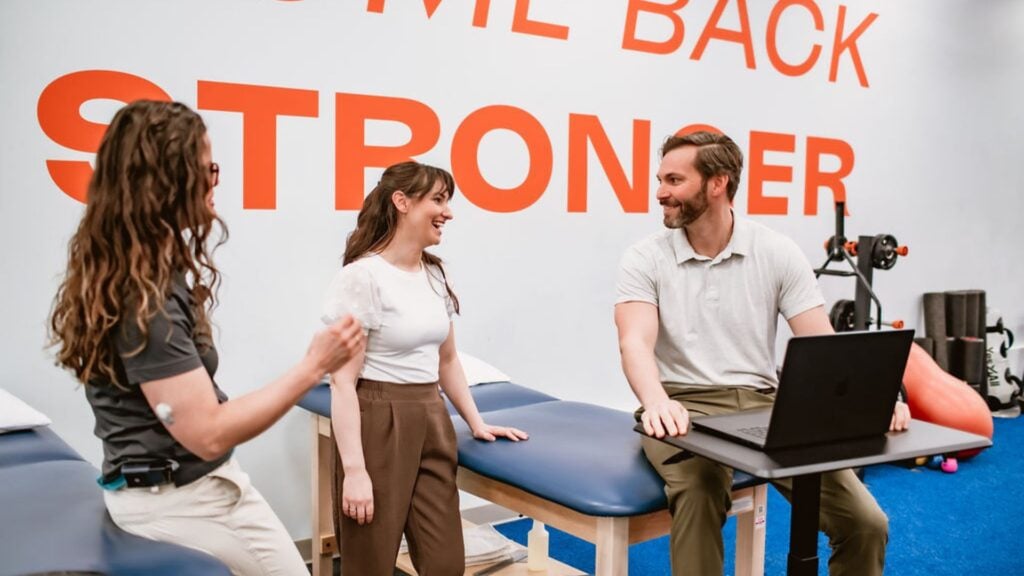
The course uses realistic cases, mentor-mentee-observer role play, peer discussion, direct feedback, and reflection so participants practice the actual conversations and decisions mentorship requires. Prior cohort role play: mentor, mentee, and observer working through a case conversation
01
Learn
Build the framework.
02
See
Watch it modeled.
03
Practice
Work the scenario.
04
Feedback
Get direct input.
05
Reflect
Examine your habits.
06
Repeat
Try a better response.
Prior cohort results
Participants left more confident across every mentorship competency measured.
Matched participants reported a higher average confidence score after training
Matched-group average across nine mentorship competencies
Average rating of impact on ability to provide effective mentorship
Said the balance between theory and practical strategies was appropriate
Matched pre/post confidence results reflect 40 participant self-reports. Post-course experience data reflect 47 responses. These measures reflect participant-reported confidence and experience, not objective clinical outcomes.
Registration for the next cohort isn’t open yet. Join the interest list and we’ll share dates, format, and
tuition as soon as they’re confirmed.
From prior participants
What changed in how they mentor.
9.81 / 10
Average likelihood to recommend the
training to a colleague
“This course took mentorship out of a gut feeling and intuition and gave me a much clearer understanding of the how and why behind it.”
2025 Mentorship Training Participant
“It gave me resources and a framework to support my mentees and made me a more structured mentor.”
2025 Mentorship Training Participant
“I have a better understanding of how to provide mentorship and concrete ways to develop critical thinking skills.”
2025 Mentorship Training Participant
The shift
From mentoring by instinct to mentoring with a framework.
Who this is for
Mentorship is an approach — not a title.
You do not need to be residency faculty or a formal educator to benefit. If part of your role is helping another clinician grow, this course applies.
Residency & Fellowship Faculty
Develop advanced reasoning, skill, adaptability, and independence.
Clinical Instructors
Move beyond supervising tasks toward developing clinical thinking and professional growth.
New-Grad Mentors
Provide the right balance of structure, feedback, challenge, and progressively increasing independence.
Clinic Directors & Clinical Leaders
Strengthen coaching, feedback, professional development, performance conversations, and difficult conversations.
Peer Mentors & Senior Clinicians
Become more intentional when helping colleagues develop reasoning, skills, confidence, and self-awareness.
Preceptors & Onboarding Mentors
Support the transition from orientation toward increasingly independent clinical practice.
Anyone Responsible for Clinician
Development
Whether mentorship is a formal title or simply part of your role.
You do not need to be residency faculty to benefit from Developing the Clinician.
You need to be responsible for helping another clinician become better.
Course format & logistics
Structured enough to be repeatable. Applied enough to change practice.
01
Prepare
Focused pre-work or asynchronous learning.
02
Apply
Mentorship cases, reasoning challenges, and difficult conversations.
03
Practice
Use the strategies with peers and receive observation and feedback.
04
Carry Forward
Leave with frameworks and tools that can be used immediately.
DATE
Nov 2–Dec 18, 2026
FORMAT
Hybrid
Live virtual sessions + independent coursework + one in-person intensive
LOCATION
Remote + Providence, RI
For the in-person intensive weekend
TIME COMMITMENT
~3–4 hours/week
Includes live sessions, assignments, and practice activities
TUITION
$249
CEUS
18 CEUs
Pending final approval
ELIGIBILITY
Licensed PTs and PTAs
Ideal for clinical instructors, mentors, residency/fellowship faculty, and clinical leaders
REGISTRATION DEADLINE
October 30, 2026
Frequently asked questions
Before You Enroll
Do I need to already be a formal mentor?
No. The course is useful for clinicians who currently develop others or expect to take on mentorship, clinical instructor, onboarding, leadership, residency, or peer-development responsibilities.
Is this only for residency mentors?
No. Developing the Clinician is advanced clinical mentorship training for anyone responsible for developing clinicians. Residency mentorship is one application, not the course’s sole audience.
Is this mostly lecture?
No. Participants learn the concepts, then use cases, role play, observation, direct feedback, peer discussion, and reflection to practice the actual work of mentorship.
Will this help with hands-on teaching?
Yes. Psychomotor teaching is included so mentors have a clearer process for demonstration, observation, cueing, feedback, practice, and fading support.
Is the Driver Model the focus of the course?
No. It is one mentorship scaffold used to teach clinical reasoning, prioritization, reassessment, and adaptation.
Who is eligible to register?
TBD — Insert final professional eligibility once confirmed.
You've spent years becoming a better clinician. Learn how to help someone else become one.
Developing the Clinician gives you a repeatable way to understand the learner, develop their reasoning and skills, deliver better feedback, navigate challenge, and build progressively greater independence.
Understand the learner.
Develop their reasoning and skills.
Build independence.