Highbar Physical therapy & Health blog
If you have questions about dry needling or want to explore whether it may help you, our team is here to support your decision every step of the way.


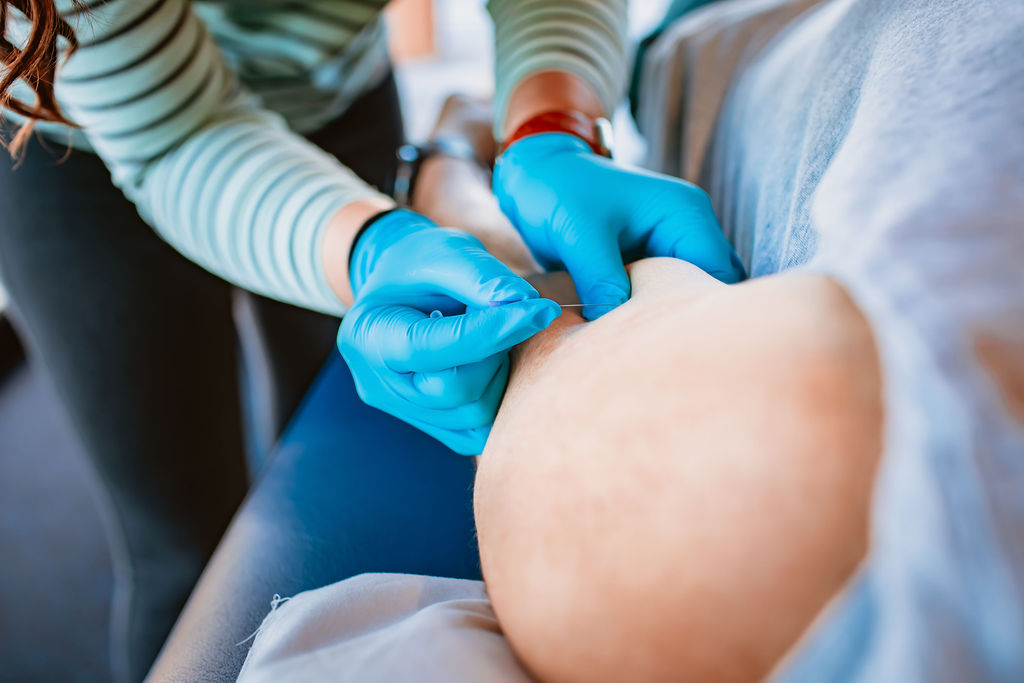
Dry needling has become one of the most trusted tools for reducing muscle pain, improving mobility, and helping people from professional athletes to weekend movers get back to doing what they love. So when headlines broke that Pittsburgh Steelers linebacker T.J. Watt suffered a collapsed lung during a dry needling session, it was understandable that many people had questions.
Any time an elite athlete experiences an unexpected complication, it raises awareness and concern. But it also opens the door for clarity: What actually happened? How common is this? And what should patients expect when receiving dry needling from a highly trained clinician?
At Highbar, safety and expertise are at the core of everything we do. This article breaks down what occurred with Watt, why it is considered an extremely rare event, and how our professional standards ensure dry needling remains a safe, effective, evidence-informed treatment.
What Happened to T.J. Watt?
According to reporting from The Sporting News, Watt sustained a collapsed lung during a dry needling session at the Steelers facility. His brother, J.J. Watt, confirmed that the injury occurred when a needle inadvertently penetrated too deeply and entered the lung space. Watt was briefly hospitalized, underwent surgery, and is now recovering with the expectation of returning to play this season.
While alarming, this type of complication is exceptionally rare. Most dry needling procedures involve superficial muscle tissue, but certain areas, such as the upper back or ribcage, require advanced anatomical knowledge and precise technique because of their proximity to the lungs.
This incident reflects the importance of clinician training and experience, not the inherent danger of the technique itself.
How Rare Is a Lung Puncture During Dry Needling?
Extremely rare.
Millions of dry needling treatments are performed in the U.S. each year, and data consistently show that:
- Minor side effects such as temporary soreness are most common.
- Serious complications occur at a rate far below 0.01 percent.
- When clinicians have strong anatomical training and hands-on experience, dry needling is considered a safe, low-risk intervention.
Clinical expertise, not the technique itself, is the key factor in preventing complications.
Why Athletes Use Dry Needling
Professional athletes rely on dry needling because it helps:
- Relax tight or overworked muscles
- Improve circulation and healing
- Reduce tendon pain
- Restore range of motion
- Support recovery between games or training sessions
Watt’s situation does not change the fact that dry needling is widely trusted in sports medicine. Instead, it highlights why advanced training matters.
How Highbar Ensures Safe, Effective Dry Needling
Highbar is a teaching practice built on mentorship, hands-on training, and in-house professional development. Every clinician who provides dry needling is trained through a structured educational pathway designed to promote safety, confidence, and clinical excellence.
Our approach includes:
Rigorous anatomical education
Clinicians learn depth, angulation, safety zones, and tissue sensitivity specific to every region of the body, including the thorax where deeper structures require high precision.
Hands-on mentorship
Before treating patients independently, clinicians practice under guided supervision from experienced instructors.
Evidence-based clinical reasoning
Highbar teaches not just how to needle but when to needle, ensuring the technique is used thoughtfully and appropriately within a full plan of care.
Ongoing competency and continuing education
Because we in-source our professional development, clinicians continually refine their skills through Highbar’s courses, mentorship, and specialty pathways.
Our Dry Needling Certification Courses for Clinicians
Highbar is proud to offer a comprehensive Dry Needling Certification Program for licensed physical therapists who want to elevate their practice. While this program is designed for clinicians, not patients, it directly benefits everyone who receives care at Highbar by ensuring that every provider is trained at the highest level.
Why Our Certification Matters
Completing a dry needling certification course helps clinicians:
- Expand their treatment capabilities
- Increase patient satisfaction and outcomes
- Stay current with best practices in musculoskeletal care
About the Certification
Highbar’s Dry Needling Certification Courses, Level I and Level II, provide clinicians with:
- Evidence-based instruction
- Extensive hands-on lab experience
- Safety-focused anatomical training
- Clinical reasoning for integrating dry needling effectively and appropriately
These courses meet continuing education requirements and ensure that our team delivers dry needling with the highest level of skill, confidence, and patient safety.
For patients, this means your care is always delivered by therapists who have completed rigorous training within a system designed to protect your wellbeing.
Is Dry Needling Right for You?
Dry needling may be beneficial for:
- Neck or back tension
- Muscle spasms
- Tendinopathy
- Headaches
- Sports-related muscle strain
- Chronic or recurring pain patterns
Your therapist will always evaluate your symptoms, goals, and history before determining whether dry needling is appropriate for your case.
The Bottom Line
T.J. Watt’s injury made headlines because it was unusual, not because it reflects the typical dry needling experience. When this technique is performed by highly trained clinicians within a structured, safety-focused educational system, it remains one of the most effective tools for pain relief and improved movement.
If you have questions about dry needling or want to explore whether it may help you, our team is here to support your decision every step of the way.
Feel better. Move freely. Live fully.